
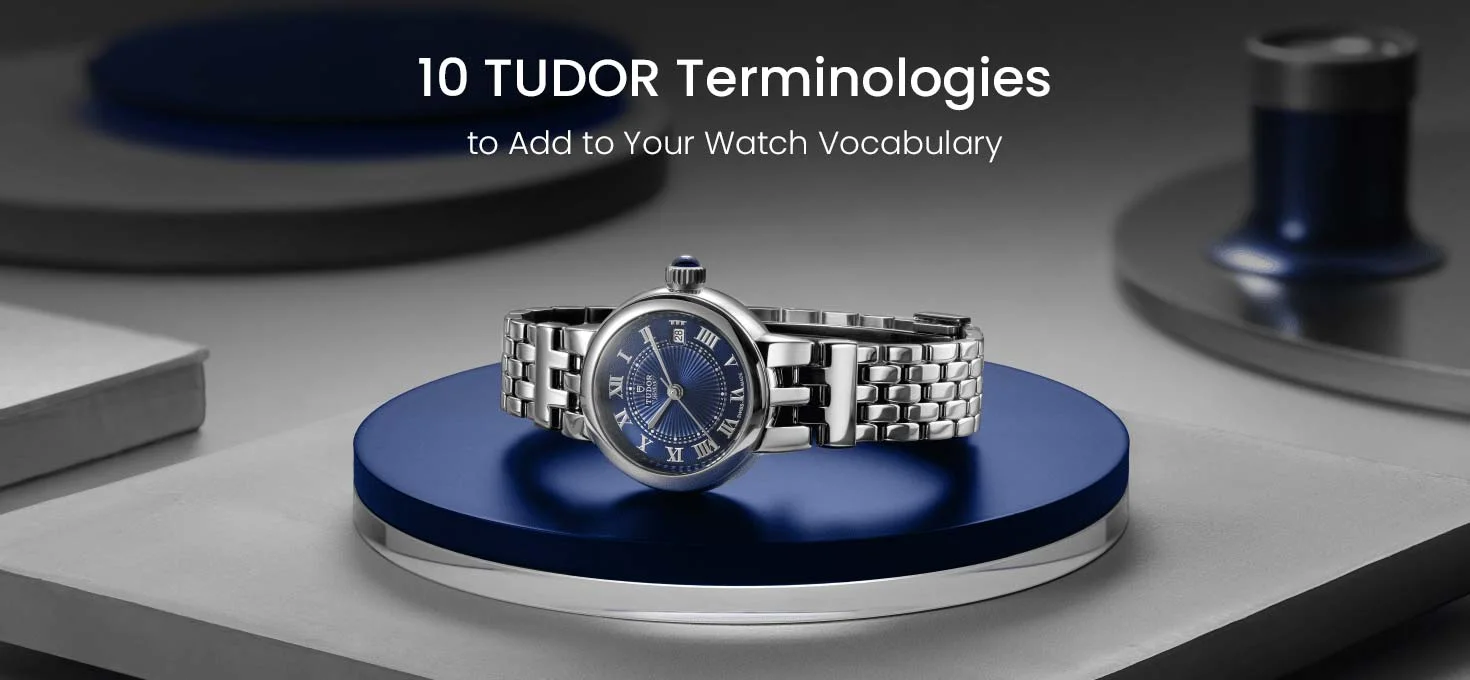
This year, TUDOR completes a century of pioneering divers’ watches, chronometric precision, and making their mark where others wouldn’t dare to — their ‘Born To Dare’ spirit encapsulates just that. Throughout this centenary, TUDOR has created icons in both form and function, with instantly recognizable designs and titles. Safe to say, there’s enough to create a vocabulary of its own. Here are 10 TUDOR terminologies you need to know.
1926
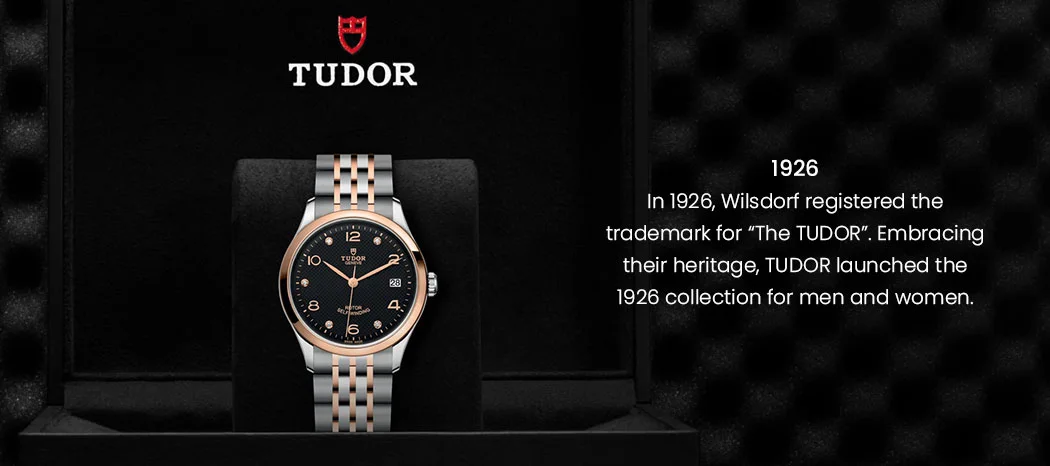
Turning back the clocks to the roaring ‘20s, Sir Hans Wilsdorf envisioned a watch brand that offered strong technical and design sensibilities, which his agents could sell at modest prices. In 1926, he registered the trademark for “The TUDOR” – an ode to ‘House of Tudor’, a British Dynasty that shaped the history of England. Embracing their heritage, TUDOR launched the 1926 collection for men and women, offering a traditional and timelessly elegant take on watchmaking. It was characterized by clean dials and a seven-link metal bracelet.
Claire de Rose
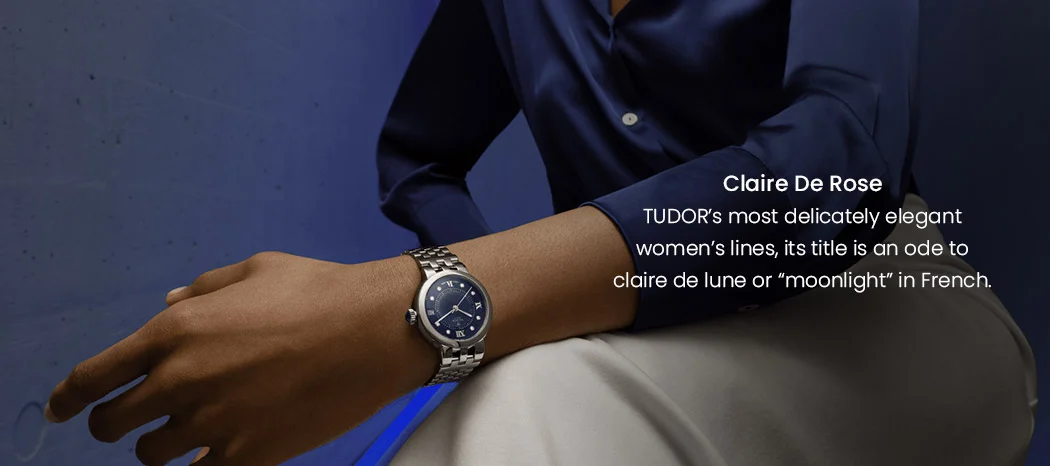
As one of TUDOR’s most delicately elegant women’s lines, its title is an ode to claire de lune or “moonlight” in French as well as the brand’s historic rose emblem. This feminine icon features a stunning ‘TUDOR Blue’ dial and ‘beads of rice’ for its bracelet.
LHD
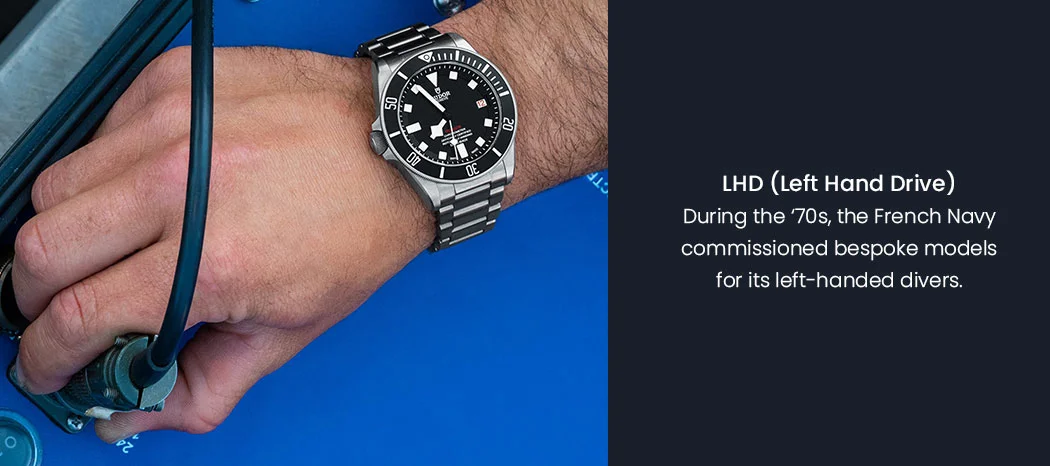
The TUDOR Pelagos broke contentions with its LHD (Left Hand Drive) edition for lefties. Featuring a crown on the left side of the case, it allows for more ergonomic crown access and time-setting. During the ‘80s, the French Navy commissioned bespoke models for its left-handed divers. It retains the Pelagos’ technical brilliance in both form and function, just with a reversed mechanism — calibre MT5612-LHD.
Marine Nationale
TUDOR’s partnership with the French Marine Nationale (Navy) is revered as one of military history’s most respected watchmaking contributions. In 1956, the French Marine Nationale (Navy) adopted the TUDOR Oyster Prince Submariner, extensively employing it until the ‘80s. The Groupement d’Étude et de Recherches Sous-Marines (G.E.R.S.) tested early models (Refs. 7922 and 7923) and deemed them ‘perfect,’ leading to further orders with enhanced water resistance.
Oyster
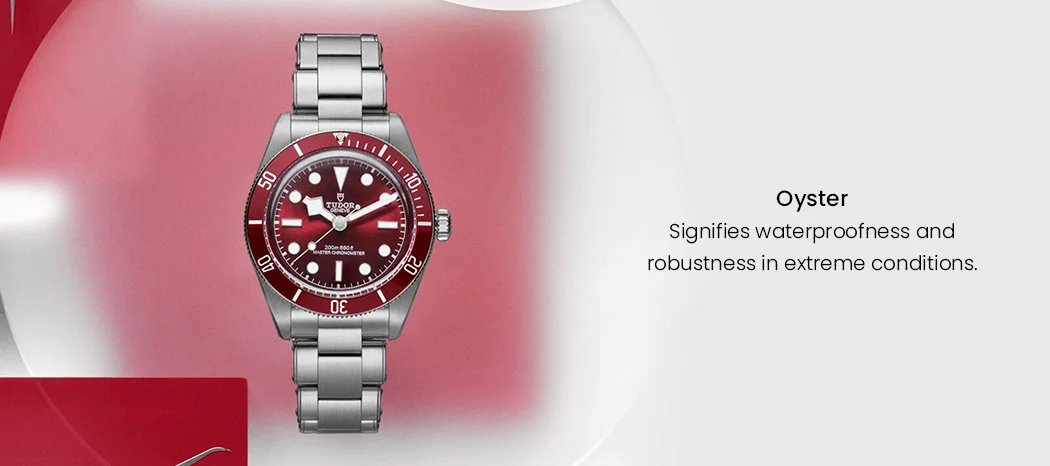
Armed with a heavy dose of technical robustness, Hans Wilsdorf presented the Oyster case in 1947 — the result of vigorous testing and evolution. The title, inspired by the protective outer shell of its eponymous reef-dweller, signifies waterproofness and robustness in extreme conditions. Incorporating a screw-down caseback, the TUDOR Oyster Ref. 4463 dawned a new generation of waterproof watches for TUDOR — it was upon this rock the brand built their legacy of divers’ watches.
Oysterthin
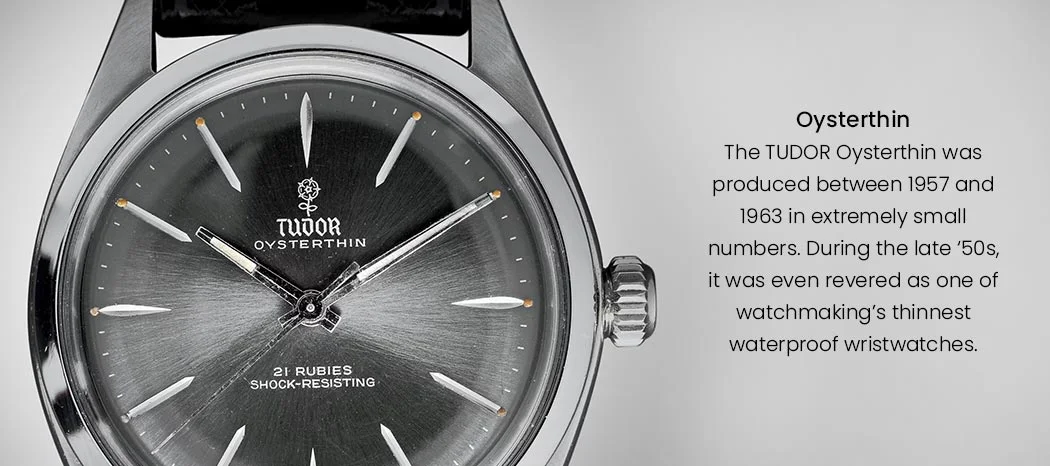
Meet TUDOR’s thinnest ever watch, measuring only 6 millimetres thick. The TUDOR Oysterthin was produced between 1957 and 1963 in extremely small numbers. During the late ‘50s, it was even revered as one of watchmaking’s thinnest waterproof wristwatches. This extra-thin waterproof Oyster case traditionally measured 34 millimetres in diameter with a signature charcoal-grey dial and recessed baton hour markers and luminescent dots.
Prince
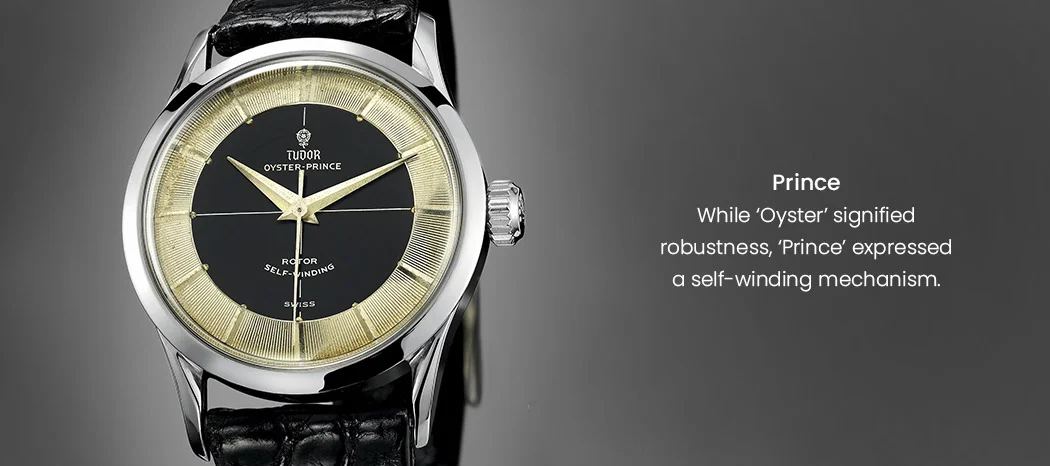
While ‘Oyster’ signified robustness, ‘Prince’ expressed a self-winding mechanism. The first TUDOR Oyster Pince was introduced in 1952 and was an icon on arrival. Featuring the famously waterproof Oyster case and self-winding Perpetual rotor mechanism, blended reliability and accuracy with a dash of contemporary elegance. The TUDOR Oyster Prince (OP) collection took many forms in successive collections — each model mixing and matching the best of TUDOR’s innovations.
Royal
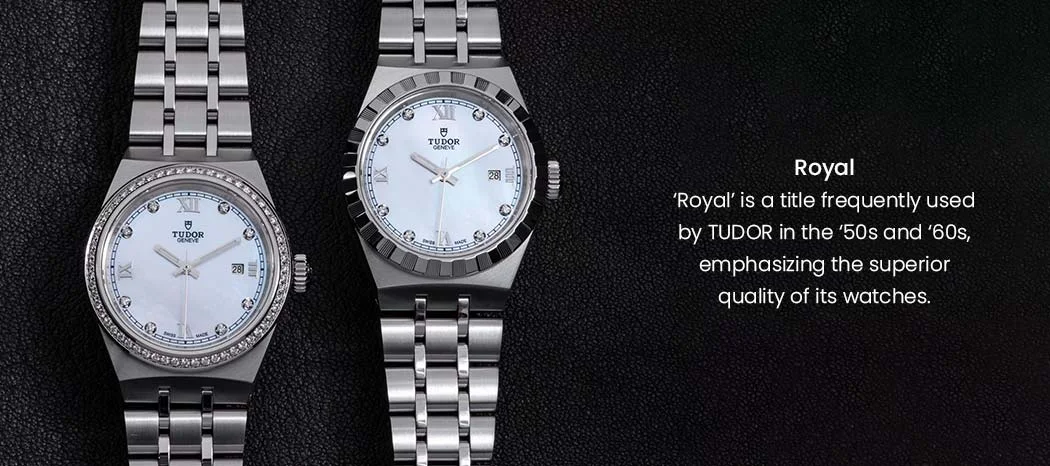
‘Royal’ is a title frequently used by TUDOR in the ‘50s, emphasizing the superior quality of its watches. The contemporary TUDOR Royal collection is a harmonious fusion of sporty-chic elegance and versatility — sharing visual similarities with the previous models from the golden era. Its most definitive details are its five-link integrated bracelet, day and date windows at twelve and three o’clock, respectively, and notched bezel.
Snowflake

Delicate, petite and elegantly unique, snowflakes have had a starkly contrasting definition in TUDOR’s books. This six-needle design icon was born out of the brand’s bold spirit of adventure and naval grit. The Oyster Prince Submariner donned circular hands at launch, but for its second generation in 1969, TUDOR sought a more angular approach. As the Submariner became a staple among scuba and military divers – especially the French Nationale, they valued functionality and reliability above all. Hence, TUDOR introduced Snowflake Hands — aptly titled after similarities to structural silhouettes of snowflakes.
Submariner
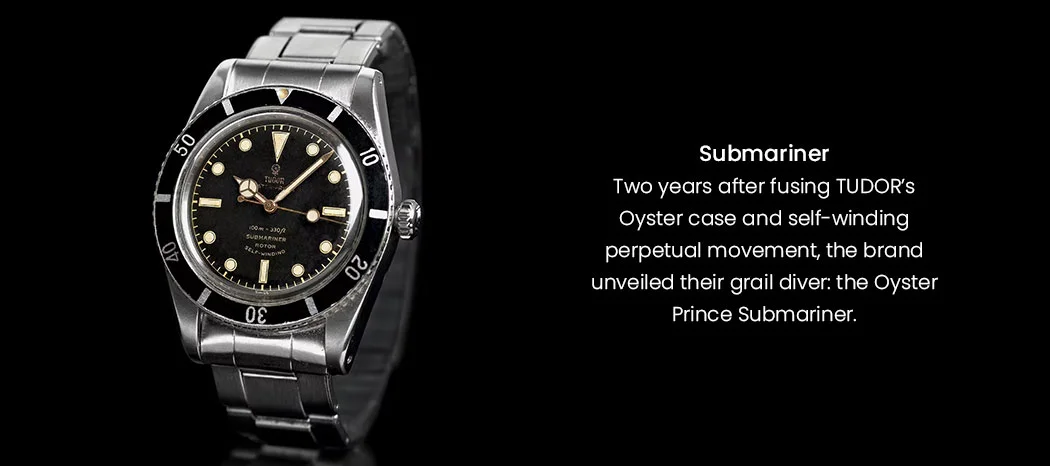
The Oyster Prince only sparked TUDOR’s curiosity in pioneering precision divers’ watches. Two years after fusing TUDOR’s Oyster case and self-winding Perpetual movement, the brand unveiled (what would become) their grail diver: the Oyster Prince Submariner (Ref. 7922) boasting a self-wound movement and an Oyster case capable of immersing to 100 metres. Soon, TUDOR doubled this depth rating and not only earned a reputation for pioneering divers’ watches but also caught the attention of militaries for their robust craftsmanship.


Recent Posts
Recent Comments
Archives