
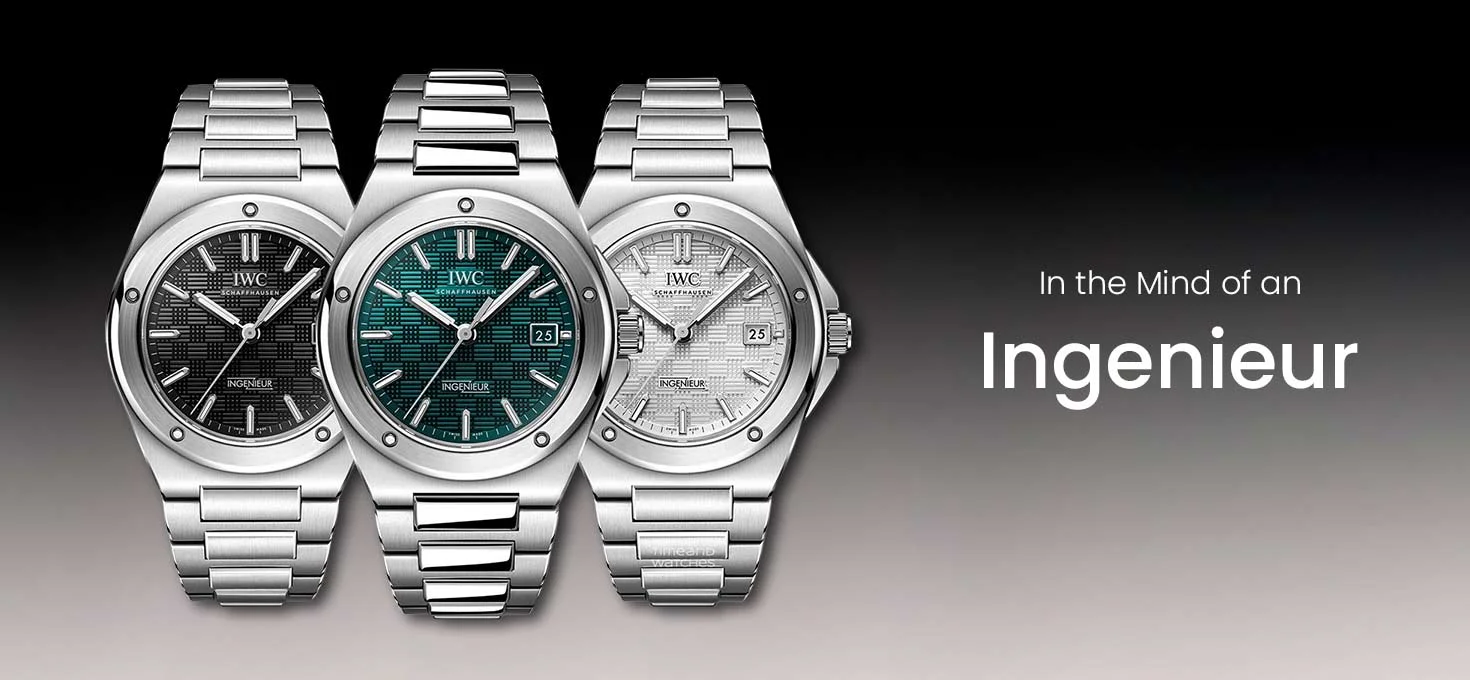
IWC’s most overlooked icon deserves far more street-cred
Back in the heat of the quartz crisis, the minds behind the mechanical watch movement managed some monumental measures. That alliterated quite well, if I may say so, allowing myself some solipsism. But back to the era of historical crisis, the mechanical watches were trying all sorts to retain their relevance. One thing that worked – and worked so well that it garners attention even today – was the launch of sporty watches with integrated steel bracelets.
A not so young Gerald Genta designed a few versions, each of which is iconic and timeless even today. Watches that seem classics today were possibly even considered preposterous at first, ostracised for being too obtuse, too jarring in concept; how could steel be luxury?
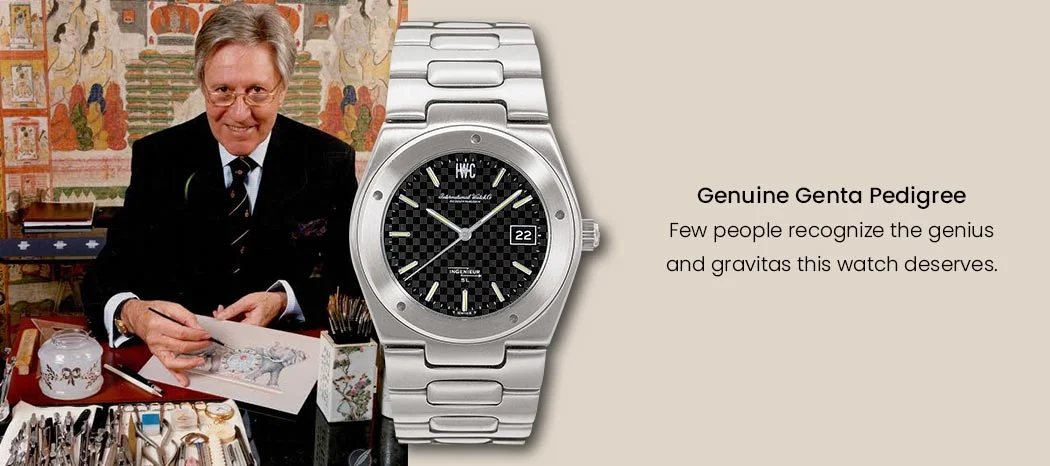
In this era of thesis and antithesis, one such synthesis was the Ingenieur from IWC — launched in 1955, and reimagined by Genta in 1976. But today, few people seem to recognise the genius and gravitas that this watch deserves. Somewhere along the line, while integrated watches became the cynosure of most collectors, the Ingenieur took a diversion, and possibly missed on a few opportunities. Now, in its anniversary year, the Ingenieur is all set and in the right gear to move back into the mainstream so let’s take a more detailed look at it.
The 3Ps of IWC
Pilot, Portugieser and Portofino, those are the three words that would come to mind if one was being quizzed on the BBC’s Mastermind show and the field of choice were the top watches from Schaffhausen. If only there was a word for engineers starting with the letter ‘P’ in any language, or perhaps if the watch had been destined for philosophers, it would have felt like it belonged more in the family. And yet, not just in nomenclature, the watch was also a stark departure in terms of design and utility, which is perhaps why many people miss mentioning this one when talking about IWC’s top pieces.
And Now, Some Trivia
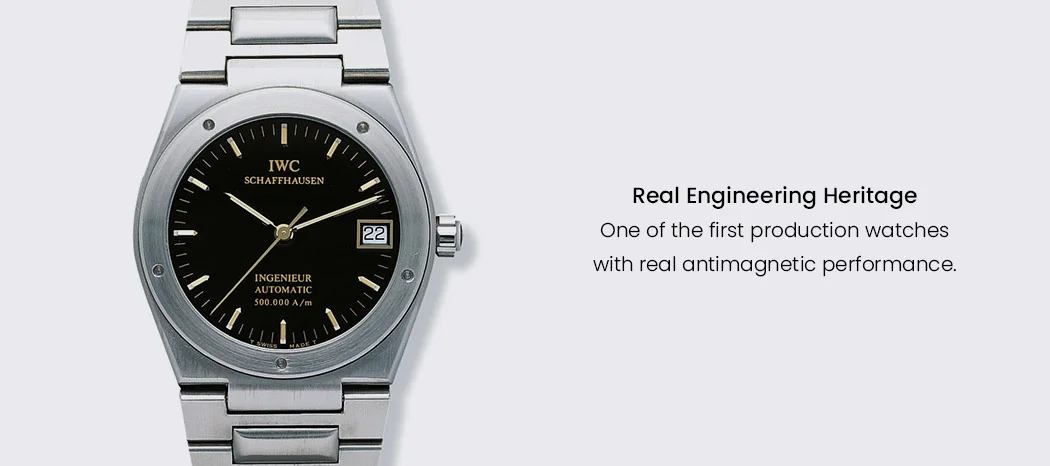
- Now the Ingenieur wasn’t launched in 1976, it had been around longer. Hans Ernst Homberger launched it in 1955 as a post-war tribute to engineers and other men from the technical fields, positioned as “Probus Scafusia” engineering, which is Latin for good, solid craftsmanship, from Schaffhausen, the house philosophy since 1903. It was a tool watch, designed for a very specific purpose – to not be deterred by the magnetic fields in which engineers (and others) were often required to work. This was achieved by constructing a soft-iron Faraday cage, rated to 80,000 A/m / 1,000 Gauss to encase the movement (ref. 666, which used IWC’s own Pellaton winding system) and this was one of the first production watches with real antimagnetic performance, alongside early Milgauss prototypes. So, even while it was a dainty looking watch with clean lines, it wasn’t intended to be the cool slick watch on the wrist of your average city slicker.
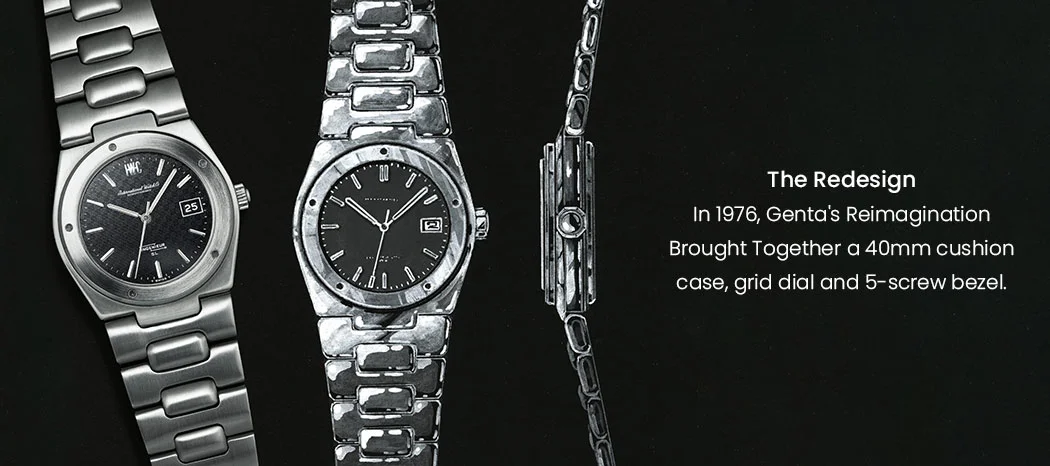
- Gerald Genta’s reimagination of the design, which was introduced in 1976, the ref. 1832 sported a 40mm cushion case in satin finish, a unique “grid”/checkerboard dial with a 5-screw bezel on an integrated bracelet, all paired with 120m water resistance and the antimagnetic cage. This version was almost double in weight compared to the previous iterations of this watch. Do note that some credit also goes to Hano Burtscher, the then-designer of the house, who was still the main authority sitting in on the redesign.
- The watch commanded a premium for this new do-over, one that the crowd didn’t take to immediately, considering this wasn’t a fancy watch for a fop but a piece of utility, a tool, to be worn on the wrists of scientists and engineers, both demographics with not exactly the most lavish of means to park in a wristwatch.
The Wonder Years
I call these the wonder years because, as we look back, many of us wonder what was happening in the world of horology (the bleak 80s and 90s) and where was the Ingenieur through it all.
Short answer, it was going through an overhaul. Through the 80s, while the 5-screw look was retained, while a graph-paper-inspired dial was introduced, and the overall look went for something lighter and breezier (translate: skinnier) on the wrist; think of it like the brief in the room being – a tool watch but make it dressier. They briefly also introduced a quartz version of the watch to try and level the playing field. Around the same time, a titanium variant was also introduced.
The next few years saw a lot more structure and definition, making for a more robust silhouette. Another version, originally designed for German mine clearance divers (Minentaucher), made the crossover attempt to appeal to the quotidian watch wearer, trying to push top-grade specs into commonplace watches. Ref. 3518 was the first to not require a Faraday cage at all and still managed to resist 3,900,000 A/m of magnetism in an MRI machine by shifting to special and advanced materials for the construction of the movement.
Many of these models were so hard to produce to the high standards that were required to back up the claims it made, that barely a few thousand made it into the hands of wearers. The movements aspired (and acquired) Chronometre certification (1993, Ref. 3521) and with a more modest 80,000 A/m rating, the watch took on a sleeker look.
The 2000s celebrated a bolder silhouette, 42mm across and 14.5mm thick, with a sharp angular case, a harken back to the original Genta design but unapologetically tool-oriented in proportions than dressy or urban. Some designs even departed from the integrated look and went sportier for the one-off pieces.
What’s New
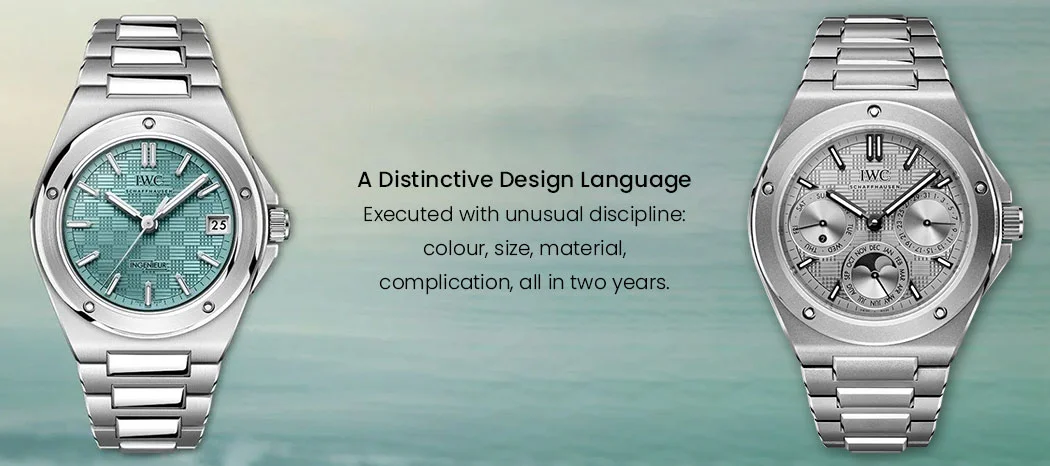
Since 2023, the watch has been returning to its original form and proportions, and the results are immediately fascinating. Here are some of the noteworthy points
- The 35mm case wears a lot like the original.
- The full ceramic is a welcome extension to the line.
- The “Pool” dial has all the makings of a ‘viral’ piece and equates to a vacation watch like none other.
- The flagship Tourbillon at 41mm is a true high-complication flex in the right direction.
From size and materials to colours and complications, IWC Ingenieur has made all the right moves in recent times to resurrect their reputation. There is that brilliant alliteration again!
The Sum Up
The collective conclusion of this model’s journey is mixed – liking an IWC Ingenieur is very time-bound a conversation; one has to mention exactly which era they prefer. In retrospect the watch (and its journey) is a lot more understood now, being a top draw among collector’s for both its build quality and design. But back then, it felt like the brand tried too many things along the way, and some were a departure from the original proportions of the watch and maybe consequently had a slightly less enthusiastic response.
It will take some time before the Ingenieur too has a legacy following like the Portofino, Pilot, the Portugieser but, as it stands, it has all the right ingredients in the mix:
- genuine Genta pedigree,
- a distinctive dial language,
- real engineering heritage, and
- a platform strategy executed with unusual discipline (colour, size, material, complication, all in two years)
I guess it wasn’t reinventing that the Ingenieur needed all along, it just needed time, for people to get to know it better, fall in love with it with more surety. I am definitely one for acquiring a piece, while they are still available and not enjoying the hype they truly deserve because, eventually, we all know what happens to styles with Genta’s Midas touch.


Recent Posts
Recent Comments
Archives