
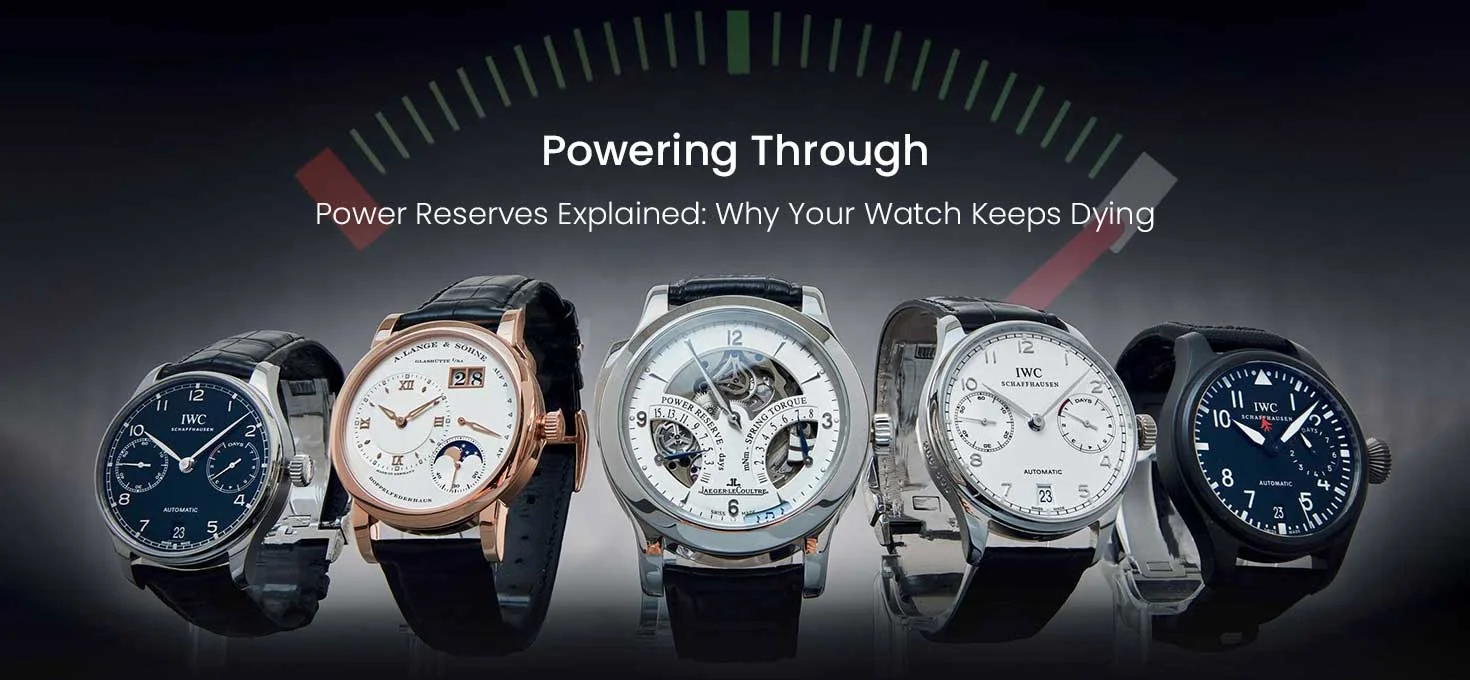
Everyone who knows about automatic watches knows that they are more difficult to make. Yet, few talk about how it is even more difficult to live as the owner of one! In fact, the one thing about automatic movements that can be considered among the most polarising is having to set it’s time (and date, and day, and month, and year, and moonphase) every time one has given it a prolonged time away from the wrist. While some love the part of setting a watch each time they wear it, comparing it to seducing a lover all over again, others think of it as an unnecessary hassle in a world of tech and from analogies eulogising lovers and seduction, they much think of as an expensive piece of metal junk appended to your wrist.
Both are correct, sadly.
Defining Power
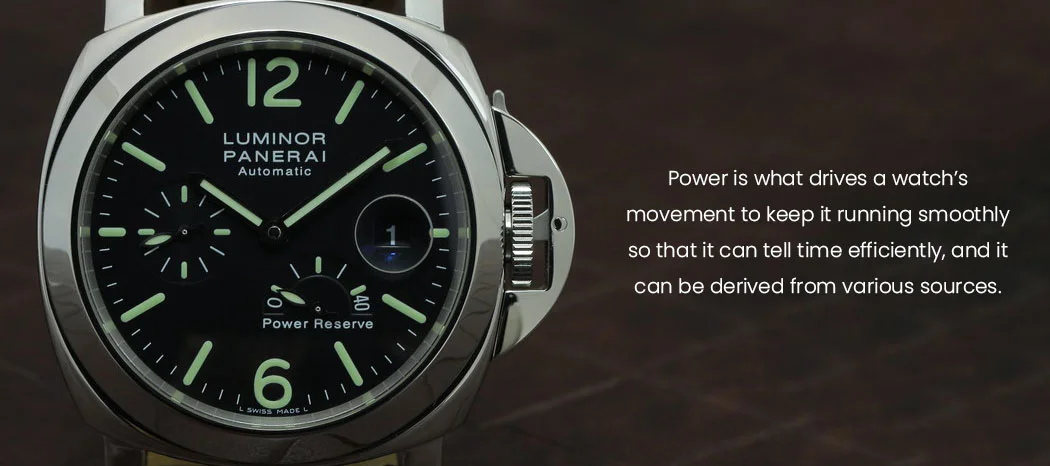
With absolute power comes…yes, you know how to finish that one…absolute responsibility. Watchmakers understand this concept, possibly even better than Spiderman, but, in the latter’s defence, I don’t know many teenage watchmakers either to level that playing field. But power, unlike in the superhero fantastical, it has a very definite definition in horology. Power is what drives a watch’s movement to keep it running smoothly so that it can tell time efficiently, and it can be derived from various sources. The difference in how a watch movement is powered can reflect in its price as some power setups are more intricate and complicated to make than others. Remember that delivering power isn’t just about the quantity but also its quality i.e. it’s not only important that the power supplied last sufficiently long enough, it should be constant and balanced so that the watch gains or loses the least amount of time through a day.
So let’s understand how many ways there are to power a watch movement, the end goal always being to keep a watch telling time.
Sources of Power
Quartz
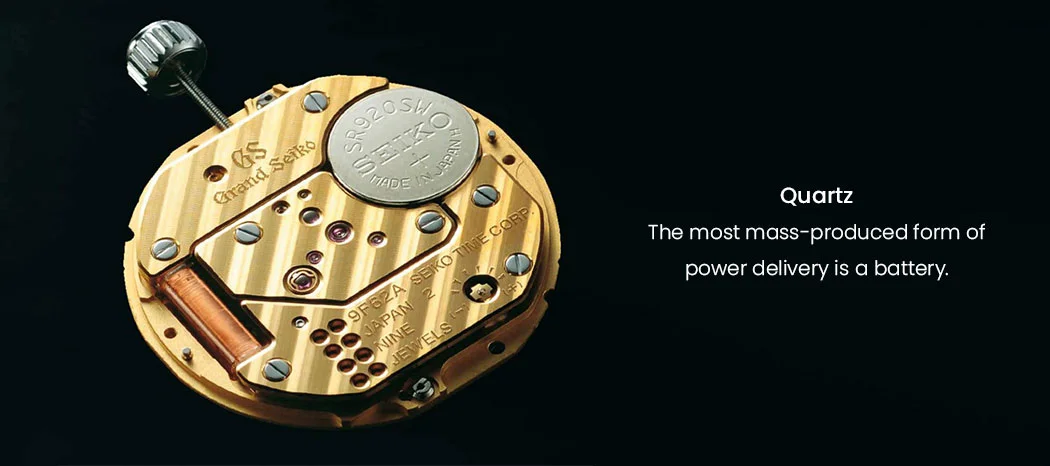
The most mass-produced (and possibly one of the most efficient and value-driven) form of power delivery is a battery – it is also fairly hassle-free, as long as it has juice, but even once it runs out, replacing it isn’t exactly high-precision engineering for a majority of quartz watches. The power supply can last for a fairly long time, depending on how complicated the watch movement is and how much one uses it. For e.g. a simpler day or date function will consume significantly lower battery than one with a chronograph function, even more so if one is using that stopwatch on a regular basis. Add other complications like an alarm function, dual time, maybe a floating digital display, or something a little more refined like a moon-phase (although I am yet to come across who uses this or has ever felt the need for one at the end of their wrist) and you will reduce the lifespan of the battery. Either way, it isn’t too complicated to change it. As for the pros and cons, well convenience is a big positive – just pick it up and go, no need to wind it or recalibrate. The downside, the ticking movement is not exactly considered ‘refined’ by many hardcore enthusiasts who much prefer a sweeping seconds hand. Now there are ways get around that even with a quartz powered movement but it’s not very common.
Solar Powered
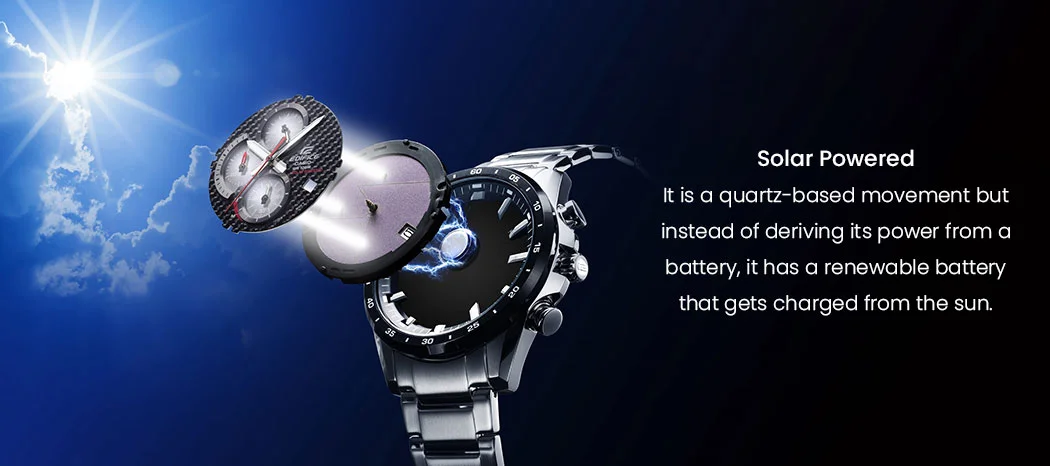
Solar power is a beautiful source of renewable and boundless energy (unless you live underwater, or in a mine) and we don’t seem to use it enough. It can be quite a convenience when one is out and off the grid, a plus that many nature lovers appreciate. Very simply, it is a quartz-based movement but instead of deriving its power from a battery, it has a renewable battery that gets charged from the sun. Such watches can keep ticking for quite a while especially if they are digital in format, analogue ones need more power, which is still possible with a solar setup but one shouldn’t expect months of endless functioning after a few hours in the sun with them.
Manual Winding
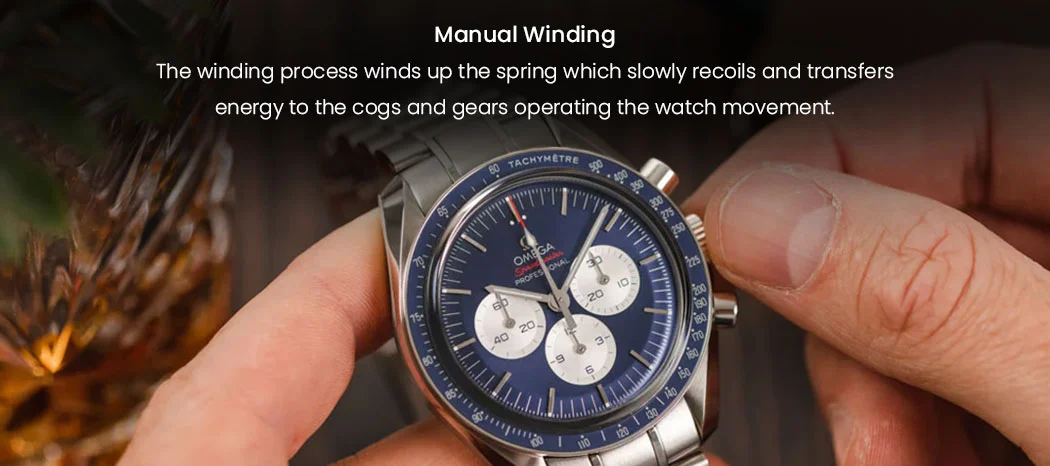
This is the watch that conjures images of a wise grandfatherly figure in the house, dressed in tweeds or argyles, doing this to their watch as a morning ritual – unscrewing the crown and then giving it a few turns before locking it back in. If any time adjustment was needed, it was done against the announcement on the radio. A few years later, the same calibration could be done by dialling a number, I think it was 174. Yes, life was different pre-internet. The winding process would wind up the spring which would slowly recoil and transfer energy to the cogs and gears operating the watch movement. It was finely tuned to not gain or lose too much time and most watches managed an economy of 36-42 hours easy. Manually winding it every morning was one way of ensuring that it never ran out of juice. From a humble wrist watch to something as big as a city clock tower, winding was a way of making them run for the longest time.
Automatic
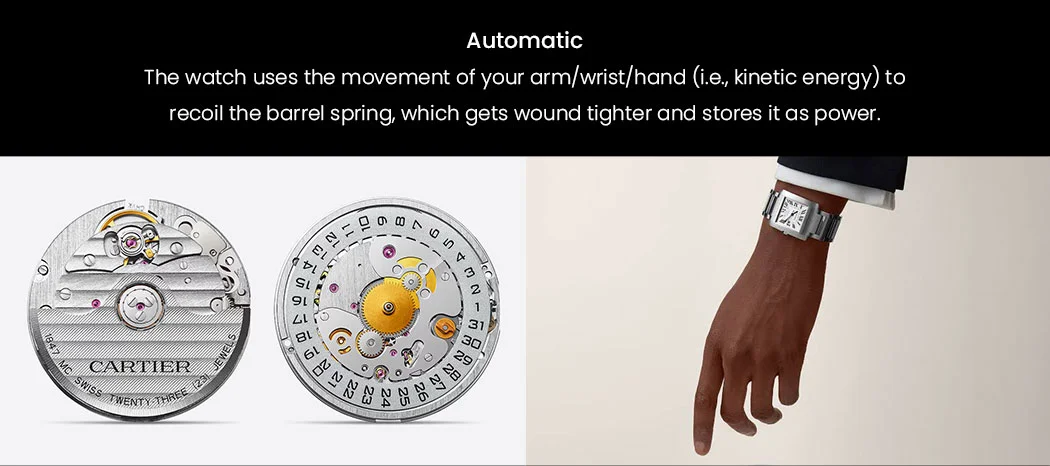
This is possibly the highest echelon of power delivery, where, and without getting into a complicated detailing of the setup, the watch uses the movement of your arm/wrist/hand (i.e., kinetic energy) to recoil the barrel spring, which gets wound tighter and stores it as power (i.e., potential energy). Nothing could explain Newton’s laws better. How long this power lasts will depend on a few factors – the size of the barrel and of the spring it contains, the material it is made of, which can affect its elasticity and therefore, its ability to store power when tightened and to deliver this power as it slowly uncoils. If it uncoils too fast when tight but too slow later, it will make the watch gain and lose time over the course of a day. While the average automatic movement can hold enough power to last 36hours, there are some which can last significantly longer, like 8-10 days. But more than the duration it is their precision that matters and the more expensive movements will keep time better even if they don’t have the most superlative of economies.
Which Power for Me
The one question that many people don’t ponder while buying a watch is whether they are buying the right kind of power setup. We debate brands, and models, case sizes and bracelet materials, but very few rarely think about the power delivery behind it. Why is that important? -Well for one, you want a watch that you enjoy wearing but also one that doesn’t turn out to be a quotidian inconvenience; a watch should suit your lifestyle. For someone who goes rock climbing and rappelling regularly, or engages in high-impact sports, an automatic movement might be a fragile and hence risky choice for daily wear. Conversely, a corporate type who is in and out of boardrooms may look a bit out of place rocking an oversized solar-powered GPS watch. But more than the aesthetics, it is the utility that can matter. Women, for example, much prefer quartz movements because a majority among them doesn’t wish to have to wind a watch or set the time, every time they pick it up to wear it, something that men in fact, quite enjoy about collecting watches. But the ‘wind and set time’ rigmarole is one of the reasons why smaller watches come with battery powered movements (apart from the fact that it is tougher to fit an automatic movement into a tinier case).
Cost is another factor – manual winding and automatic watches need more care and their periodic servicing is considerably more expensive than maintaining a quartz watch. So that too must be considered.
All in all, knowing how your watch will be powered and what level of involvement you will need to have as an owner/wearer should be an important consideration while buying one. Your next one, that is.


Recent Posts
Recent Comments
Archives