
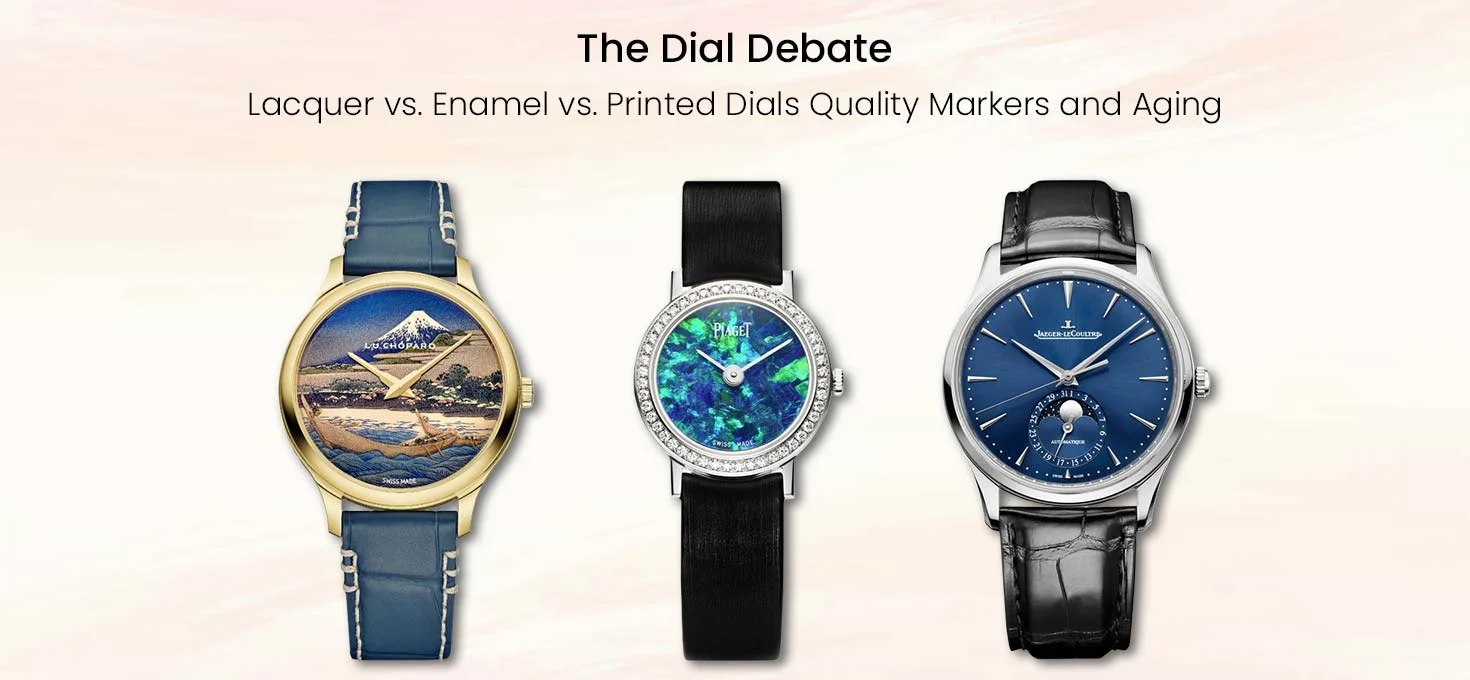
You know what is the first thing a true watch lover will notice about a watch that they spy across the room. No, not the logo, in fact, this is what separates the true watch lovers from the posers and drifters. They will most likely notice the dial. And why not, it is the face of the watch and catches and reflects light in the most charming of ways. That glimmer, that gleam, or in some cases, that sombreness, is possibly the first point of attraction in many watches, especially when seen from afar, and definitely when held up close for examination.
So today, let’s talk dials, and boy do we have a lot of ground to cover.
The First Dials
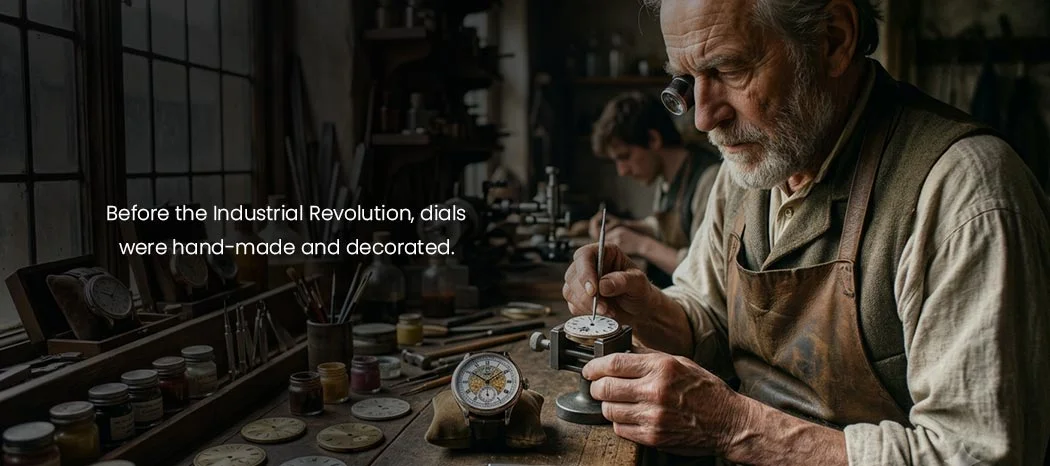
Before the Industrial Revolution made it possible to print and mass-manufacture dial faces with consistency and efficiency, dials were hand-made and decorated. Miniature paintings done with painstaking accuracy by the top artists was the way to go. Already the mechanism was hard to put together, add to that the complexity (and cost) of commissioning a painter (who was usually also a jeweller) to do this bit, and one can see why watches were purely an indulgence for the seriously wealthy, far from the tool that it would become a few centuries down. It was common to have royal crests, or Biblical scenes.
Enamel was the most common of surface finishes used, even though it was (and still is) the hardest to work with. A complicated and tedious process combined with a high failure rate – watches were definitely not cutting it as something that the hoi polloi could easily appreciate.
The Industrial Revolution
Well, the advent of machines changed all that – from speed and efficiency of execution to cost-cutting, it answered all the questions that had stopped many objects earlier from becoming articles of mass consumption and utility. Trouble is that once humans could mass produce all the parts required to assemble a watch, waiting on an enamel artist to finish the dial could be a frustrating bottleneck. The alternative was to reallocate even that job to the machines. Stamped and metal pressed dials, with mechanized printing on metal surfaces, shortened the time from a few days to a matter of seconds. Watchmakers could now consistently churn out hundreds and thousands of pieces in a day’s work. Very soon, this came to become the industry standard. Enamel continued to exist but as a prestigious time-honoured albeit labour-intensive option.
Types of Dials
The number of materials that have been used to design watch dials possibly leaves nothing to the imagination. Let’s go through them, not in order of when they came about to be but instead, of how difficult it is to work with them and consequently, what makes them so rare and precious.
Enamel
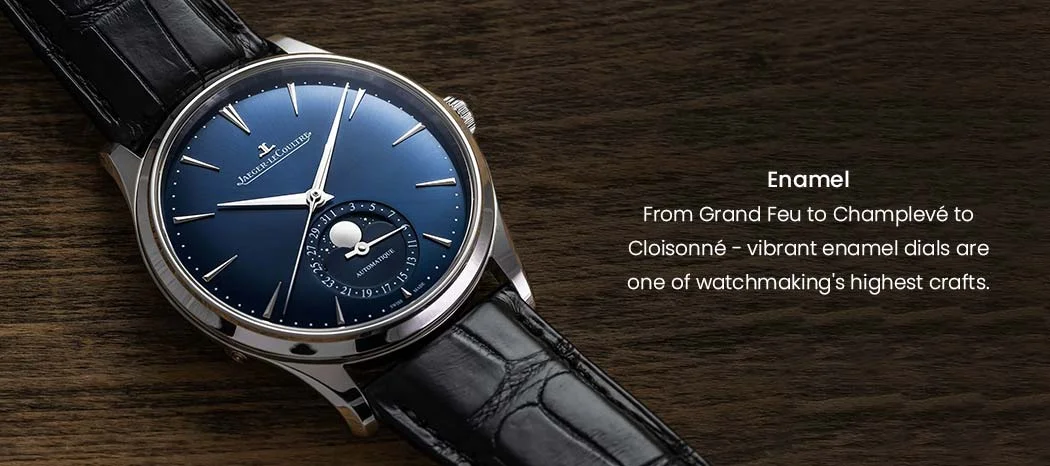
Truly well-worked enamel is like the glass they spoke of in ‘Alice in Wonderland’ – you don’t just look at it, you get drawn into its folds. It involves fine glass powder mixed with a binding medium (like water or even oil) being applied to a copper (or sometimes gold) sheet at very high temperatures. Each layer has to be just the right thickness – too thin and it looks uneven, too thick and it might bubble and crack. Each firing takes 2-3 minutes and it takes about 3-5 firings to get an even white dial. If any one step in this entire cycle gets botched, the whole piece needs to be discarded and the artisan has to start again! In case there is decoration involved then they are applied on the white dial and require 15-20 kiln-cycles and yes, one tiny mistake is enough to render the entire work a waste.So, yeah, some work stress there. For those who are now hunting their next dress watch, do know that there are three popular ways enamel is applied – Grand Feu is the foundational technique, most commonly seen as a classic all-white dial, though it can produce colours too. If the metal base is carved out and the resulting recesses filled with enamel to create an intricate, colourful pattern, that’s Champlevé. And finally, if fine metal wires are laid onto the surface to form partitions, with enamel filled into each cell to build a pictorial scene or ornate design, that’s Cloisonné.
Lacquer
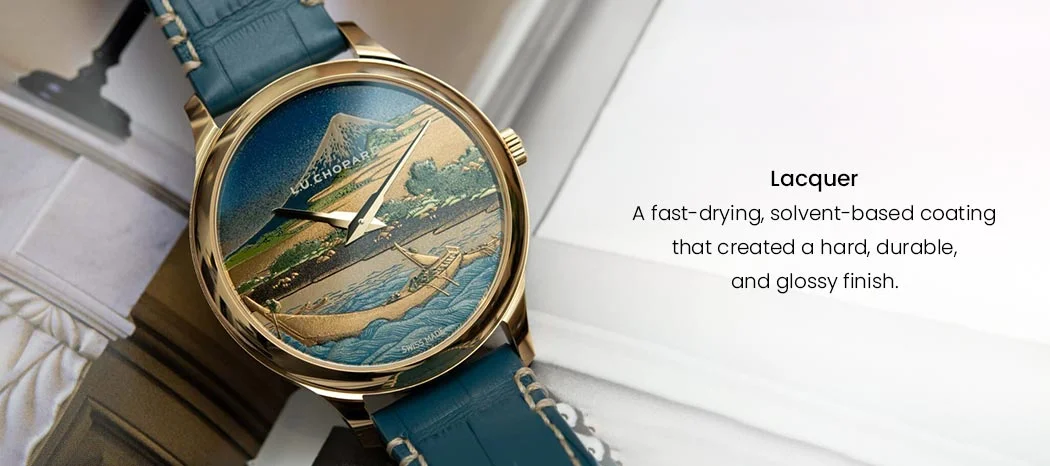
Urushi is the highest form of this art – hand-applied and time-consuming. It also needs a considerable amount of skill so no young apprentices will be allowed anywhere near a watch too early in their career. This is the kind that gains depth and gets richer over time, just keep it protected from moisture and UV rays. The Western technique involves solvents and is a lot less natural, and it simply doesn’t acquire that same lived-in depth and patina over time which the Japanese horophiles so rave about. The Western version can yellow and even crack over time. Both are not easy to apply as each coat needs to be dried completely before the next one and multiple layers are needed to give it strength and gravitas. A small note here, lacquer is not the same as enamel. Lacquer, being solvent-based allows one to melt it and rework it, i.e. it can be reversed. It is also quite quick-setting. Enamel, by comparison, takes hours to harden, and is an irreversible chemical-reaction and is much more painstaking to apply and set evenly without any blemishes. But, in the long run, where enamel is durable and acquires a fine patina, lacquer risks chipping and cracking due to its brittle nature.
Guilloché
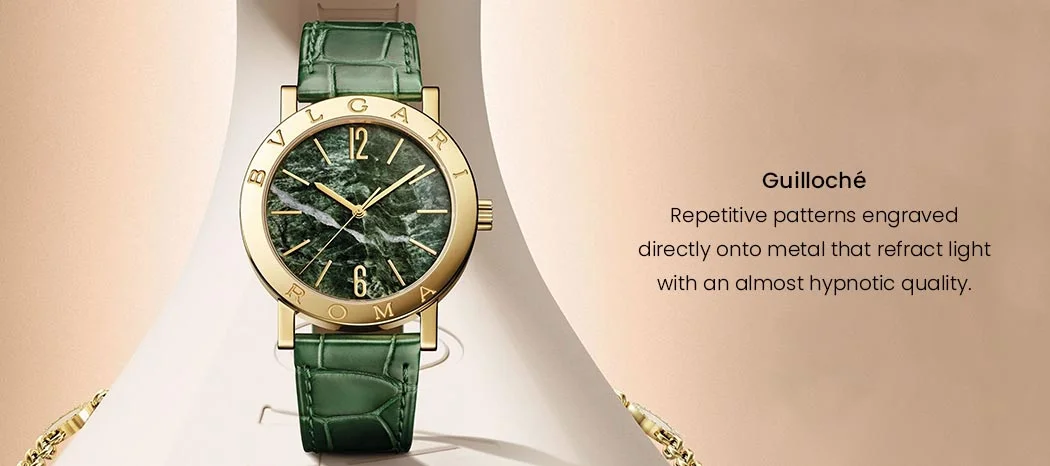
This is work that is applied directly to metal surfaces, but whether it is done entirely by machine or by a person can make all the difference. Good design will add an almost 3D aspect to the dial, a repetitive pattern that, as the eye grazes over, has an almost-hypnotic quality about it, even as it catches and refracts light differently at various angles. Most such dials are quite sturdy and will age well, acquiring a warm patina over time.
Wood/ Exotic
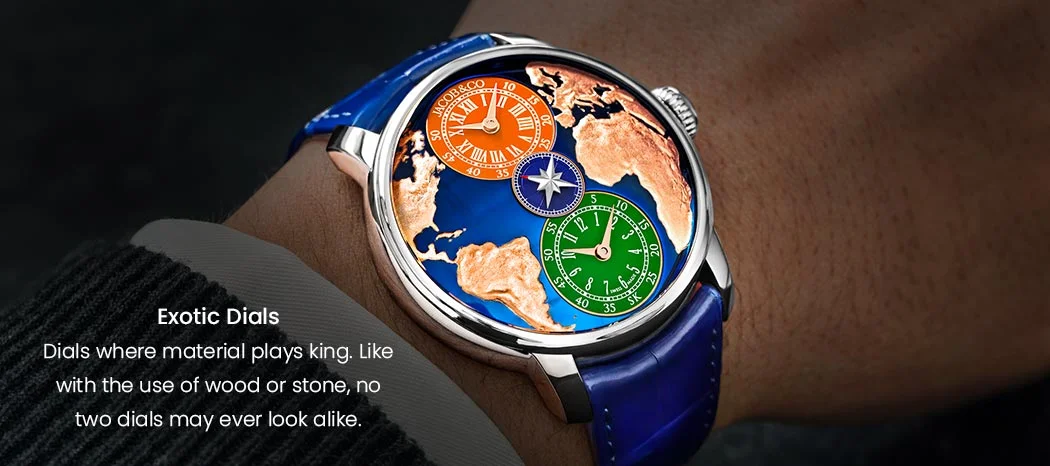
This is where material plays king. Depending on the quality of the material and how it was treated, working the dial can be consequently as laborious and tricky. Wood is one option but anything goes, from meteorite to even fabrics and other possible materials like carbon, concrete, ceramic, linen or even paper! With each new material, the artisan will have to run hundreds of tests and experiments to see what works best. This is definitely not for mass-produced timepieces. Ageing here is variable and depends on the material, how it was finished and most importantly, maintained thereafter.
Printed Metal
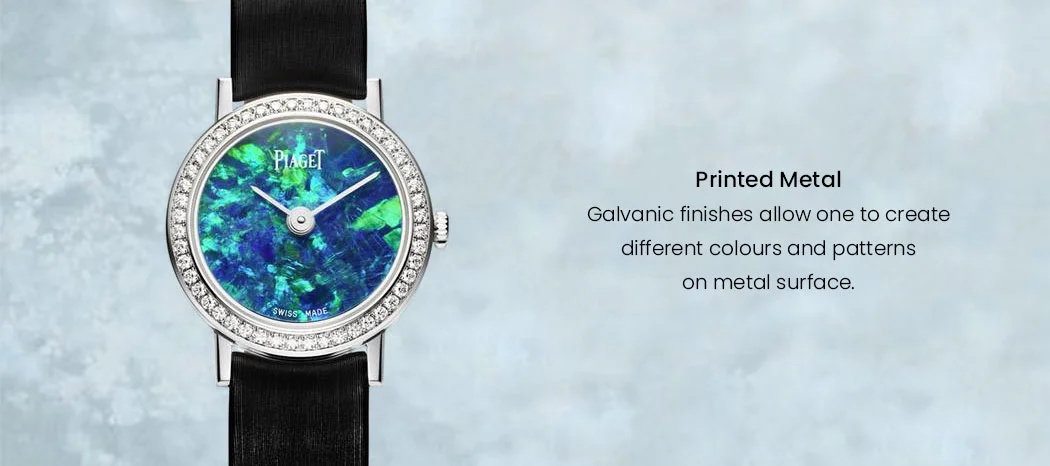
This is the easiest to work with, to reproduce, replicate and control for quality. Galvanic finishes allow one to create different colours and patterns on an otherwise banal metal surface. The resulting pieces are those workhorses which are great as daily-wear pieces, the kind which are memorably attractive yet classic and fly under the conspicuousness radar. Colours on the dial can shift, which, in some cases, become a much sought after quirk that can drive prices up for vintage pieces.
And the Best Dial Award Goes to…
…Frankly, you already know the answer. With something as personal as watches, there can never be one blunt answer. If anything, variety is the reason watch-lovers exist. Why have one when the options abound? The best dial is one that fits the requirement at that moment. Daytime corporate boardroom wear to evening cocktail hour, a fancy heirloom piece to a vacation beachside piece, dials need have nothing in common. All that unites them is that they show provenance – made with care and concern to last a lifetime, and to enrich with age, or at least not wither and die out. But who knows, sometimes even a cracked enamel dial can acquire a certain look which the owner finds appealing. There is beauty to be found everywhere, even in cracks and crevices which were unintended. And if others too start to see it that way, then you are sitting on a potential knockout piece for the next auction to go under the hammer!
But, all said and done, if I were to be receiving a gift of unmarked value, from an unknown source, I’d so wish it to be a Grand Feu enamel with the brightest lume in the room. Now you know. Also, to add for good measure, my birthday happens to be around the corner.



Recent Posts
Recent Comments
Archives