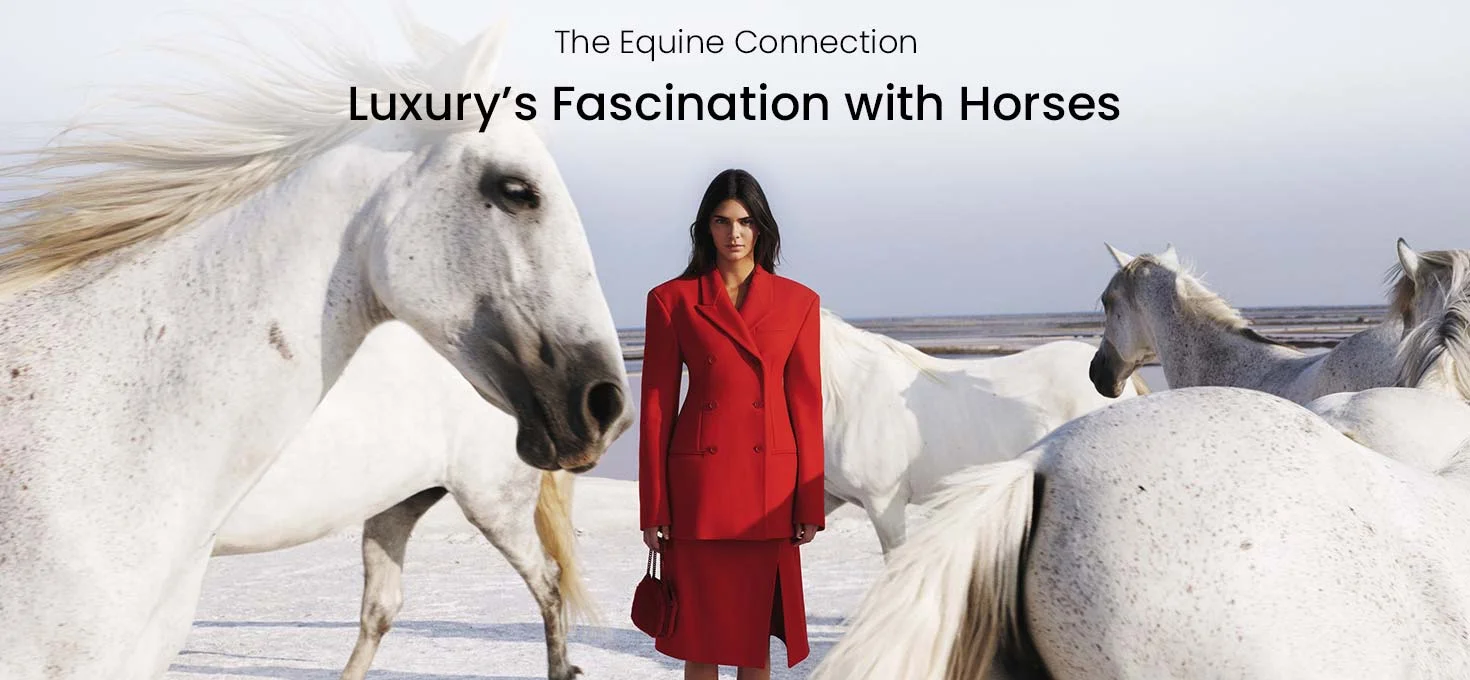
We explore how horses came to be known as a marker of luxury, across eras and industries.
Long before luxury became synonymous with private jets, Birkin bags, supercars and rare timepieces, it was measured in horses. In the courts of Indian maharajas and European kings, horses served as the ultimate status symbol representing wealth, power and prestige. Royal families commissioned portraits of prized stallions, indulged in polo and took pride in owning stables of purebreds spread over acres of estate. Centuries later, the silhouette of a galloping horse continues to hold a significant place in the visual language of luxury brands.
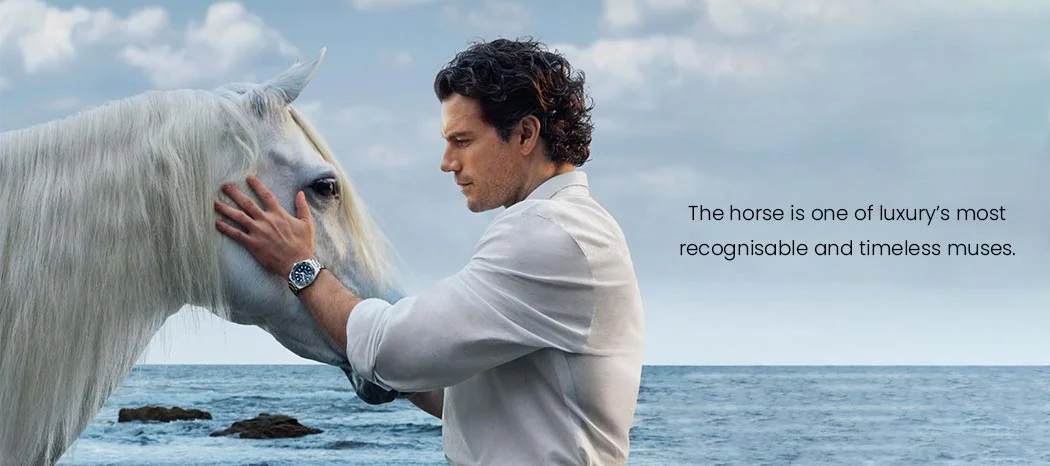
From global maisons like Hermès and Gucci to automotive behemoths like Ferrari and Porsche, the horse is one of luxury’s most recognisable and timeless muses.
The History of Horsepower
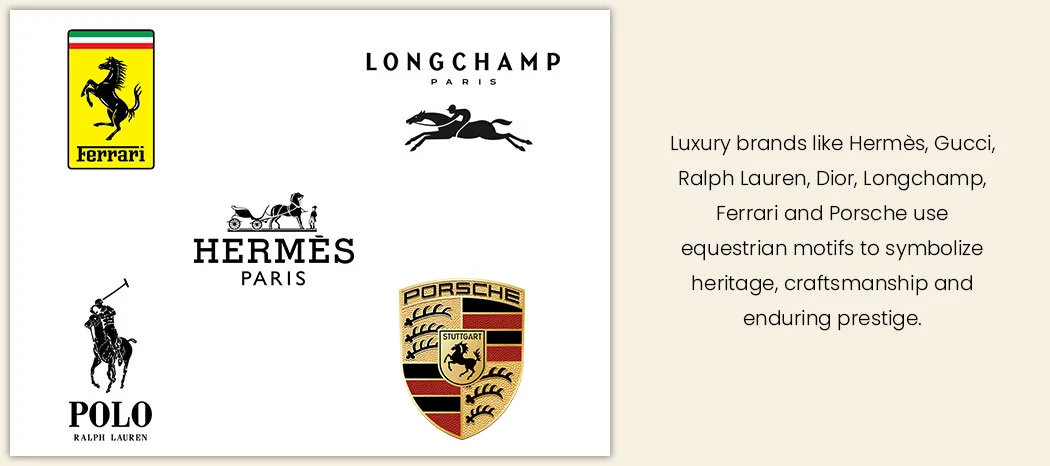
Founded in 1837, Hermès was not born as a fashion house but as a harness maker for French aristocracy. Before silk scarves and coveted handbags, the maison specialised in finely crafted saddlery and riding equipment. Their first ever bag, the Haut a Courroies, designed to carry saddles eventually evolved into some of their now legendary handbags, that have years-long waiting lists. The brand’s Duc carriage logo continues to define its aesthetic language, with equestrian motifs gracing their scarves, watches and leather goods range, even today. Then there is Gucci. In 1953, the Italian house introduced the Horsebit loafer, transforming a piece of riding hardware into one of fashion’s most iconic design codes. The signature double ring and bar detail subsequently showed up on their handbags, belts, watches and jewellery, remaining a house staple, 70 years later.
Elsewhere, Ralph Lauren built an entire empire around equestrian symbolism and the aspirational lifestyle associated with polo, evoking the American dream featuring sprawling mansions and weekends in the Hamptons. Other examples include Coach’s horse and carriage logo introduced in the 1950s, as a nod to its roots as a leather workshop, Burberry’s Equestrian Knight Design reflecting on its origins as a manufacturer of outdoor apparel, French brand Longchamp borrowing its name from Paris’s famed Longchamp racecourse, with a galloping horse as its logo, and Dior’s Saddle bag introduced in 1999, inspired by the silhouette of an actual saddle, under the creative direction of John Galliano. The motif across all of these houses signals the same values of craft, lineage and durability.
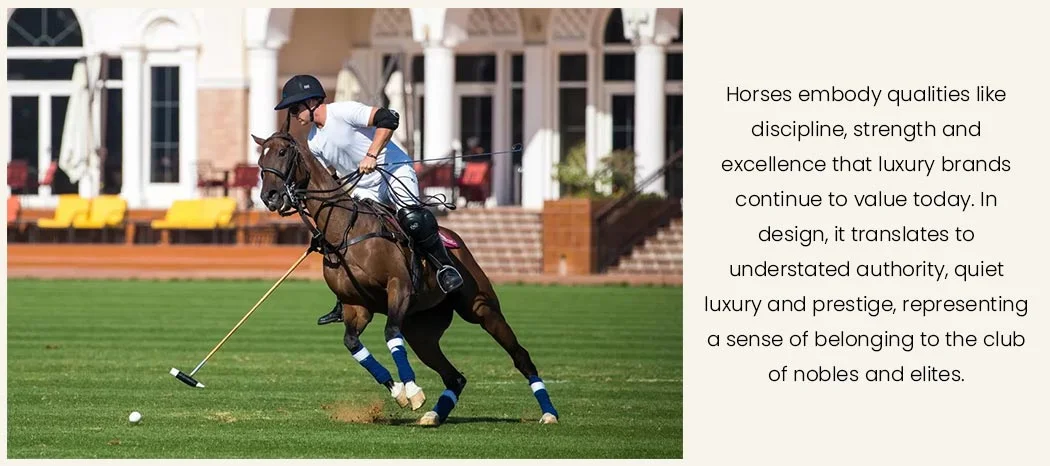
Even in the realm of automotives, when Enzo Ferrari sought a logo for his racing team, he chose the Cavallino Rampante (the prancing horse), an emblem originally painted on an Italian fighter pilot’s plane. German manufacturer Porsche’s stallion draws from the Stuttgart’s coat of arms, signifying heritage and tradition. The horse, however, is more than a historical reference. It embodies qualities like discipline, strength and excellence that luxury brands continue to value today. In design, it translates to understated authority, quiet luxury and prestige representing a sense of belonging to the club of nobles and elites.
Timing the Turf
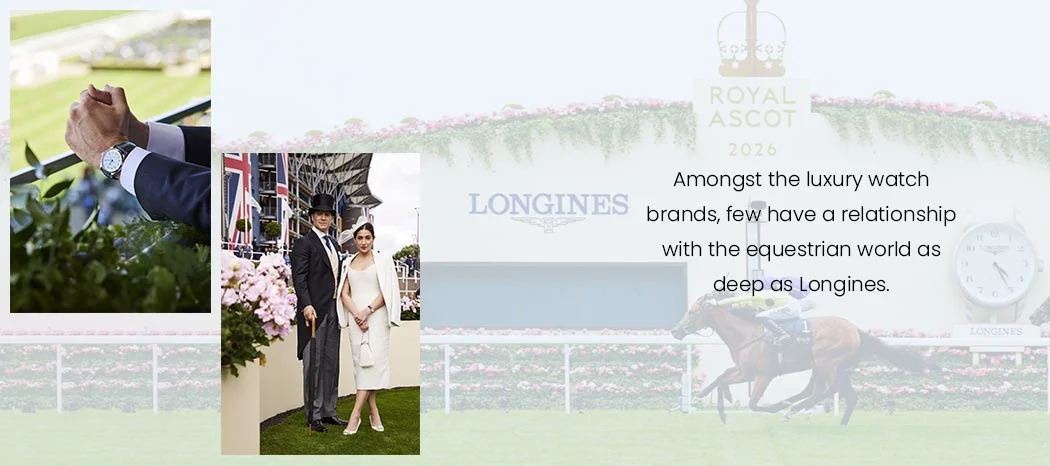
This relationship between horses and luxury also extends to watchmaking, an industry equally obsessed with performance and heritage. Amongst the luxury watch brands, few have a relationship with the equestrian world as deep as Longines. Founded in Switzerland, Longines created its first watch with equestrian motifs in 1869. A couple of years later, it launched its first chronograph movement enclosed in a case decorated with a horse and jockey, which became the standard timekeeper for equine sports in the US. Today, Longines serves as the official partner and timekeeper for some of the world’s most important events from the Longines Global Champions Tour to the Royal Ascot.
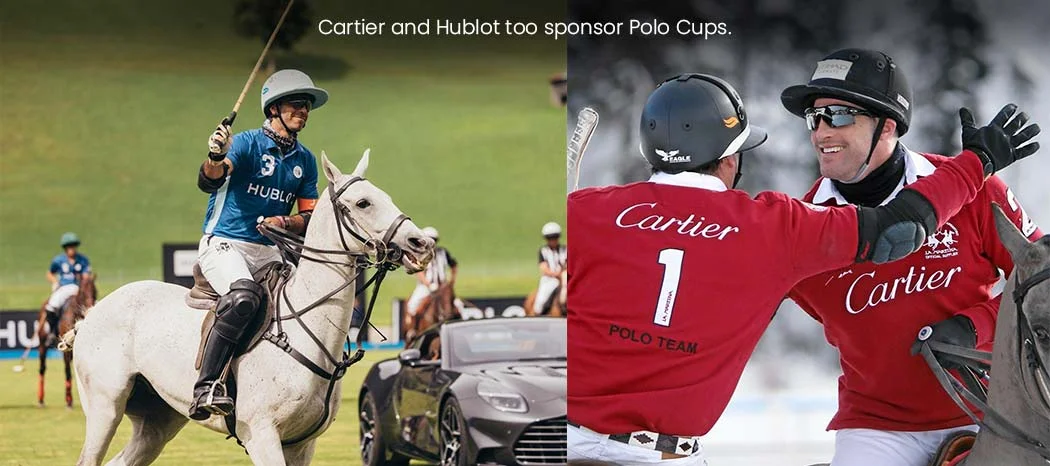
Cartier, ‘The jeweller of kings and king of jewellers’ is also known for sponsoring the Queen’s Cup, while Hublot is associated with the Polo Gold Cup Gstaad. Then there’s Jaeger LeCoultre which holds a symbolic association with equestrianism. Famously birthed in 1931, specifically for British officers playing polo in India, the Reverso is a cultural icon, allowing players to flip the delicate dial over, protecting it from the swings of a polo mallet.
In the end, both luxury brands and horses signify perfection, ambition, storytelling and emotion. So while trends might come and go, logos may get redesigned and aesthetics may evolve, luxury’s fascination with horses will continue for generations to come.

Recent Posts
Recent Comments
Archives