
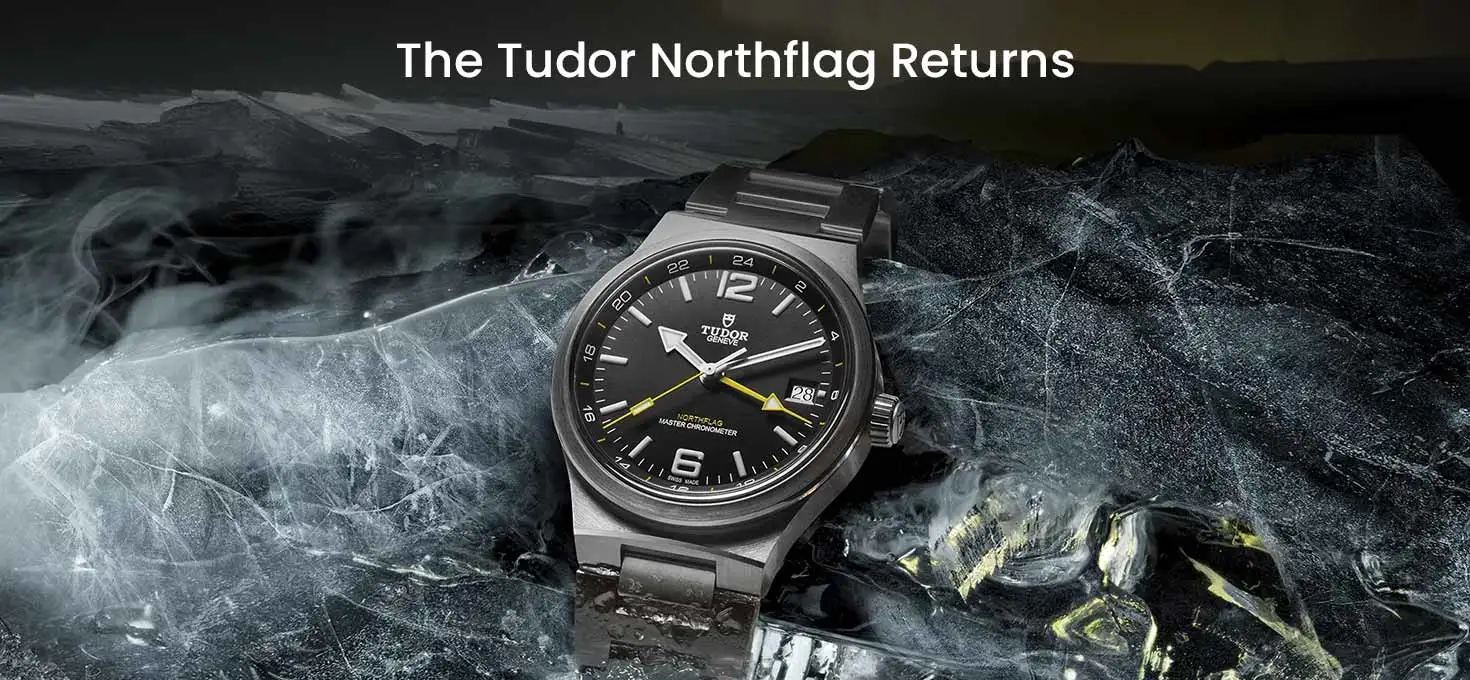
We all know the idea of a tool watch but how many actually know of one such example which was created to solve a persistent problem? And how many watches which never acquired the pompous bells and whistles that many such fabled pieces do only then to be gentrified and become a shadow of their original selves? Few watches have a documented raison d’etre, one that stands the test of time itself, so much so that, years later, when it returns, the upgrades are more than merely cosmetic.
The Name
In the 1950s, the BNGE, or the British North Greenland Expedition planned a visit to carry out scientific surveys across various fields – from geology to glaciology and meteorology. They also learnt a lot about surviving in such harsh conditions, knowledge that was of crucial importance to the armed forces. Their station was aptly named ‘North Ice’ and 30 men over the course of two years stayed here, participating in this science-led exploration. The pieces that stayed through the entire stretch of this expedition were the Tudor watches on their wrists which had been issued to members of the team.
So, this wasn’t just a laboratory test under reproduced conditions of harshness to check the efficiency of a watch, this was duress in real time, actual stress under extreme conditions which was yielding pure data on its functional prowess. And although the research was scientific the people were nothing short of adventurers – out and about, battling the harshest of elements of nature – extreme wet, cold and windy conditions – in which they were performing moves that would have stunned a regular watch into submission.
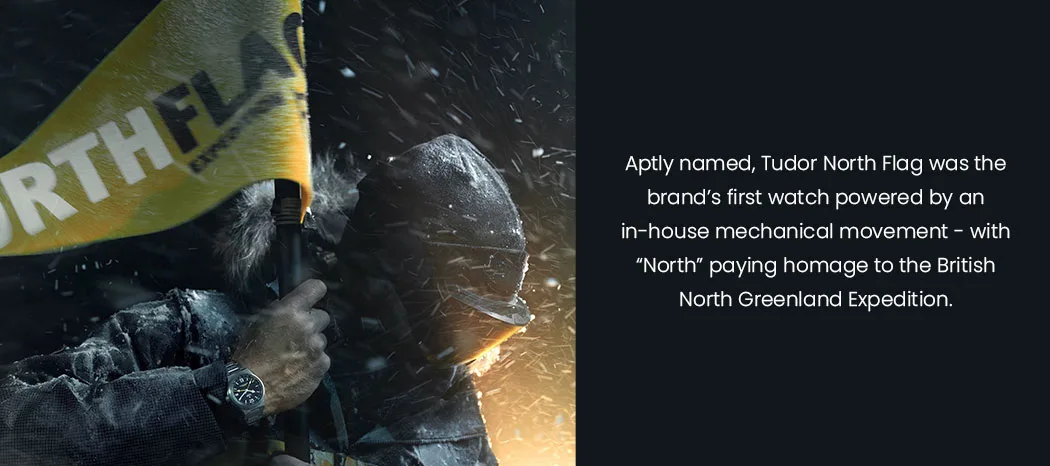
The symbolism of a flag being planted to mark a first is historic and thus Tudor arrived at the name of this beast of a tool watch – Northflag. North, here, defining not just the geographical north pole but also a reference to the brave team of the BNGE and all that they accomplished, something this watch was privy to from their wrists.
The Watch
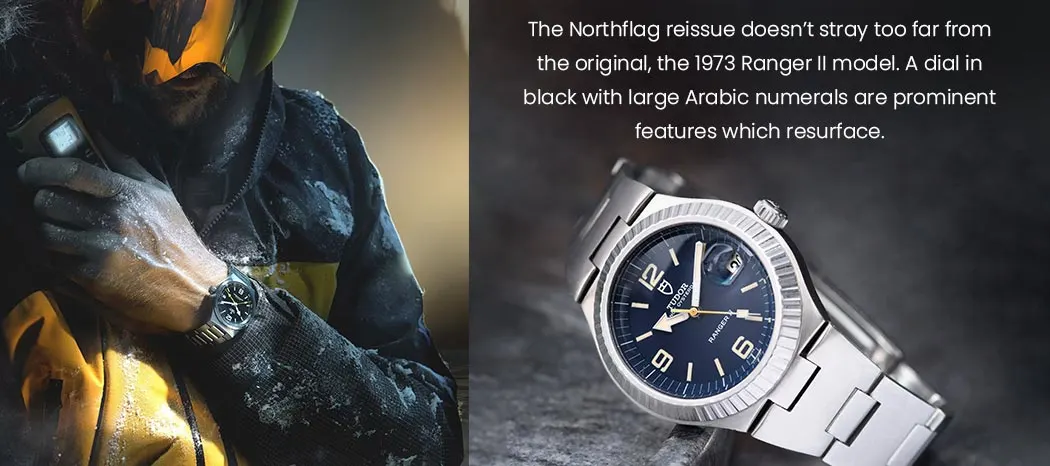
The Northflag reissue doesn’t stray too far from the original, the 1973 Ranger II model. A dial in black with large Arabic numerals are prominent features which resurface here but these new numerals are done in monobloc luminous ceramic thereby imbuing them with an even more amplified presence, by day, and by night. The 24-hour graduated rehaut is at an easy-to-read 45-degree angle. Touches of yellow are used to add accent and highlight all around – from the seconds hand and the GMT function to the alternating hour markers – which also serve as historical nods to the original.
The date window at 3pm with black script is juxtaposed on a white background for legibility. The watch comes in 40mm with a 316L stainless steel case and bezel attached to an integrated two-link 316L stainless steel bracelet with satin-brushed and polished finishes, with a “T-fit” rapid adjustment clasp. The clasp can sit in 5 positions which allow for up to 8mm of adjustment on the go without needing any tools for tinkering. The use of ceramic ball bearings in the clasp ensures a smooth and secure closure while also adding a reassuring tactile element to the clasp’s functioning.
The Movement
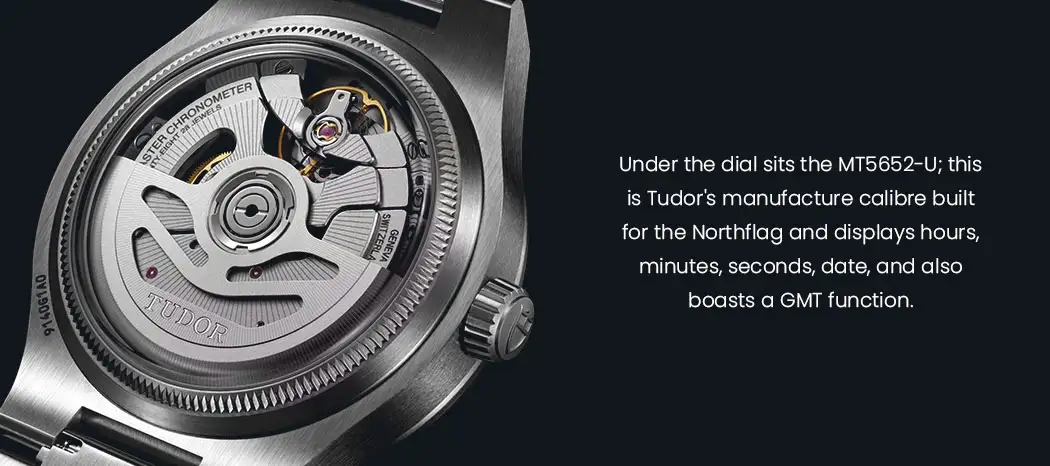
Time to look deeper and see what makes this watch tick, literally! Under the dial sits the MT5652-U; this is Tudor’s manufacture calibre built for the Northflag and displays hours, minutes, seconds, date, and also boasts a GMT function. The rotor is open-worked tungsten (monobloc) while the bridges and main-plate offer a study in contrasts: sand-blasted surfaces alongside polished ones with laser-etched details throughout. If we flip the watch over, we are treated to a transparent caseback which puts all of this on display, including the engraved words, “Master Chronometer”, on the bridges — a reminder of the rigorous certification standards that this movement has cleared. I say standards because this movement is both COSC and METAS certified. While the COSC tests focus on the movement, the METAS certification puts the entire assembled watch through the highest levels of tests, including precision, resistance to magnetic fields, waterproofness, and power reserve.
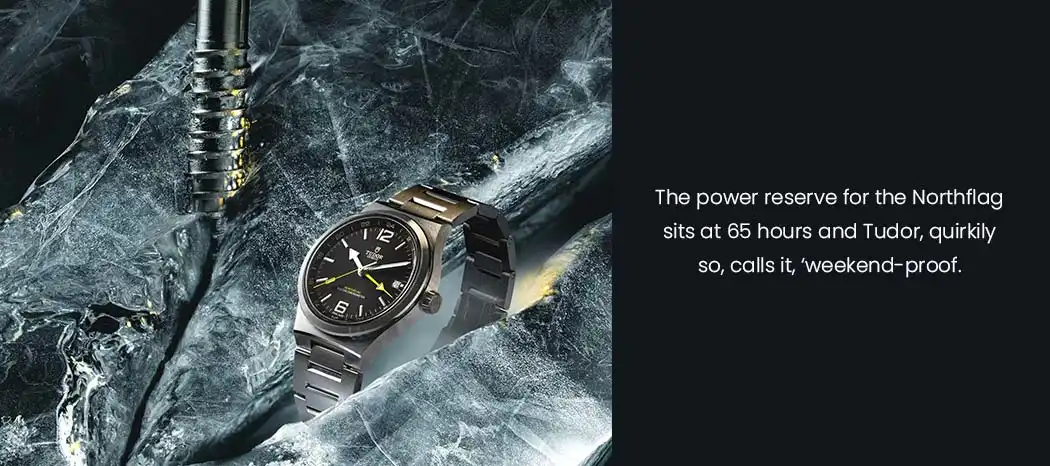
Speaking of which, the power reserve for the Northflag sits at 65 hours and Tudor, quirkily so, calls it, ‘weekend-proof’ i.e., if one were to take it off on Friday night and pick it up on Monday morning, it would still be running without needing to be wound.
The Appeal
To a city dweller who maybe shuffles between a few underground switches to get to his desk job and then breaks to have a sedate lunch in a quiet food court of an urban jungle, it might sound hard to make a case for a watch that was built to withstand absolutely extreme conditions. But then, none of us are really taking a plunge every time we wear a diver, nor are we landing an ultralight just because we strapped on a pilot watch. The ruggedness quotient of a watch is to reassure us that the watch will be able to handle anything we throw at it, and the fact that we needn’t be in doubt if a ski holiday comes up and we are wondering which one to take for a code red downhill ski jaunt.
And then, back in the city, the watch will effortlessly fall back into place – understated yet elegant, a tool but with polish, a lovely example of when utility meets form. Tudor is not new to tool watches, or watches which have performed under severe conditions, but this was an almost forgotten piece of their history, as also of human effort and courage in the most testing and trying of conditions, back when we were more at the mercy of the elements and nothing could be taken for granted. With this reissue, the brand has brought attention back to both. The reiteration then, is, in equal parts, an homage as it is an upgrade without compromising the functional values it was built on.
The TUDOR Northflag is available exclusively at TUDOR boutiques.



Recent Posts
Recent Comments
Archives