
In the world of watch collecting (and preening), no matter how many people join in, the conversations tend to centre around a few brands and models. It is almost as if all the variety and creativity in the field gets knocked down a handful of styles and silhouettes. This inflated sense of concentrated importance surges demands, which obviously falls behind the supply, and like a self-fulfilling prophecy, the said model then takes on a whole new level of reverence.
Brands notice such upward ticks and try and ride the wave, dishing out more variants, more colour and style options, all in a move to keep the demand going. This form of brand harvesting is quite common nowadays and, sometimes, it can lead to certain long-term equity erosion. But we are not here to discuss market dynamics or brand strategies, nor am I here to give you tips on how to get ahead in the waiting line. Instead, let’s break this cycle of grails and instead focus on some sleepers, i.e., pieces which are every inch as worthy but somehow get overlooked or haven’t yet had their time in the limelight. Perhaps we’d be better educating ourselves on the many pieces out there which are equally good conversation pieces but nobody seems to be breaking the ice on it.
Grails & Sleepers
So I briefly hinted two terms, and most watch collectors are only too familiar with the first one – Grails – as also are sneakerheads! Nobody can say for certain what defines a specific model as a grail, or how or when it gets there; all we can know for somewhat certain is that there exists an unwritten agreement in the circles about what constitutes one without really knowing the exact metrics which define it.
A sleeper, then, is any watch that a smaller subset feels deserves more attention – from micro-brands to lesser popular models, certain limited era launches (like say around events like the Olympics) or generally discontinued models which either didn’t come back or their newer versions didn’t find the same connection with their prospective wearers. Sleepers are the hopeful ones, that one day people may see them for the stars they truly are, or deserve to be seen as. Remember, Every grail was once a sleeper.
Omega Seamaster 300
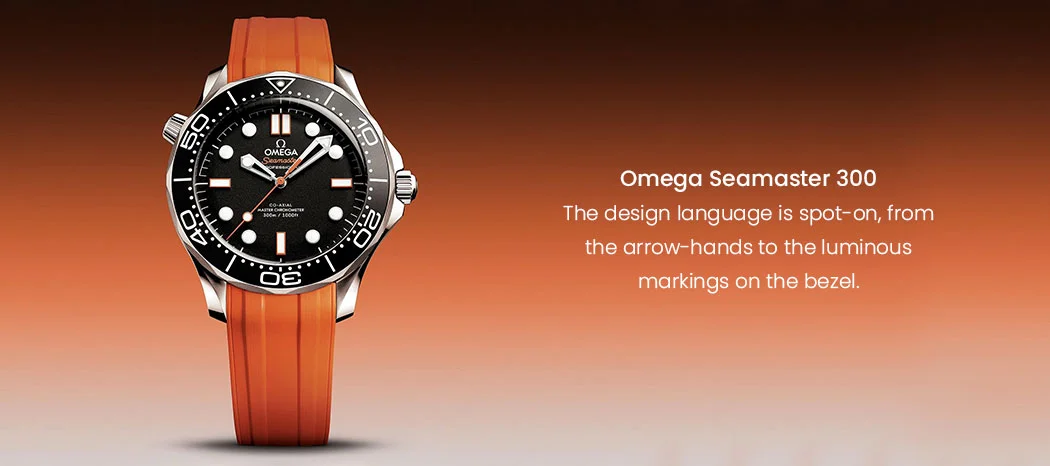
Always riding pillion to the Speedmaster, it takes a James Bond to revive this watch from time to time. But the pedigree of this watch is second to none – worn by Jacques Cousteau’s team during the Precontinent II underwater habitat experiment (1963), this watch was regularly issued to British military and naval forces, and was instrumental in establishing Omega’s reputation as a serious tool-watch manufacturer. It carries an in-house Co-Axial Master Chronometer movement with METAS-certification to resist magnetic fields up to 15,000 gauss and an impressive power reserve of 60+ hours. The design language is spot-on, from the arrow-hands to the luminous markings on the bezel, and a host of materials from titanium and Sedna gold for the case to dials in stone, malachite and lapis lazuli.
That is one helluva’ list of flexes, even I need to pause and catch my breath here. Speedy may have gone to the moon but the Seamaster goes places, like underwater, and at this point, we know more about the space than we do about what lies beneath the waters on our planet, which is an oddly appropriate analogy for this comparison.
Longines HydroConquest

A lot of people eschew the term “Entry-level Luxury” and that is where the Hydroconquest suffers most for the average watch enthusiast considers this Swatch-owned brand as the one they wear before they go on to afford something with, well, more cachet. COSC-certified and powered by an in-house calibre (with a silicon balance spring and a 72-hour power reserve), with magnetic resistance ten times the (ISO 764) standards, the new HydroConquest packs all this in a 300m water-resistant case with high-end finishing and timeless proportions. These watches are for a specific type of collector, those who values construct and quality over logo recognition or perceived social coin. It’s a watch for those who know what others don’t.
IWC Ingenieur
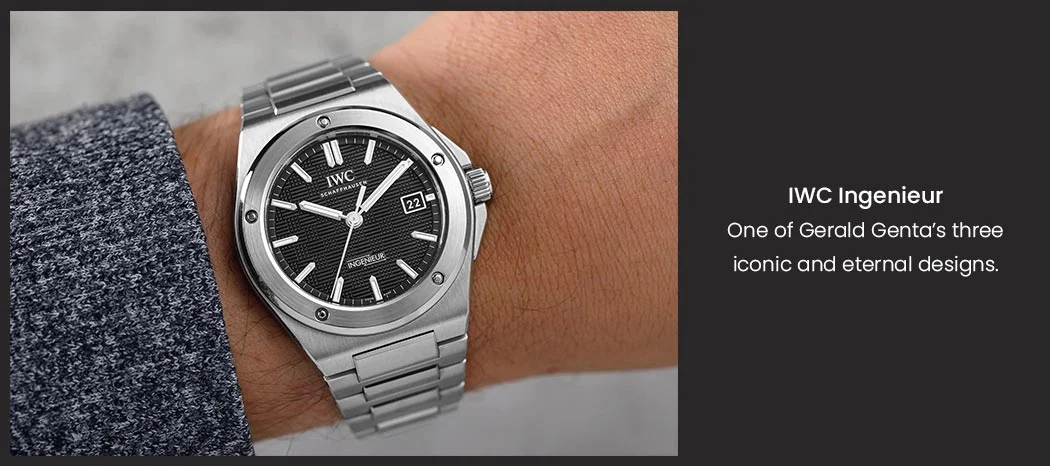
Of Gerald Genta’s three iconic and eternal designs, this is the one that is more readily available. But perhaps, availability is what makes it less appealing, in a nod to the classic adage about demand and supply. The original Ingenieur which dates back to 1955 was designed to protect the mechanical movement from the strong magnetic fields in which many engineers were required to operate. By placing the entire movement inside a soft-iron inner cage designed to shield the movement from magnetic fields, IWC’s team achieved 80,000 A/m of magnetic resistance, as compared to the acceptable standard of 4,800A/m! The Genta redesign of 1976 produced the integrated-bracelet, five-screw-bezel silhouette that the current generation continues to propogate. Armed with an in-house calibre and 120-hours of power reserve(!), the new versions go from 35mm all the way to 40mm and cover steel, titanium and gold as case materials. This watch is technically more poised than the Pilot or Portofino, and it can go toe-to-toe with any integrated bracelet sports watch in the market today and yet flies under the wider collector radar.
Rado DiaStar Original
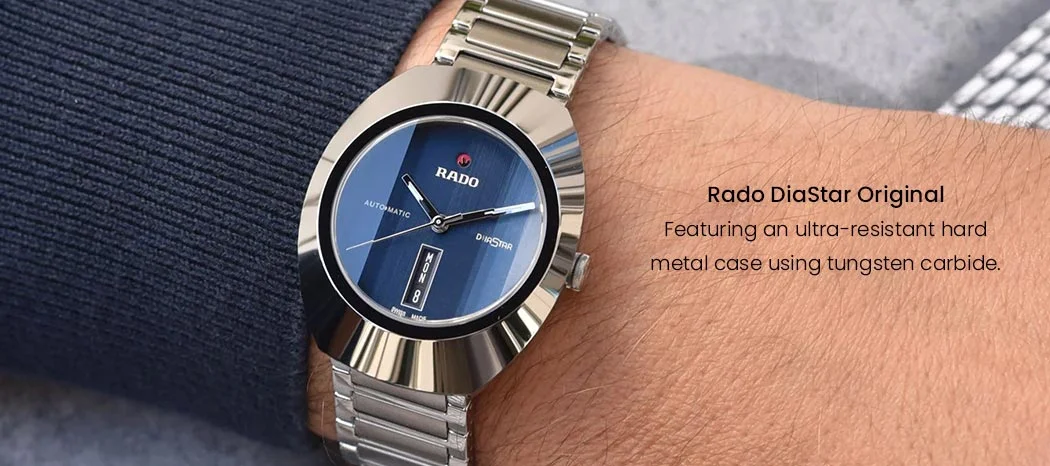
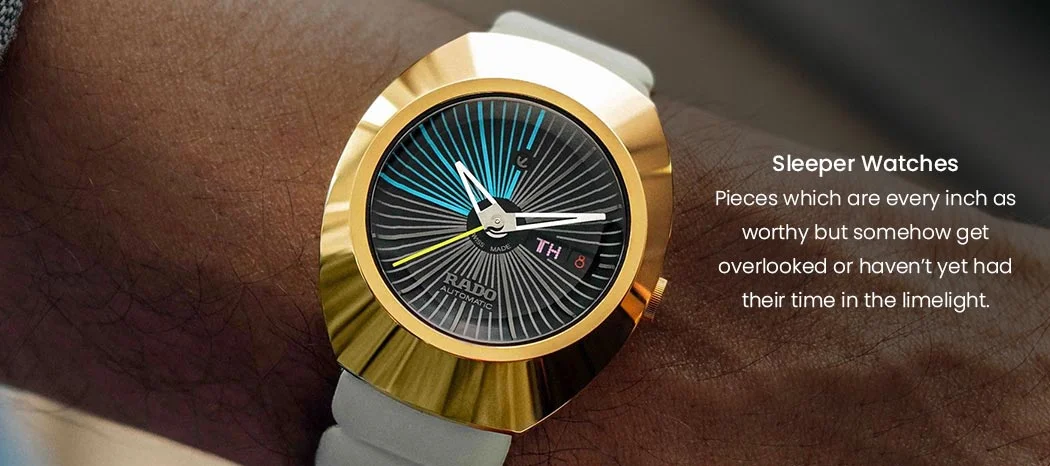
The Master of Materials brand aka Rado launched this pioneering piece back in 1962 as the first un-scratchable watch! The case was formed from ultra-resistant hard metal using tungsten carbide and a sintering process that the tool industry used for cutting-edge equipment. It also came with a sapphire crystal at a time when acrylic was still used by most watches. All these were far-reaching and extremely cutting-edge innovations rather than mere refinements. It came to establish Rado as a brand whose identity was built entirely around material innovation. Today, the brand continues to be the flagbearer for developing and evolving while staying true to their design ethos. To me, a DiaStar original is in the same league as a Porsche 911, a Mini Cooper or a VW Beetle – designs which defined an era and continue to stay relevant no matter how much things change with the times. In the world of watches, as elsewhere, that kind of timelessness of design and form normally command a much higher premium.
Chopard L.U.C
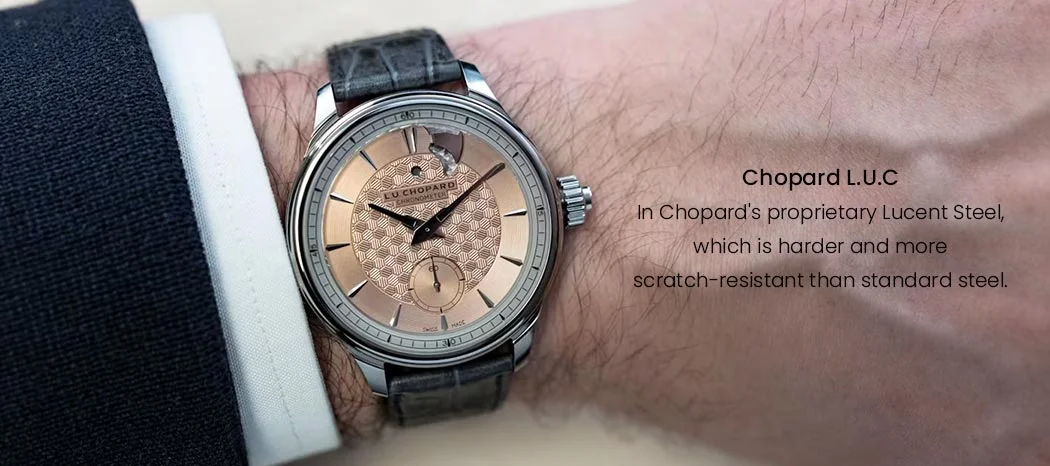
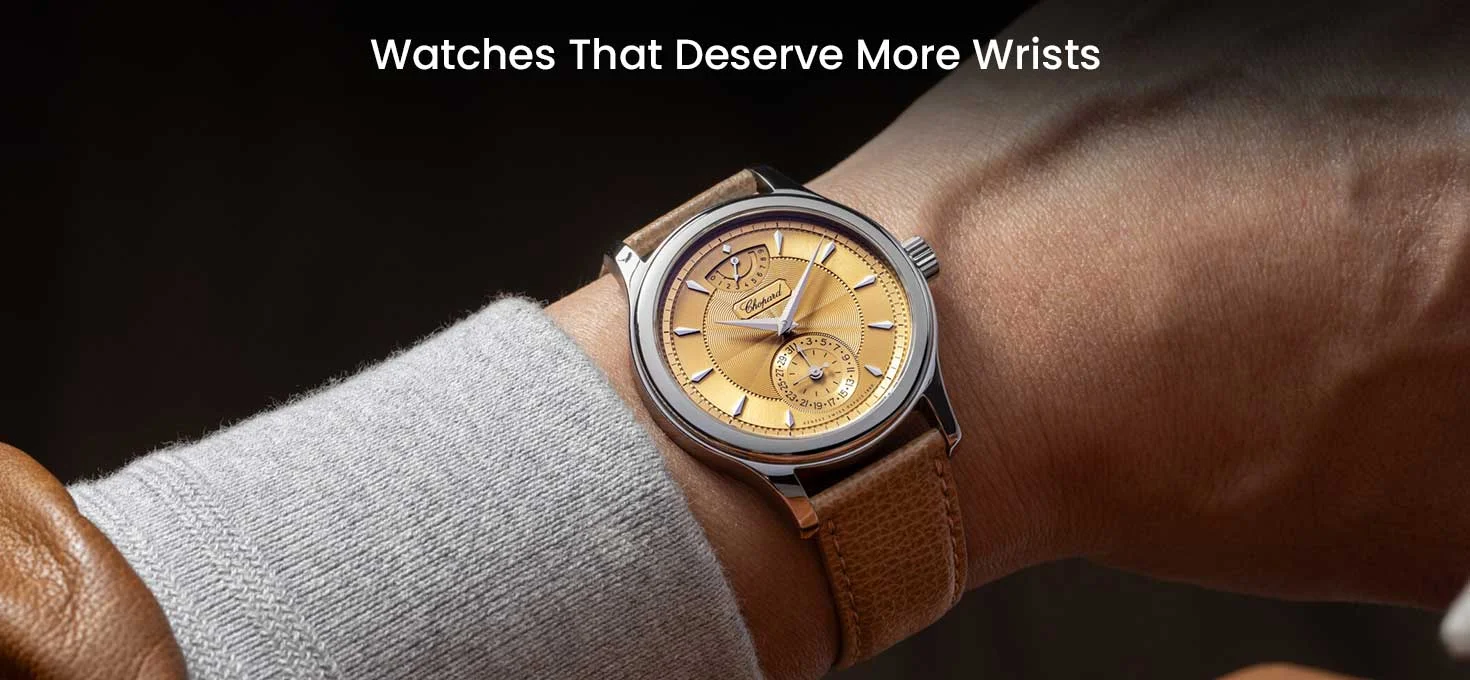
There is a simple test to check a watch’s technical cred which can be distilled down to two certifications — the COSC chronometer certification and the Poinçon de Genève – and together they represent the most demanding quality standard in Swiss watchmaking. COSC tests the uncased movement across 15 days, in five positions, and across three temperature ranges to see how stable it stays. The Poinçon de Genève audits the entire watch — case, movement, assembly, et al — within the Canton of Geneva for build quality and other metrics. Achieving both is already a big achievement for any brand but to do succeed simultaneously in steel (rather than in gold or platinum where surface finishing is considerably easier) is extremely demanding and only a handful of manufactures can legitimately claim to have reached such pinnacles of performance. Chopard’s L.U.C (calibre 96.40-L) is one among those stars – it’s 3.3mm thick, houses a 22-carat gold micro-rotor and twin stacked barrels which deliver 65-hours of power reserve. The movement is decorated to Poinçon de Genève standards: chamfered bridges with Côtes de Genève, perlage on the mainplate, polished bevels. This has been the main course in the L.U.C collection since 1996, when Karl-Friedrich Scheufele opened the Fleurier Manufacture and steered the brand into haute horlogerie waters as a serious player. Thirty years on, the L.U.C 1860 in Chopard’s proprietary Lucent Steel, which is a recycled alloy, harder and more scratch-resistant than standard steel, remains one of the best-value entry points into double-certified watchmaking available at any price.
Cartier Ballon Bleu

The Ballon Bleu has a very quirky “problem” – it became an instant best-seller right after it was launched, back in 2007. In collector circles, that kind of success is effectively a disqualification; too popular, too visible on too many wrists, too easy to dismiss as a jewellery purchase rather than a horology one. This is perhaps why it gets overlooked by the very people who should be paying attention. Such is the game and it is quite unfortunate, because the case design is genuinely extraordinary. The floating crown protected within a curved arc of the case, the seamless integration of the sapphire cabochon, the way the rounded case transitions into the bracelet — such meticulous nuances of design aren’t accidental. Cartier did with this watch what it has always done better than anyone: resolving form into something that feels inevitably timeless and an instant classic and instead its popularity has worked against it. It is powered by the in-house 1847 MCand priced extremely sensibly, the Ballon Bleu rewards the buyer who separates what a watch is from what wearing it is assumed to say. For it is a genuinely handsome watch, a statement that embodies the inexorable class of Cartier like few others.


Recent Posts
Recent Comments
Archives