
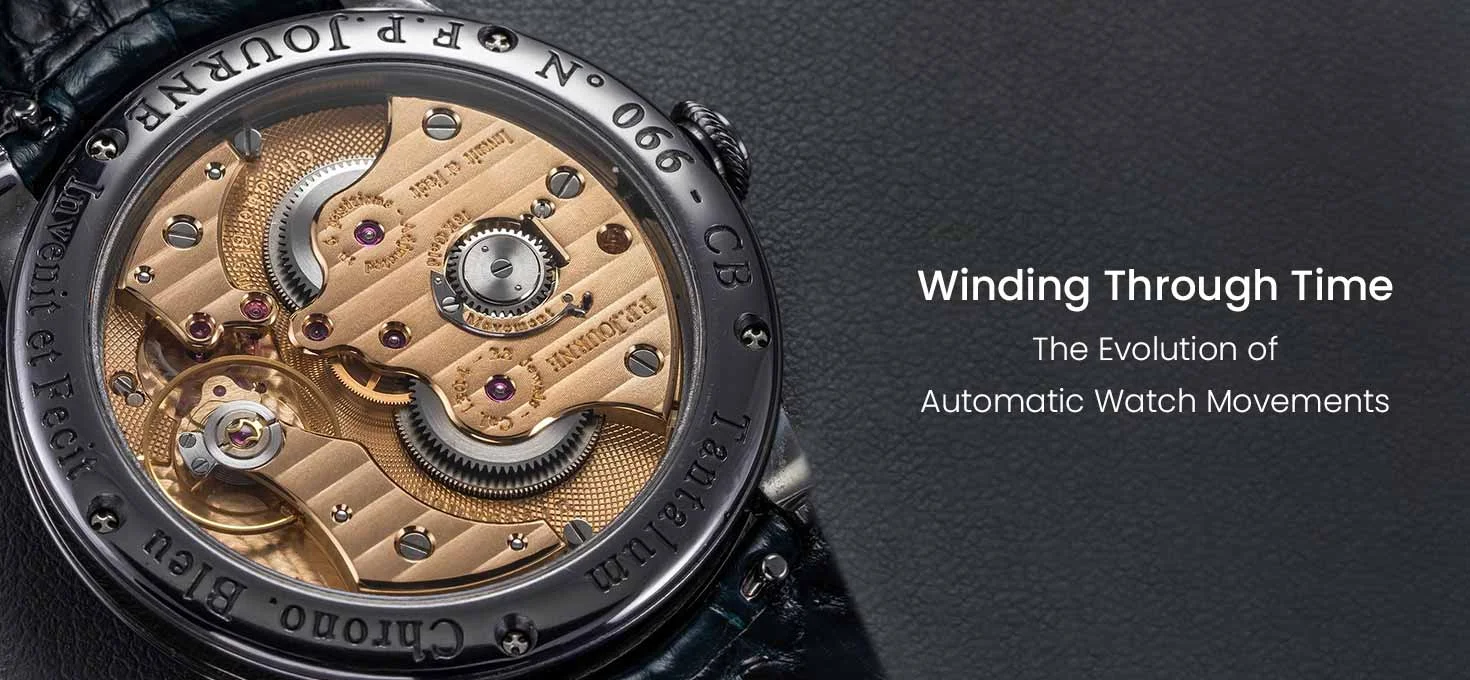
There’s something compelling about a watch that powers itself. No winding, no effort, just the natural motion of your wrist converted into energy. That quiet efficiency is what makes the history of automatic movements so fascinating.
As a key milestone in the evolution of mechanical watches, automatic movements blend craftsmanship with everyday practicality. What feels effortless today is the result of centuries of innovation making their story inseparable from the broader journey of watchmaking itself.
What is an Automatic Movement?
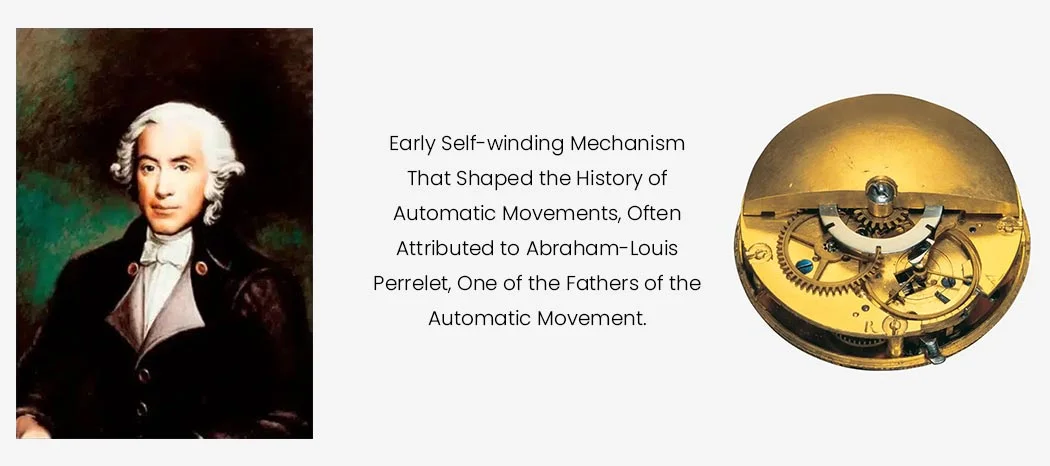
Early Self-winding Mechanism That Shaped the History of Automatic Movements, Often Attributed to Abraham-Louis Perrelet, One of the Fathers of the Automatic Movement
Before diving into the timeline, it’s important to understand what an automatic movement actually is. In simple terms, it is a self-winding mechanical movement that uses the motion of the wearer’s wrist to wind the mainspring. At the heart of this system lies a rotor, a semi-circular weight that pivots as the wrist moves. This motion is transferred through a series of gears to tighten the mainspring, storing energy that powers the watch. Unlike manual watches, which require regular winding through the crown, automatic watches rely on continuous motion to stay operational.
This innovation did more than just add convenience. By reducing the need to open the case for winding, it also improved durability and protection against dust and moisture. In many ways, this was a pivotal step in the evolution of mechanical watches making them more practical for daily wear. Understanding this mechanism is essential to appreciating the history of automatic movements, because every advancement over the centuries has been focused on improving this core principle, how efficiently motion can be converted into stored energy.
Origins in the 18th Century
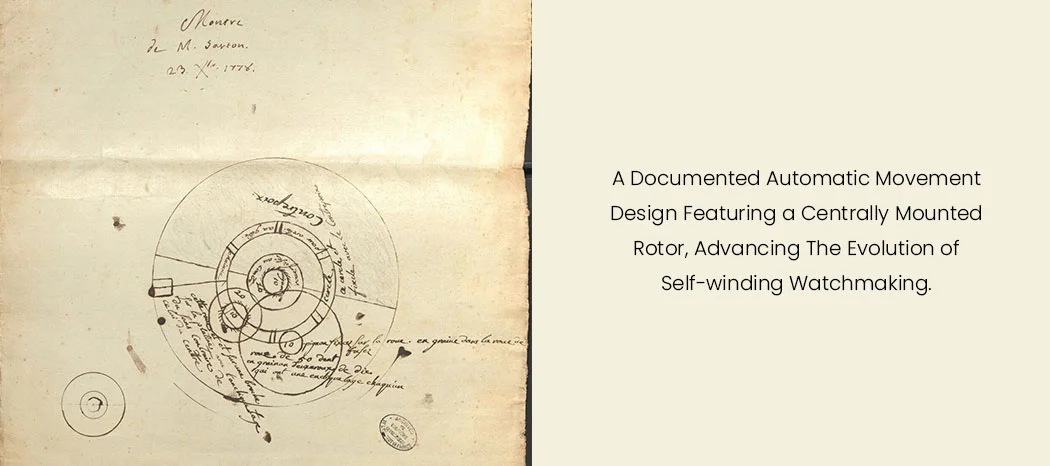
The story of the history of automatic movements begins in the 18th century, a period defined by experimentation rather than standardization. Unlike many technological milestones, there is no single inventor who can definitively claim the creation of the automatic watch.
One of the earliest figures often associated with self-winding mechanisms is Abraham-Louis Perrelet. He is frequently credited with developing early automatic pocket watches that used the motion of the wearer to wind the mainspring. However, much of this attribution remains debated due to limited documentation. A more clearly documented contribution comes from Hubert Sarton, who in 1778 presented a design featuring a centrally mounted rotor, remarkably similar to the systems used in modern watches. His work included mechanisms to regulate winding and prevent overwinding, marking a significant step forward in functionality. At the same time, Abraham-Louis Breguet introduced his “Perpétuelle” watches, which used oscillating weights to achieve self-winding. These designs were elegant but complex, and while they demonstrated the potential of automatic systems, they were far from practical for widespread use.
This early phase highlights an important theme that the history of automatic movements is not a straight line of invention but a collection of overlapping ideas. Each contribution added a layer to the broader evolution of mechanical watches, even if these early designs remained rare and experimental.
Why Automatic Movements Didn’t Take Off Immediately
Despite the ingenuity of these early designs, automatic movements did not become mainstream in the 18th or 19th centuries. The reasons were both technical and practical. Firstly, the mechanisms were complex and difficult to manufacture reliably. Precision engineering at the time had its limits and maintaining consistent performance was a challenge. Secondly, the introduction of the crown for manual winding made traditional watches far more convenient, reducing the immediate need for self-winding systems.
Pocket watches dominated this era and their relatively stable position in a pocket meant there was limited motion to effectively power an automatic mechanism. In this context, manual winding was simply more efficient. As a result, automatic systems remained a niche innovation. However, they continued to exist in the background, quietly contributing to the evolution of mechanical watches. Even in this period of limited adoption, the groundwork for the modern history of automatic movements was being laid.
The Transition to Wristwatches
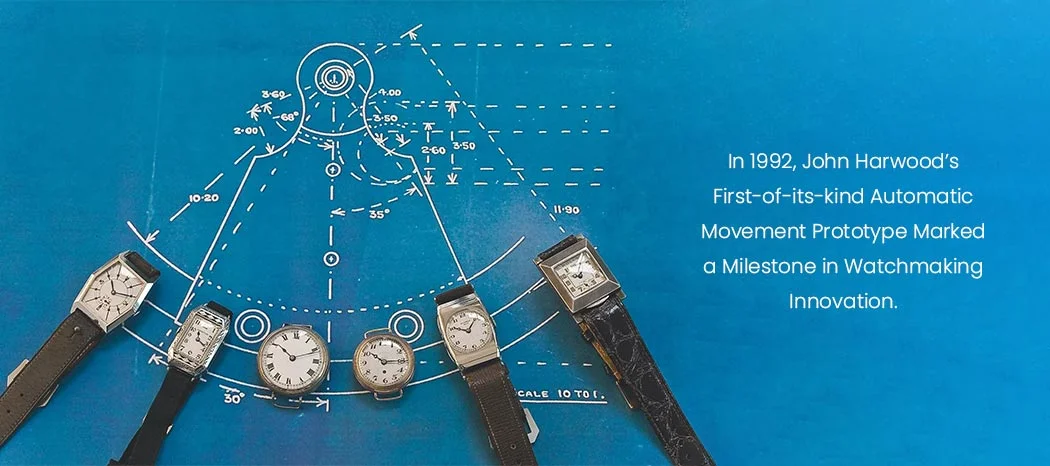
The real turning point came in the early 20th century, driven largely by the shift from pocket watches to wristwatches. This transition was accelerated by World War I, where wristwatches proved to be far more practical for soldiers.
With watches now worn on the wrist, the idea of using motion to power a watch suddenly made much more sense. The natural movement of the arm provided a consistent source of energy, making automatic mechanisms far more viable. In the early 1920s, brands like L. Leroy & Cie began experimenting with automatic wristwatches, though production remained limited. The real breakthrough came with John Harwood, who patented an automatic wristwatch system in the mid-1920s. Harwood’s design used a pivoting weight with a “bumper” system, where the rotor moved back and forth rather than completing a full rotation. While not as efficient as later designs, it marked the first commercially viable automatic wristwatch.
This moment is crucial in the history of automatic movements as it represents the shift from experimental concepts to practical, wearable technology. It also marks a significant milestone in the evolution of mechanical watches, where innovation began to align with everyday usability.
The Shift to Central Rotor Systems
As automatic wristwatches gained traction, engineers sought to improve efficiency and reliability. One of the most important developments during this period was the transition from bumper systems to centrally mounted rotors capable of continuous rotation. This new approach allowed the rotor to move more freely, capturing energy more consistently from wrist motion. Compared to earlier systems, it reduced mechanical stress and improved winding efficiency.
The adoption of this architecture marked a defining point in the history of automatic movements, establishing the foundation for most modern automatic watches. It also pushed forward the evolution of mechanical watches, demonstrating how incremental engineering improvements could significantly enhance performance.
Technical Advancements and Refinement
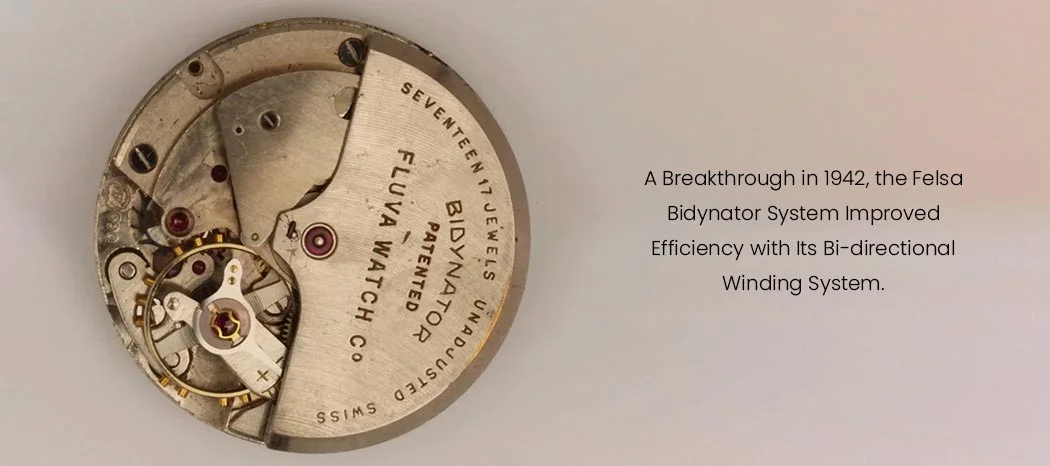
The mid-20th century saw a wave of innovations aimed at refining automatic movements and making them more efficient.
One major development was bidirectional winding, introduced through systems like the Felsa “Bidynator.” This allowed the rotor to wind the mainspring regardless of the direction of rotation, significantly improving efficiency. Another important advancement was the Pellaton system, developed by IWC Schaffhausen. This mechanism used a pawl-based system to convert rotor motion into winding energy more effectively. Similarly, Seiko introduced the Magic Lever system, which simplified the winding mechanism while maintaining high efficiency and durability. Innovation also extended to design. The introduction of micro-rotors in the 1950s allowed the rotor to be integrated into the movement itself, enabling slimmer watch profiles. Peripheral rotors pushed this concept even further by positioning the rotor around the edge of the movement.
These developments illustrate how the history of automatic movements is defined not just by invention but by continuous refinement. Each improvement contributed to the broader evolution of mechanical watches making them more adaptable to different designs and use cases.
Modern Automatic Movements
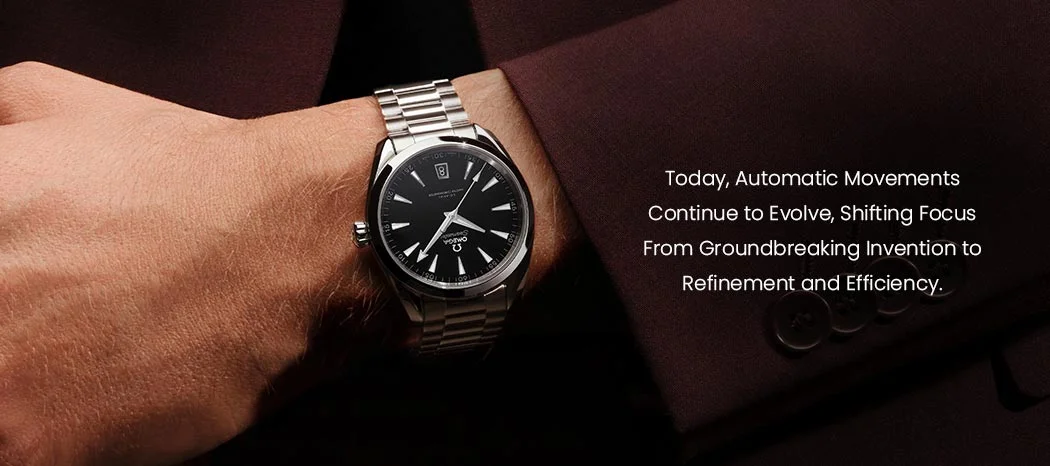
Today, automatic movements continue to evolve, though the focus has shifted from groundbreaking invention to refinement and efficiency. Modern systems incorporate advanced materials such as ceramic ball bearings, which reduce friction and eliminate the need for lubrication. Improvements in manufacturing precision allow watches to capture even minimal wrist motion, increasing reliability.
Design innovation also continues, with peripheral rotors and hybrid winding systems offering new ways to optimize performance while maintaining aesthetic appeal. In many ways, the modern era represents the culmination of the rich history, a point where centuries of innovation have resulted in systems that are both highly efficient and remarkably refined. At the same time, this ongoing progress reflects the enduring evolution of mechanical watches, proving that even in a digital age, mechanical ingenuity continues to thrive.
Kapoor Watch Co.
At Kapoor Watch Co., we take pride in being an authorized retailer of some of the world’s most renowned watch brands including Rado, Omega, TAG Heuer, Longines and many more. Every timepiece we offer is guaranteed authentic and backed by official brand warranties, ensuring trust, quality and a seamless experience for every customer. So visit our website or step into the Kapoor Watch Co. Stores to get your timepiece.
Frequently Asked Questions
- Who invented the automatic watch movement?
Early contributions came from watchmakers like Abraham-Louis Perrelet, who experimented with self-winding mechanisms, and Hubert Sarton, who documented one of the earliest rotor-based systems in 1778. The automatic movement evolved over time through the contributions of multiple innovators rather than a single breakthrough invention.
- How do automatic watches work?
Automatic watches use the natural motion of the wearer’s wrist to generate energy. Inside the watch, a rotor moves with wrist movement and transfers this energy through gears to wind the mainspring. This stored energy powers the watch, allowing it to run continuously without manual winding as long as it is worn regularly.
- Are automatic watches better than manual watches?
Automatic watches are not necessarily “better” than manual watches, they are simply more practical or convenient for daily wearers.



Recent Posts
Recent Comments
Archives