
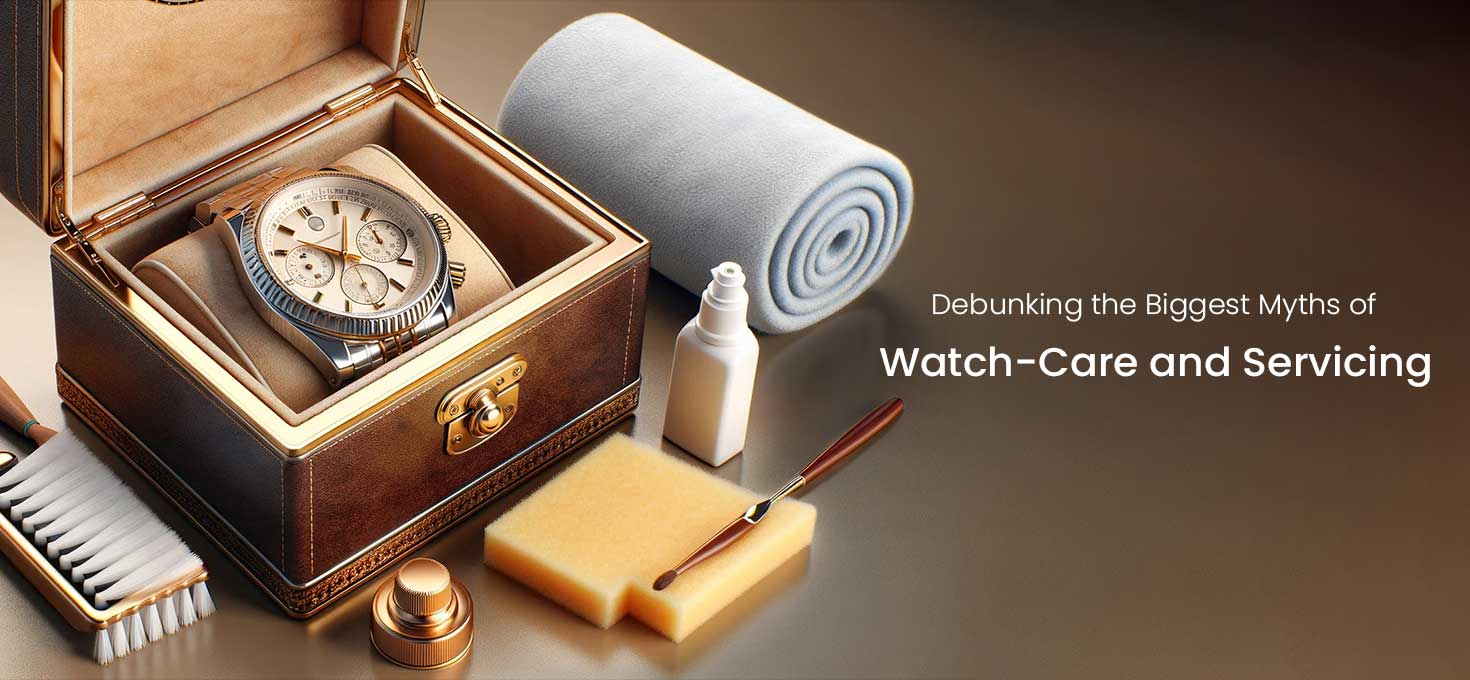
Time is eternal yet delicate, and tools of time require care. Crafted to shine at abysmal depths, precisely time aviation endeavors, and shock-absorb the raw g-force of tennis swings, timepieces are still subject to nature’s laws and the woes of aging. Watch maintenance, care, and storage are complicated processes — with endless internet articles on tips, tricks, and “expert guides”, you may end up lost in an information rabbit hole. To ensure the value and longevity of your timepiece, it’s critical to stay well-informed and clear of misconceptions in matters of watch-care and servicing. To help you avoid costly mistakes and efficiently preserve your timepiece, we’re debunking a few common watch-care and servicing myths.
The Fallacy of Frequency
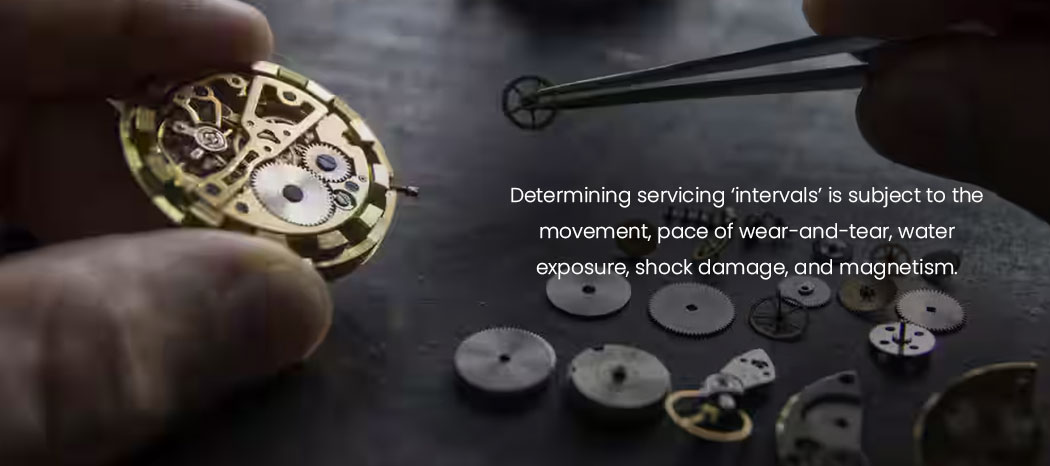
We’ve been led to believe that servicing watches between fixed intervals is its secret to long life. However, that’s half the truth. There’s no universal cadence, but determining these ‘intervals’ is subject to the movement, pace of wear-and-tear, water exposure, shock damage, and magnetism. Another important matter of subjectivity is brand: For example, TAG Heuer and Tissot suggest visiting a service center roughly every five to six years for daily-use luxury automatic watches, while Omega and IWC Schaffhausen nod towards more conservative intervals, stretching seven to ten years.
Practical rule: If your timepiece runs well, keeps consistent time in several positions, shows a healthy amplitude/beat on a timegrapher, and the crown winds smoothly, you can most likely wait. The moment you find any of these metrics deteriorating, or the watch has been exposed to shocks/saltwater, don’t wait out your service interval — get a professional evaluation.
Self-winding ≠ Self-servicing
Automatic (self-winding) means the rotor converts wrist motion into mainspring energy. But what about oils, seals, and bearings? Movement lubricants age. Modern watch oils are synthetic and far more stable than traditionally used 19th-century whale oil, but they oxidize, evaporate, or even migrate over the years. Once that happens, power transfer suffers, amplitude drops, and wear accelerates.
The other half of this story is the winding train, which is subject to wear. Rotor bearings, reverser wheels, and clutch components see continuous micro-load and often tend to loosen over time. Also, magnet exposure near motors or speakers can de-calibrate watch components. You can use a store-bought demagnetizer to fix irregularities, but if they keep recurring, it’s best to bring it into the shop.
Yes, You Can Overwind Your Watch
Gear up for a quick technical lesson: Modern automatic movements employ a ‘slipping bridle’ or similar design that allows the mainspring to slip inside the barrel when fully wound. This safeguards the movement from over-tightening. However, this protection isn’t universal.
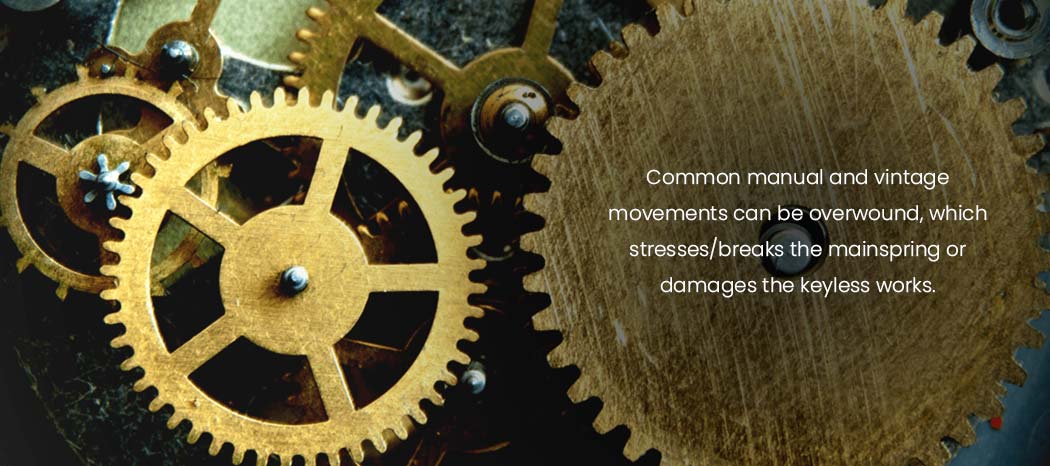
Common manual and vintage movements can be overwound, which stresses/breaks the mainspring or damages the keyless works. This is strictly subject to the mainspring design and era of production.
Bottom-line: For vintage or manual-wind pieces, stop immediately when you feel resistance. For modern automatics, rotor winding is safe, but repeated hard shocks or force winding of a stuck crown can cause damage.
Solitude Is Corrosive
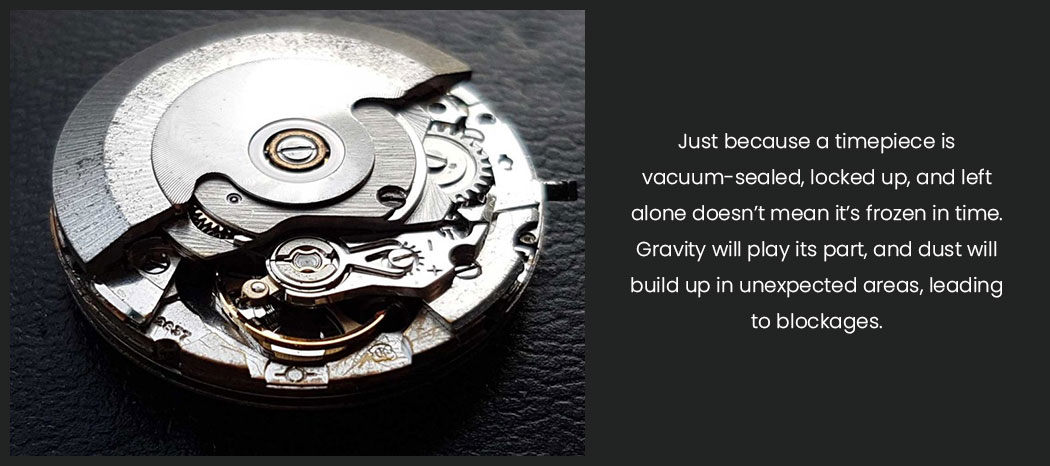
Just because a timepiece is vacuum-sealed, locked up, and left alone doesn’t mean it’s frozen in time. Gravity will play its part, and dust will build up in unexpected areas, leading to blockages. Movement oils will dry and lump up, simply because they’re meant to be periodically lubricated. Gaskets relax with time, and environmental seals degrade over time. As moisture leaks in, it can cause condensation, which damages movement components, dial paint, and luminous materials. After any case opening (battery change, crown pulled out), the seals must be checked and the watch pressure-tested to ISO standards for water resistance — water resistance is not permanent. Pressure testing and gasket replacement are standard during servicing and are an essential part of a timepiece’s life.
Quartz ‘Servicing’ Crisis
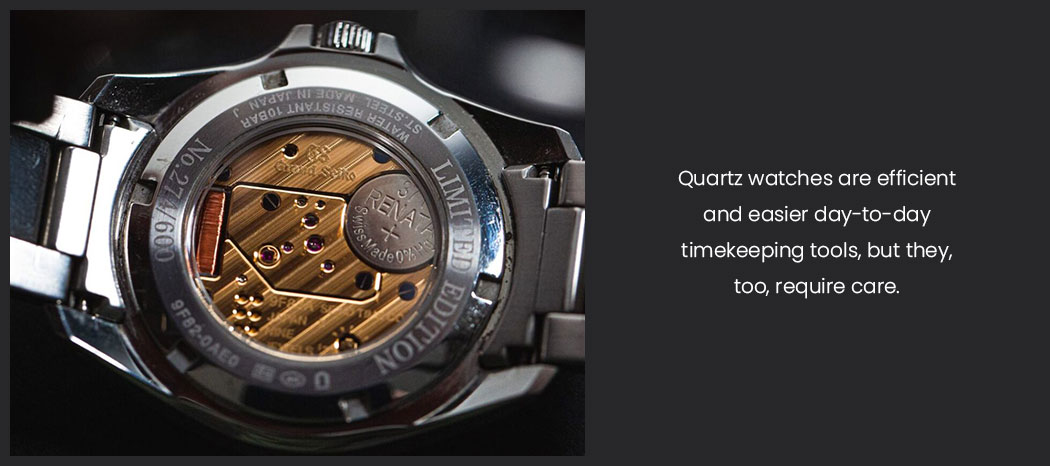
Quartz watches are efficient and easier day-to-day timekeeping tools, but they, too, require care. Just because you’ve fitted in a fresh battery, doesn’t mean your worries fade away. The battery of a quartz watch is always subject to spoilage and leakage. When cells fail, they can release alkaline electrolytes that corrode internal components, circuits, and coils. The longer a battery ages, the more it’s prone to spoilage. Replace your batteries every two to three years (or as per manufacturer guidance), and if your watch has been idle for prolonged periods of time, have a service center or watchmaker inspect for leakage. If leakage is present, immediate cleaning and replacement of damaged components is required.
Taking Matters in Your Own Hands: DIY Watch Repair
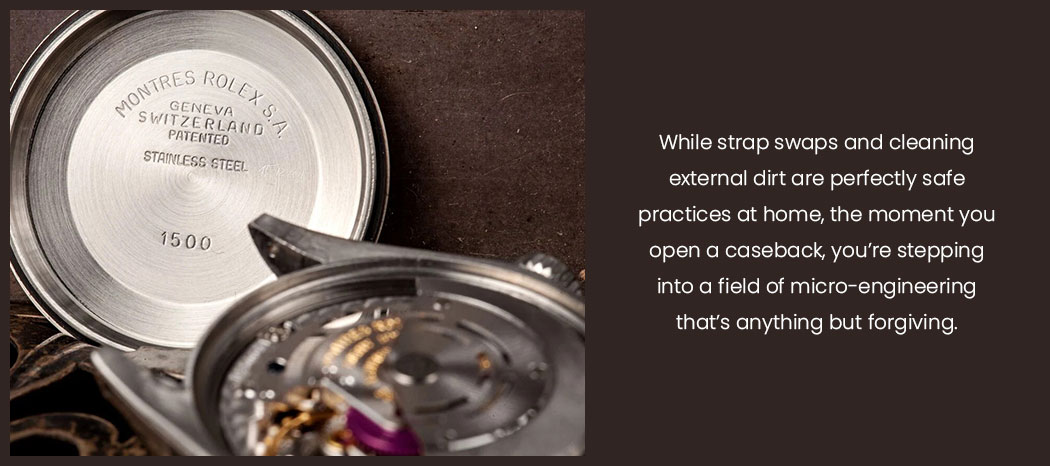
The biggest misconception of them all is that a YouTube tutorial and an Amazon-bought Rs. 2,000 toolkit can turn you into a watchmaker. While strap swaps and cleaning external dirt are perfectly safe practices at home, the moment you open a caseback, you’re stepping into a field of micro-engineering that’s anything but forgiving. The hairspring, thinner than a strand of hair, can easily deform or magnetize with a slip of tweezers. Jewels and pivots are vulnerable to scratches, and even a speck of dust can turn into abrasive paste once mixed with lubricants. More importantly, gaskets need to be reseated and pressure-tested every time a watch is opened — otherwise, the first splash of water could fog the crystal or corrode the movement.
Movements are completely dismantled, inspected, cleaned in ultrasonic baths, reassembled with precise lubrication points (using modern synthetic oils), regulated across multiple positions, and then resealed with fresh gaskets before pressure testing. Without the right bench, tools, and training, attempting this at home risks irreversible damage or a steep drop in collector value.


Recent Posts
Recent Comments
Archives