
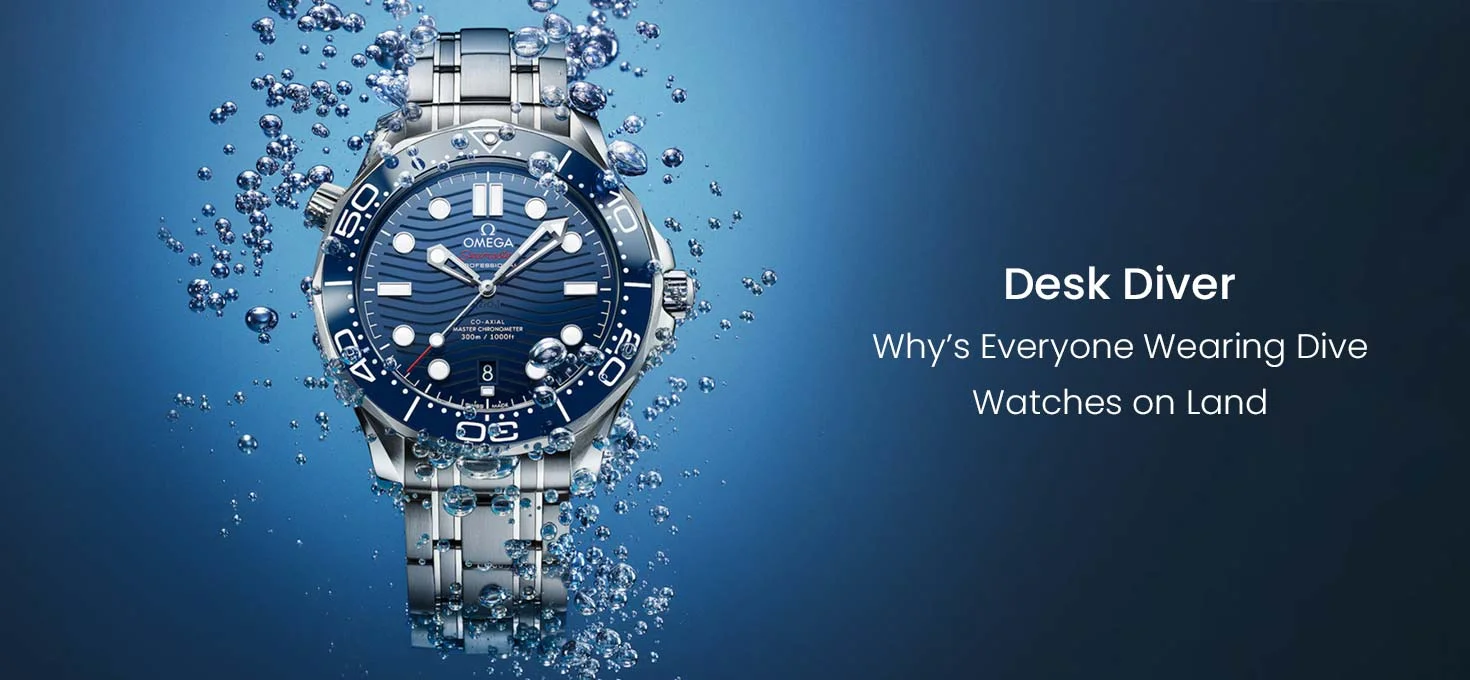

Built to withstand bone-crushing pressures, freezing temperatures, and glow in abysmal darkness, dive watches are surprisingly worn more frequently to Sunday brunches than even scuba boat-trips. Walk into any premium airport lounge or plush downtown cafe, and you’re guaranteed to spot a dive watch peeking out from under a collector’s sleeve. Also guaranteed: That dive watch has never seen the sea. They obviously aren’t pretending to be ocean explorers or “collecting” for investment value. So why are watch enthusiasts so obsessed with wearing dive watches on land? And not while actually diving?
Let’s “dive” in.
Through Turbulent Tides
Introduced in 1931, the Cartier Tank “Étanche” was the world’s first truly water-resistant watch, followed by 1932’s Omega Marine, which dove to 73 metres in Lake Geneva. As World War II started reshaping the world, dive watches found a new military purpose — brands like Hamilton and Panerai soon began manufacturing watches for the U.S. Navy and the Royal Italian Navy (Marina Militare), respectively. These specialized, robust, waterproof watches accompanied navy frogmen units in underwater demolitions, mini-sub operations, and tactical warfare. Today, dive watches have outgrown these past military gear identities. Similar to how iconic fashion has evolved beyond its originally intended purpose (example: trench coats, bomber jackets, hiking boots), dive watches, too, have transitioned from purpose-built tools into a cultural segment of their own.
A True Land Submarine
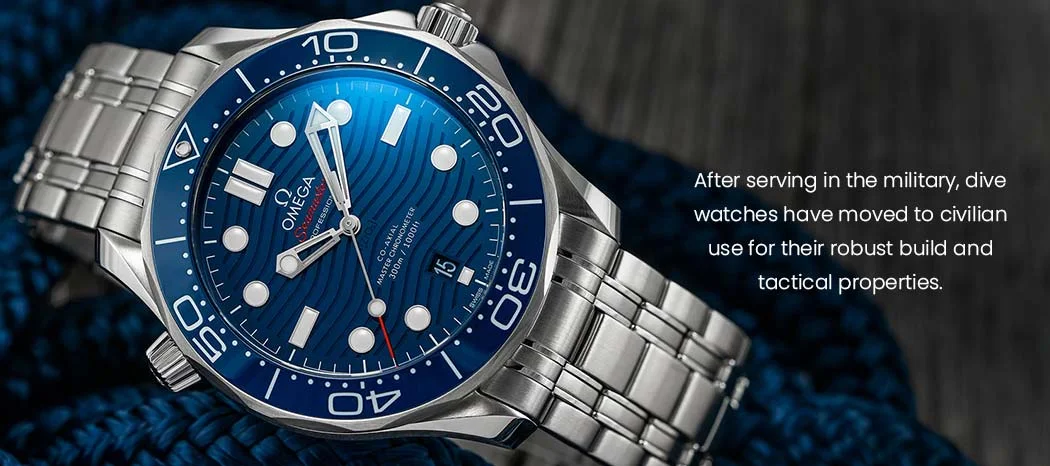
At the heart of dive watch obsession is durability. After serving in the military, dive watches may have moved to civilian use but retained their robust build and tactical properties. Remember, dive watches were originally engineered for the extreme, to reach the deepest depths of the ocean and (quite literally) survive warfare. This is why collectors instinctively trust them. Even if you don’t dive to a tenth of its rated depth, there’s a certain comfort knowing your watch can take a hit and keep ticking. As it removes the fragility of watch collecting, it gives wearers a certain confidence. This is why dive watches have grown to become one of watchmaking’s most coveted offerings.
Ride Any Tide
From a sartorial sense of things, dive watches offer great versatility. Dress watches feel too formal, chronograph dials are overbearingly crowded, and pilot watches come off too tactical. On the other hand, dive watches are fuss-free, compact, and stick to a universal design code.

Whether you’re wearing a coat, a polo tee, or even a summery linen shirt, it hits a sweet spot between sport and simplicity. It’s an absolute unit of robustness and professional utility without screaming for attention. The bezel is a great example of why. It’s a timing tool, but collectors love it for reasons that have nothing to do with elapsed minutes. It’s a form-meets-function feat that adds depth and a great technical/professional touch. There’s something addictive about the click, the interaction, the subconscious fidget factor.
Legibility Everywhere
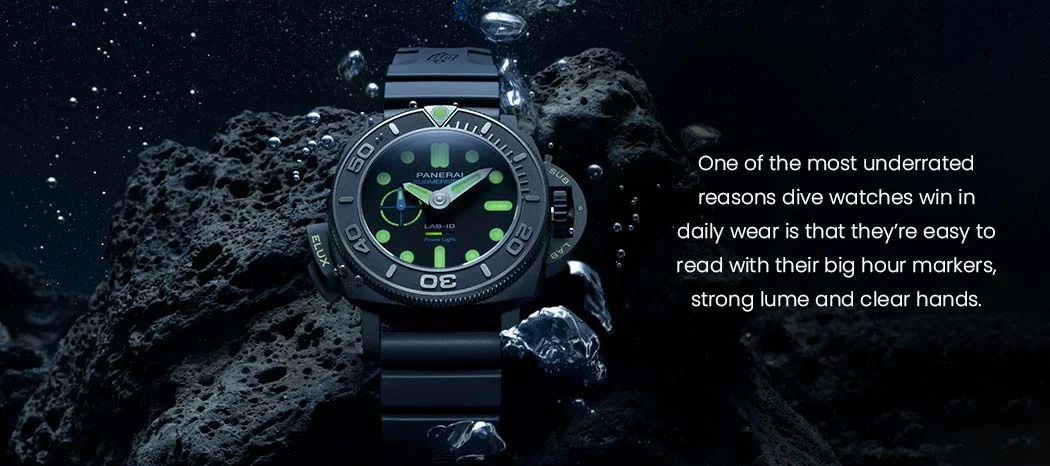
One of the most underrated reasons dive watches win in daily wear is that they’re ridiculously easy to read. Historically, dive watch dials were designed to be readable in dark, murky waters. Big markers, strong lume, clear hands that don’t need you to squint when reading time — it’s a simple formula for excellent timekeeping. Collectors admire this sense of legibility and how it adds character to a timepiece. The dial layout feels purposeful, almost architectural, like every detail was designed and placed with reason. Even the lume, which is often treated like a spec on paper, becomes part of the emotional payoff. They rarely come across as flashy, even when they’re expensive. They feel premium without looking performative.
Are Divers Really Diving Anymore?
Ironically, the reason collectors don’t wear dive watches while diving anymore is that diving has moved on. If you’re genuinely going underwater today, you’re probably wearing a dive computer. It’s far more practical, lighter, and gives you considerably more information than a mechanical watch ever could. In that context, the dive watch becomes less of a utilitarian object and more of an emotional accessory, carrying the vintage romance of exploration.
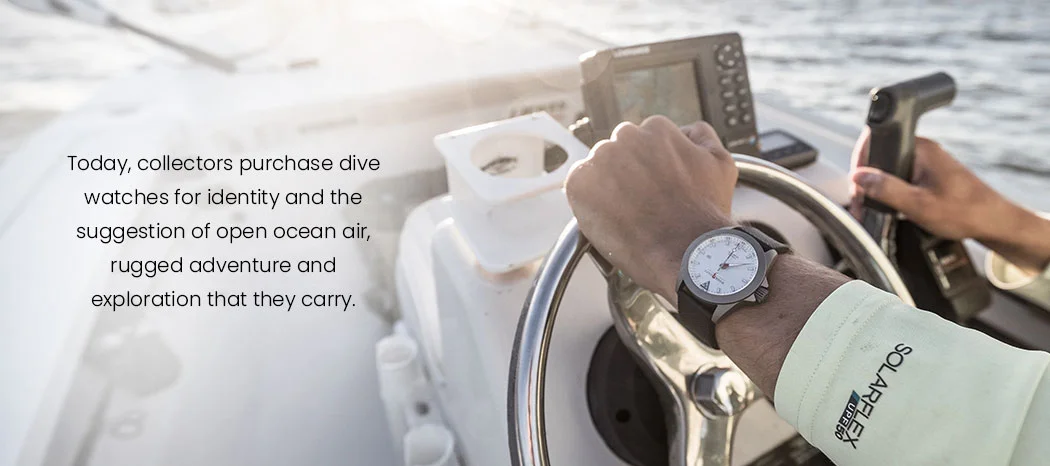
Today, collectors purchase dive watches for identity and the mood they create. They suggest open ocean air, rugged adventure, exploration, and a certain military confidence — even if your reality is emails, meetings, and city traffic. Just like motorsport chronographs live mostly off-track, dive watches live mostly on land.

Recent Posts
Recent Comments
Archives