
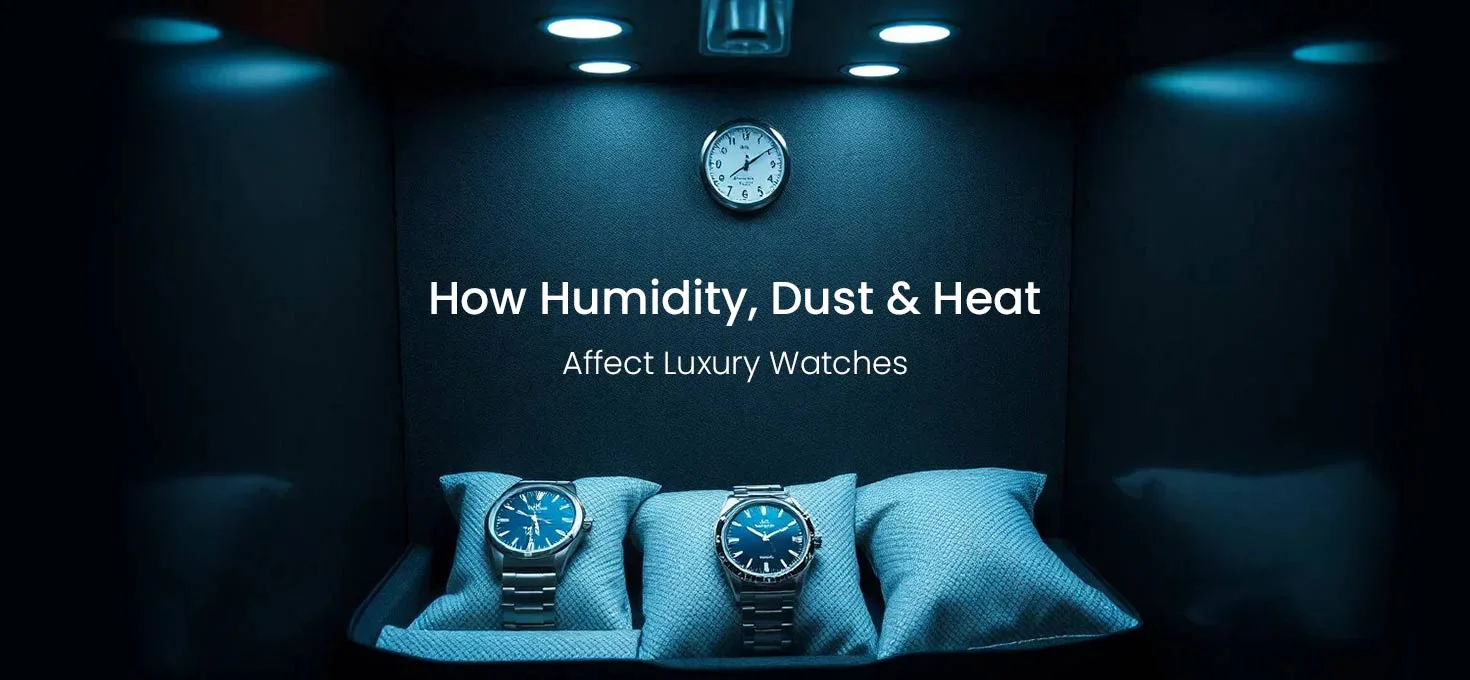
A luxury watch is a finely engineered piece of craftsmanship designed to perform with precision for decades. However, while most collectors focus on scratches or water penetration, other environmental factors of damage are often overlooked.
Constant exposure to humidity, dust and heat can slowly affect a watch’s movement, accuracy and overall longevity. Understanding these hidden risks is essential for anyone looking to preserve both the performance and value of their timepiece.
The Hidden Environmental Threats to Luxury Watches
- Moisture & Humidity Can Cause Internal Damage
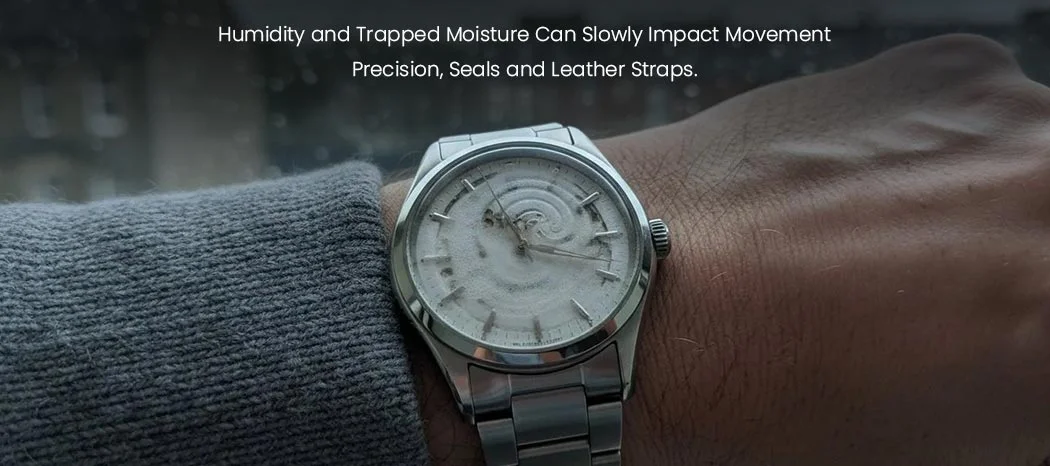
One of the biggest concerns for collectors is the humidity effect on watches. Even luxury watches with water resistance are not completely immune to moisture exposure over long periods. Tiny gaps around aging or damaged gaskets, crowns or seals can gradually allow humidity to enter the case, especially in tropical climates or during constant exposure to sweat and moisture. The most visible sign of the humidity effect on watches is condensation forming beneath the crystal. This usually happens when a watch experiences sudden temperature changes, such as moving from an air-conditioned room into humid outdoor weather. While the fogging may disappear after some time, the moisture trapped inside the case can continue affecting the movement internally.
Over time, the humidity effect on watches can lead to corrosion on delicate metal components and degradation of lubricants responsible for smooth mechanical operation. As lubricants break down, the movement may begin losing accuracy or develop unnecessary friction between components. Leather straps are also highly vulnerable to moisture exposure, often absorbing sweat and humidity that can cause cracking, discolouration and unpleasant odours. Another important aspect of the humidity effect on watches is that the damage is often gradual rather than immediate. Many collectors only notice problems once the movement has already suffered internal wear.
Dust Slowly Wears Down Precision
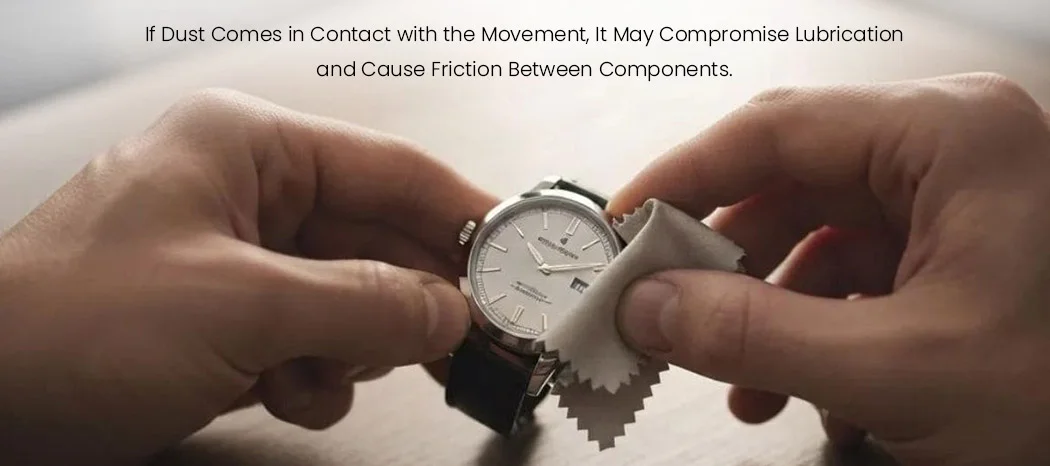
While moisture receives most of the attention, the dust effect on watches can be equally damaging over time. Luxury watches are engineered with incredibly fine tolerances, meaning even microscopic particles can interfere with the smooth operation of the movement.
The dust effect on watches usually becomes a concern when a case is improperly opened, serviced in unsuitable conditions. Once dust enters the movement, it can mix with lubricants and create additional friction between components. This friction may gradually reduce efficiency and negatively affect timekeeping precision. Another overlooked aspect of the dust effect on watches is its long-term impact on movement wear. Dust particles can act as abrasives within the mechanism, slowly increasing strain on gears and pivots. Mechanical watches are particularly sensitive because of the number of moving parts operating continuously throughout the day.
Collectors often underestimate the dust effect on watches because the damage is not immediately visible from the outside. However, maintaining clean storage conditions and ensuring professional servicing are key steps for preserving movement health and longevity.
- Heat & Sudden Temperature Changes Stress the Movement
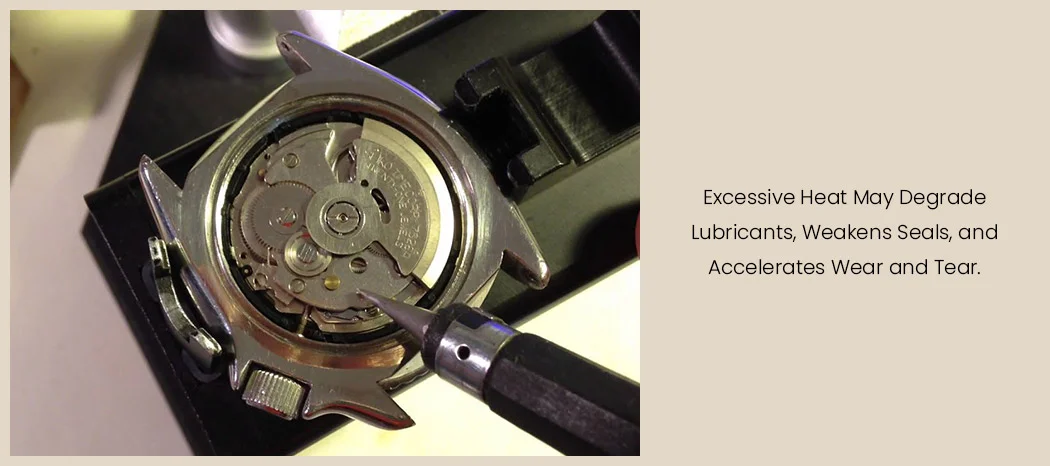
The heat effect on luxury watches is another major environmental factor that owners frequently overlook. Excessive heat can place stress on both the movement and external materials of a watch, especially during prolonged exposure to direct sunlight, hot vehicles, beaches or saunas.
One major heat effect on luxury watches is the gradual breakdown or evaporation of movement lubricants. These lubricants are essential for reducing friction between internal components and excessive temperatures can compromise their effectiveness over time. Once lubrication begins deteriorating, the movement may lose accuracy and experience increased mechanical wear. The heat effect on luxury watches also impacts rubber seals and gaskets responsible for maintaining water resistance. Continuous heat exposure can dry out or weaken these seals, making the watch more vulnerable to future moisture intrusion. Quartz watches may additionally experience faster battery depletion under extreme heat conditions. Rapid temperature fluctuations can be just as harmful as prolonged heat exposure. Moving quickly between hot outdoor environments and cold indoor spaces can create pressure differences within the case, increasing the risk of condensation. This combination of temperature instability and moisture exposure further amplifies the overall heat effect on luxury watches.
- Warning Signs Owners Should Never Ignore
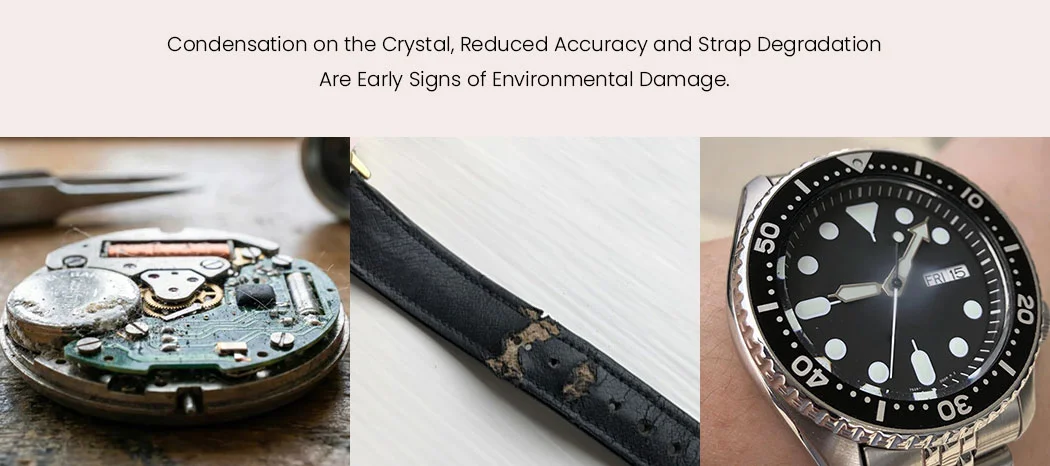
- Fogging or condensation beneath the crystal
- Reduced accuracy or inconsistent timekeeping
- Stiff crown operation
- Moisture marks inside the dial
- Cracking or discolouration on leather straps
- Reduced power reserve in mechanical watches
These symptoms can indicate moisture intrusion, lubricant degradation or internal contamination.
Luxury Watch Care: Do’s & Don’ts
Do’s
Store watches in cool, dry and temperature-stable environments
Use silica gel packs or protective watch boxes to minimise humidity exposure
Service luxury watches regularly to inspect seals and lubricants
Wipe down watches after exposure to sweat, rain or humid weather
Follow a professional watch care guide for long-term maintenance
Don’ts
Leave luxury watches inside hot cars or under direct sunlight
Wear watches inside saunas, steam rooms or extremely humid environments
Store watches in bathrooms where moisture levels constantly fluctuate
Ignore condensation or fogging beneath the crystal
Open the case unnecessarily outside professional servicing conditions
Luxury watches are built to last for generations but environmental conditions can quietly influence their performance over time. The combined humidity, dust and heat effect on luxury watches can gradually impact movement precision, lubricants, seals and overall longevity if left unchecked.
Kapoor Time Crafter
Built on a legacy of authenticity and technical mastery, Kapoor Time Crafter caters to discerning watch enthusiasts who understand that longevity begins at the microscopic level. We specialize in high-end luxury watches, delivering meticulous servicing that adheres to the exacting standards of fine horology, ensuring each movement is cleaned, lubricated and regulated with absolute precision. By preserving mechanical health and originality, our expertise safeguards both performance and long-term value of your loved watch. Visit our Kapoor Watch Co. Stores or explore our website to book a consultation and ensure your timepiece receives the care it deserves.
Frequently Asked Questions
Can humidity damage luxury watches?
Yes, humidity can damage luxury watches over time by allowing moisture to enter through worn seals or gaskets. This trapped moisture may cause condensation beneath the crystal, corrode delicate internal components and degrade movement lubricants. Even water-resistant watches can experience long-term humidity-related issues if regularly exposed to damp or tropical environments.
How does heat affect automatic watches?
Heat can affect automatic watches by stressing lubricants, seals and internal movement components. Prolonged exposure to direct sunlight, hot cars or extreme temperatures may cause lubricants to deteriorate faster, increasing friction inside the movement. Excessive heat can also weaken water-resistant seals and slightly impact the watch’s overall timekeeping performance.
How does humidity affect leather watch straps?
Humidity affects leather watch straps by causing them to absorb sweat and moisture throughout the day. Over time, this can lead to cracking, fading, stiffness and unpleasant odours. In hot or humid climates, leather straps usually wear out faster than metal bracelets or rubber straps due to constant exposure to moisture.
Which watch straps perform best in hot weather?
Metal bracelets and rubber straps generally perform best in hot weather conditions. Stainless steel bracelets resist sweat and humidity well, while rubber straps remain lightweight, flexible and comfortable during high temperatures. Both options are easier to clean and maintain compared to leather straps, which are more vulnerable to moisture damage.
Can heat affect watch accuracy?
Yes, heat can affect watch accuracy, especially in mechanical and automatic watches. High temperatures may alter lubricant performance and slightly impact the expansion of internal metal components. Over time, excessive heat exposure can increase movement wear and reduce precision, particularly if the watch is frequently exposed to extreme environmental conditions.
Do climate conditions affect watch complications?
Climate conditions can affect watch complications by influencing the movement’s internal performance and lubrication. Humidity, dust and temperature fluctuations may gradually impact the precision of complications such as chronographs, moon phases or perpetual calendars. Proper storage, servicing and environmental care help ensure these complex mechanisms continue functioning accurately over time.
Recent Posts
Recent Comments
Archives