
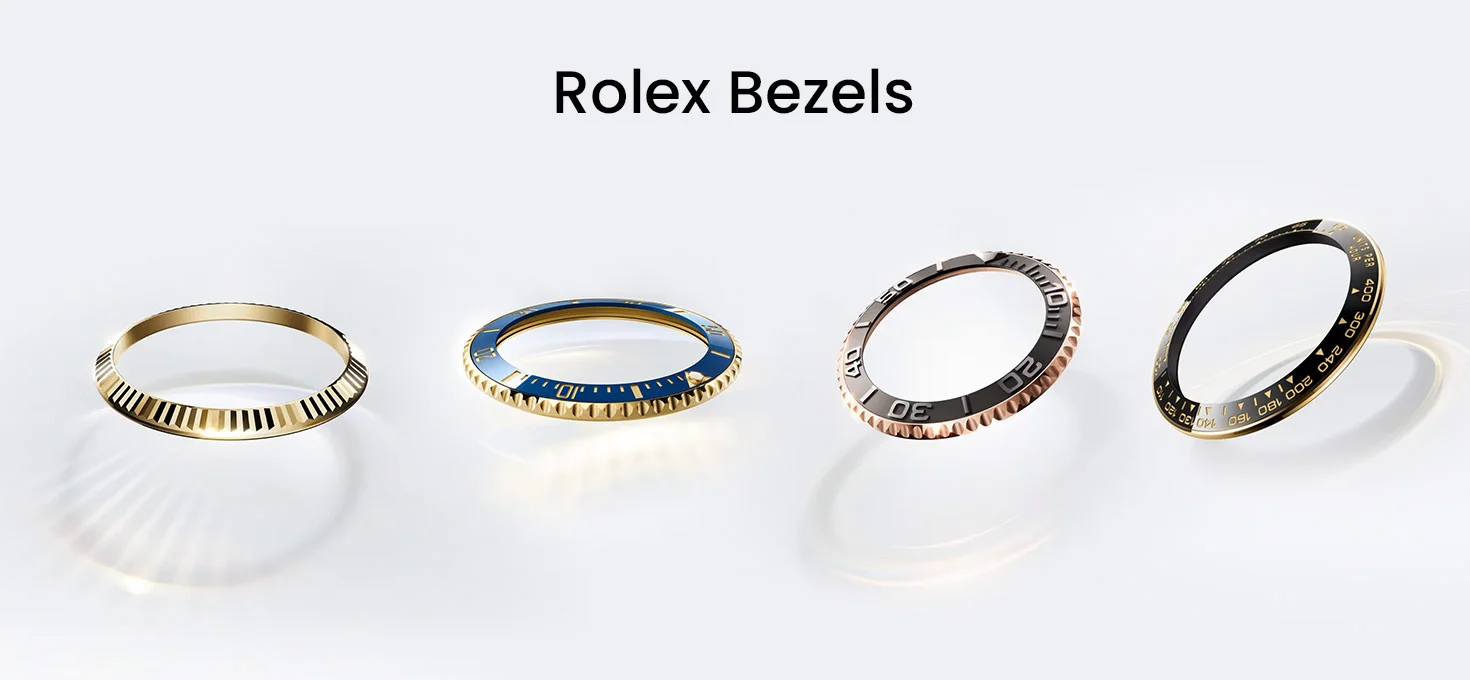
What makes one fall in love with an object is never a singular objective feature. In the world of watches, there is so much to admire and appreciate, that the reasons for hankering after a particular piece can never be static. Why we like a timepiece often morphs – as our fondness remains, the factors that constitute it often change. Such is the nature of true love, unflinching but evolving.
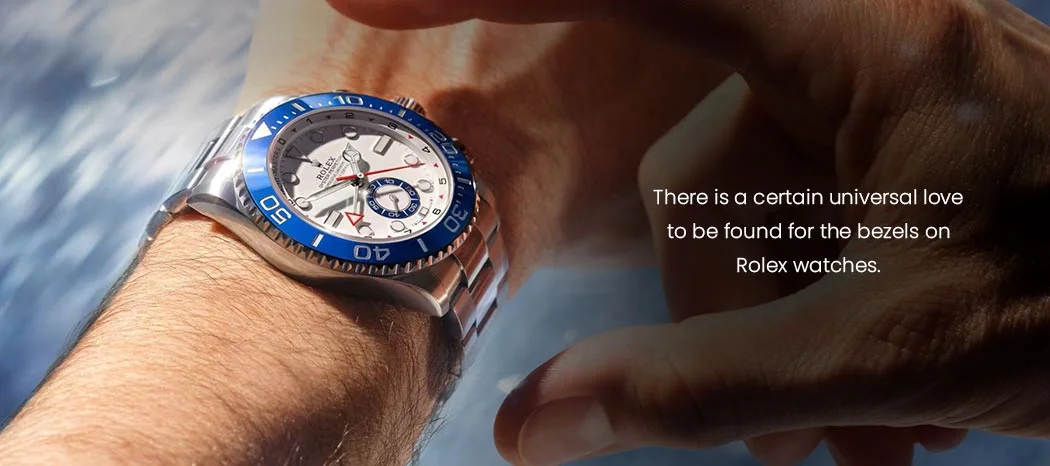
That said, there is a certain universal love to be found for the bezels on Rolex watches. Let’s look at the different types of bezels that one can find in the Rolex universe and see how form and function blend so seamlessly.
Fluted Bezel
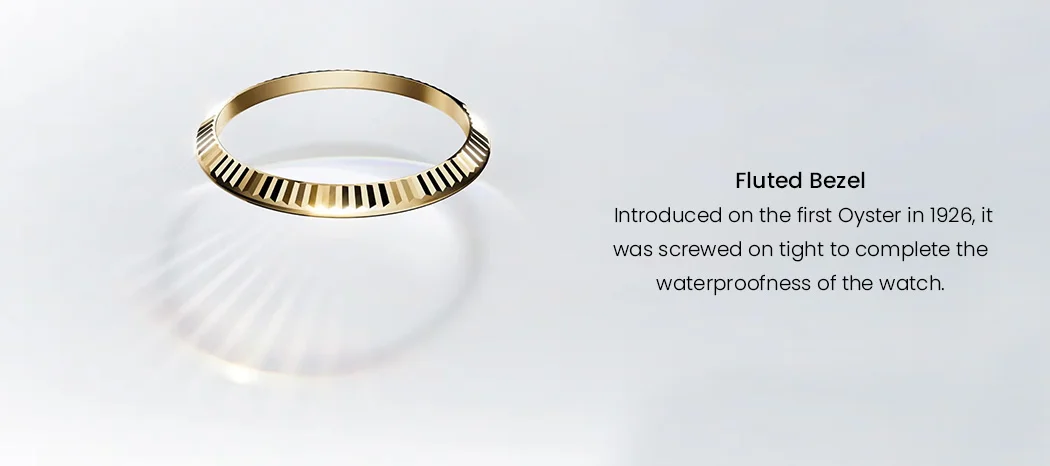
When this was introduced on the first Oyster in 1926, it was screwed on tight to complete the waterproofness of the watch. It was a purely functional part of the watch, the first fully-waterproof watch. This one aspect made the wristwatch a more utilitarian tool, one that could be worn everywhere without fear of damaging it especially with moisture ingress. Nothing that had come before this did so much to grow the category.
In 1953, this changed as friction-fitting became the method of choice to attach this onto the watch as it ensured a more secure fit. But now it was no more a part of the watch’s seal against water, merely an aesthetic ring that sat atop. Instead of dispensing with it, the brand decided to double down and augment it – more defined, enhanced fluting with sharper angles, a high level of polish, and exclusively produced in 18K gold or 950 platinum – a painstaking and meticulous application and to ensure that every ray of light that falls on the bezel stands reflected. The shine and brilliance is almost gemlike, and today, the fluted bezel has become a signature look on many Rolex watches.
The Unidirectional Rotatable Bezel
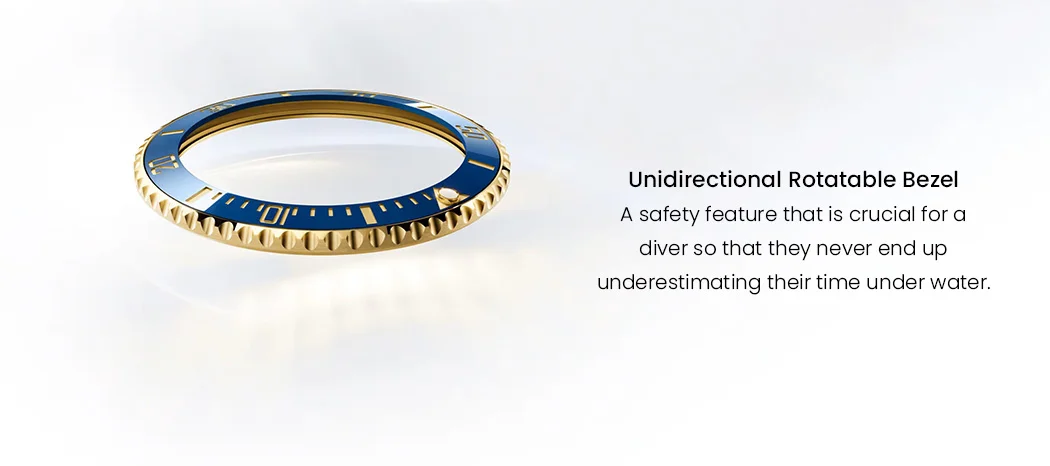
This comes standard on all Rolex dive watches, marked with 60-minute gradations and moving through them with a resoundingly reassuring click, but in one direction only. The reason for this is simple – a diver should never end up overstaying their dive plan underwater, and if the watch were to bump against anything underwater and shift the bezel, it would only be to reduce the time and not extend it. A safety feature that is crucial for a diver so that they never end up underestimating their time under water. The luminescence capsule at the ‘0’ position is visible even at depth where light is scarce, thereby ensuring legibility in the most trying of situations. These bezels use a shiny, flat ceramic insert with the numerals being recessed which can be platinum or gold-coated, and the markings are stark for contrast. The Cerachrom bezel insert is invulnerable to corrosion and UV stable, and any colour that one sees on these is fired into the material and not applied as a topical coating which can wear easily with time.
The Bidirectional Rotatable Bezel
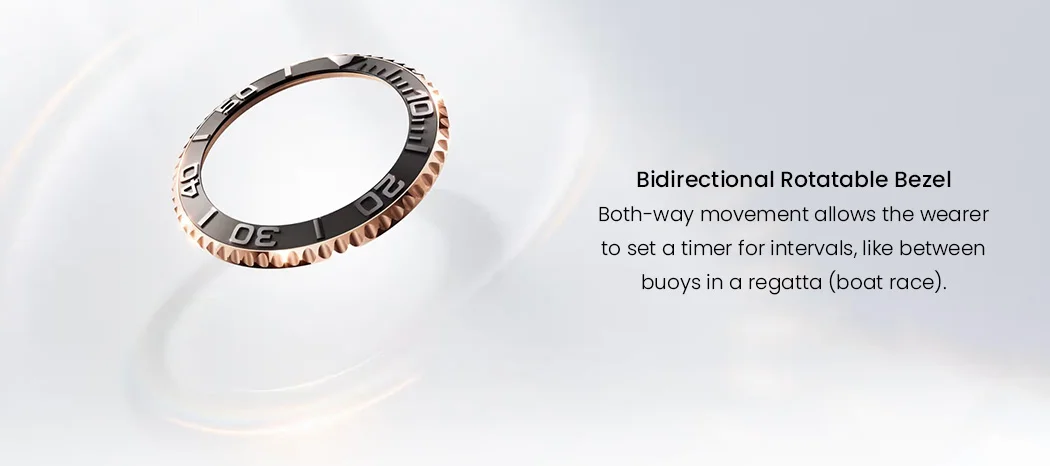
This is not for those who go down under, but instead for those who stay on the surface, like on a Yacht; they have a different set of responsibilities and the bidirectional bezel is geared to address those.
Both-way movement allows the wearer to set a timer for intervals, like between buoys in a regatta (boat race). The edges are knurled for an easy grip and it allows for smooth and precise rotation in either direction, in the same 60-grade clicks. This is found exclusively on the Yachtmaster.
The Tachymetric Scale
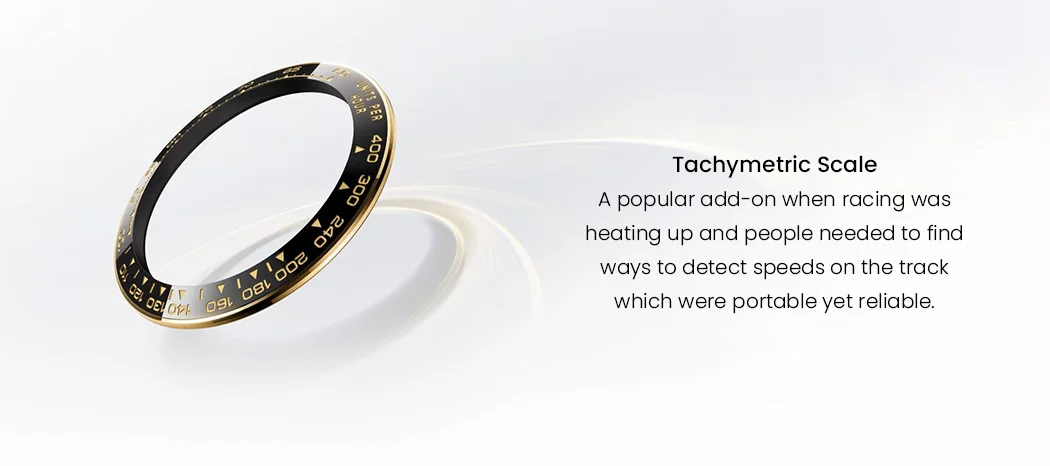
The tachymeter bezel was a popular add-on when racing was heating up and people needed to find ways to detect speeds on the track which were portable yet reliable. The tachymeter scale worked simply in that it was marked, curiously enough for the times, from 400 down to 60, with each gradation getting more distant on the bezel. An accompanying chronograph function on the watch was to be used to read the time elapsed as cars were raced around a track where the distance was known and the lap times would be clocked in with a simple start-stop function. The corresponding reading on the bezel would convey their speed. Rolex introduced this on the Cosmograph Daytona in 1963 and, they too considered it cryptic in appearance but immediate in use. Today, this bezel, whether made in precious metals or in high-tech ceramic, is an immediately-recognisable feature of the model.
The Ring Command Bezel
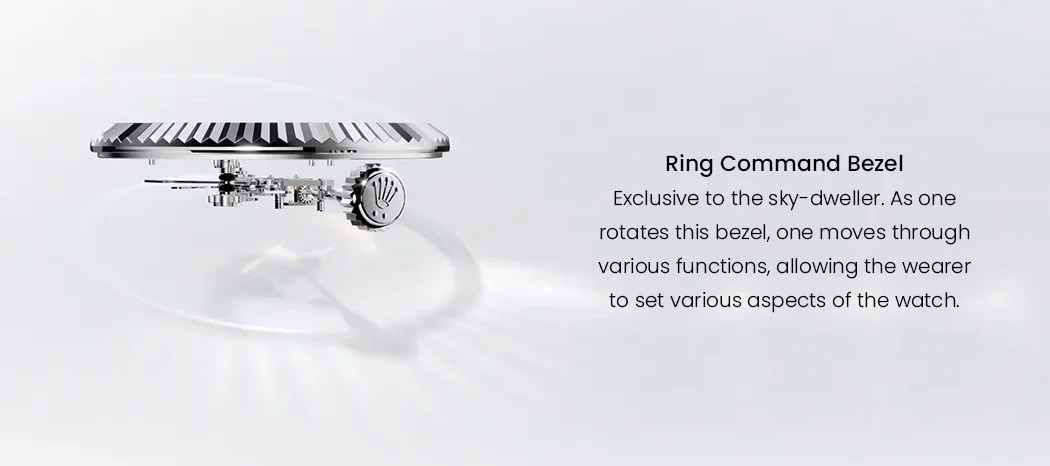
This is a bezel that is exclusive to the sky-dweller. In fact, this is not just a bezel, that would be too modest a nomenclature. This is Oyster Perpetual Sky-Dweller’s Ring Command system. Unlike most other bezels here, this one isn’t a measuring tool, instead it’s a functional mechanical interface. As one rotates this bezel, one moves through various functions, allowing the wearer to set various aspects of the watch. Starting with the neutral position at 12 o’clock, one can move it to 11 o’clock where it will allow access to adjust the calendar. Then, if shifted further to 10 o’clock, one can adjust the local time and, finally, at the 9 o’clock position, it allows one to change the reference time. Even setting the annual calendar, Saros, is a matter of a few simple twists and turns. Everything about this bezel is designed to simplify a life on the move, hopping cities, managing layovers, changing time-zones, basically cruising through a jet-setting day without having to stop and spend a substantial amount of time to bring the wrist-piece up to speed. In this connected era of technology and digital screens, this is a great way to remain rooted even as life takes one places.
A Note on Cerachrom
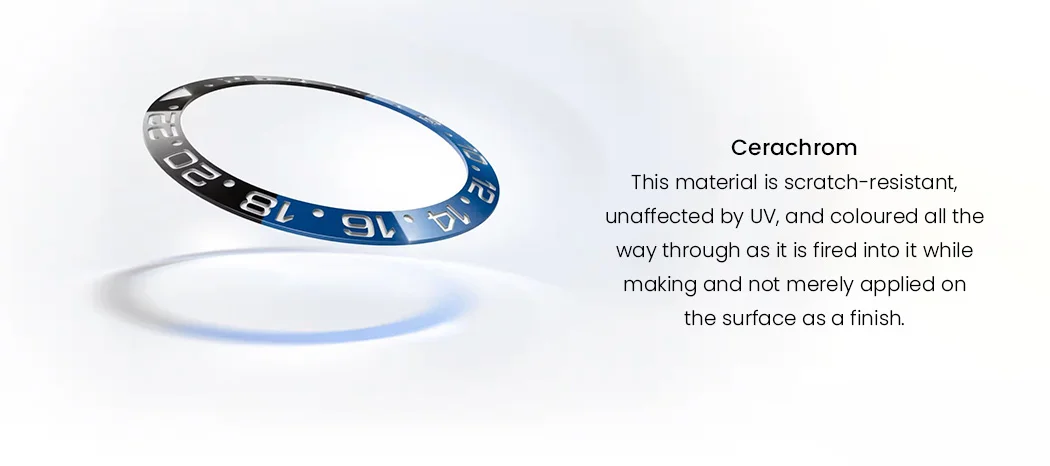
It would be remiss to not mention this marvellous innovative material and all that goes into working with it before we conclude. This material is scratch-resistant, unaffected by UV, and coloured all the way through as it is fired into it while making and not merely applied on the surface as a finish. Now if you consider that often many bezels are two-toned, it meant that Rolex had to develop an entirely new way of producing these bezels. Sintering is the process that Rolex uses, a high temperature final firing of these bicolour monobloc ceramic bezels so that the two distinct colours that make up the ring are sealed unto eternity in a chromatic union.
The Sum Up
Discussing the bezels was intended to help one understand the art behind the design, and in some cases, the function that came before the form. Fixed or rotating, functional or aesthetic, simple or mechanically integrated, and in whichever material it happens to be fashioned out of, every time one holds a Rolex watch, and lets the fingers glide gently around the case, framing the watchface, the bezel will now resonate more than it did before.



Recent Posts
Recent Comments
Archives