
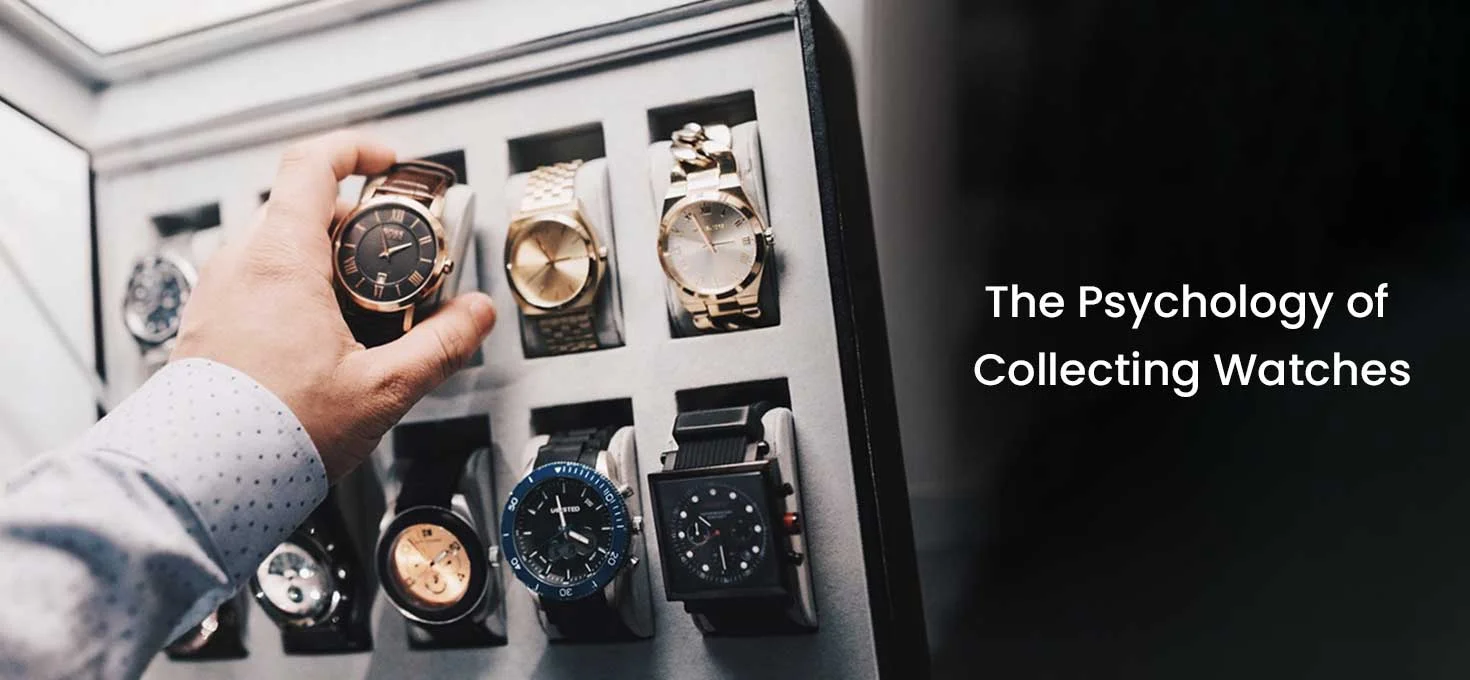
Life is nothing but a series of memories, which are happening even as (and when) we don’t realise they are; so assigning objects to mark landmark moments along the way is possibly one way of feeling complete. It is also how most men justify their purchases to their better (financially wiser) halves. From stamps to coins, Lego® sets to miniature cars or figurines of superheroes, men have a penchant for collecting. We don’t know when it starts, and when it does end, it rarely ends voluntarily, or on a satisfactory note. Women collect too, but it’s more often things that either appreciate in value (gold jewellery, for one) or add value (make up), or, its stuff we men haven’t been awarded the rights to question (handbags, shoes, et al). But collect, we all do – even animals in the wild do it – and there is really nothing except personal pleasure behind it.
Collecting Watches
Let’s be honest, in this day and age, when almost every electronic device around you can tap into the internet and tell you the exact time down to the last nanosecond, wearing a chunk of metal that is vulnerable to gravity, water, temperature, pressure and just general condition of upkeep, feels archaic, and logically, rather unreliable. Add to this the point that we pay significantly higher prices for a timepiece, way over its material worth, and yet it doesn’t make them any more efficient. The only way then to justify this irrational acquisition is a long-standing, burning desire within. There is no specific number of pieces before your purchases can be classified as a collection. You can have a collection of just one but, let’s be honest, I am not writing this article for those potentially-dangerous antisocial loonies.
Why Watches

Maybe I jumped the gun there. I went straight to defining the idea of a collection without addressing the bigger question: why do watches hold such fascination for so many of us?
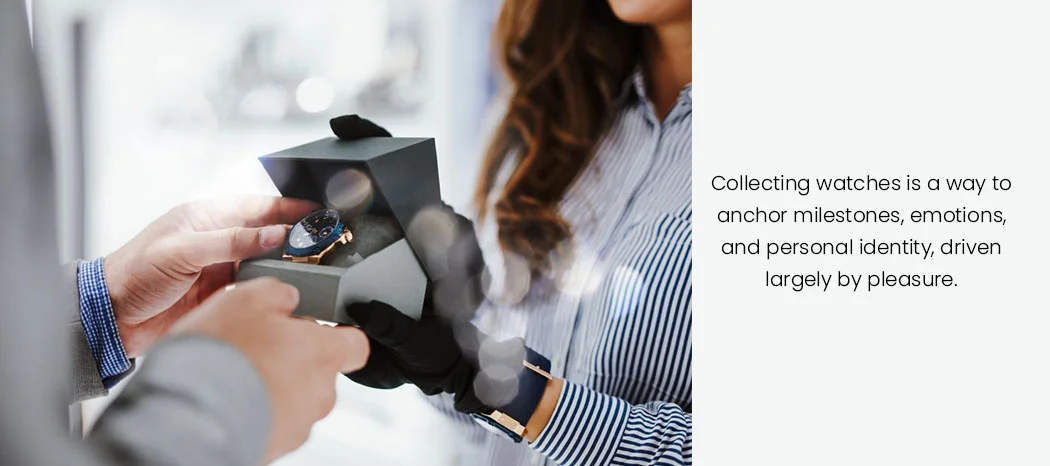
The most popular reason is an emotional memory; we buy a watch because it is tied to a milestone. A child’s birth, a new job or a promotion, a new house/car…it is also a great excuse to hide a purchase behind an occasion.
A more recent (relatively speaking) reason for buying a mechanical watch is the strong urge to sever ties with all forms of technology. Maybe I jumped the gun there. I went straight to defining the idea of a collection without addressing the bigger question: why do watches hold such fascination for so many of us? The most popular reason is an emotional memory; we buy a watch because it is tied to a milestone. A child’s birth, a new job or a promotion, a new house/car…it is also a great excuse to hide a purchase behind an occasion. Some people see buying a timepiece as a way of marking their respect for a mechanical marvel, one which is tangible and has a (heart)-beat as opposed to something which is soulless. To me, it feels a bit unjust since even a circuit-board can feel as intricate as a thriving city skyline but it was precisely because of this nerdy outlook that I spent most Saturday nights at home while still a student at college. But personal past horrors aside, those are some ways to normalise our justification of buying a watch, or two, or maybe, twenty. Just saying.
Sweetening the Pot
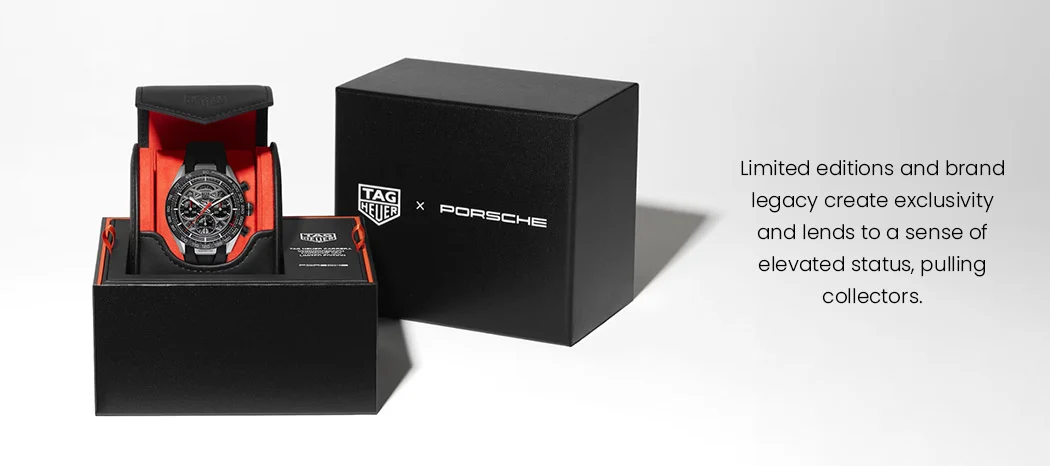
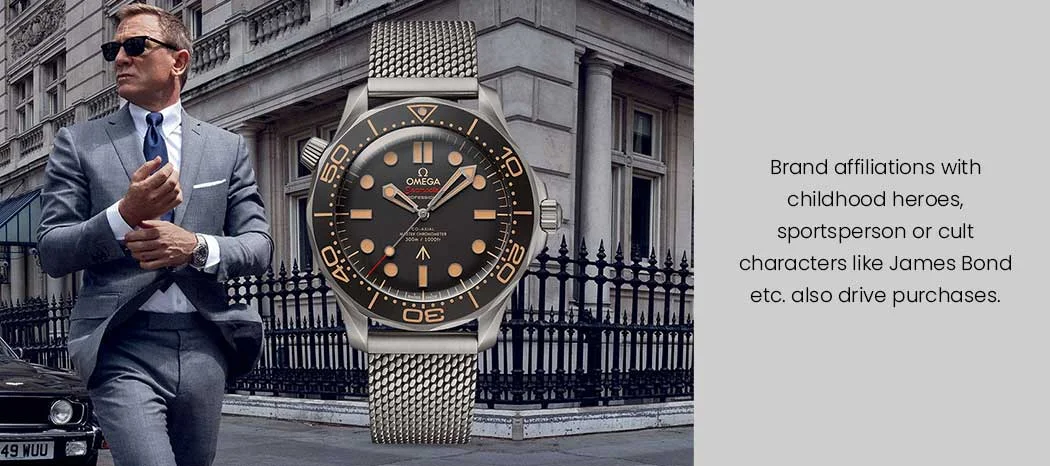
Now that we know why some of us like to collect watches, let’s also analyse factors that make watch-collecting such a huge draw. We already mentioned a sense of belonging through association which then lends us a sense of (elevated) status. If the watch is a limited release, then one gets extra points for having good taste but also access, the equivalent of having a 3-digit number plate in the UAE. Some watches need you to wait for them, others require you to stand in a line on the day of the launch, both experiences lead to an interesting narrative to be shared at your next soiree. Sure, you may need to queue for a Japanese masterchef, or an iPhone <>, or, a Magnolia cupcake <>, but they just don’t have the same social flaunt currency as a rare timepiece. Also, with a watch, it doesn’t erode in value the minute a new iteration gets launched six months down. By virtue of acquiring or being in the race to acquire a piece of mechanics that is usually limited in numbers, expensive to afford and even tougher to find on the market, and comes with a backstory that is worthy of an Oscar nomination, automatically buys you a ticket into an exclusive club of the elite few who ‘get it’. Outsiders may judge you for your lavish tastes and extravagance, but for those in the clique, there could be no more accolade more worthy than being recognised for their refinement. Game recognise game, indeed.
The Collection Spiral
The watch collectors have a rule, quite like Fight Club. It is this: They never admit to being a watch collector. Instead, they justify how each watch that they came to acquire was a result of the confluence of several one-off factors which just happened to align in their favour even better than retrograde Mercury and a rising Venus. They weren’t looking for a watch, or even planning to buy one, but then, this “once-in-a-never” deal came along which was just “too good to turn down”. And so it goes, they are not collectors, oh no, it’s a series of independent acquisitions, with each watch having its own impossible story which was an unrequited mission to begin with. The only time you admit to have skidded down that slippery slope is when you meet with other ‘like-minded’ un-collectors. Outside of those evenings, you don’t talk about this “hobby”, just like Fight Club.
Types of Collectors
No two watch collectors are alike, even if they covet the same watches. Oh no, we all build our own bridge into this fantasy world. The purists will only buy watches which are mechanical and eschew anything that is as recent as turn-of-the-century nouveau. They are the first to judge you for what you are wearing, no matter what you wear, simply because they can. Then there are the romantics – definitely more likeable – who buy a watch to mark salient life moments, valuing sentiment over watch specs.
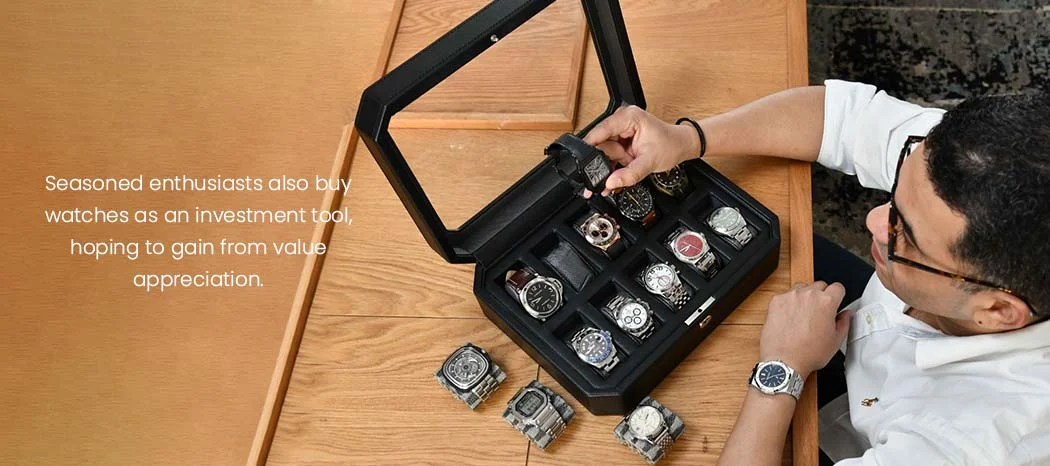
Far more boring and cringe-inducing are the investor types who only buy watches as an investment tool – at watch evenings, they talk about acquisition costs and annual appreciation of their pieces but definitely wear a smartwatch during the day and harp on about their resting HR and weekly step-count, boring coworkers just as much. Comparable but slightly more affable are the hype chasers who only wish to buy something because it is a limited edition or has a long waitlist. They may not spin it on the secondary market but they will certainly spiral into one long monologue about how they came to acquire it. Others, like history buffs, acquire pieces which were a turning point in the evolution of timepieces, and they are the real nerdy types, who will know everything about everything there is to know, from the parts to who designed them, and when. They don’t get invited much, anywhere, which frees them up to write articles online, which I doubt anybody reads.
Should You Join the Club?
Well, the only invitation you need is a readily dispensable bank balance (and if married, a nod of assent from your partner). Collecting watches isn’t all that bad – you are appreciating craftsmanship, acquiring a lesson in history (and geography, and physics), and are showing discernment by coming into possession of a mechanical device which will last you decades thereby reducing overall human waste. That said, bank balances can diminish significantly and rapidly in this hobby because no matter however much you justify it as an ‘investment’ it isn’t one most of the time. The ‘high’ one feels upon acquiring a new piece only lasts till the purchase is finalised and by the time you are putting it on the second time, the crash is already becoming evident. The only way some people deal with this is by building up to their next purchase, and, at this point, you are no different from a drug addict, finding their fix at any cost. I know it sounds drastic but it can be quite the maze to hazard.
Caveats settled, I would still encourage you to get into it and here is my advice how to chart your course ahead:
- Enjoy a watch thoroughly before purchasing the next.
- Once you have a few, remember to rotate them so all get adequate wrist-time.
- Enjoyment over investment value is the best way to approach any purchase.
- Buy sensibly – size, wrist-feel and utility over hype and rarity.
- The collection will never be complete.
- Sometimes you need to let go of one/some before you commit to another.
- The one watch collection is a myth.

Recent Posts
Recent Comments
Archives