
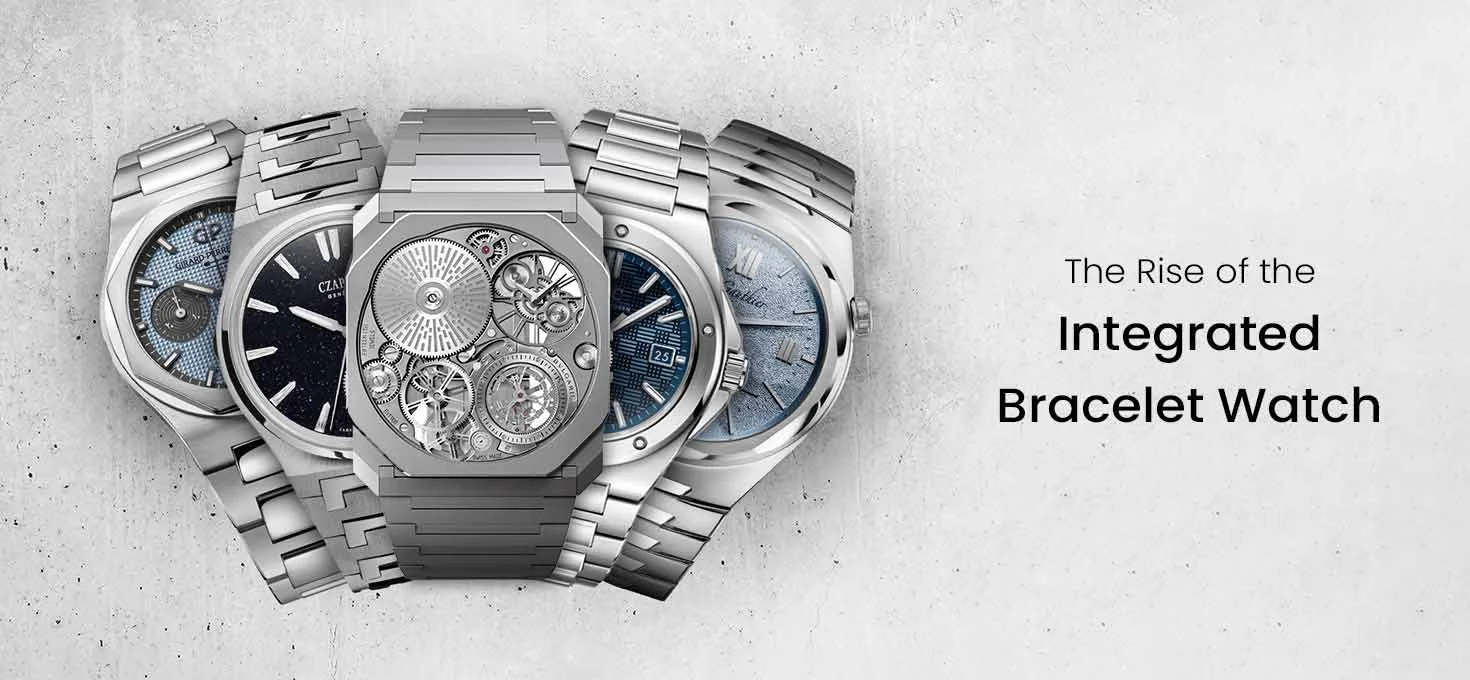
The bracelet watch may be a wardrobe staple today, but what makes it such a perennial classic? We break it down for you
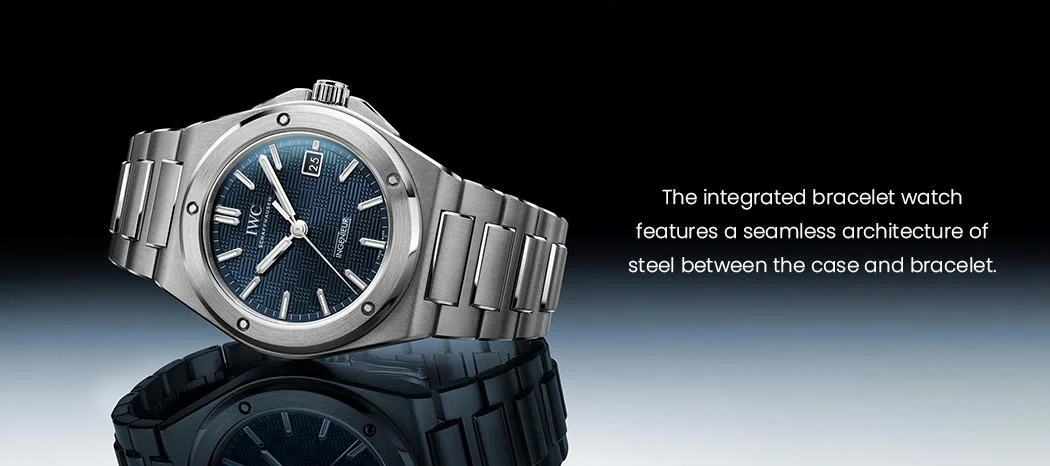
There are certain objects in fashion that transcend their original purpose and become part of the cultural environment we live in. The Birkin. The Reverso. The black turtleneck. And unmistakably, the integrated bracelet watch. A seamless architecture of steel defined by the fluidity between case and bracelet, it is sleek, sculptural and a quiet hero of luxury timepieces. Once a bold experiment in 1970s watchmaking, the integrated bracelet watch has now become the ultimate expression of precision, restraint and confidence.
Birth of a Design Revolution
To understand the steel bracelet watch’s popularity, we must return to 1972—a year when the Swiss watch industry was battling the quartz crisis, the rise of Japanese dominance and the public rapidly falling out of love with old-world mechanical timekeeping. It was during this time that Audemars Piguet did the unthinkable. It launched a watch not made of gold, but of stainless steel. It wasn’t petite and discrete, but angular, architectural and conceived as a single, seamless form. Apparently designed overnight by the legendary Gerald Genta, the Royal Oak emerged with porthole edges, exposed screws and a bracelet integrated so flawlessly into the case that it seemed carved from a single block.
A few years later in 1976, came the similarly iconic Patek Philippe Nautilus—another Genta creation— carrying forward the same doctrine of unity in design. In the decades following, this design language seeded an entirely new category: the luxury-steel sports watch, with Cartier launching the Santos, Piaget the Polo and Chopard the Alpine Eagle. This wasn’t just a sports watch or a dress watch, but something in between—something that paired refinement with ruggedness, elegance with everyday wearability.
Journey Through Time
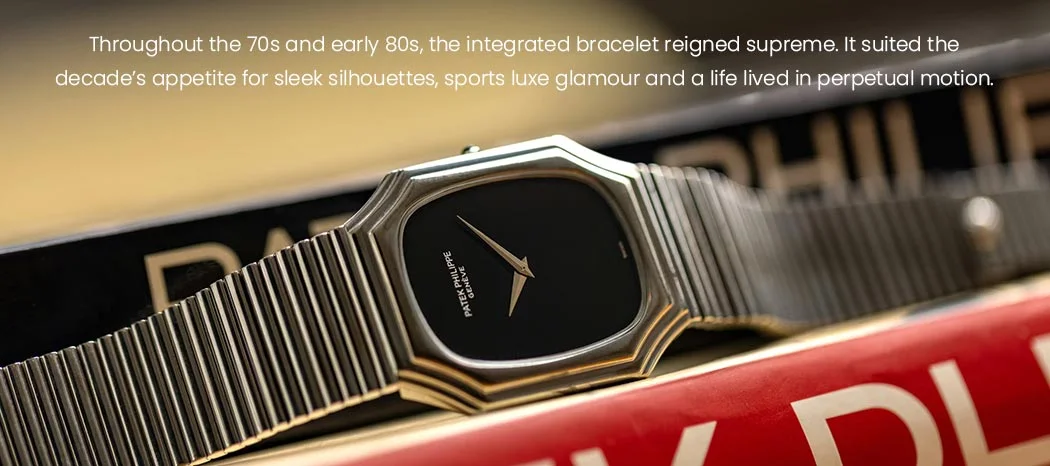
Throughout the 70s and early 80s, the integrated bracelet reigned supreme. It suited the decade’s appetite for sleek silhouettes, sports luxe glamour and a life lived in perpetual motion. But as the watch world shifted into the 1990s and 2000s—decades marked by oversized chronographs, colourful straps and high-polish gold—the integrated aesthetic slipped out of the spotlight. Around the mid-2010s, something changed. A new generation of collectors and aesthetes began to view these silhouettes from the 70s not as dated, but as breathtakingly contemporary. The clean geometry, the play of polished links, the slim profiles—all of it felt perfectly aligned with the world’s renewed love for minimalism, form, function and quiet luxury. New materials ushered in an even more contemporary sensibility. Titanium for feather-light tactility, ceramic for scratch-proof coolness and rose gold for a sculptural warmth. Ultra-thin movements, skeletonised bridges, micro-rotors have all added a level of sophistication, far superseding the original 1970s creations.
Modern Renaissance
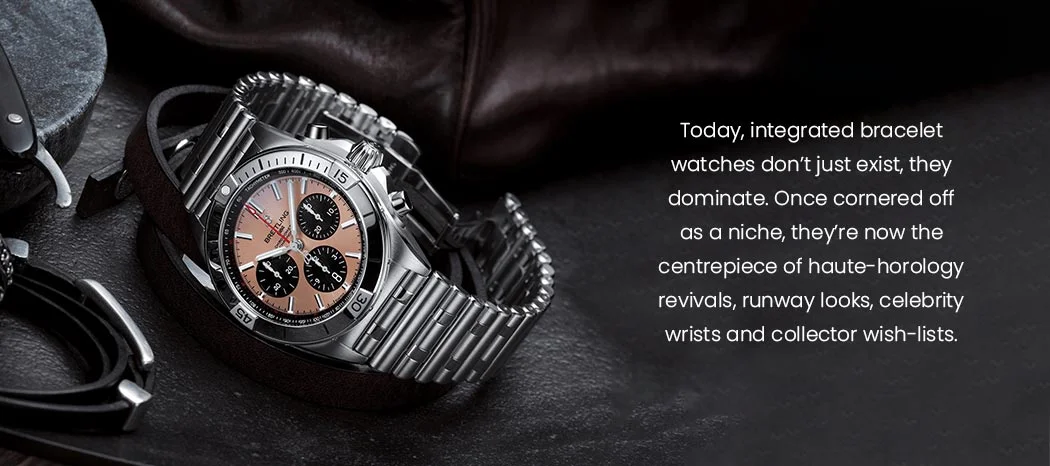
Today, integrated bracelet watches don’t just exist, they dominate. Once cornered off as a niche, they’re now the centrepiece of haute-horology revivals, runway looks, celebrity wrists and collector wish-lists. Their visual language fits everywhere—from the snowy streets of St. Moritz to the dusky bars of Soho House. It complements streetwear, power dressing and couture with equal finesse. Contemporary maisons have embraced the spirit of the 70s but modernised its execution. Whether it’s the Octo Finissimo Automatic, a ground-breaking timepiece celebrated for its ultra-sleek profile and impeccable design or the Omega Constellation, an iconic timepiece renowned for its enduring elegance and signature design elements. There are also the likes of the Longines Conquest and the IWC Ingenieur Automatic 40, a harmonious blend of contemporary elegance and sporty refinement.
Pop-culture Moments
The integrated bracelet is no longer a niche, it is a signature and has enjoyed a resurgence thanks to culture’s spotlight. The yellow gold Cartier Santos Galbee introduced in 1987, was worn by Michael Douglas in the film Wall Street, which instantly made it synonymous with wealth and style during the economic boom of that decade. While, the Piaget Polo launched in 1979 got its first serious outing when Bond girl Ursula Andress wore it to the World Polo Cup in Palm Beach. Soon after, it was taken up by tastemakers of the time and could be seen on many wrists including those of Andy Warhol and Brooke Shields.
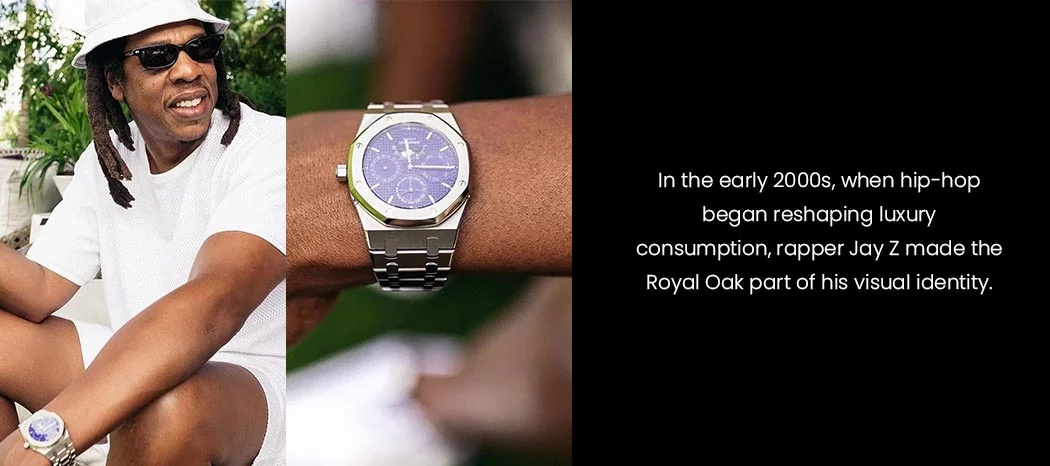
In the early 2000s, when hip-hop began reshaping luxury consumption, rapper Jay Z made the Royal Oak part of his visual identity. His lyrics referenced Audemars, but it was the imagery of the studio shots, courtside appearances and private jets that turned the integrated bracelet into a symbol of arrival. Basketball player LeBron James further cemented its status. Frequently photographed wearing various Royal Oak references off the court, paired with impeccably tailored suits or relaxed athleisure, James reframed the watch amongst the elite. Today, Drake’s love affair with the Nautilus has also been well documented with concert spottings, interviews and behind-the-scenes footage, transforming the watch into a contemporary status symbol. Hardik Pandya is often photographed in his many Patek Philippe Nautilus watches, as is Victoria Beckham, who has a penchant for the heavily bejewelled variants too. Deepika Padukone is often seen flaunting Cartier’s Panthère de Cartier with a stainless steel strap.
Ultimately, the enduring appeal of the integrated bracelet watch rests in the fact that it seamlessly flaunts bold aesthetics with classic design. Its evolution has been quiet, subtle and deeply respectful of its origins.



Recent Posts
Recent Comments
Archives