
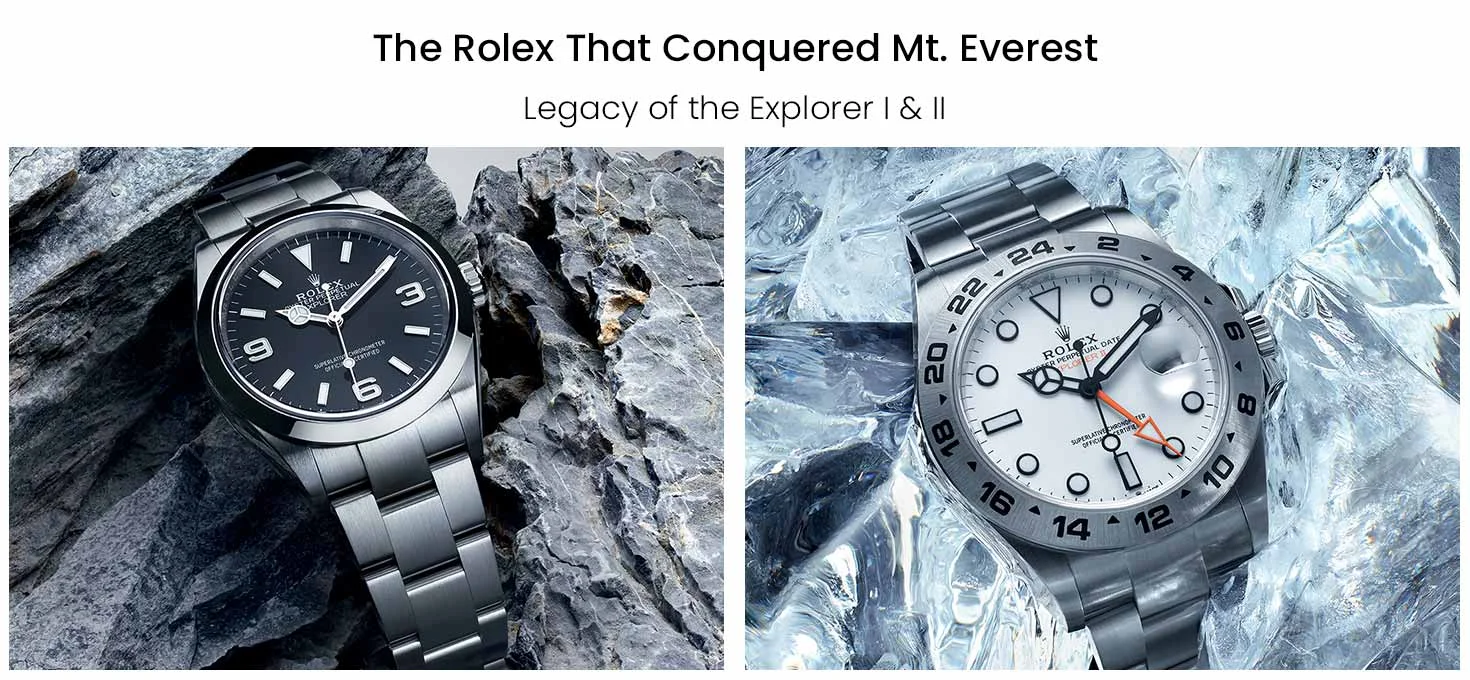
On the Crown’s spectrum of dress-to-tool watches, the Rolex Explorer I sits on the precise median. As the title suggests, the Explorer series was designed for discovery yet boasted the simplistic elegance of a quintessential Rolex dress watch — the perfect ‘one for all’ timepiece.
Possibly Rolex’s dressiest tool watch, the Explorer is fitting for a ballroom gala yet capable of withstanding Earth’s extremities. While the Daytona was born on the racetrack, GMT-Master in the skies, and Submariner in the seas, the Explorer’s legacy began on the highest point on Earth, Mt. Everest – proclaiming its natural habitat and resilience against the elements.
Here’s everything you need to know about the Rolex Explorer I and Explorer II.
Rolex Climbs Mount Everest
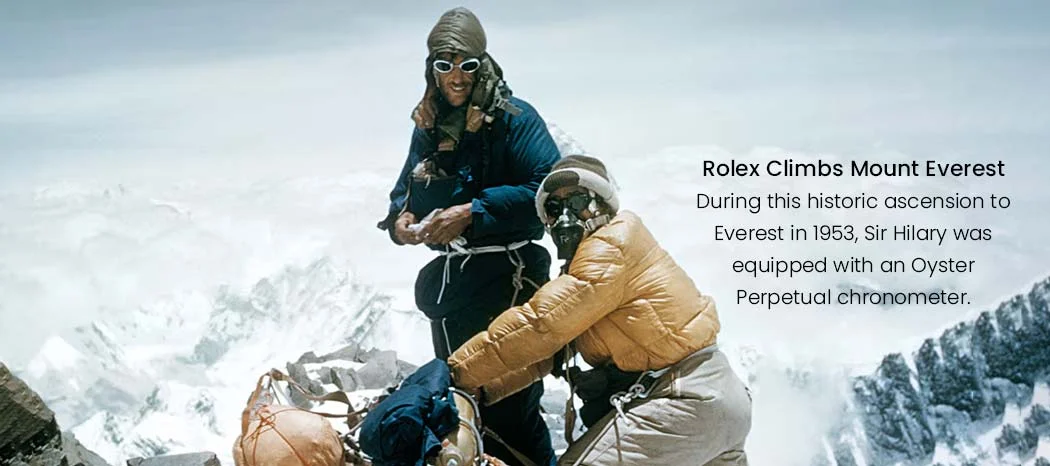
Even before World War II, Rolex had been putting their watches on the wrists of the world’s leading climbers, proclaiming the Oyster Perpetual’s durability in treacherous, high-altitude climbing. These models featured were crafted for added endurance and legibility.
On May 29th, 1953, under Colonel John Hunt’s expedition, British explorer Sir Edmund Hilary and Nepalese mountaineer Tenzing Norway famously summited the world’s highest peak — Mt. Everest, at an altitude of 8,848 metres (29,029 feet). During this historic ascension, Sir Hilary was equipped with an Oyster Perpetual chronometer.
Conquering the Extreme
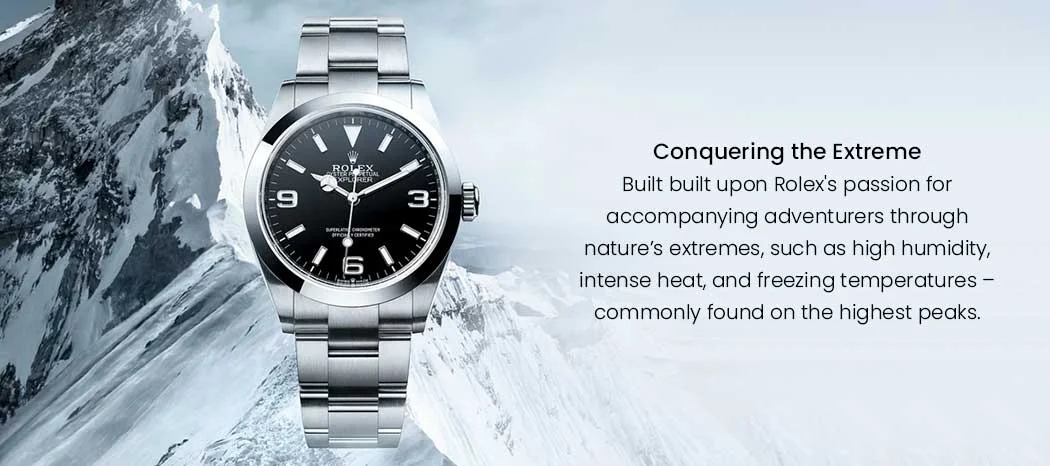
The year 1953 was epochal for Rolex. With the launch of the Submariner, Rolex also introduced the first generation of the Explorer — born for high-altitude Himalayan climbing — cementing Rolex’s place in the sports and utility segment. The Rolex Oyster Perpetual Explorer was one of the maison’s first professional models, built upon their passion for accompanying adventurers through nature’s extremes, such as high humidity, intense heat, and freezing temperatures – commonly found on the highest peaks. Rolex dared to plant their flag in the world’s most harrowing circumstances with sheer confidence.
Expeditions Into the Unknown: Explorer II
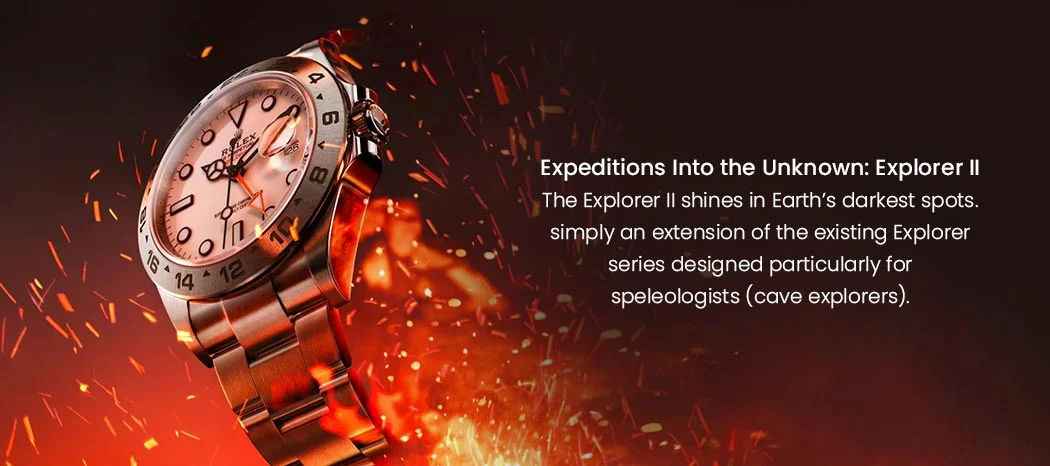
While the Explorer I was born for high-altitude Himalayan peaks, the Explorer II shines in Earth’s darkest spots. Furthering Rolex’s passion for discovery now to spaces untouched by sunlight, the Explorer II was simply an extension of the existing Explorer series designed particularly for speleologists (cave explorers). It features a 42 millimetre dial, Cyclops date, a Chromalight display, and a 24-hour graduated bezel, which enables the wearer to separate the time of day and night during extended periods in caves and underground terrains. Carrying the resilience of the Explorer I, the Explorer II can withstand icy polar conditions even during hours/days without light. The 24-hour hand is dipped in a striking orange hue accompanied by Chromalight indexes, which use a new luminescent material against a white or black dial that guarantees legibility in all circumstances.
Current Configurations: Explorer I
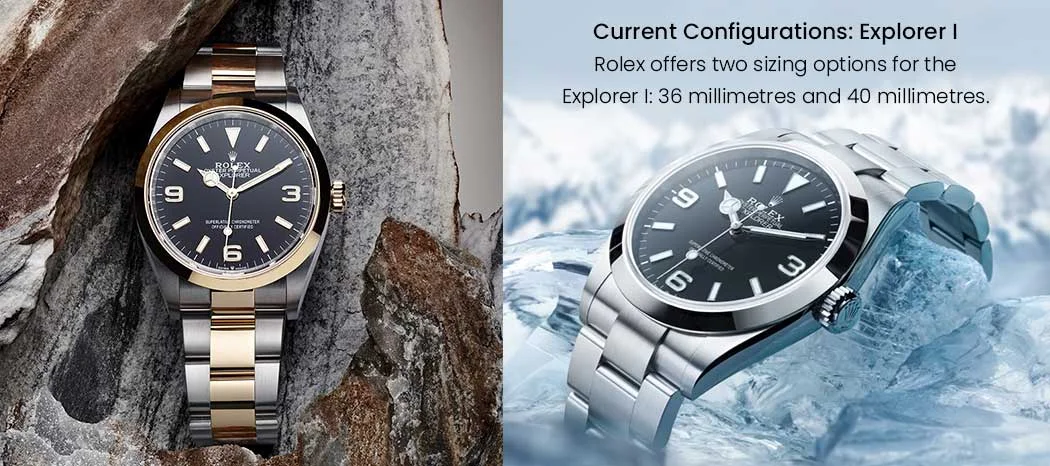
Retaining the original spirit of a heroic expedition, the Rolex Explorer features the same 3-6-9 index accent from seventy years ago. Currently, Rolex offers two sizing options for the Explorer I: 36 millimetres and 40 millimetres. In terms of case materials, the 36-millimetre sizing comes in Oystersteel and Yellow Rolesor, whereas the 40-millimetre sizing is offered exclusively in Oystersteel. Featuring a crisp black dial and Chromalight indexes that emit a long-lasting blue glow, it proudly boasts ‘Superlative Chronometer Officially Certified’ text (COSC + Rolex certification after casing). The bezel is sober, smooth, robust, but elegant – resistant to corrosion or scratches. Inside, the Rolex Explorer I houses a self-winding Calibre 3230, boasting a paramagnetic blue Parachrom hairspring and high-performance Paraflex shock absorbers, offering a 70-hour power reserve.


Recent Posts
Recent Comments
Archives