
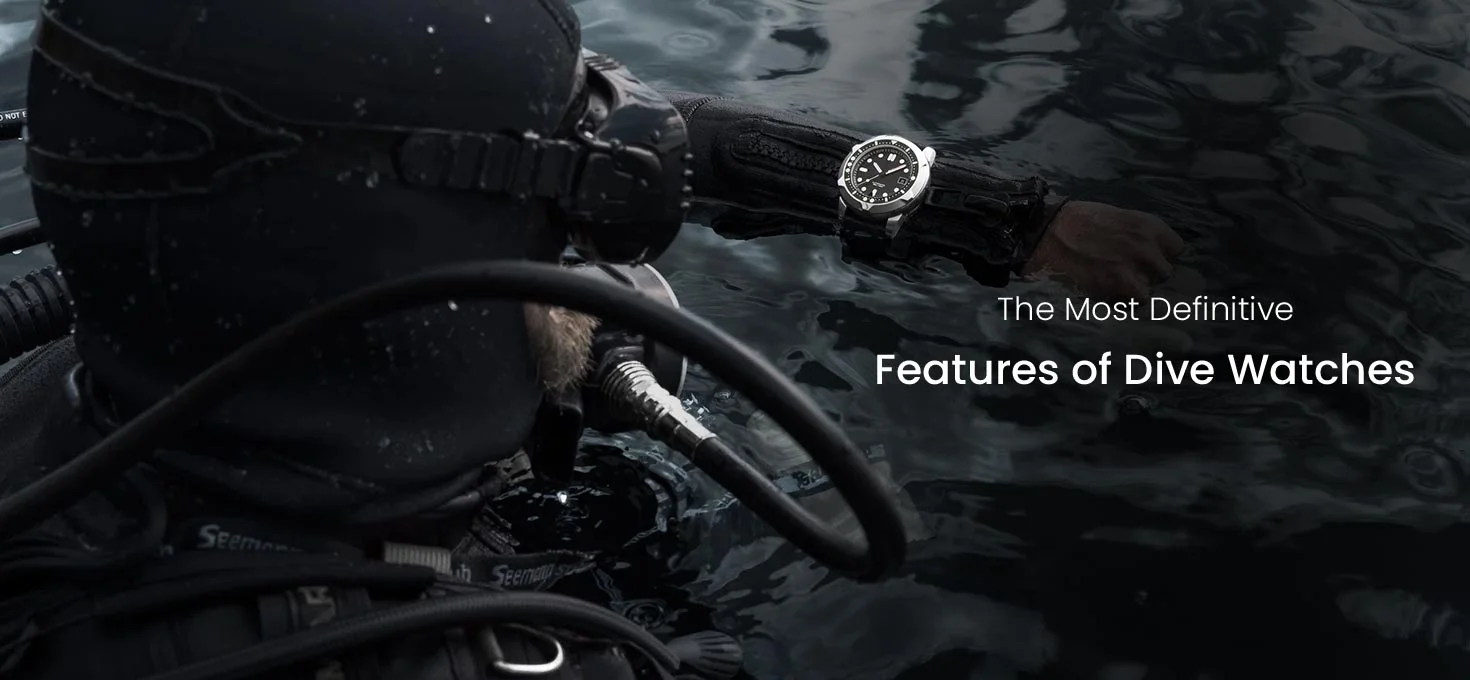
Engineered to withstand oceanic extremities with a century’s worth of technical innovation, dive watches are perhaps watchmaking’s most formidable breed that choose function over frills.
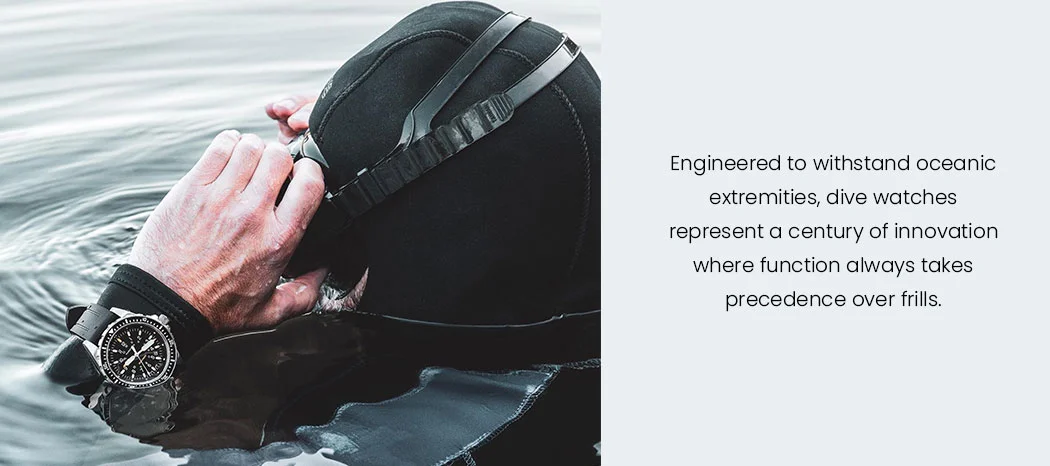
In the 1950s, when Blancpain’s Fifty Fathoms and Omega’s Seamaster 300 made their first splash, diving computers were still three decades away from being invented. Hence, militaries across the world relied on dive watches as the only reliable underwater timekeepers. These professional-grade timekeeping tools were purpose-built to accurately record elapsed dive time and, while down there, survive any natural forces that could prove a hindrance to their performance.
As the epitome of robust craftsmanship in watchmaking, dive watches are commonly accompanied by a library of technical sheets and statistical references. For easy reference, we’re cutting through the clutter and highlighting five of the most definitive features of dive watches.
ISO 6425: Gold Standard of Depth Rating
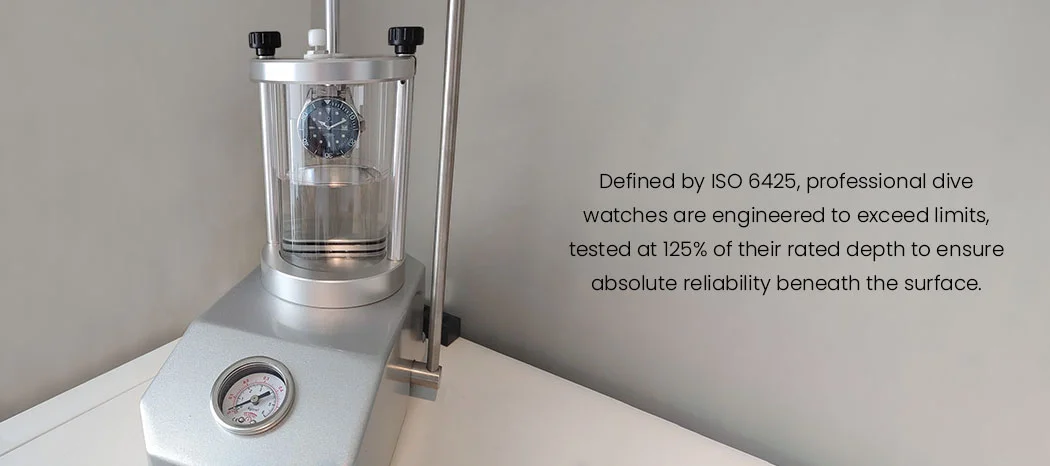
What draws a distinction between poolside sports watches and professional dive watches that can endure bone-crushing oceanic pressures is the ISO 6425 certification. Established in 1996, ISO 6425 certification is a globally recognized standard that outlines a series of stringent tests a dive watch must pass. At minimum, the watch must withstand 100 metres of water resistance — though in practice, most professional-grade dive watches begin at 200 metres. More importantly, each watch is tested at 125% of its rated depth. A 300-metre watch is pressure-tested at 375 metres to ensure a margin of safety.
An Underwater Fortress
As you dive deeper, water pressure dramatically increases, roughly one additional atmosphere every 10 metres. At 300 metres, the force pressing against a watch exceeds 30 times atmospheric pressure at sea level. To endure this, professional dive watches are constructed like miniature submarines.
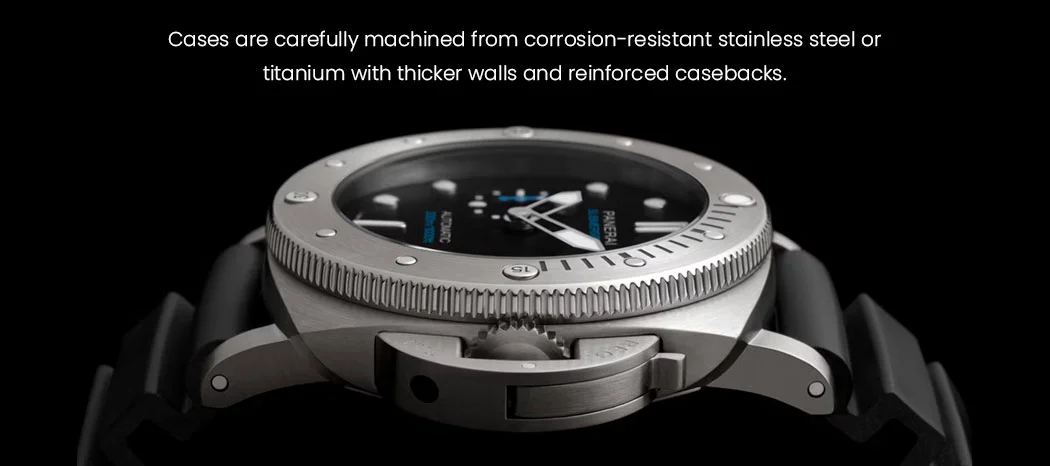
Cases are carefully machined from corrosion-resistant stainless steel or titanium with thicker walls and reinforced casebacks. Sapphire crystals are often bulged or curved to resist deformation under pressure. The screw-down crown plays a critical role – when secured, it compresses internal gaskets to create a watertight seal.
Dive watches aren’t overbuilt. They’re purposefully designed to survive environments that are unforgiving towards structural weakness.
Withstanding Natural Forces
Pressure isn’t the only threat a dive watch faces in the abyss. As natural light diminishes, water temperatures drop too, and with underwater currents, temperature shifts can be sudden. These fluctuations cause materials to expand and contract, potentially compromising seals. ISO 6425 testing simulates these variations to ensure thermal stress protection.
Magnetic fields present another invisible threat. Diving equipment, marine vessels, and underwater tools generate electromagnetic interference that can disrupt mechanical movements. ISO 6425 mandates resistance to 4,800 A/m, though many modern manufacturers exceed this baseline through anti-magnetic alloys or silicon balance springs.
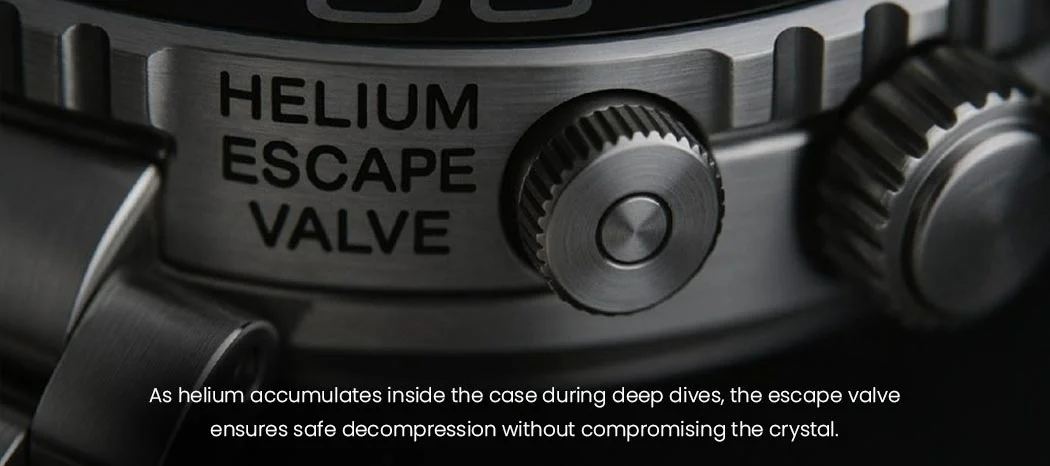
Then there’s the helium escape valve. During saturation diving, helium-rich gas environments allow microscopic helium molecules to infiltrate a watch case over time. Upon decompression, internal pressure can exceed external pressure, risking crystal displacement. A helium escape valve allows accumulated gas to exit safely.
Deep Down, Time Moves Differently (And More Critically)
If there’s one visual feature that defines a dive watch, it’s the counterclockwise rotating bezel. However, when you’re 300 metres deep in abysmal darkness on limited oxygen, it’s a lifeline. Moments before descent, every diver is instructed to turn their bezel turns the bezel so its luminous zero marker meets the minute hand. It triggers a countdown, and every passing minute is measured in oxygen consumption and decompression thresholds.
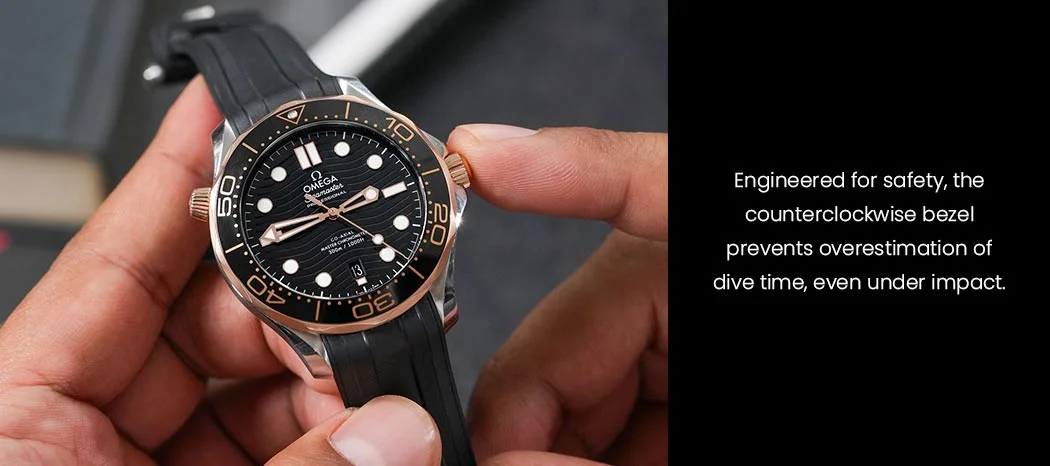
For safety, the bezel strictly rotates counterclockwise. Should it be knocked against equipment or a coral, it can only shorten the recorded dive time – never lengthen it. When the first modern dive watches emerged in the 1950s, this feature redefined underwater timing. Today, despite having dive computers, purists still prefer the cautious ticking of the rotating dive bezel.
Seeing Through the Depth of Darkness
Beneath the surface, light behaves differently. Within the first few metres, red wavelengths begin to disappear. Descend further and orange, then yellow, fade away. By the time a diver reaches significant depth, the world compresses into a spectrum of blue and grey Contrast weaken Shadows deepen.
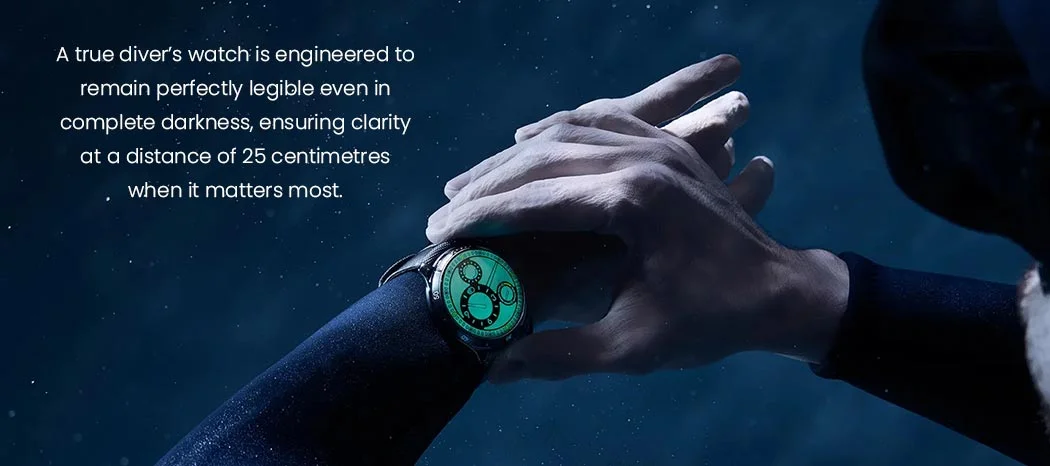
A dive watch answers this with contrast. ISO 6425 mandates that a diver’s watch remain legible in complete darkness at a distance of 25 centimetres.
Large, geometric hour markers maximize surface area for luminous material. Broad hands — often sword, arrow, or baton-shaped — are designed not for elegance, but for immediate differentiation. The minute hand is frequently more prominent or uniquely coloured, because elapsed time, not hours, is the diver’s primary concern. Modern dive watches rely on high-performance photoluminescent compounds such as Super-LumiNova, capable of absorbing light energy and emitting it steadily for hours.


Recent Posts
Recent Comments
Archives