
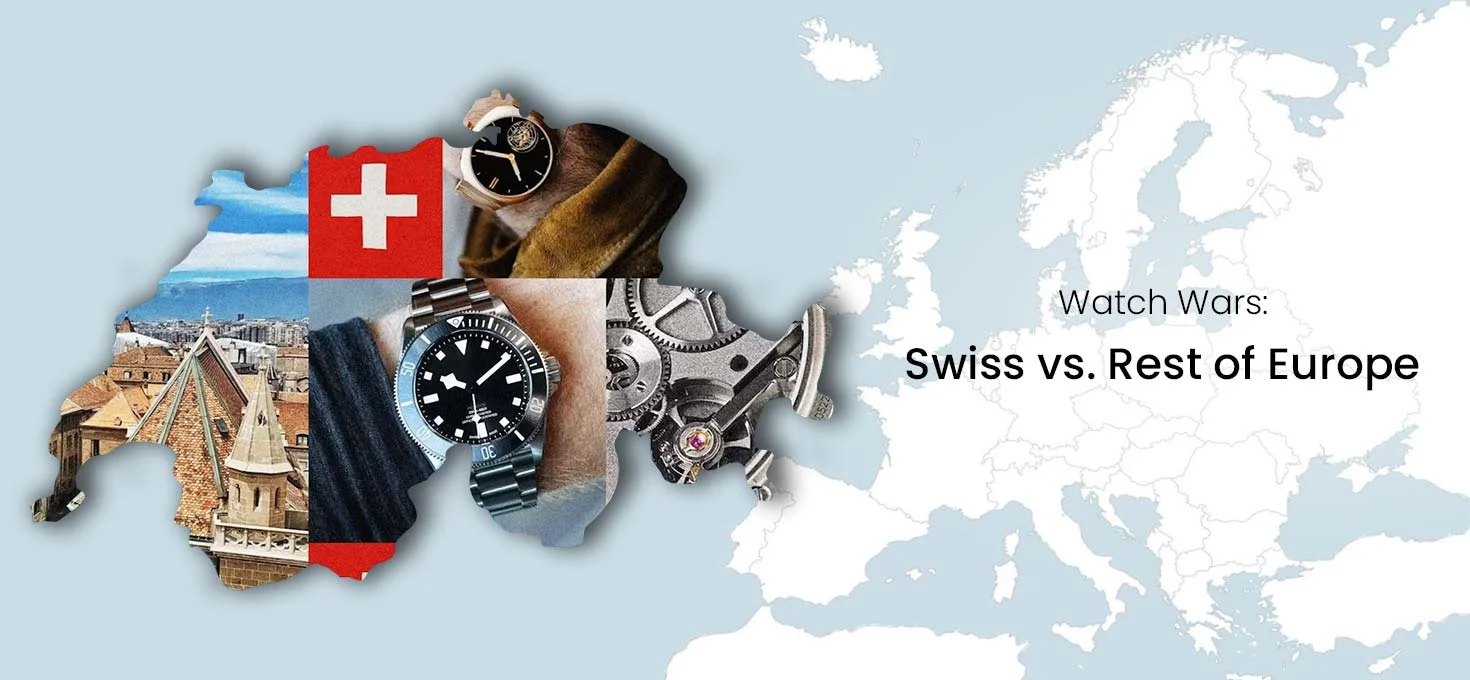
From T20, FIFA World Cup to the IPL, there is something about competitions that gets us all riled up and on the edge of our chaise longue. In the spirit of the season, one thought, why not pit some watchmaking countries against each other, juxtaposing their philosophies and techniques, and seeing how they stack up.
How Do Watches War?
his is definitely not as black and white as a slalom downhill, or even an ice-skating performance to the most current Punjabi remix, oh no, this is definitely more holistic and rounded an approach. We are talking about history and legacy, which were built on research, innovation and a relentless pursuit of perfection as embodied through quality and durability, so no easy task trying to simply assign them a score and then putting them in an order. If anything, the most obvious caveat here would be this: no matter the order of watch-producing countries we end up, regardless of how detailed or defined a process we follow, we will still find people who disagree with it. So, with that in mind, let’s try and see how really do all these countries stack up against each other and what sets them apart. And, most pertinently, at the risk of adhering to stereotypes, why should one prefer a certain country’s watchmaking industry over another when scouring for their next acquisition.
Switzerland
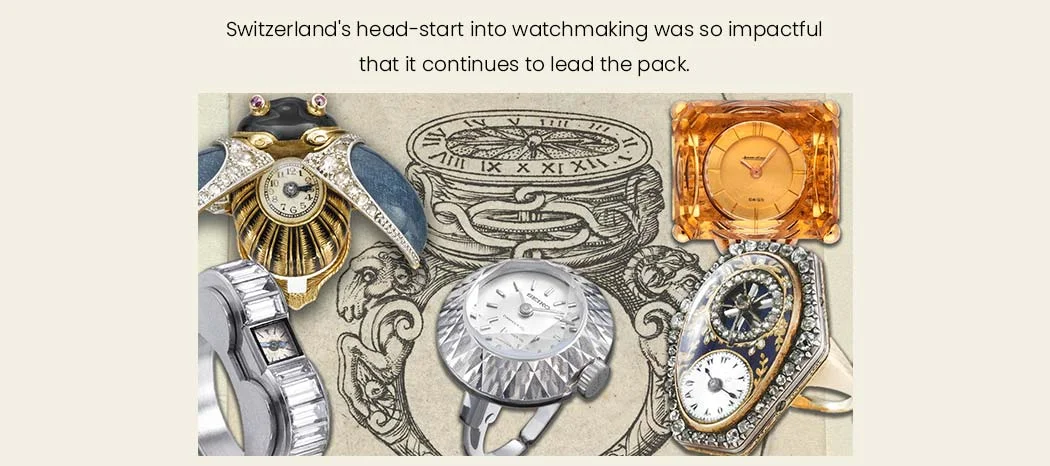
The land of chocolates and chimes, and perhaps romantic Bollywood song sequences from the late 80s, to encase it in a moderately spacious nutshell, is the first name that people associate with prestigious timepieces. For anybody who is not afflicted by the watch-collecting virus, the first question they ask when out shopping for their first watch is, “Is it Swiss?” Such is the prestige and reputation of the country and its ware. How did it all happen? -Well, we don’t have the time to get into that here, but it all started with the expulsion of the French Huguenots from France, and, combined with the rise of Calvinism, which further preached austerity, it pushed the fine jewellers into experimenting in the realms of precision and movement. Sometime after, when vanity became fashionable again, these jewellers and monks were propped right up for launching watches that were precise and pretty. The head-start was so impactful that other countries have never really caught up, so much so that, today, even when a technically superior watch comes from somewhere else, it is sized up against Swiss standards.
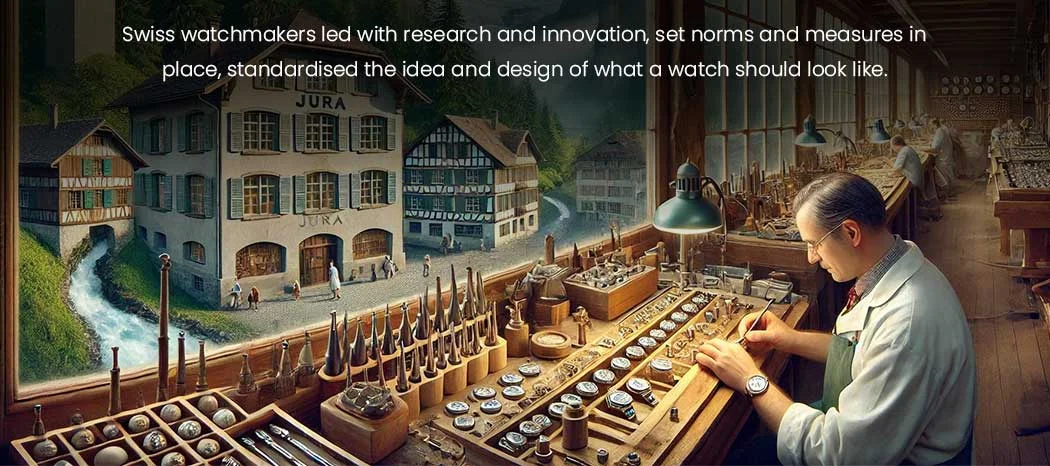
In that sense, the Swiss really were the pioneers of the trade. They led with research and innovation, set norms and measures in place, standardised the idea and design of what a watch should look like, pegged prices, established trends, and certainly did more for watches as a commodity (as also an article of luxury) than any other country before or ever since. Their contribution remains unmeasurably immense, and if many continue to consider them the supreme overlords of the watchmaking world, it is with much valid gravitas and emotion.
Germany
There is a joke that goes that the Swiss are better off than the others because they have French and Italian flair for living it up, combined with a German obsession for precision. So, that certainly says something about the Germans, something which may not be romantic or dreamy but is definitely respectable and worthy. Germany designs watches as if the Calvinists never left; they continue to exhibit an unmatched dedication to the idea of precision and mechanical mastery. It is a watch designed for engineers, by engineers. It’s almost a stark and austere approach to an art form, aspiring for greatness like a martial arts disciple, unbothered by fame or fortune. Their purpose (raison d’etre) seems to be derived entirely from their work, which is defined by a stoic commitment to honing their ware. German brands don’t put out watches that make you fall in love with them instantly, but maybe if you flip them over, or open them up, and someone learns patiently and explains to you all the painstaking work that has gone into the piece, perhaps then it all starts to make sense. Don’t buy a German watch for flaunting value, or because it will get instantly recognised in a room, instead buy it because you are someone who values the time taken to showcase the time being displayed on your wrist.
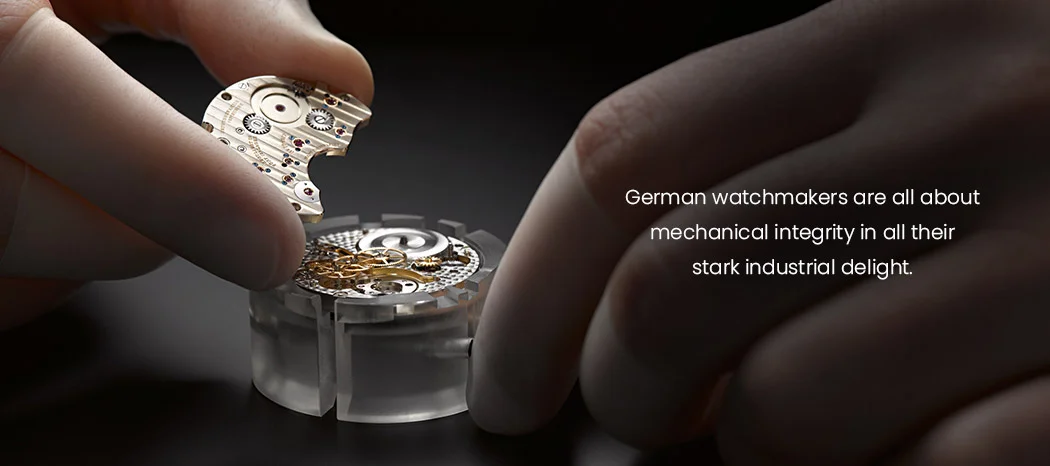
To compare, if the Swiss sell legacy, German watchmakers are all about mechanical integrity in all their stark industrial delight.
Italy
In direct contrast to both the above two, the Italians are all about La Dolce Vita. The Swiss and Germans pay heed to what’s in the case, while the Italians are more about the case. Sure, a watch must have mechanical prowess, and it should have precision, but those should come as standard so much so that one can then focus on the real thing that matters – the external beauty and how it makes the wearer smile. What’s the point of a watch if you can tell the time but are miserable about it? A well-told story, in the Italian sense, outshines a truthful one. A watch doesn’t have to be a compromise between movement and aesthetics but a watch which doesn’t have an elevated sense of the latter is not a civilised attempt at timekeeping. It’s brusque and banal. That’s what the Italian take on this job is – make it work but please make it look good, oh, so darned good.
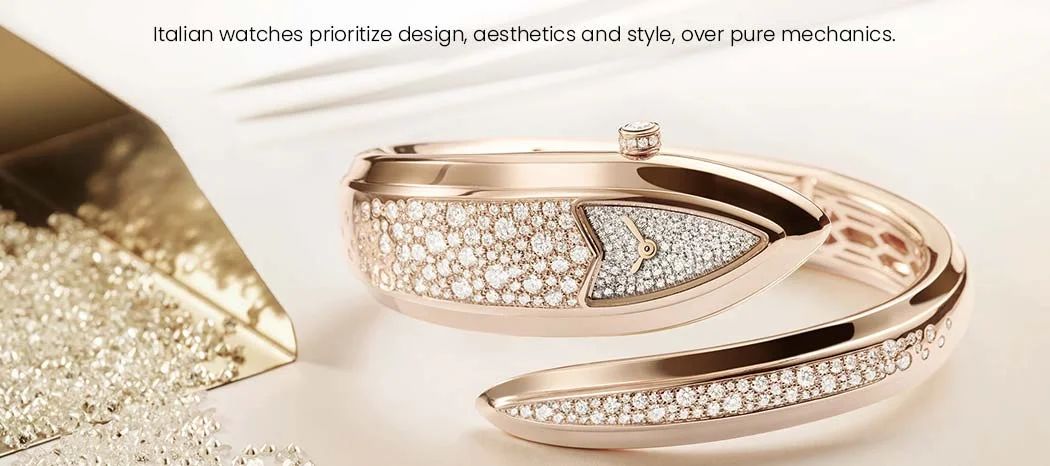
For Italians, a watch is wearable design and that function shouldn’t supersede form. If you have seen how the average Italian dresses, you can see what they mean and how important it is to them. I can’t think of any other set of people on the planet who can wear orange trousers with blue shirts almost as some unspoken rule of uniform and still make it look not out of place!
France
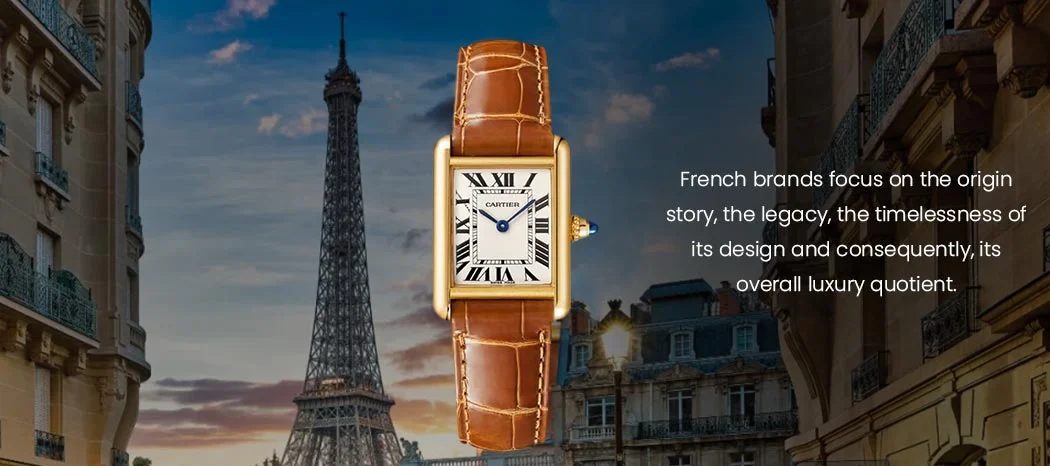
If the Swiss think of watches as legacy while for Germans they are a mechanical marvel, and the Italians considers theirs high artistry, for the French, watches are an extension of the larger conversation around luxury itself. The watch isn’t a standalone accoutrement that can be seen or studied in isolation. Instead, for the French, it is part of the larger conversation that is the cynosure of the world of first world problems. In that sense, it encompasses everything that can give it the luxury tag – rarity, preciousness, exclusivity, desirability, even (un-)affordability. Think of all the watch collector’s in your circle (or slightly above, outside of it); how many do you recall wear (or even possess) a French watch? There you go. (In case you answered, “many”, then I have failed.)
Now some will rebuttal that by virtue of defining it as luxury, one is looking at a fashion piece, an ephemeral object of momentary beauty, jewellery at best. But that’s the thing, the French don’t discount the values and metrics that define haute horlogerie, they just feel that it needn’t be the main talking point of their most iconic pieces. Many luxury French brands put out some truly classic timepieces yet, you will be notice, to much amazement, that the conversation rarely teeters towards too many technical aspects, choosing instead to focus on the origin story, the legacy, the timelessness of its design and consequently, its overall luxury quotient.
So, Who Wins?
In the long term, I think all these countries, in some manner, have got it right. If we were to judge a watch by pure functionality, to reduce it to its one core purpose and to try and see just how well it can be delivered, well, we’d still leave a lot of space for competition from the digital side of things. No matter how many cylinders an internal combustion engine may flaunt, it still can’t deliver the torque that an electric motor can dish out. The same way, an mechanical watch isn’t necessarily better to have compared to a modern digital device with satellite connectivity capabilities for timekeeping, but it certainly does feel better to have. In that long war, all these countries are possibly fighting for the same side.
But that isn’t the spicy answer one was anticipating when they set out reading this article; all of us have seen too many races where there is a medal for even coming in 17th. So really, who does it better? Is it Switzerland with their history and legacy, maybe Germany with their mechanical prowess, could it be Italy with their design flair, or does France edge all others out with their more comprehensive approach?
Sigh, it would be easier to rate fruits – apples vs. oranges – at this point. Well aware that there is no way to divide this cake equally, here’s what I feel. The Swiss, no matter how tough the competition gets, will still have the edge on them all. They manage to make great reliable builds and designs across price brackets, materials, and styles, so there will always be something for everybody. Next would be the Italians because to the layman, aesthetics will matter more, and I won’t be surprised if every watch collector who started their collection with a Swiss piece, are now eyeing an Italian one for their second acquisition.
As for the French and Germans, well, neither will come in cheap, for one. But, since many a French piece will come from a popular design or luxury brand, the appeal might be quicker and easier perceived. Even a seasoned watch collector won’t shy away from owning a classic from a French brand. Which leaves the Germans in last place, who, by no means, are here for lack of any element or feature. It’s simply because German watches are an acquired taste. For those who have explored this realm, they will continue to be a part of this clan, silently, discreetly, yet with an unparalleled respect for others of their tribe. To put it in more contemporary words and circumstances, if “quiet luxury” were to infect the watch world tomorrow, everyone would be queuing up for a German brand. Thankfully, horology is less ostentatious and trend-driven.
So, what did you think about our little battle? Was it as edge-of-the-seat as a biathlon? Did you feel the same rush as an Ind-Pak match? Or ire, in case the country you were rooting for didn’t win?
Recent Posts
Recent Comments
Archives