
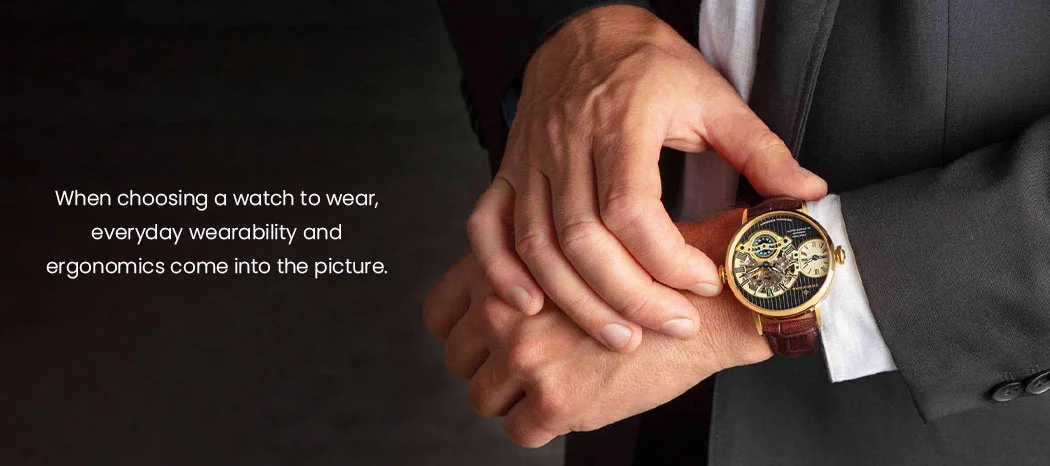
We buy a watch for a multitude of factors: Passions, nostalgia, novelty, and many more. But when choosing a watch to wear, everyday wearability and ergonomics come into the picture — especially factors like dial hue, complication, and case size.
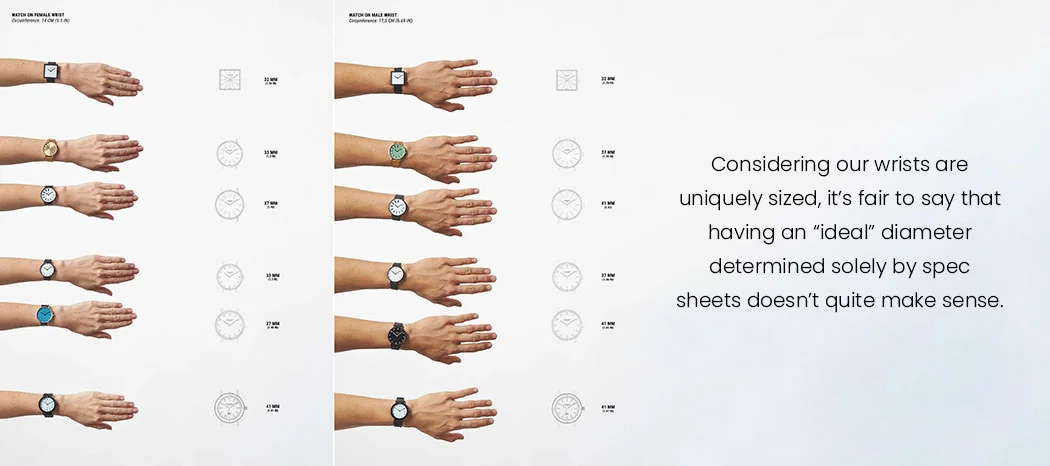
Traditionally, a timepiece’s case diameter has been treated as a shorthand for “how big a watch actually is”. A 36-millimetre diver was “small”, while a 42-millimetre steel sportswatch was “perfect”, and a 44-millimetre tool watch was brutish. Considering our wrists are uniquely sized, it’s fair to say that having an “ideal” diameter determined solely by spec sheets doesn’t quite make sense.
Firstly, Does Watch Size Even Matter?
When timepiece shopping, the only rule that matters is that there aren’t any.
You’re absolutely free to sport a heavyweight diver’s watch to a boardroom meeting, a petite dress watch to Sunday brunch, or an oversized pilot’s watch to your best friend’s wedding. A report revealed that 61.7% of female buyers in 2023 purchased what had been traditionally labelled as “men’s” watches, and nearly a third of those were 40 millimetres and above. In contrast, men are embracing their individualism and flair by wearing smaller models, erasing the lines between gendered watch-wearing and jewelled accessorising.
Sure, the rulebook’s thrown out the window, but having a sense of functional ergonomics when choosing a timepiece is definitely helpful.
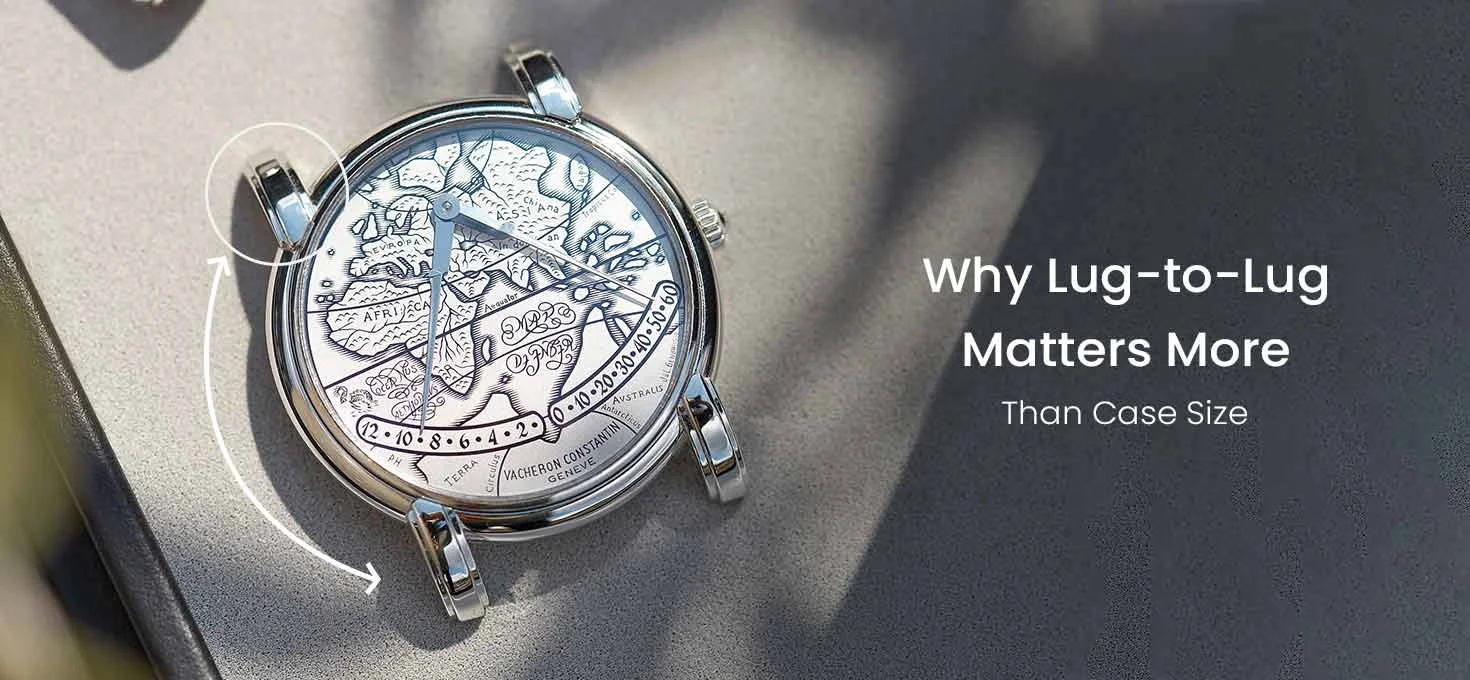
What Is ‘Lug-to-Lug’ Size?
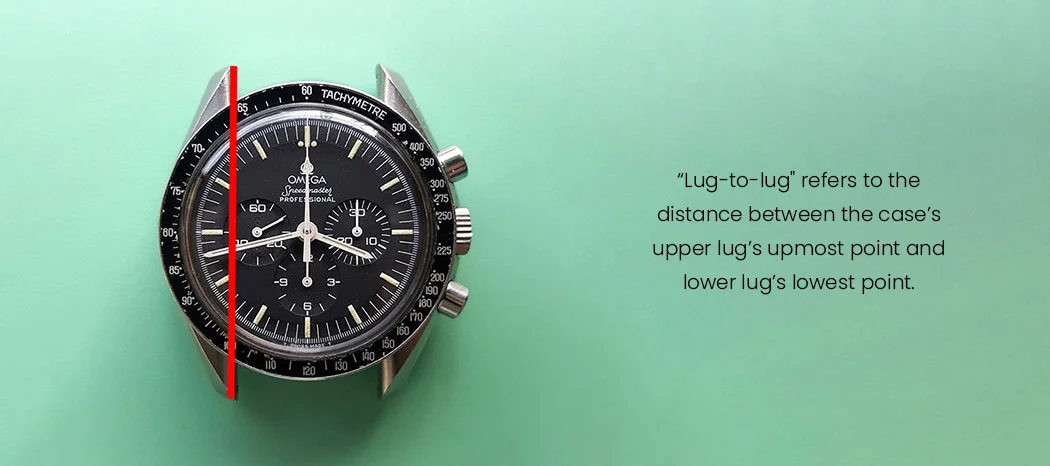
“Lug-to-lug” refers to the distance between the case’s upper lug’s upmost point and lower lug’s lowest point. Simply put, it’s the full vertical span of the timepiece — from where the strap/bracelet attaches at the top, all the way to where it attaches at the bottom. This is different from lug width, which signifies the distance between lugs on the same side. Lug width matters when determining the suitability of strap/bracelet thickness for your wrist.
Always remember, case size is a guideline, not a rulebook. A timepiece’s diameter might appear modest, but long, straight lugs can significantly enlarge its presence on the wrist. Conversely, a larger diameter watch with short, downward-curving lugs may be surprisingly compact.
Getting A Sense of Scale

Imagine placing two timepieces side by side, both featuring identical diameters. However, one has long, straight lugs, whereas the other has short, curved lugs. When worn on the same wrist, the former will stretch much farther across the wrist, causing an “overhang” where the case appears to protrude beyond the wrist’s width. This causes the timepiece to look and feel disproportionate, unstable, or, quite frankly, awkward, despite having a “reasonable” diameter.
That “overhang” is what collectors avoid at all costs, because it ruins wearability and aesthetic proportion. Lug design, curvature, and case architecture all influence this, and it’s why some large divers wear smaller than expected, while some slim dress watches feel surprisingly large.
The Golden Rule
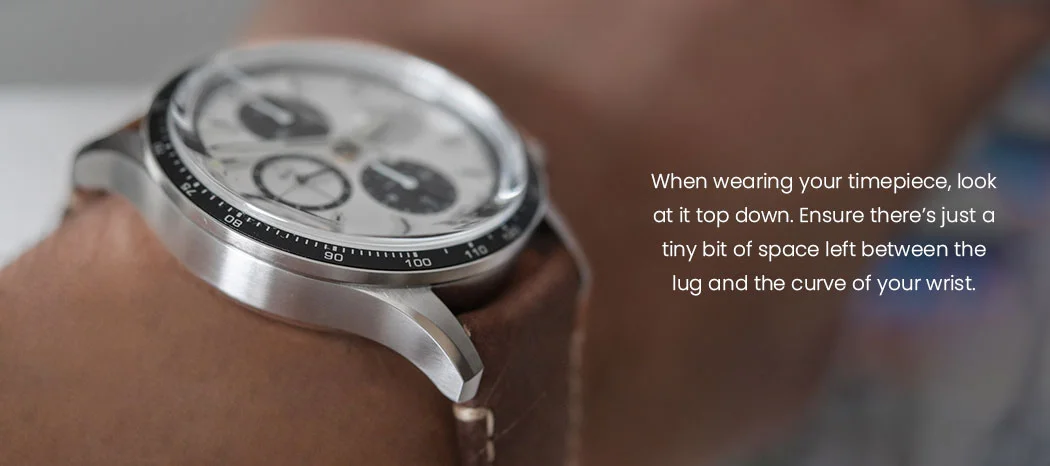
There’s a sweet spot between proportion, comfort, and aesthetic presence here. Find a timepiece with a lug-to-lug size that doesn’t exceed the width of your wrist.
Try this: When wearing your timepiece, look at it top down. Ensure there’s just a tiny bit of space left between the lug and the curve of your wrist. As a general guide, smaller wrists best pair with lug-to-lug measurements around 45-46 millimetres, while average-sized wrists can comfortably sport a 50-millimeter+ size. Broader wrists can certainly push past that, but only if the lugs curve downward, ergonomically spilling over your wrist.
What This Means for You
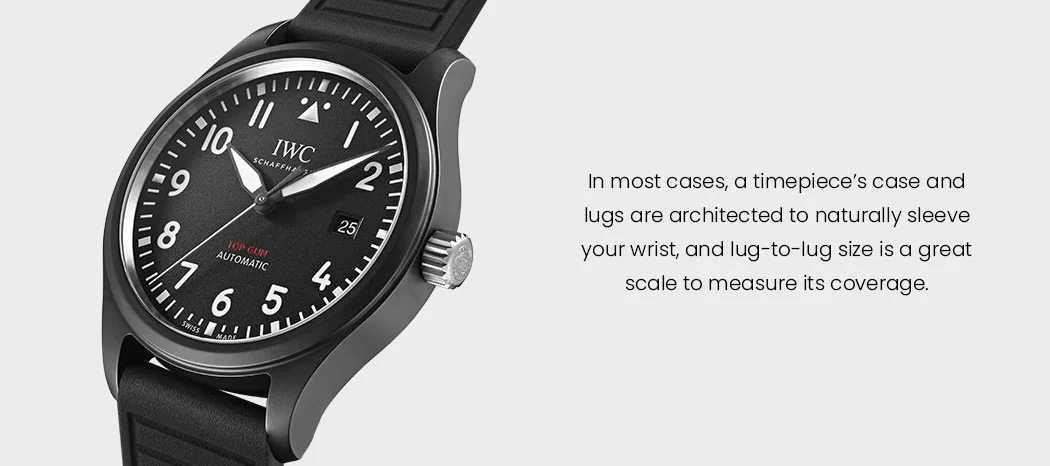
Finally, it doesn’t come down to bulky case sizes, thin lugs, or spec sheet figures. Our wrists are shaped uniquely, and what matters is how a timepiece rests on them. In most cases, a timepiece’s case and lugs are architected to naturally sleeve your wrist, and lug-to-lug size is a great scale to measure its coverage. Understanding lug-to-lug sizing fundamentally alters the way you assess a watch, especially in an age where much of watch shopping, reading, and research takes place online. Case diameter remains an undeniably critical metric, but considering lug-to-lug size and curvature of lugs adds nuance, clarity, and real-world practicality to any evaluation. That 38/40-millimetre timepiece that looks perfect on paper may wear clumsily if the lugs stretch past your wrist. On the flip side, that intimidating 42-millimetre diver you’ve been avoiding might actually fit beautifully, thanks to thoughtful and clever case geometrics.


Recent Posts
Recent Comments
Archives