
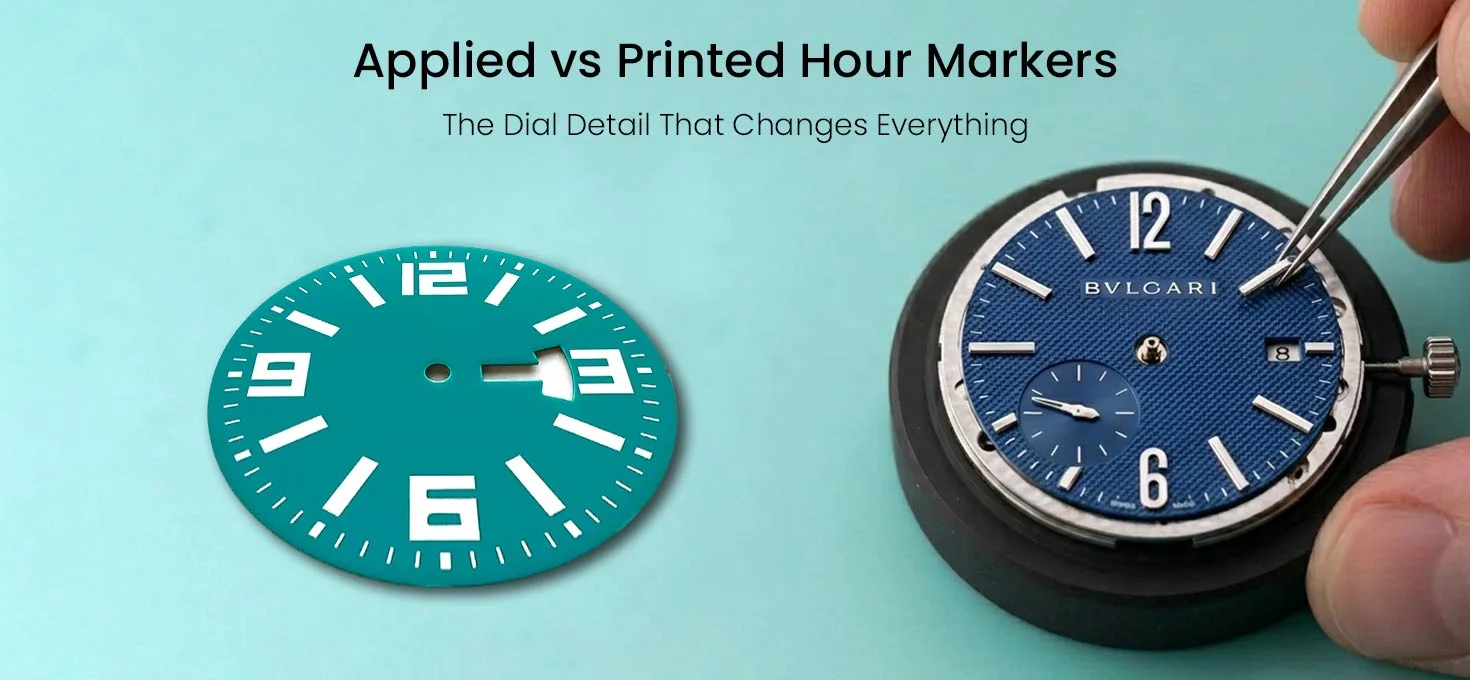
In watch design, few details shape a dial’s personality as quietly yet powerfully as its hour markers. The debate around applied vs printed hour markers has become a defining conversation among collectors and enthusiasts who appreciate the finer nuances of watchmaking. While applied hour markers bring depth, reflections and a sense of luxury to a dial, printed hour markers offer clarity, vintage charm and timeless simplicity. The distinction between applied vs printed hour markers is not merely technical but deeply artistic, influencing how a watch feels on the wrist and reads time under changing light. Whether one prefers the dimensional elegance of applied hour markers or the clean restraint of printed hour markers, the discussion surrounding applied vs printed hour markers continues to shape modern watch aesthetics. Today, both applied hour markers and printed hour markers remain central to the identity of countless iconic timepieces.
How Hour Markers Became an Art Form?
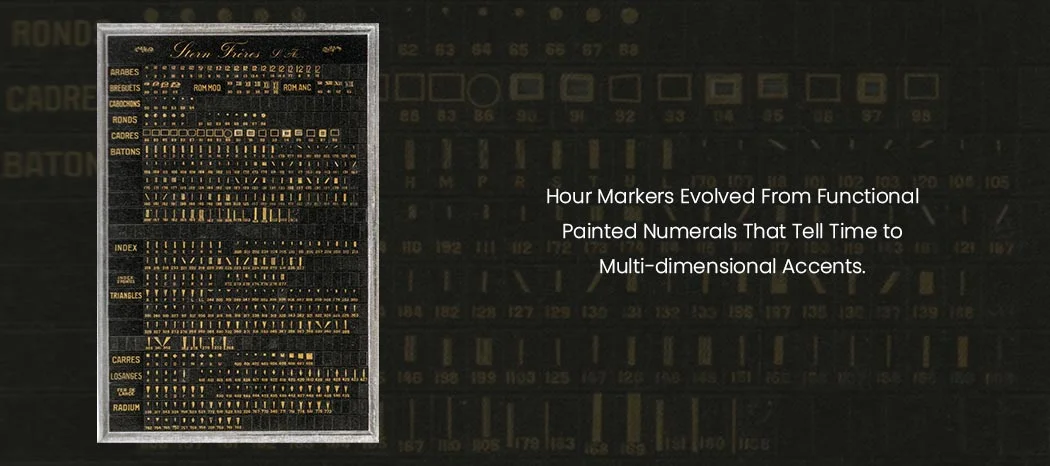
Before luxury watchmaking turned dials into artistic statements, hour markers were created with pure functionality in mind. Early watches featured hand-painted numerals and markers crafted by skilled artisans, valued for their clarity and practicality. As manufacturing evolved, machine printing gradually replaced hand-painting, making dials cleaner, more consistent and easier to produce.
With the rise of luxury wristwatches in the twentieth century, dial design became more expressive and decorative. This shift introduced applied hour markers, where individually mounted indices added depth, reflections and a stronger sense of craftsmanship to the dial. Over time, the debate between applied vs printed hour markers evolved into a contrast between simplicity and dimensional luxury, shaping the visual identity of modern watch design.
Printed Markers: The Beauty of Simplicity
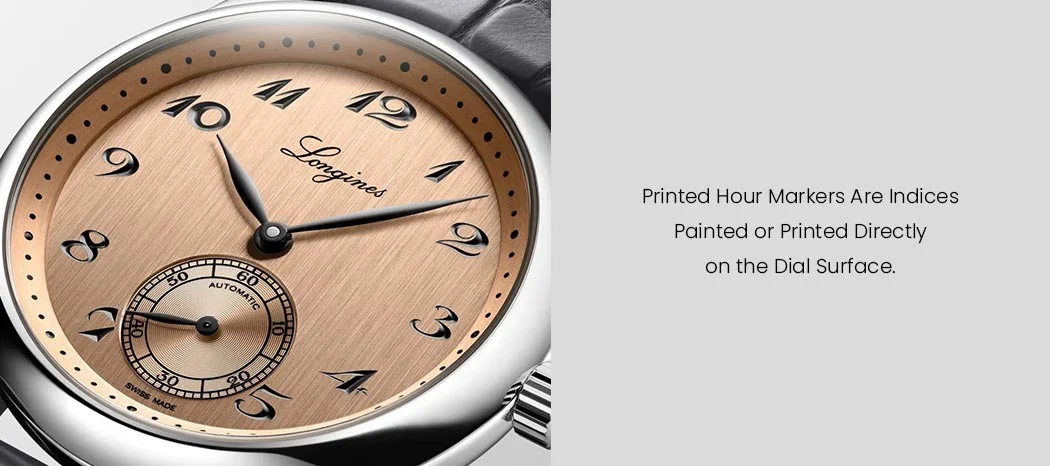
Unlike raised indices, printed hour markers sit flat on the dial surface, creating a cleaner and more balanced appearance. The creation of printed hour markers typically involves pad printing (also known as tampography), a precise technique ideal for curved and textured surfaces. The process begins with the dial being meticulously cleaned and treated. Special UV-resistant inks, often mixed with Super-LumiNova for lume-filled markers, are transferred from an etched plate onto the dial using a soft silicone pad. This method allows for extremely fine details and consistent thickness. Because the markers become an integral part of the dial surface, they require no additional mechanical attachment, contributing to their exceptional durability and smooth, minimalist appearance.
One of their biggest advantages is legibility, as the absence of reflective metallic surfaces makes the time easier to read under different lighting conditions. This practical quality is why many military, dive and vintage-inspired watches still rely on printed designs today.
There is also a nostalgic charm associated with printed markers, as many classic watches from earlier decades used painted or printed indices to achieve a functional yet elegant look. Their integrated construction also makes them highly durable, with no risk of markers loosening over time. More than anything, printed hour markers celebrate minimalism, proving that simplicity can often leave the strongest visual impact.
Applied Markers: Depth, Light and Luxury
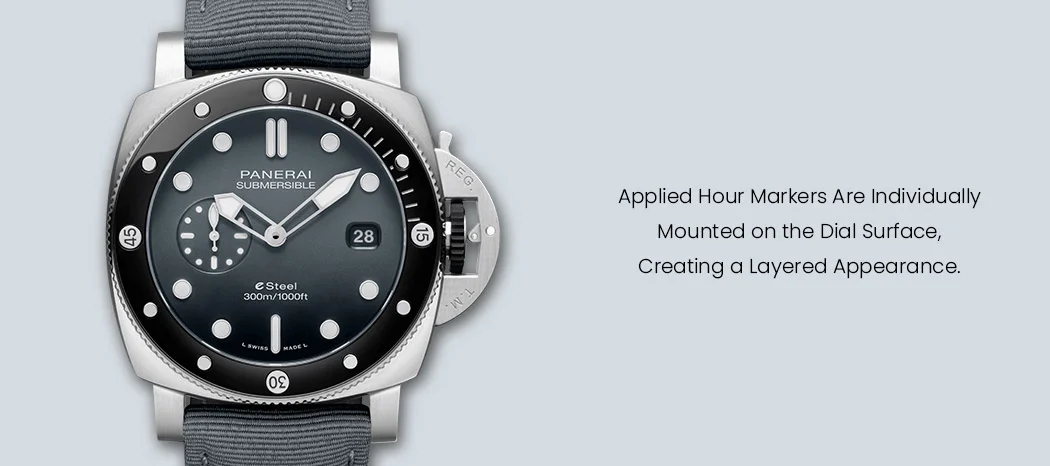
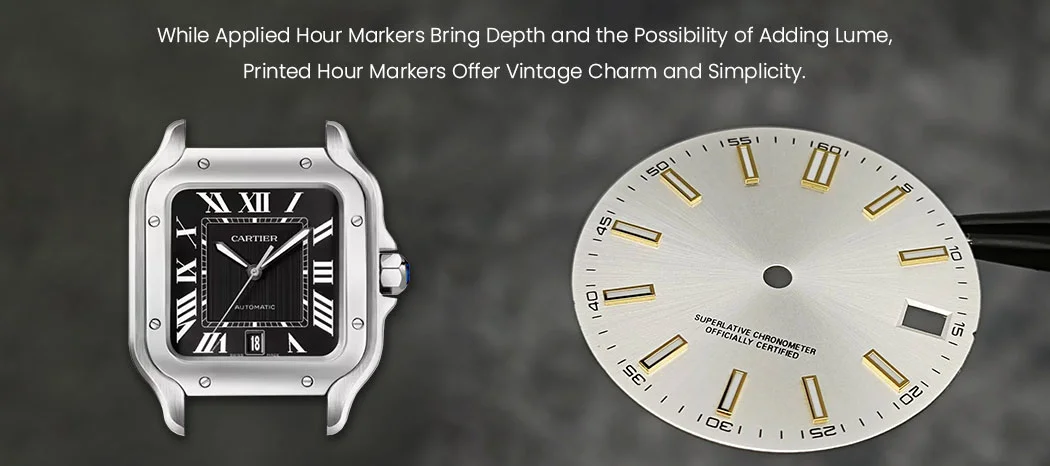
Applied hour markers bring depth, texture and a stronger sense of craftsmanship to a watch dial. Unlike printed markers, they are individually mounted onto the dial surface, creating a layered appearance that adds dimension and visual richness. Their biggest appeal lies in the way they interact with light, as polished indices reflect changing highlights that make the dial feel more dynamic and luxurious. Many enthusiasts associate applied markers with premium watchmaking because of the intricate process involved in manufacturing and attaching each index.
Applied markers are usually crafted from 18k gold, platinum, or high-grade stainless steel. They are individually stamped, machined, and hand-finished before being polished or brushed to achieve the desired texture. In high-end executions, brands may use solid gold markers set with diamonds (often brilliant-cut or baguette) for added sparkle, or even baguette-cut gemstones. Each marker typically features tiny gold feet on the underside that are inserted into precisely drilled holes in the dial and secured with adhesive or tiny screws from the back. This labor-intensive process is one reason applied indices are closely associated with haute horlogerie and commanding price points. They also offer better lume capacity, since luminous material can be placed within the marker structure itself.
However, their reflective nature can sometimes reduce legibility and there is always a slight possibility of markers loosening over time. Ultimately, applied hour markers are valued less for practicality and more for the emotional and luxurious experience they bring to a watch dial.
Let’s Understand the Two Philosophies of Dial Design Better
Printed Hour Markers
- Creates a cleaner and flatter dial appearance that feels balanced, understated and visually refined.
- Offers better overall legibility as the absence of raised metallic surfaces reduces unnecessary reflections.
- Carries a strong vintage-inspired character often associated with classic military and tool watches.
- Provides greater durability due to its simpler construction with no risk of markers detaching over time.
Applied Hour Markers
- Features a raised three-dimensional structure that adds depth and a more layered appearance to the dial.
- Creates a stronger sense of luxury and craftsmanship through individually mounted and polished indices.
- Produces dynamic reflections and shadows that change beautifully as light moves across the watch face.
- Allows for better lume capacity since luminous material can be applied within the structure of the marker itself.
- Can occasionally reduce readability under certain lighting conditions due to the reflective nature of the markers.
The discussion surrounding applied vs printed hour markers ultimately comes down to design philosophy rather than superiority. Printed hour markers prioritize clarity, balance and simplicity, while applied hour markers focus on depth, texture and visual richness. Neither approach is objectively better. The true beauty of applied vs printed hour markers lies in how each style changes the personality of a watch dial and shapes the emotional experience of wearing it.
Kapoor Watch Co.
Kapoor Watch Co. has established itself as one of India’s leading destinations for luxury watch enthusiasts, offering an exceptional collection of prestigious global watch brands like Cartier, Rado, Omega, Breitling and many more. Known for our legacy of trust, authenticity and refined customer experience, we have become synonymous with premium horology in the country. From timeless classics to contemporary masterpieces, we curate timepieces that reflect craftsmanship, heritage and innovation, making it a preferred choice for collectors and first-time luxury watch buyers alike. Visit Kapoor Watch Co. stores or visit our website now!
Frequently Asked Questions
What are applied hour markers in watches?
Applied hour markers are raised indices individually attached to the watch dial rather than printed onto it. These markers add depth, reflections and a more luxurious appearance to the dial. Often crafted from metal and polished for visual impact, applied markers are commonly associated with premium watchmaking and high-end dial craftsmanship.
What are printed hour markers in watches?
Printed hour markers are indices painted or printed directly onto the dial surface. They create a cleaner, flatter and more minimalist appearance while improving legibility by reducing reflections. Commonly found on vintage-inspired, military and tool watches, printed markers are appreciated for their simplicity, durability and timeless aesthetic appeal.
What is the difference between applied and printed hour markers?
The main difference lies in construction and visual effect. Applied markers are physically mounted onto the dial, creating depth and reflections, while printed markers are flat designs placed directly on the dial surface. Applied markers emphasize luxury and dimension, whereas printed markers focus more on clarity, simplicity and vintage-inspired functionality.
Are applied hour markers better than printed markers?
Applied hour markers are not necessarily better than printed markers, as both serve different design purposes. Applied markers offer a more luxurious and dimensional appearance, while printed markers provide cleaner aesthetics and stronger readability. The choice ultimately depends on whether one prefers visual richness or minimalist practicality in a watch dial.
Do applied hour markers improve readability?
Applied hour markers do not always improve readability. While they can enhance lume application and visibility in low light, their reflective surfaces may create glare under certain lighting conditions. Printed markers are often considered easier to read because their flat, non-reflective design provides a cleaner and clearer dial appearance.


Recent Posts
Recent Comments
Archives