
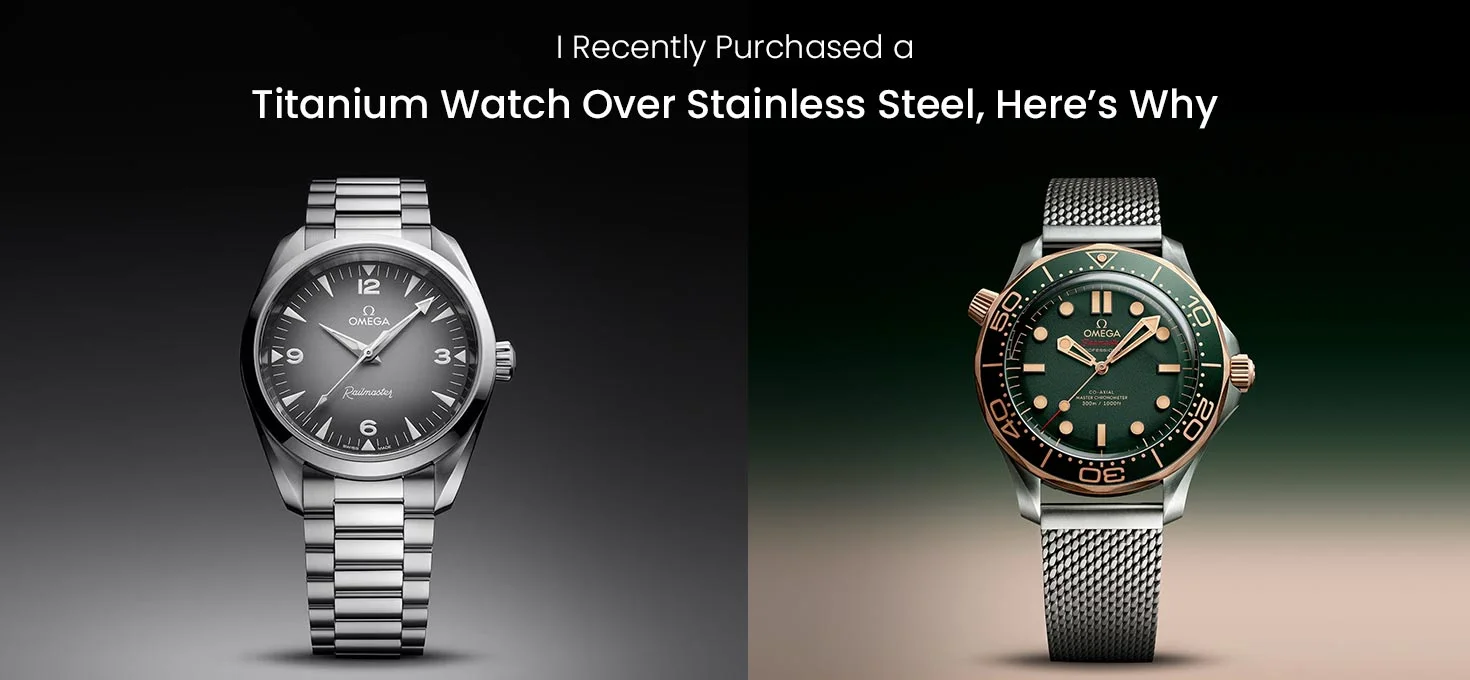
Beyond haute horlogerie’s lustre of gold timepieces, stainless steel is considered an industry staple for being flexibly machined to each era’s innovations, contemporary appeal, and meeting watch buyers at various price points. Despite stainless steel having a timeless shine, cutting-edge titanium only ups the ante. Sure, titanium has been around since 1791, but its value proposition has only gotten stronger, especially in watchmaking.
Recently, at a Kapoor Watch Co. store, I was spoilt for choice between a shiny steel-cased timepiece and a strikingly handsome titanium-cased alternative. I weighed the pros and cons of titanium versus steel, and came to a technical, emotional, and practical conclusion. Here’s all about it.
An Element of Innovation
Here’s a quick history lesson: Named after the titans of Greek mythology, titanium is considered the perfect case material for its many unique properties. Discovered in 1791 as a “magnetic black sand-like oxide” with mainstream industrial use in the 1940s, titanium’s first commercial use in watchmaking dates to the 1970s X-8 by Citizen Watch, Japan. Before this, watch cases were commonly crafted out of precious metals or brass, which were highly prone to corrosion. Citizen’s R&D team turned their attention to titanium, which was rust-resistant, ultra-light, and hypoallergenic.
My Watch Shopping Experience
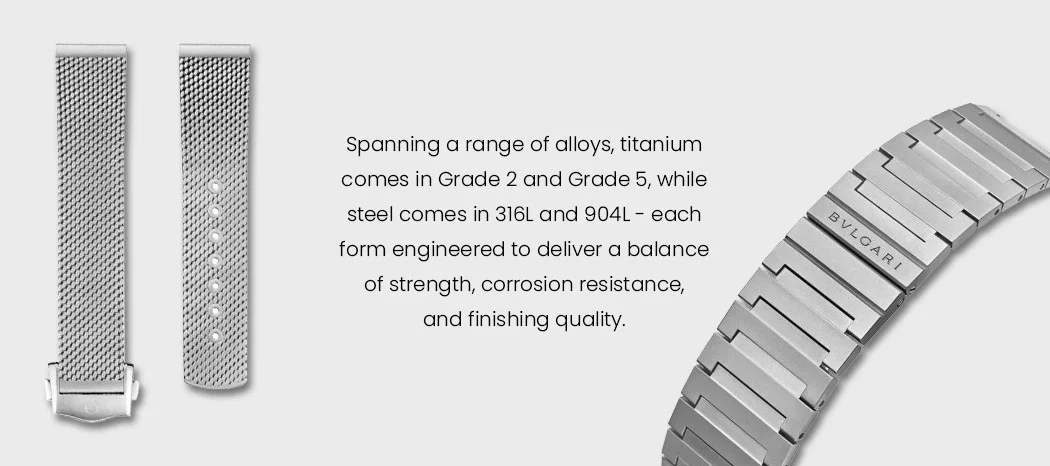
Titanium and steel are both materials of innovation, with neither existing as a singular, uniform material in watchmaking. Spanning a range of alloys, titanium comes in Grade 2 and Grade 5, while steel comes in 316L and 904L — each form engineered to deliver a balance of strength, corrosion resistance, and finishing quality. It’s these characteristics and classifications that are key to determining its experience when worn on the wrist. This is where I found titanium asserting a quiet yet pivotal advantage.
Recently, I experienced two stunning timepieces at Kapoor Watch Company’s store: IWC Schaffhausen Ingenieur Automatic 40 and Longines Spirit Flyback Titanium. The Ingenieur’s distinct, grid-structured blue dial made a strong first impression, and its 40-millimetre stainless-steel case had a commanding presence. On the other hand, Longines’ aviation-inspired Spirit Flyback Titanium features a larger, 42-millimetre titanium case and a classic aviator chronograph look. Despite being larger and having a more complex/heavier movement, it was lighter than the Ingenieur — hence, fitting and resting better on the wrist. I wasn’t convinced, only more curious.
A (Stronger) Case For All-day Ergonomics
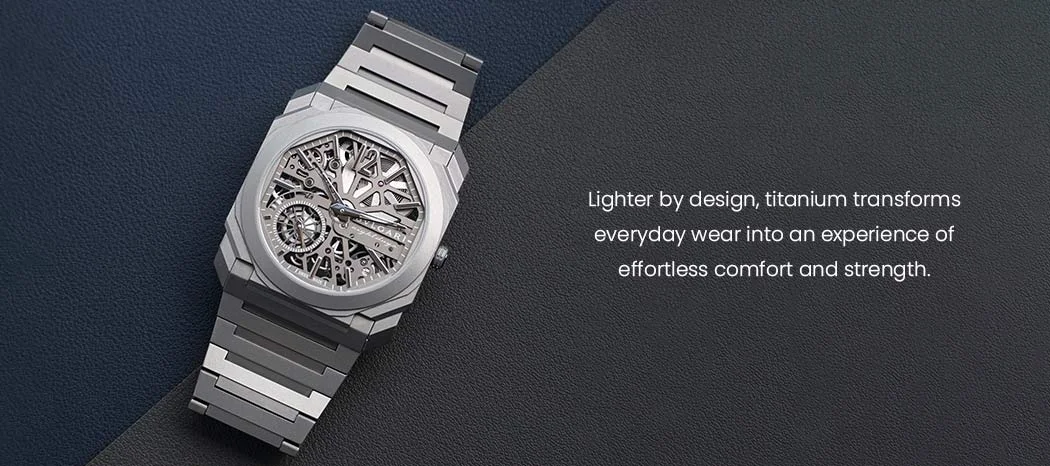
Titanium distinguishes itself through its exceptional strength-to-weight ratio, boiling down to its molecular properties. On the surface, both titanium and stainless steel are gray and shiny, but the former is 40% lighter, and that weight reduction fundamentally changes the wearing experience. Titanium challenges the long-held notion that substance is only measured by weight. Instead, it introduces a new kind of luxury, focusing on agility and ease of wearing.
Technically Speaking
Strength in context of watchmaking isn’t always about hardness. It’s also about how a material behaves under stress, in extreme conditions, and exposure to corrosive elements. While on paper, stainless steel may be harder, titanium offers excellent high tensile strength and lower density. With a density of around 4.5 g/cm³ — roughly 40% lower than stainless steel’s ~8 g/cm³ — high-grade titanium alloys such as Grade 5 can still deliver tensile strengths approaching 900–1,100 MPa. The result is a material that offers comparable, and often superior, structural resilience at a fraction of weight.
Always On The Move
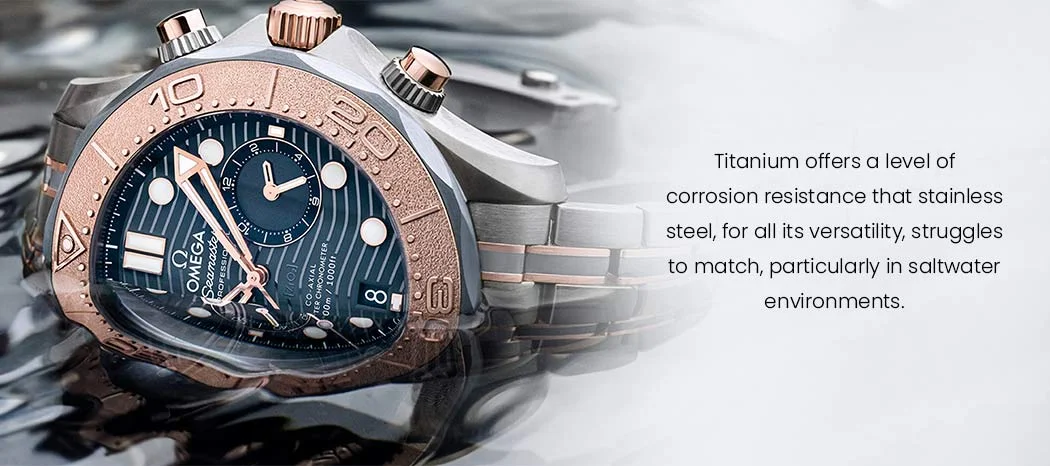
Another stunning titanium option I was drawn to was TAG Heuer’s Aquaracer Professional 200 Solargraph — simply because of my nautical endeavours. I spend time near tropical beaches, and salty winds have always been a worry. Luckily, titanium offers a level of corrosion resistance that stainless steel, for all its versatility, struggles to match, particularly in saltwater environments. Having a titanium case in or around the ocean would be a massive advantage. Exposure to seawater, humidity, and sweat becomes less of a long-term concern, positioning titanium as a considerably more durable option.
Is Your Timepiece Toxic?
On the hunt for a beater watch, I needed one that’s not just comfortable, strong, and light, but also healthy for me. Turns out, overexposure to your timepiece’s case material can prove toxic to your skin. I came across Cartier’s titanium-cased Santos de Cartier and Santos Large — both measuring 39.8 millimetres with a classic Roman numeral dial and date window at six o’clock. The difference? a stainless steel case vs titanium.
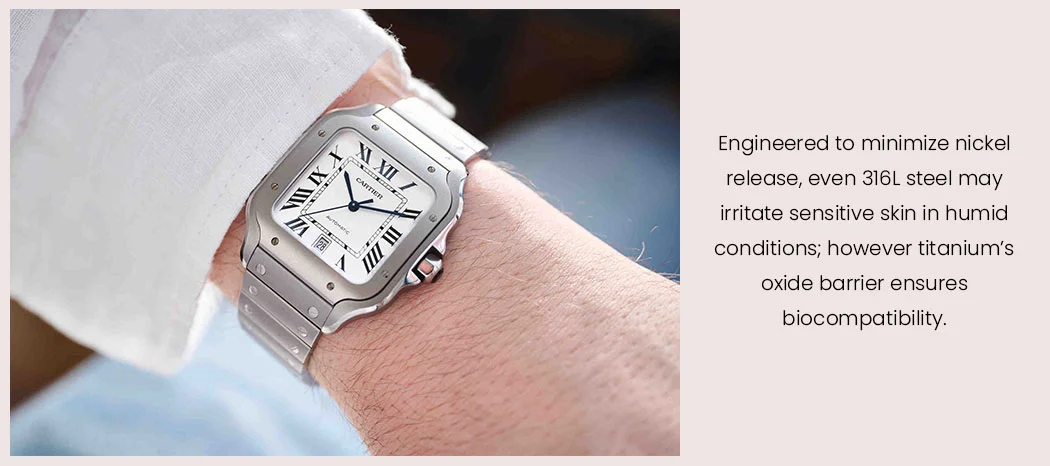
Even widely used watchmaking steels such as 316L are engineered to minimize nickel release, yet sensitivity can still occur in humid conditions, or when a watch is worn tightly for extended periods. Titanium, by contrast, forms a stable oxide layer on its surface that acts as a natural barrier, preventing metal ions from interacting with the skin. This biocompatibility is precisely why titanium is widely used in mechanical implants and surgical instruments where prolonged contact with the human body is unavoidable.
For collectors who wear their watches daily, across varying climates and conditions, titanium’s hypoallergenic nature offers a unique luxury of being non-toxic.


Recent Posts
Recent Comments
Archives