
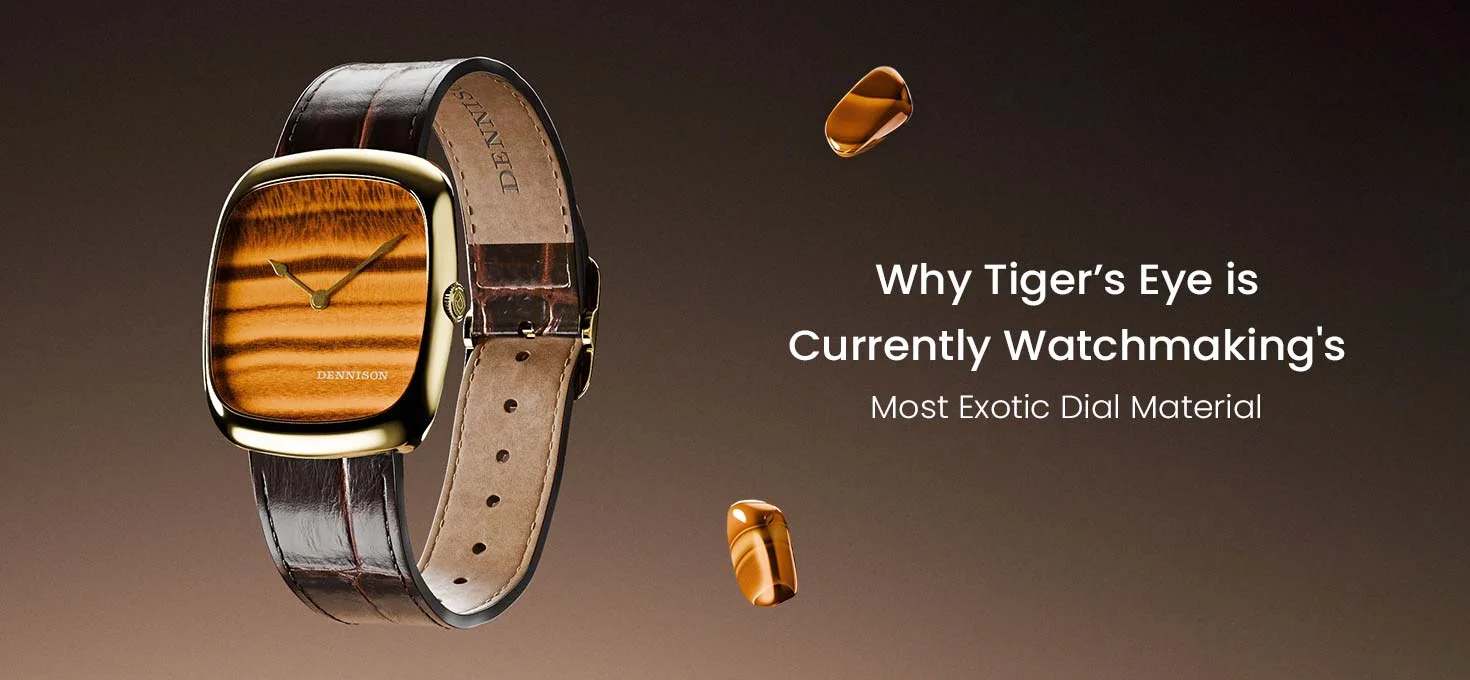
Contemporary watchmaking is rewinding to the ‘60s, an era that embraced expressionism, counterculture aesthetics, and a stark departure from tradition. Watch dials were luxe-sporty, ready for tomorrow, and boldly experimental (in form and function). And thanks to Piaget, some icons were even decoratively crafted out of mesmerizingly textured natural stones like lapis lazuli, opal, malachite, and many more.
As we’re witnessing the resurgence of hard stone-dial watches, which were the biggest horological trend in 2025, watchmakers have expressed a bold penchant for meteorite dials. Take Breitling x Erling Haaland’s Chronomat capsule, Moser & Cie. Streamliner Perpetual Moon Concept Meteorite, or the Omega Speedmaster Moonphase Meteorite, as examples. While meteorites are surely watchmaking’s top dial material of 2025, the most exotic choice has been tiger’s eye. Right from microbrands like Dennison to horlogerie titans like Piaget and Bovet, everyone’s caught in the eye of the tiger.
What’s Tiger’s Eye?
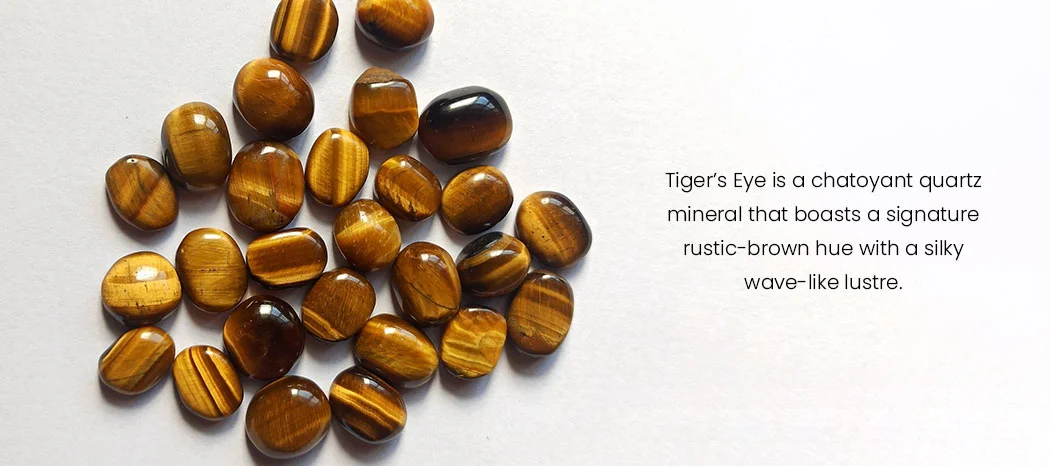
Tiger’s Eye is a chatoyant quartz mineral that boasts a signature rustic-brown hue with a silky wave-like lustre. Comprising mainly of silica, it gets its alluring brown striations from the presence of limonite, an iron ore. Primitively used by Indian and Egyptian civilizations for amulets and jewelry, Roman soldiers wore tiger’s eye talismans during battle, believing it provided strength, focus, and protected them in battle. Today, this exotic material is primarily mined in South Africa and Western Australia.
A Timeless Affair, Set in Stone
Interestingly, the use of precious stones as dials is a fairly new development in horlogerie’s half-millennium tenure. While we can’t historically trace the first official use of tiger’s eye in watchmaking, Piaget first shone the spotlight on this natural stone in the 60s. After pioneering the ultra-thin calibre 9P in 1957, Piaget found freedom to experiment with radical case sizes and new ingredients. The maison unveiled its first batch of stone-dialled watches in 1963, boasting ultra-delicate 1-millimetre sheets of lapis lazuli, opal, malachite, jade, tiger’s eye, and many more mesmerizing hard stones.
Entering the ‘70s, mineral and gemstone dials gained a prominent reputation for flamboyance and as a status symbol. However, the Quartz Crisis of the ‘80s halted much of the industry’s glamour, forcing maisons to choose functionality over frills and pivot to modest, steel-cased watches. This resulted in stone dials going almost entirely out of fashion, but Cartier (who adapted to quartz movements) boldly continued embracing the beauty of stone dial watches with their Must de Cartier line. Over the next couple of decades, we’ve witnessed countless tiger’s eye releases from top maisons like Jaeger-LeCoultre, Patek Philippe, Bvlgari, Chopard, and many more.
Caught in the Eye of the Tiger, Once Again
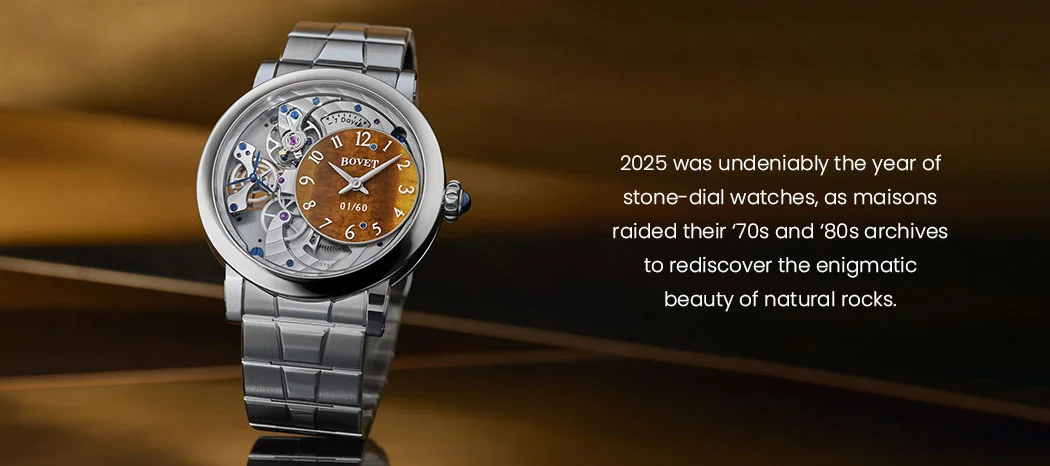
2025 was undeniably the year of stone-dial watches, as maisons raided their ‘70s and ‘80s archives to rediscover the enigmatic beauty of natural rocks. Piaget updated its Andy Warhol collection with a slew of hued meteorite dials and a fourth tiger’s eye style. Similarly, Bovet refreshed their Récital 12 with a duet of stone-dial models comprising malachite and tiger’s eye, resting against a backdrop of sheer mechanical poetry.
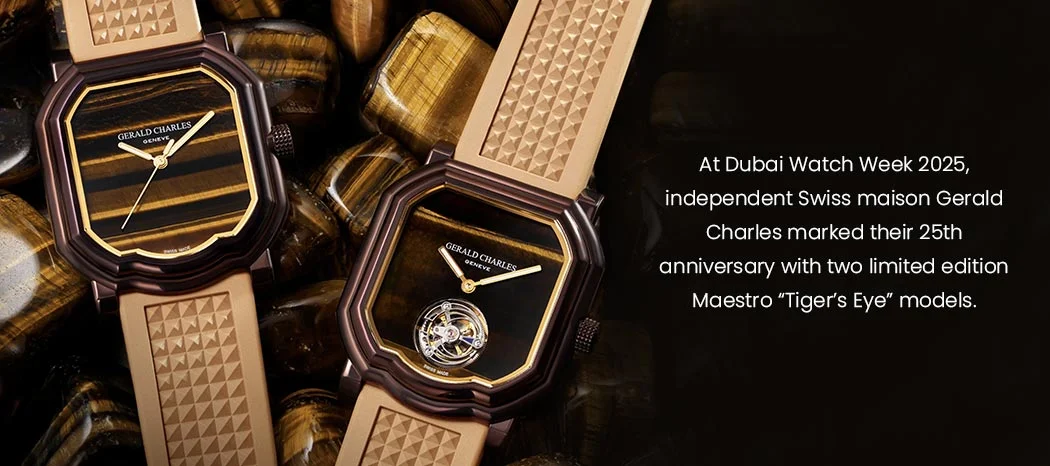
At Dubai Watch Week 2025, independent Swiss maison Gerald Charles marked their 25th anniversary with two limited edition Maestro “Tiger’s Eye” models.
The Tiger at the Oscars
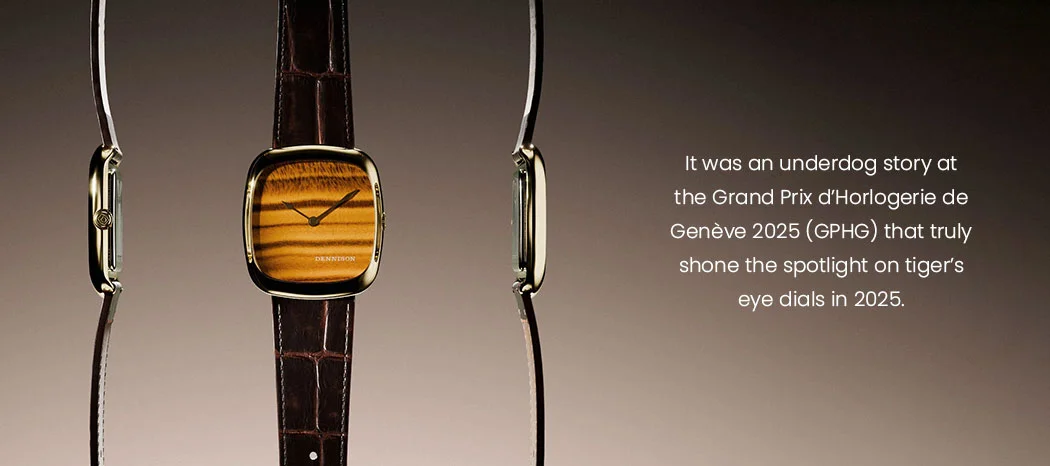
Interestingly, amidst these exquisite creations by historic horlogerie marques, it was an underdog story at the Grand Prix d’Horlogerie de Genève 2025 (GPHG) that truly shone the spotlight on tiger’s eye dials in 2025. Colloquially known as the “Oscars of Watchmaking”, its “Challenge” category awards the best watch priced under 2,000 CHF (US $2,500). Despite competing against heavy hitters like Christopher Ward, Kurno Tokyo, and Atelier Wen, Denisson’s retro-themed $690 Natural Stone Tiger Eye won. With its 60s-inspired PVD gold cushion case, the burnt orange tiger’s eye dial added a layer of vintage luxury on a highly affordable dress watch.
In late 2024, the tiger’s eye version of the Berneron Mirage 34 also made a statement. Its warped case silhouette was oddly in perfect proportion to the Cartier Crash it takes inspiration from. With a thick sheet of tiger’s eye stone for its dial, the maison carved out a tiny, small seconds counter at seven o’clock with hands that appear to elegantly melt and bend. It retails for a hefty CHF48,000 (US $61,000).
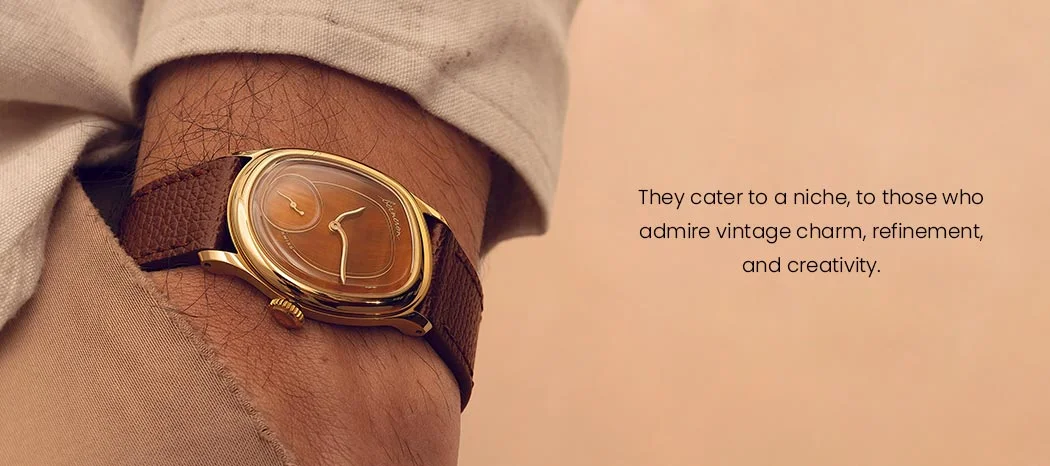
All in all, both timepieces aren’t about price or breaking into the mainstream. Tiger’s eye stone-dialled watches might possibly never sell enough to disrupt a market or compare with the upper echelons of luxury horlogerie. However, they cater to a niche, to those who admire vintage charm, refinement, and creativity. Contemporary watchmaking is sharply steering towards expressionism and niche taste; here’s simply an example of a style that made a statement.



Recent Posts
Recent Comments
Archives