
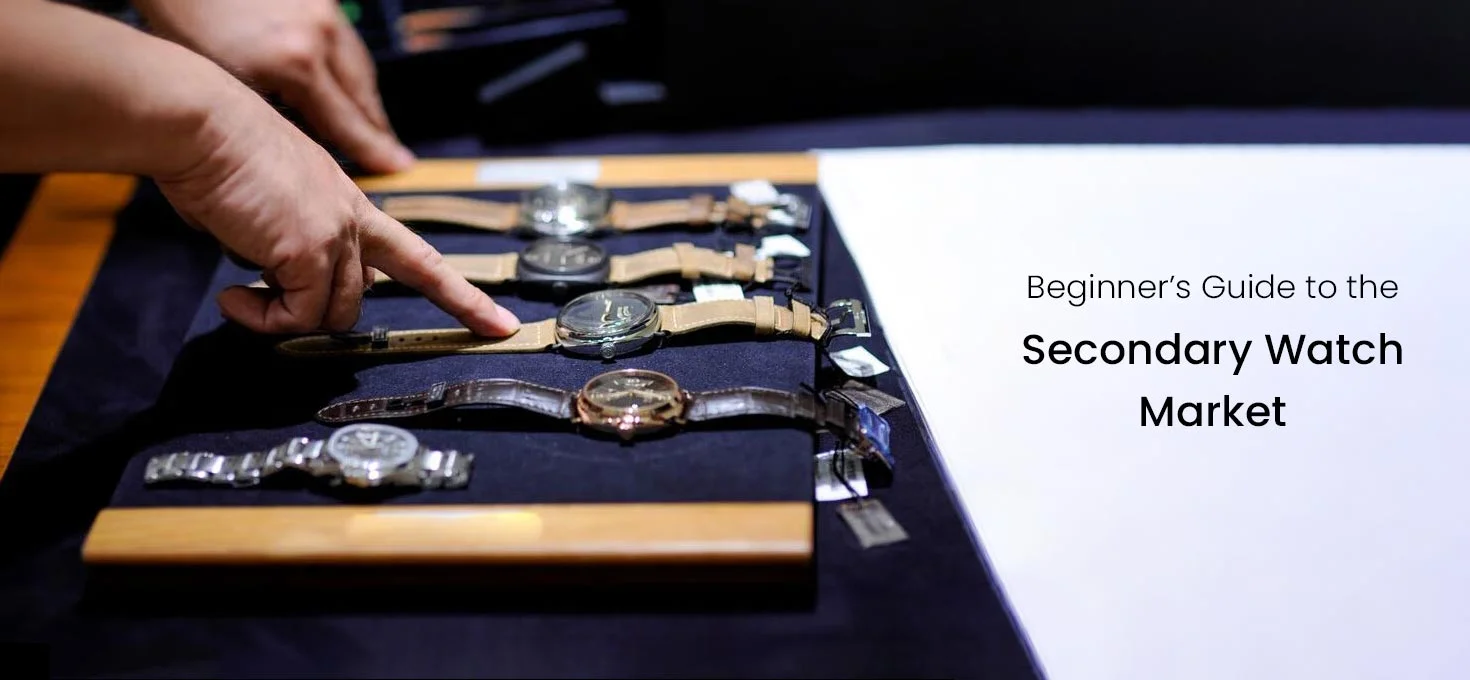
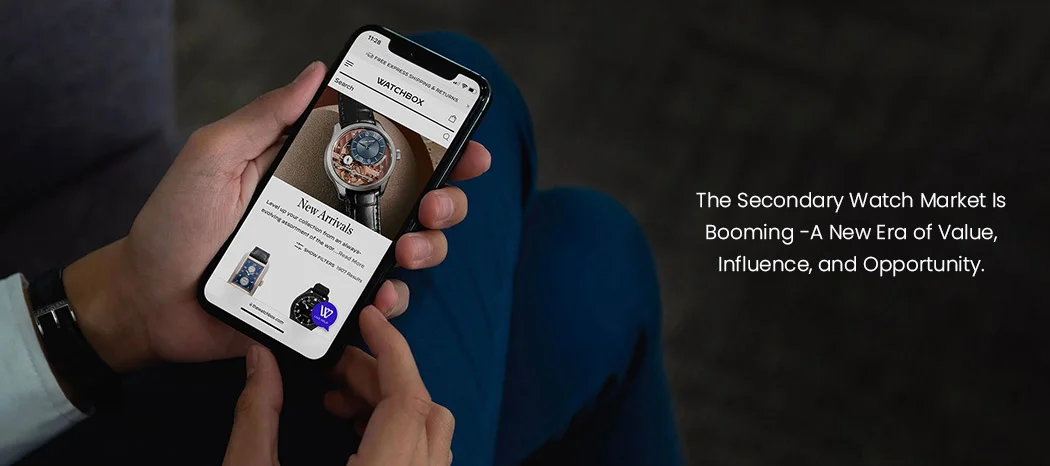
Simply put, the secondary watch market is booming. With $16.73 billion in total transaction value in 2025, EveryWatch reports a 36.4% year-over-year growth, now establishing the secondary market as a new baseline valuator — even influencing primary retail pricing, collector acquisition strategies, and brand positioning. As watch reselling was once a straightforward monetary function involving a consumer product, it’s now a rabbit hole of endless research, options, opinions, and choices – both right and wrong. To quickly introduce and help you navigate this time-maze called the secondary watch market, we’ve chalked up a beginner’s guide for easy reference.
How The Secondary Watch Market Works
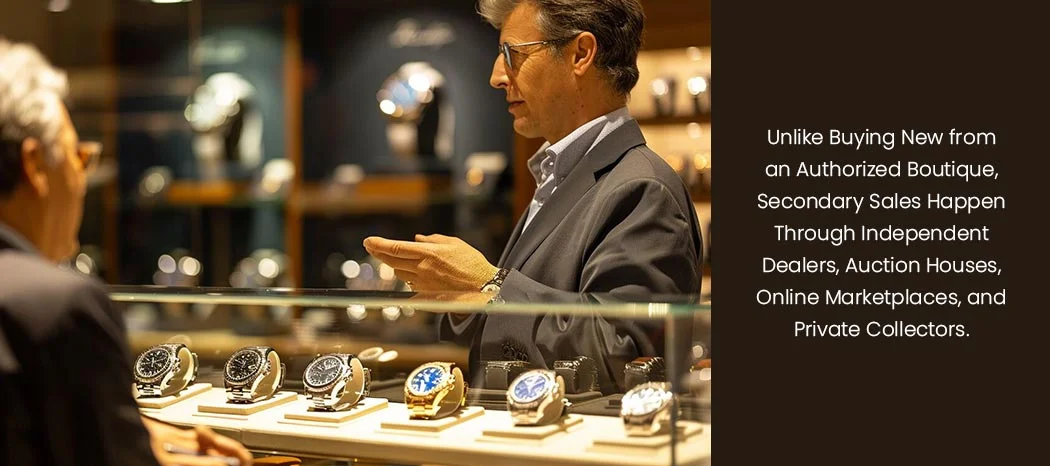
Think of the secondary market as a library for timepieces, except the books oftentimes rise in value. Unlike buying new from an authorized boutique, secondary sales happen through independent dealers, auction houses, online marketplaces, and private collectors. This market runs on its own gears and springs. While standard retail watch models may sit on the market, discontinued references or limited editions may command astronomical prices. Trends, celebrity sightings, collector sentiment, and production decisions all move prices — sometimes even overnight. for beginners, the takeaway is this: the secondary market is full of opportunity, but it demands research. Like all investment arenas, the secondary watch market is one that rewards knowledge and punishes impulse.
Used, Certified, Vintage – Know the Difference
Here’s a quick guide to the layers of the secondary watch world:
- Used/Pre-Owned: As the broadest segment from the lot, pre-owned watches have lived lives of varying intensity. Some spent in comforted closets, others in the ocean with some honest wear. In most cases, they’re accompanied by original boxes and paperwork – take that with a pinch of salt, though. Pre-owned watches are typically vintage and purchased for usage in specific environments.
- Certified Pre-Owned (CPO): Despite being used, these timepieces have been inspected, authenticated, and religiously serviced by reputed dealers or brand partners. The premium you pay is for warranted and documented quality. For those looking to purchase an older or vintage watch and are anxious about authenticity, CPO is the answer.
- Vintage: Carrying decades (sometimes centuries) of heritage, vintage watches are a study in provenance: original dials, untouched patina, and a clean service history. Authenticity is sacred here, and a replaced dial or polished case can affect emotional resonance and market value. It’s all about retro charm and rewinding to a nostalgic era.
There’s Always More Homework
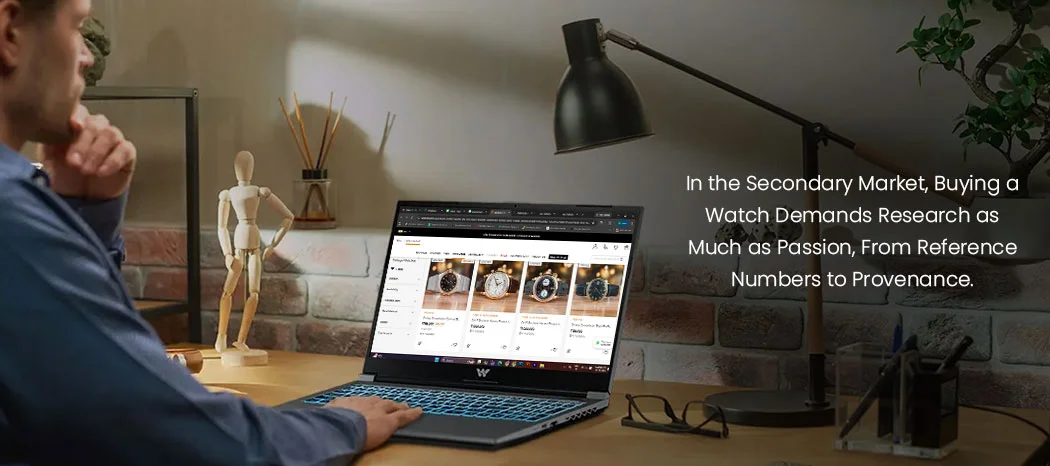
Buying on the secondary market is an act of research as much as desire. You need to know the reference number, model variations, which production years matter, and what common service issues exist. Two watches that look identical at a glance may be worlds apart in provenance and price. Counterfeits and “Frankenwatches” (genuine parts assembled into a mismatched whole) exist. The more you read auction results, compare listings, and study serial ranges, the sharper your instincts become.
Keeping Count: A Handy Checklist
Keeping things simple yet efficient, here’s a list of essential aspects you must consider before indulging in a watch from the secondary market.
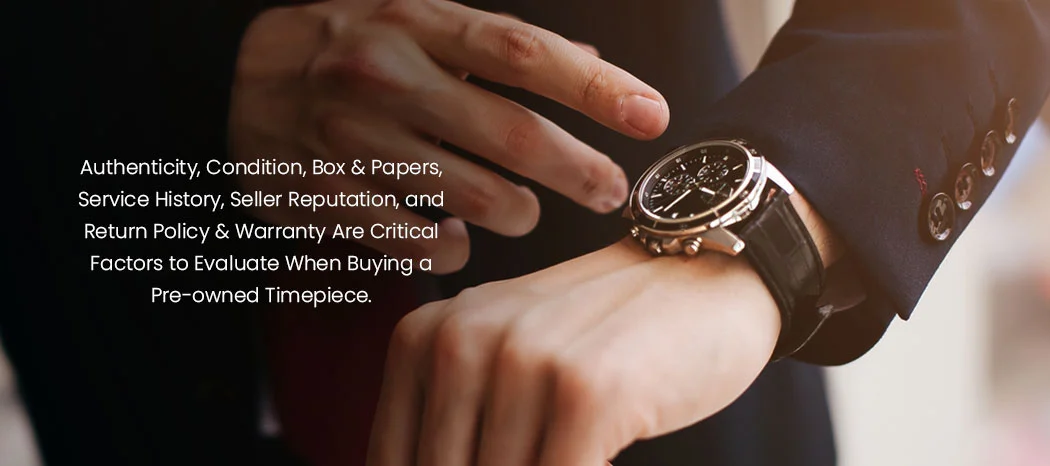
- Authenticity: Ask for clear photos of the dial, caseback, movement (if possible), clasp, and serial numbers. Cross-check serial ranges and reference numbers.
- Condition: Look for over-polishing (softened edges, rounded lugs), bracelet stretch, and signs of heavy wear. Honest scars are one thing – extensive restoration is another might be suspicious.
- Box & Papers: A full set comprising box, warranty cards, and manuals is a massive asset when determining value.
- Service History: Strictly enquire about when the timepiece was serviced and where. It’s absolutely essential for luxury timepieces to be serviced at reputed dealers and brand partners.
- Seller Reputation: Do you trust the seller? If not, check reviews, sale history, and previous clients. Established dealers always offer deep trust, transparency, and certifications.
- Return Policy & Warranty: A short return window or a dealer-backed warranty separates professional sellers from opportunists.
Most importantly, trust your instincts. If anything feels rushed, slow down and take a step back.
Time Can Be Turbulent Too: The Pros & Cons
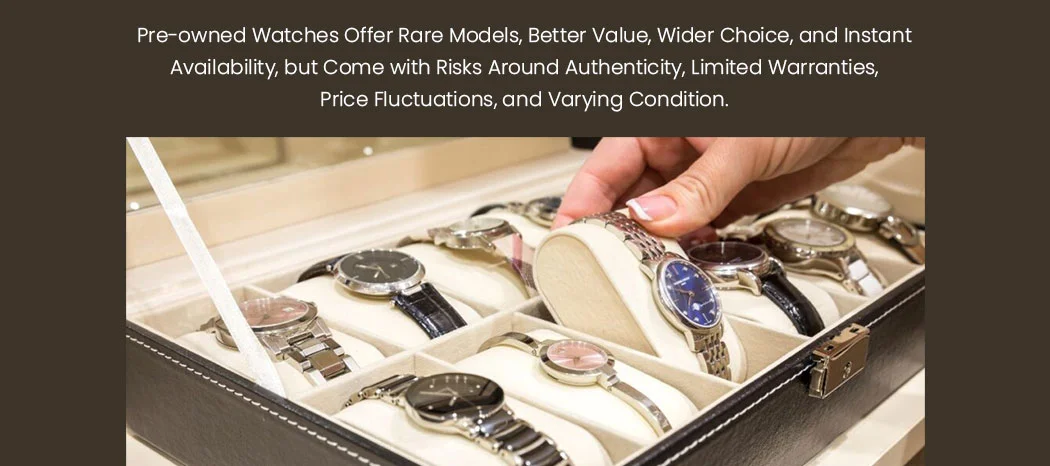
There’s a certain romance about vintage watches, but there must be realism too. We’re often smitten by vintage charm but tend to ignore blaringly obvious red flags. I understand you’re passionate about timekeepers from a past era, but the time can be turbulent, too. Here’s a quick list of the pros and cons of investing in the secondary watch market.
Pros
- Access to discontinued and obscure models.
- Value opportunities when depreciation has already happened.
- Variety: You can choose from decades of production, not just current catalogues.
- Immediate possession, no year-long retail waitlists.
Cons
- Risk of incomplete authentication and undisclosed issues.
- Limited factory warranty unless it’s a certified program.
- Price volatility causes market values to peak or abruptly correct.
- Condition: Every pre-owned story is unique, and not all are flattering.


Recent Posts
Recent Comments
Archives