

In a world where your phone can track time, set timers and show world clocks in seconds, mechanical watches no longer compete on necessity as they compete on purpose. And that’s where complications come in.
When collectors and first-time buyers debate Chronograph vs GMT watches, they’re not just comparing features. They’re choosing how they interact with time itself. Do you want to measure it precisely as it passes? Or monitor it across borders and time zones?
Understanding the difference isn’t just about mechanics. It’s about lifestyle. This guide breaks down everything you need to know, from how they work to who they’re really for so you can decide which one aligns with how you live.
Chronograph vs GMT: orifA Matter of Lifestyle
The conversation around Chronograph vs GMT watches isn’t about which complication is better but rather it’s about which one aligns with your lifestyle. Both serve distinct purposes and the right choice depends entirely on how you interact with time on a daily basis.
Chronographs are built for measuring moments. They suit individuals whose lives revolve around pace, productivity and performance. Whether you’re timing workouts, meetings or personal milestones, the appeal lies in precision and hands-on interaction. If you’ve been researching about chronograph watches, chances are you appreciate mechanical engagement and the satisfaction of tracking progress in real time.
GMT watches, on the other hand, are about connections across places. They are designed for those who operate beyond a single time zone whether through frequent travel, international business or global collaboration. If you’ve been exploring about GMT watches, you likely value awareness, coordination and the ability to stay synced with different parts of the world at a glance.
Ultimately, the right watch isn’t the most complex one. It’s the one that reflects how you move through time whether you’re measuring life’s moments or navigating life’s destinations.
Let us break it down for you.
Understanding Watch Complications
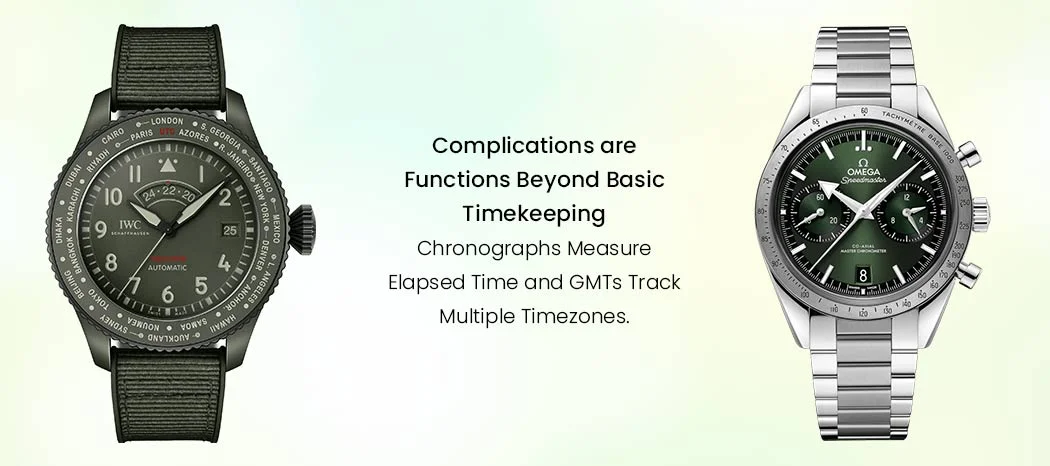
In horology, a “complication” refers to any function a watch performs beyond simply displaying hours, minutes and seconds. These added mechanisms are what elevate a timepiece from basic timekeeping to mechanical artistry. The more purposeful and technically intricate the complication, the more captivating the watch becomes not just in design but in how it serves its wearer.
Among the most practical and enduring complications are the chronograph and the GMT. Both emerged from genuine real-world demands, long before smartphones and digital tools made such functions commonplace. When discussing Chronograph vs GMT watches, you’re not just comparing features but you’re examining two fundamentally different approaches to managing time.
A chronograph is designed to measure elapsed time with precision making it ideal for timing events and activities. A GMT, by contrast, allows the wearer to track multiple time zones simultaneously. Both are beautifully engineered solutions but they cater to distinctly different lifestyles and needs.
About Chronograph Watches: Timing Life in Motion
If you’re curious about chronograph watches, think of them as mechanical stopwatches integrated into a wristwatch. At their core, they allow you to start, stop and reset a central seconds hand to measure elapsed time.
How a Chronograph Works
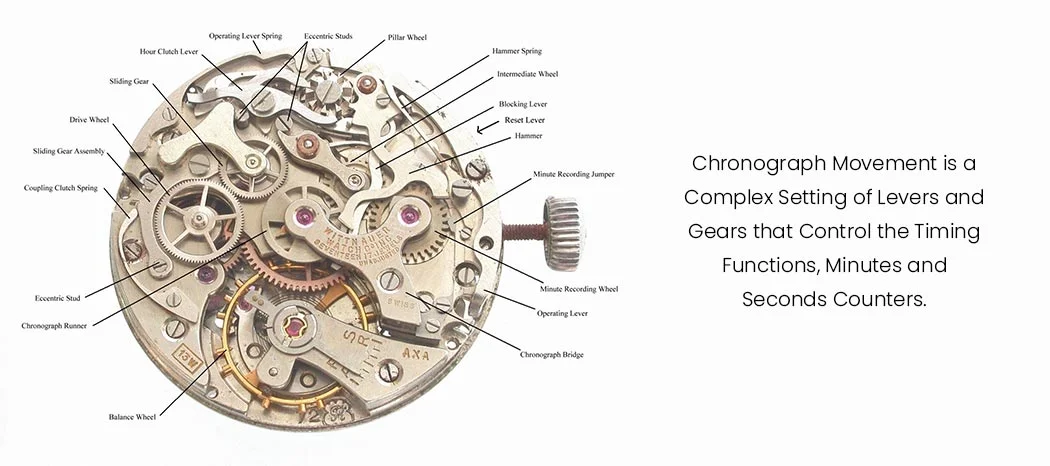
Chronographs typically feature pushers on the side of the case. One starts and stops the timer, while another resets it. Subdials on the face display elapsed minutes and sometimes hours. While it may look complex, the concept is straightforward: press, time, stop, reset.
For those exploring about chronograph watches, the beauty lies in their interaction. You physically engage with the mechanism. It’s tactile. Mechanical. Intentional.
Real-World Utility
Originally developed for precision timing from scientific experiments to sporting events, chronographs quickly became associated with performance and measurement.
In modern life, their uses are surprisingly practical:
- Timing workouts
- Measuring cooking intervals
- Tracking meeting durations
- Monitoring parking meters
- Keeping pace during runs
When comparing Chronograph vs GMT watches, the chronograph often feels more universally useful. Nearly everyone times something at some point during the day.
Aesthetic Personality
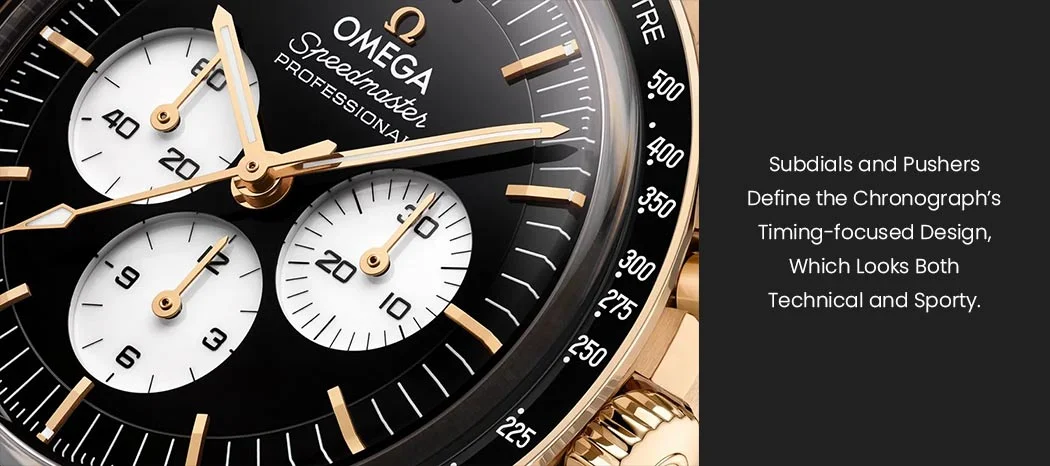
Chronographs tend to have layered dials, multiple subdials and a sportier presence. They look dynamic and technical. For some, that visual energy is part of the appeal. It doesn’t just tell time and it looks like it does more.
If your lifestyle revolves around pace, productivity, and precision, understanding about chronograph watches may lead you toward this complication naturally.
About GMT Watches: Mastering Multiple Time Zones
Now let’s talk about GMT watches, which solve a completely different problem: keeping track of time in more than one place at once.
What Is a GMT Watch?
A GMT watch features an additional hand that completes one full rotation every 24 hours. Paired with a 24-hour scale on the bezel or dial, this hand allows you to track a second time zone at a glance. Unlike a chronograph, which measures elapsed intervals, GMT watches display parallel time, meaning local time and home time can coexist seamlessly on your wrist. If you’re learning about GMT watches, think of them as practical travel companions, designed for individuals who navigate multiple time zones and operate across borders rather than within the limits of a single clock.
Why GMT Watches Were Created
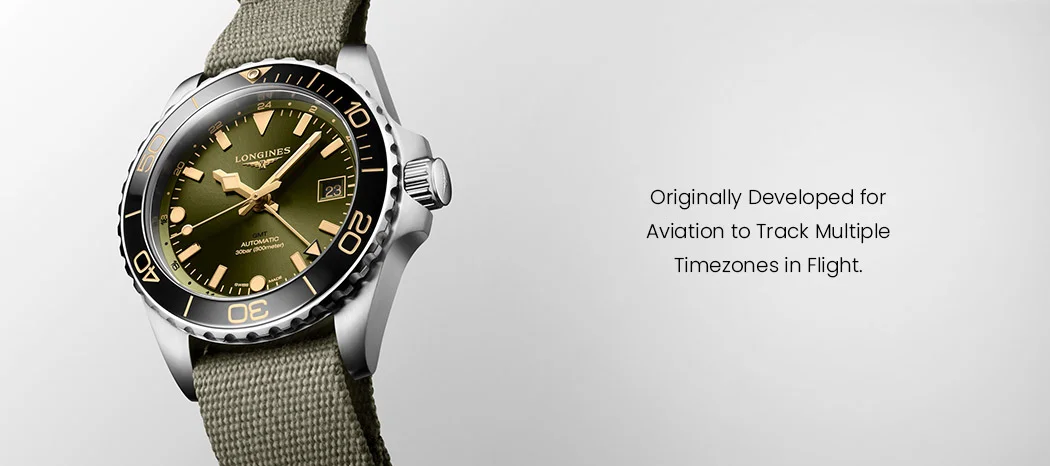
GMT watches were originally designed for pilots navigating between time zones. Tracking both departure and destination times was essential for coordination and safety. Today, their usefulness extends far beyond aviation.
Who are GMT watches for?
A GMT watch is not defined by geography, it’s defined by mindset. It belongs to those who move quickly, think globally, and refuse to be limited by a single horizon. The kind of individual whose decisions ripple across cities, whose calendar doesn’t recognize borders, and whose world is measured in more than one time zone.
It naturally finds its place on the wrist of:
- The entrepreneur building across markets
- The executive negotiating across continents
- The investor is watching global openings
- The traveler who feels at home in departure lounges
- The individual whose personal and professional worlds span countries
However, for someone who lives beyond one city, time itself becomes layered. A GMT is not merely a function, it is a quiet acknowledgment that your life operates on a broader scale. It eliminates friction, removes digital distraction, and replaces it with mechanical certainty.
Designed for Purpose
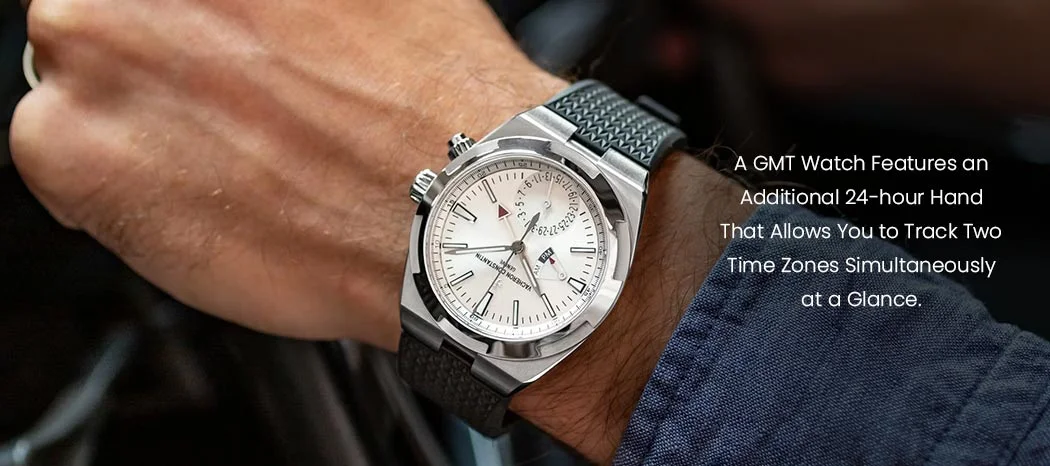
Compared to chronographs, GMT watches often appear cleaner. There are fewer subdials, but the extra 24-hour hand adds subtle complexity. They strike a balance between function and simplicity. For those curious about GMT watches, their practicality often outweighs their mechanical theatrics.
Lifestyle Scenarios: GMT or Chronograph- Which One Matches You?
The Performance-Oriented Individual
If you’re someone who values efficiency, tracks productivity, times workouts or thrives on measurable performance, the chronograph makes sense. You’ll actually use it. Exploring about chronograph watches often appeals to individuals who enjoy engaging with their tools rather than passively wearing them.
The Frequent Traveler
If airports, time zone shifts, and international calls are part of your life, GMT functionality becomes indispensable. Learning about GMT watches reveals how seamlessly they simplify global coordination. No mental math. No confusion about day or night abroad.
The Remote Professional
In today’s digital work culture, many professionals collaborate across continents. For them, the GMT is less about travel and more about synchronization. In the ongoing discussion of Chronograph vs GMT watches, remote professionals often lean GMT.
The One-Watch Owner
If you plan to own just one mechanical watch, the decision becomes more strategic.
Chronographs offer broader day-to-day timing use. GMT watches offer niche but powerful convenience. Ask yourself honestly: Do you time activities more often than you check another time zone?
Your answer determines the outcome.
Can You Have Both?
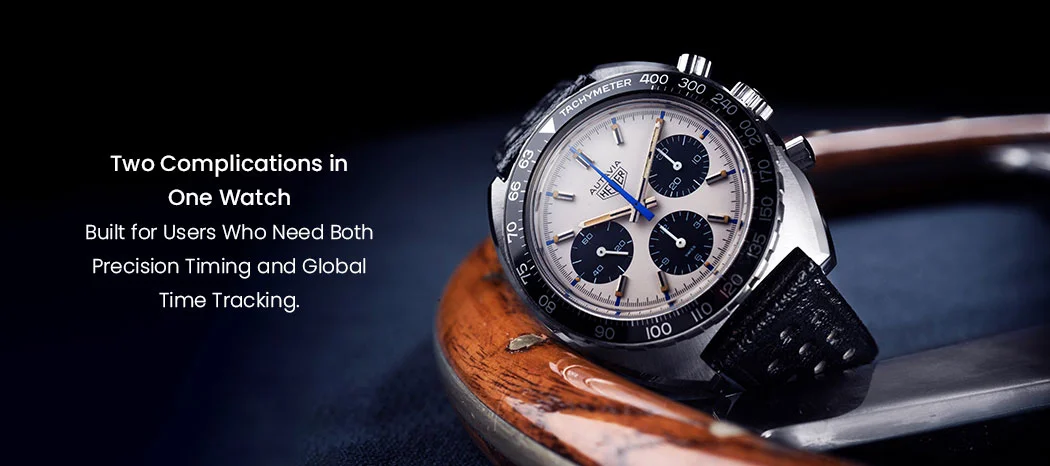
Luxury watch brands recognize that the modern individual embodies multiple personas; fast-moving, dynamic, and intent on making every second count while thinking far beyond borders and time zones. And hence, they create timepieces that merge complications, combining chronograph precision with dual-time functionality. Mechanically sophisticated and visually compelling, these watches become a testament to both their complexity and craftsmanship. Still, for someone deeply invested in both performance timing and global coordination, they represent the ultimate solution in the Chronograph vs GMT watches debate.
Kapoor Watch Co.
Kapoor Watch Co. is an authorized retailer chain known for offering a curated selection of premium luxury watches from some of the world’s most respected watchmakers. With a strong reputation built on trust, authenticity and exceptional service, we provide customers with a seamless buying experience. From expert guidance to after-sales support, we ensure authenticity making us a reliable destination for serious watch enthusiasts and collectors alike. So visit our website or the Kapoor Watch Co. Stores today!


Recent Posts
Recent Comments
Archives