
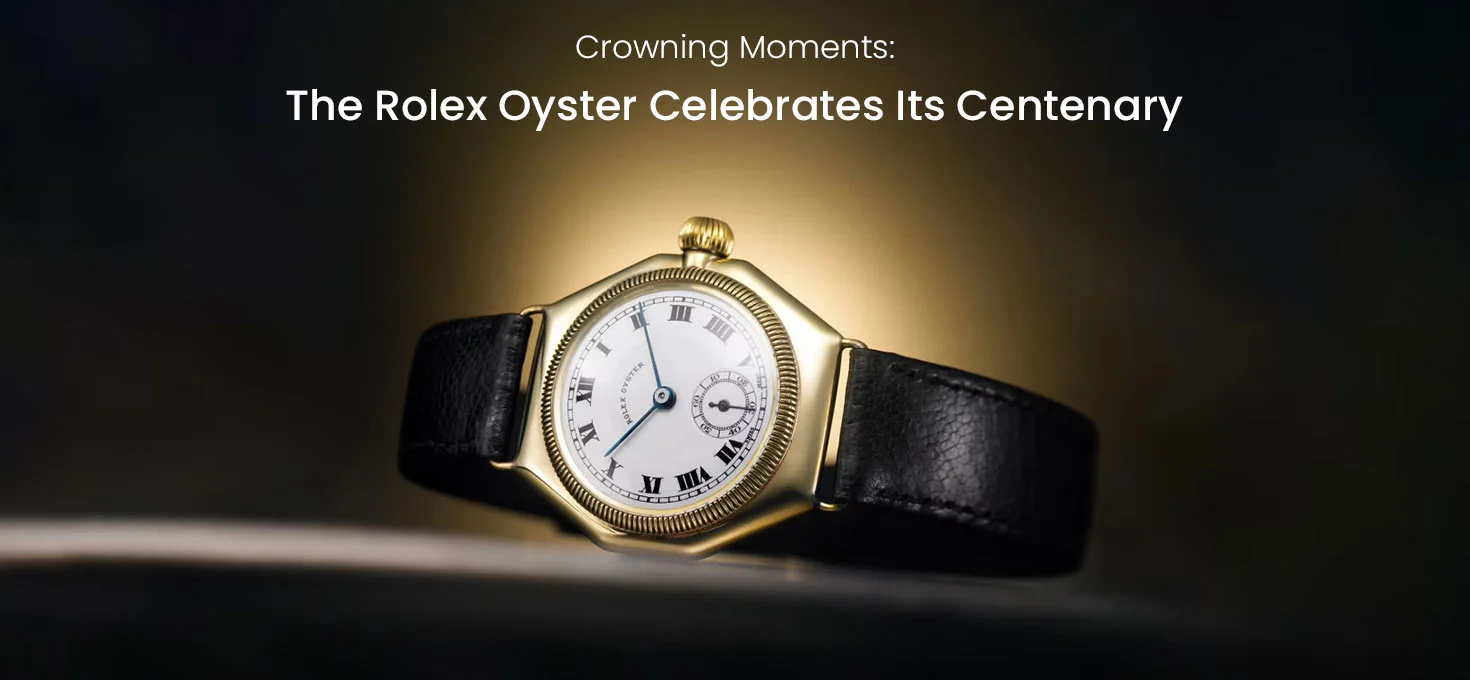
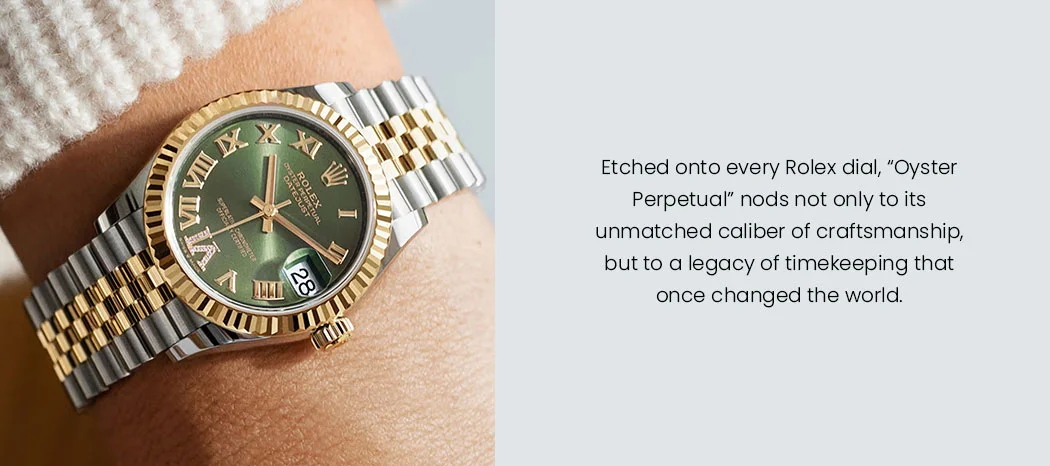
Etched onto every Rolex dial, “Oyster Perpetual” nods not only to its unmatched caliber of craftsmanship, but to a legacy of timekeeping that once changed the world. Perhaps the greatest invention in the history of horology, Rolex’s 1926 Oyster, was the world’s first waterproof and dustproof watch, crafted with Hans Wilsdorf’s unique vision. As the magnum opus of Hans Wilsdorf, the Rolex Oyster challenged the limits of human knowledge and achievement — becoming a tool of triumph for explorers, scientists, extreme adventurers, athletes, artists, and world leaders. From Earth’s highest peak to its deepest abyss, a Rolex Oyster case has accompanied pioneers as they plant their flags in the world’s most harrowing circumstances. As Rolex celebrates 100 years of its revolutionary Oyster case, we look back at its legacy and crowning moments.
Hans Wilsdorf’s Legacy of Innovation
At the dawn of the 20th century, when pocket watches remained a staple tool for timekeeping, Hans Wilsdorf, a timepiece distributor in London, dreamt of a timekeeping watch worn on the wrist. Aware of the importance of accurately recording discoveries and timing critical moments, he also closely observed the era’s changing lifestyles and the booming popularity of sports and outdoor pursuits. Striving to create a contemporary wristwatch that was both elegant and reliable, Wilsdorf embarked on a quest to achieve chronometric precision and robust design. Equipped by Bienne movements, which were awarded class “A” precision certification from the Kew Observatory in Great Britain, Rolex’s early timepieces quickly became synonymous with precision in the 1900s. However, the biggest challenge Wilsdorf faced was reliably protecting his movements from dust, moisture, and rust. In 1914, he penned a letter to Aegler, a Bienne-based firm (which later became Manufacture des Montres Rolex S.A.), to urgently find a way to create a waterproof wristwatch.
A Case for Excellence
As Hans Wilsdorf’s first breakthrough in creating a waterproof case, Rolex launched the “Submarine” in 1922. This innovative model attached a watch on a hinge inside a second outer case while its bezel and crystal were screwed-down watertight. Its only drawback was requiring the opening of the second, outer case to access the crown.
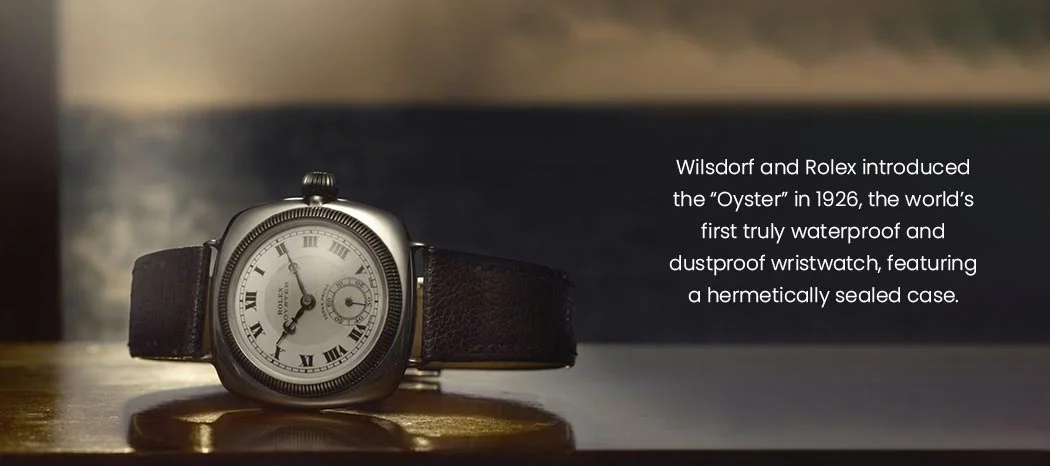
As the fruit of years of research and development, Wilsdorf and Rolex introduced the “Oyster” in 1926, the world’s first truly waterproof and dustproof wristwatch, featuring a hermetically sealed case. Wilsdorf picked its name to signal its limitless capability to endure water exposure without detriment to its parts. It employed a system of screwing down the bezel, caseback, and winding crown against the middle of the case, hermetically sealing and protecting the movement inside.
Companion in Man’s Greatest Triumphs
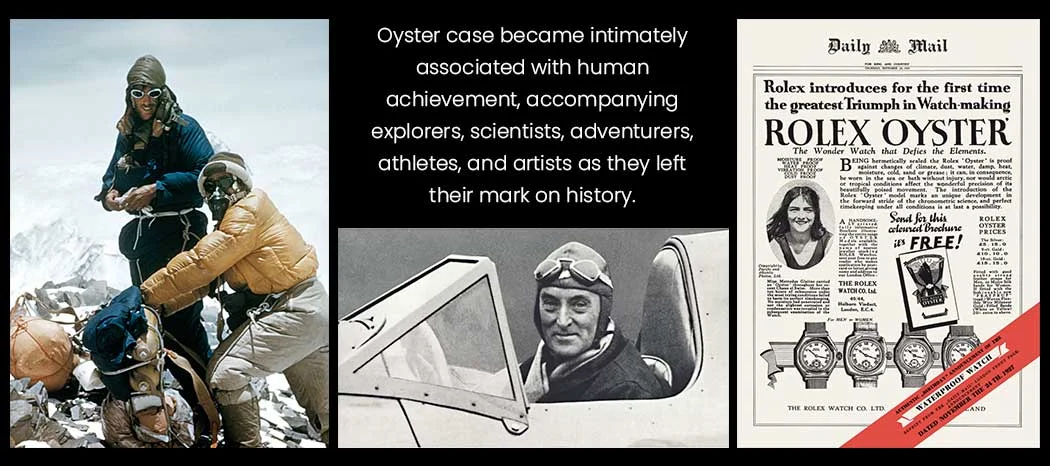
In the decades that followed, the Oyster case became intimately associated with human achievement, accompanying explorers, scientists, adventurers, athletes, and artists as they left their mark on history. Each tale of triumph was a testimony to the undaunting water resistance and resilient craftsmanship of the Rolex Oyster. Right from Mercedes Gleitze becoming the first woman to cross the English Channel in 1927 and Sir Malcolm breaking the land speed record of 300 miles/hour in 1935, to Sir Edmond Hillary summiting the world’s highest peak, Mount Everest in 1953 and James Cameron’s abysmal dive into the Mariana Trench in 2012 — a Rolex Oyster was worn, witnessing these moments of human triumph. These expeditions into the extraordinary not only tell tales of victory, but also how a Rolex accompanied man in facing mother nature’s extremities, together, embracing a shared commitment to excellence and innovation.
A Living Laboratory Worn on Your Wrist
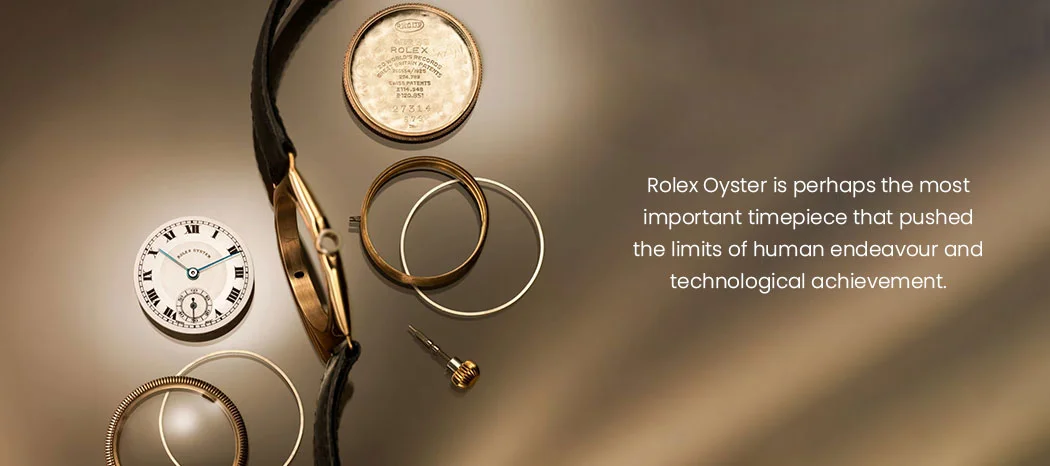
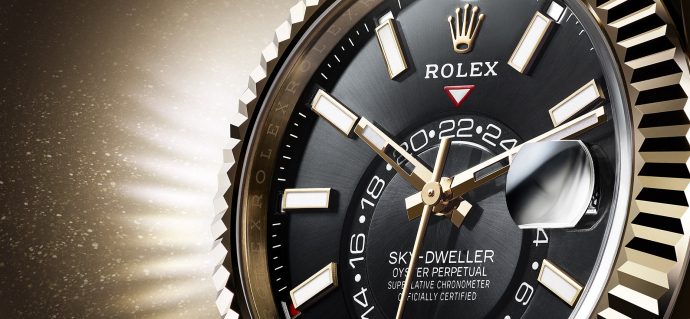
The legend of Hans Wilsdorf’s Oyster lives in every Rolex today. Be it the Submariner’s 300-metre diving prowess, the Day-Date’s functional elegance, the Land-Dweller’s boldly fluted accents, or the Sky-Dweller’s mechanical excellence, every Rolex is drawn from the DNA of the original 1926 Oyster. As the pioneering ancestor to today’s entire Rolex catalogue, the Rolex Oyster is perhaps the history of horology’s most important timepiece that pushed the limits of human endeavour and technological achievement. Upon every Rolex dial, the words “Oyster” nod to its waterproof case craftsmanship, while “Perpetual” represents Rolex’s legacy of revolutionary self-winding chronometer movements, introduced in 1931. Today, as you wear a Rolex Oyster Perpetual timepiece, you’re experiencing a century-long heritage of Hans Wilsdorf’s vision, heritage, and innovative spirit, encased within a dial.


Recent Posts
Recent Comments
Archives