

Most of us think of wine as the de facto drink when it concerns watches from a launch party to a private auction, a general exhibition to even visiting a store for a precious personal purchase White, red or sparkling, everyone feels that at a watch event one must be seen sipping from slender delicate stemware, whatever be your colour of choice. Personally, I always prefer white and sparkling wines over reds because if there is a photo op later on, at least my teeth won’t look stained black when I smile.
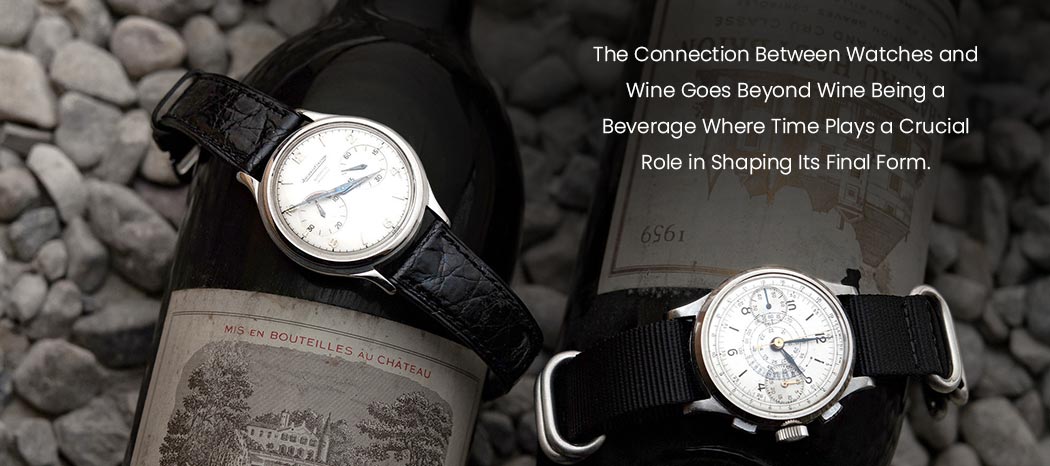
But what is with this wine and watch connection. Is it because people feel one complication deserves another? Or, poetically speaking, it might be because many feel it’s only fitting to partake of a beverage where time plays a crucial role in shaping its final form at an event showcasing time. Others may think that since both are expensive forms of artistic indulgences, it’s only normal to connect one with another. But what if there was another connection, one that connects wines and watchmaking? A link that is buried in time but much more direct and logical than any of the subjective reasons one can think of? Allow me to unravel.
The Treaty of Fountainbleu (1685)

The story begins during the reign of King Louis the XIV He came to power in 1643 was the longest reigning monarch; and in fact, his reign of over 72 years is the longest for any monarch in Europe, ever! His rule is considered a golden one for France, where many fine art forms and architecture flourished.
But not all was golden for he wasn’t very tolerant with religion. He made this clear by abolishing the Edict of Nantes (dated 1598) which had been put into effect by his grandfather by signing the. The Treaty of Fountainbleu (1685). This new official document effectively revoked the rights of all non-Catholic Christians in the state of France from practising their religion freely. It mainly affected the French Protestants (also called the Huguenots) and weakened them as a community by stripping them of their liberties and reducinged their rights, including political and military privilege.
The Curse of the Dragonnades
The Sun King also sent out the Dragoons, a special class of mounted military, to convert people to Catholicism, and to handle refusals or hesitations in the most fitting (read: cruel) way to make clear the message (and this came to be known as the Dragonnades. The Huguenots were a strong community and had made their presence felt in various uprisings and revolts earlier but this time, they were too weak to fight back. So, they fled.
A Dutch “Friendship”
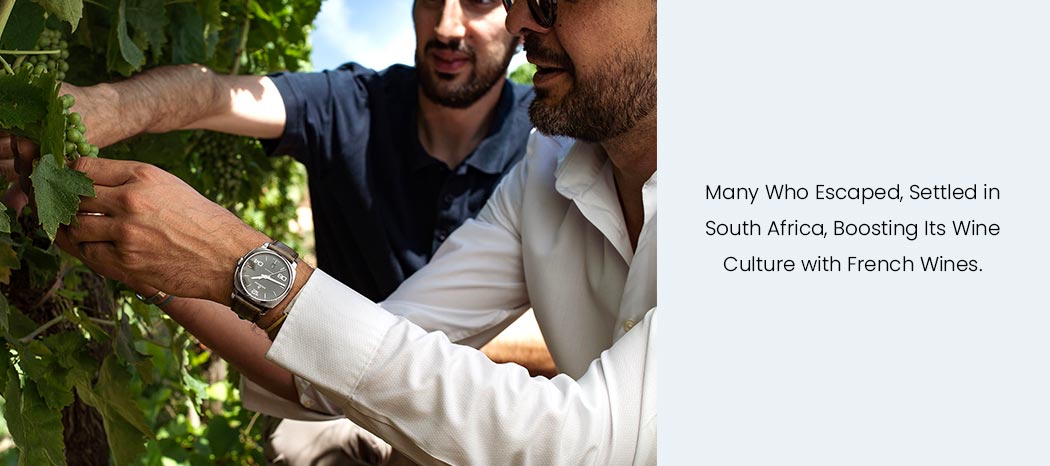
The Dutch were seen as friends as they too were not too keen on Catholicism and took in a lot of immigrants. who were mostly farmers and field workers, and were being shipped them to the Dutch colony which was trying to improve its winemaking industry, South Africa. So, between 1688 and 1689, the largest number of Huguenots ended up there, which also makes up the maximum European-descendant population of South Africa today. These immigrants were state-subsidised and given land to settle in.
To date, that area is called Franschhoek (meaning ‘French Corner’ in Afrikaans), and the area names which were given by the French settlers – La Motte, Provence, Chamonix, La Dauphine – still remain. In fact, many popular South African surnames today (some of which are part of famous names of wine houses) still hold a trace of their French origins – Cronje came from Cronier, Nel From Neel, Joubert from Jaubert, and Du Randt from Durand, among others.
The settlers engaged in viticulture often with vines they had brought from home, many from the South of France, and very soon, they were putting out some worthy produce for the country to be proud of. Fast forward to today, and the most popular grapes out of South Africa include Chenin Blanc for white wines and Cabernet Sauvignon for red wines, both originally French imports which have found great expression in South African soils and winemaking.
The Watchmaking Connection
So what about the watchmaking connection? Getting there. So, the Dragonnades hunting for the commoners who were then forced to leave everything behind and flee. In this way, the working (agrarian) class were driven out of the country but the monks and clergy were rounded up to be tried; they were given a chance to convert, and if they refused, they were imprisoned and exiled.
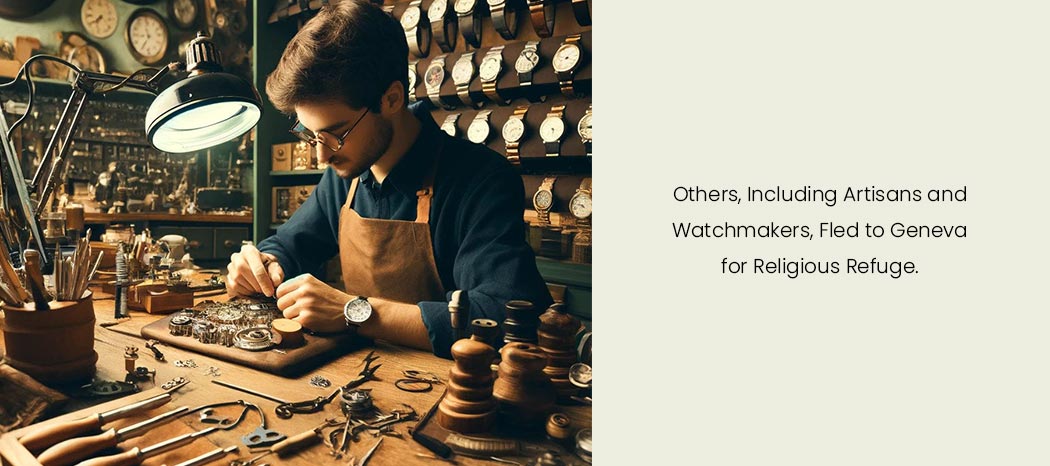
Around the same time, the richer factions of society, comprising professionals like jewellers and watchmakers, fled to Geneva where a recent Reformation movement had increased Protestant sympathies and the country was thus more welcoming than its neighbour. Soon enough Geneva was overflowing with watchmakers and jewellers. The watchmakers, seeing this congestion, started relocatinged to the more remote valleys where it was quieter and consequently, safer.
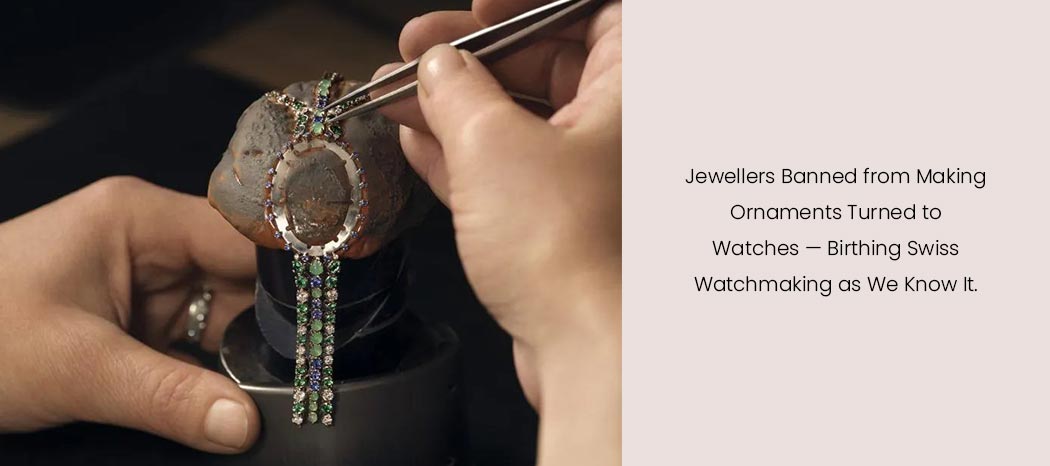
While Switzerland was not strictly Catholic, another revolutionary faction of the religion was quite domineering. John Calvin, who propagated Calvinism, was quite involved in defining how people lived their personal lives. One major tenet of Calvinism was to live in a less ostentatious manner, they eschewed displays of wealth and so they banned the public wearing of jewellery. This got the jewellers too to turn their skills to other arts, like watchmaking, where they had little experience but one that wasn’t too distant a segue from working with very small pieces of precious metals.
Now picture this, jewellers with the skill of intricate work with precious metals, monks with a knowledge of weights and measures, and experienced exiled watchmakers who knew how to bring it all together, all of them end up in remote valleys with austere weather and little else by way of activity or commerce… the rest, well, you know what they say about it. In the 16th century, when Calivnism was no more as prevalent a way of life, these fine watchmaking setups began to grow, prosper, establish and flourish.
Over time, the watch brands that we all know so well today were formed and forged in these strategic (but also fated and inevitable) partnerships. The Sun King, who, in a bid for unquestionable supremacy and infallible power, had crushed any possible religious revolts, had also, unknowingly, given rise to other industries and movements that would alter the course of the world in ways unimaginable.
So the next time you are invited to a watch gathering , don’t think of the obvious and more superficial connections between the two. A watch isn’t just about timekeeping, it records history and encases it for us to see at the end of our arms, every time we flick our wrists. A glass of wine is more than just fermented grape juice. It is, as Galileo said, “Bottled sunshine,” but it is also a living relic that shines light on the way our ancestors lived, and possibly, partied. And then look beyond the tangibility of the two, dive into the annals of history to relive this link between the two that I have just shared here. Religious freedom, consequent prosecutions, upheld beliefs, exiles and exodus, an unplanned coming together of trades in lonely vales at one end, an immigration of grape growing farmers to distant lands at the other – that is what connects a glass of fine South African wine with the watchmaking industry of Switzerland. It seems quirky, even bizarre, but given how it went down, makes perfectly logical sense.
As for Louis XIV, he may have been all that but when Remy Martin made that famous Cognac, it was named after his father, Louis XIII (who didn’t persecute people for their religion and also made wigs stylish among men!)



Recent Posts
Recent Comments
Archives