
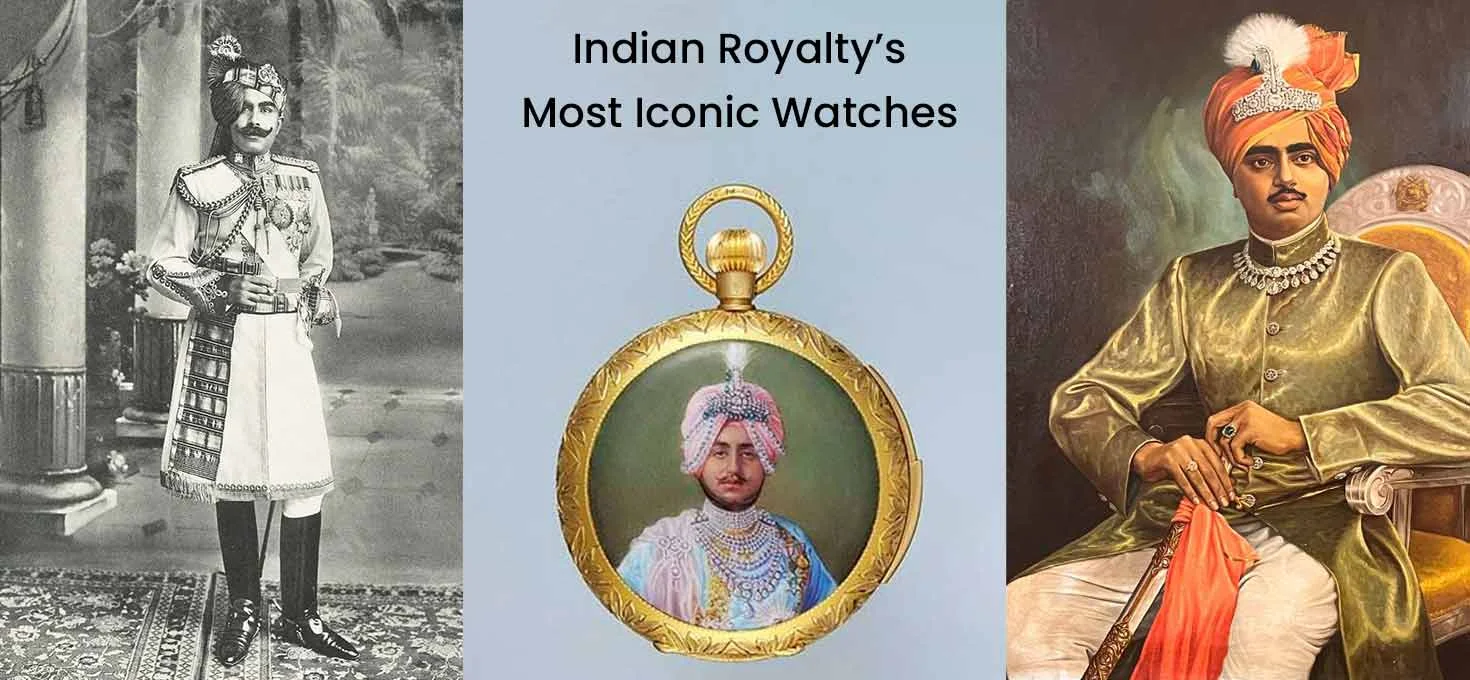
Exploring the horological treasures of Indian maharajas and maharanis — each watch a chronicle of power, prestige, and impeccable taste.
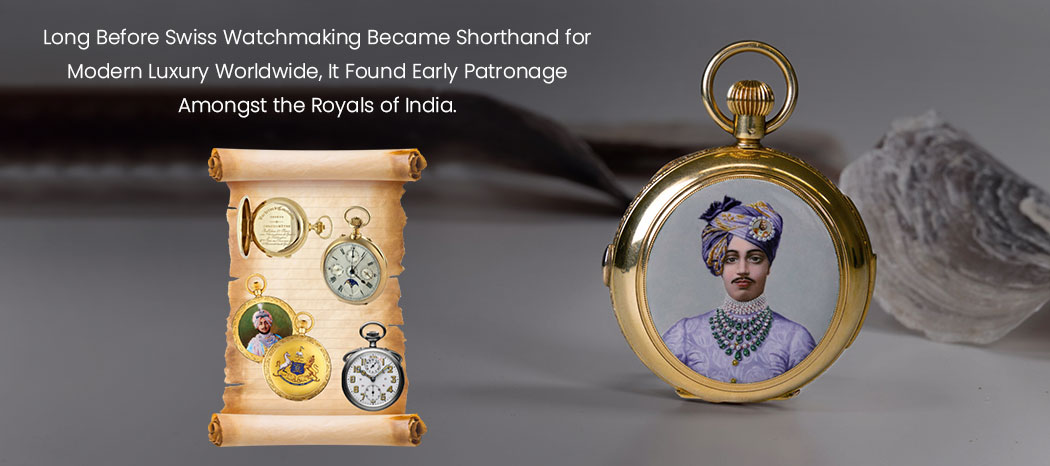
Long before Swiss watchmaking became shorthand for modern luxury worldwide, it found early patronage amongst the royals of India. In the courts of the Maharajas, clocks and watches were not merely instruments of timekeeping, they were declarations of taste, intellect and global stature. During the 19th and 20th centuries, Europe’s most prestigious Maisons forged enduring relationships with Indian royalty, who were well-known collectors of art and crafts. Cartier and Vacheron Constantin’s salons in Paris and Geneva had become ritualistic stops for India’s ruling elite, with emperors arriving with entourages, gem chests and an unerring eye for excellence.
Patiala to Paris
Indian royalty did not collect timepieces as novelties, they commissioned them as extensions of self— objects that fused craftsmanship, culture and charisma. Pocket watches, wristwatches, jewelled timepieces and custom commissions flowed freely between Europe and India, with each piece being truly one-of-a-kind. No figure embodies this grandeur better than Maharaja Sir Bhupinder Singh of Patiala, a man whose appetite for the extraordinary bordered on myth. In the early 1900s, he reportedly ordered the fabled Patiala Necklace, incorporating a timepiece into the design. In creating this necklace, Cartier used 2,930 diamonds, including a massive 234-carat De Beers diamond. Amongst his other acquisitions was an 18K gold Vacheron Constantin pocket watch equipped with a chronometer, astronomical calendar, moon phases, alarm and a single-pusher chronograph, a true engineering marvel. Another was a Savonnette pocket watch, equally lauded for its chronometric excellence. In 1916, he commissioned a unique platinum and diamond bangle bracelet watch with an inwardly directed dial to Vacheron Constantin, offering a private glimpse of time only visible to the wearer. As a true blue (blooded) aesthete with a forward-thinking taste, he acquired the Cartier Tank à Guichet—one of the most avant-garde watches of the time with jumping hours concealed behind apertures—in 1928.
The Cartier chronicles
Pocket watches were also hugely popular in other parts of pre-Independent India. The Maharaja of Kapurthala, Jagatjit Singh, a Francophile and admirer of western elegance, was drawn to Cartier’s refinement, purchasing a blue enamel pocket watch, emblematic of the Maison’s early mastery of colour and form.
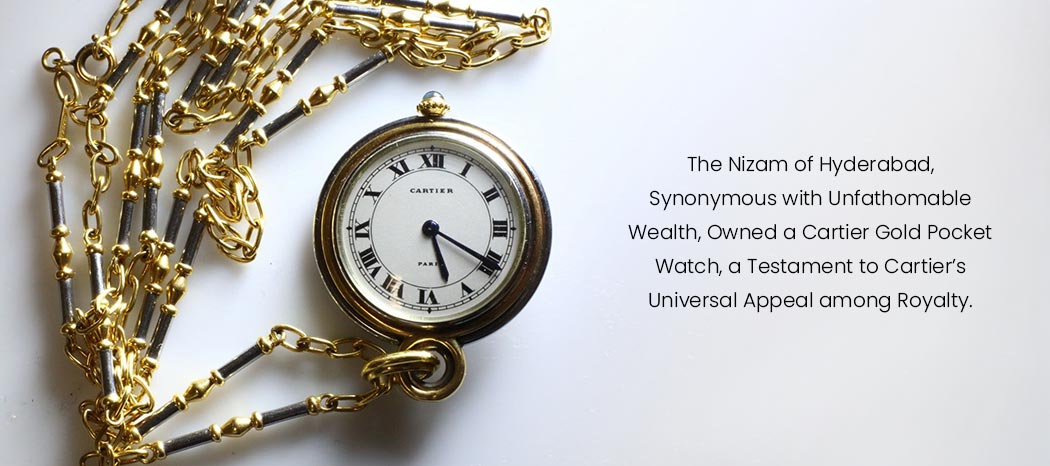
The Nizam of Hyderabad, synonymous with unfathomable wealth, owned a Cartier gold pocket watch, a testament to Cartier’s universal appeal among royalty. Meanwhile, in Baroda, Maharaja Sayajirao Gaekwad III amassed Cartier platinum timepieces, acquired during Jacques Cartier’s own travels across India.
Changing times
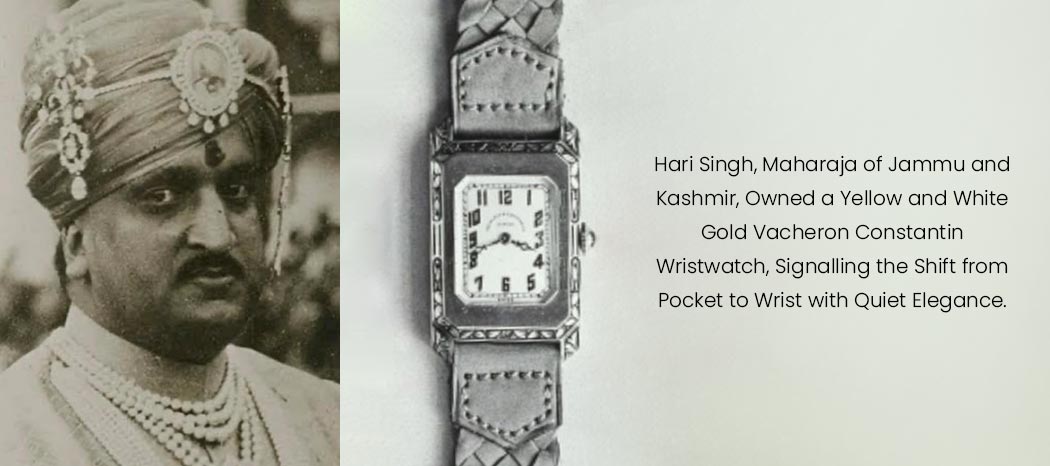
As wristwatches rose to prominence after World War I, Indian royalty adapted swiftly. Hari Singh, Maharaja of Jammu and Kashmir, owned a yellow and white gold Vacheron Constantin wristwatch, signalling the shift from pocket to wrist with quiet elegance, while elsewhere Maharaja Rana Bahadur of Dholpur acquired a diamond-set platinum wristwatch from Vacheron Constantin. For royal women, watches became jewels in motion. None embodied this better than Maharani Sita Devi of Baroda, whose Cartier timepieces set with pearls, emeralds and rubies blurred the line between watchmaking and haute joaillerie.
The India inspiration
Few watches are as intimately tied to India as the Jaeger-LeCoultre Reverso. Conceived in 1931 after Swiss businessman César de Trey witnessed polo matches in India, the reversible case was designed to protect the dial during play. The idea resonated instantly with India’s polo-playing elite. The Maharaja of Jodhpur, known as the ‘Polo King,’ became one of its most ardent patrons, cementing the Reverso’s association with royal sport. The Jaipur royal family too commissioned custom Reversos, engraved with crests, insignia and enamelled portraits, turning the watch into a personal canvas.
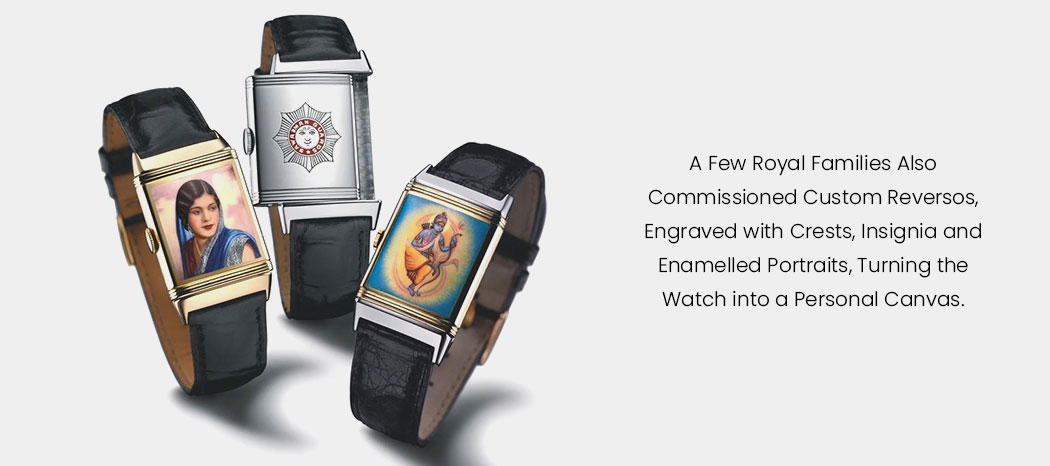
The Maharaja of Alwar, another connoisseur, owned multiple Jaeger-LeCoultre pieces, reflecting his appreciation for both mechanical excellence and bespoke artistry.
European Maisons, captivated by India’s aesthetic richness, absorbed its influence eagerly. For them India was not just a market but also a muse. Cartier’s famed Tutti Frutti style—an exuberant mix of emeralds, rubies and sapphires—was born from its interactions with Indian royalty. Jaeger-LeCoultre’s enamelled Reversos, including the mysterious Beauté Indienne and the Rama Reverso, drew directly from Indian miniature painting traditions and religious iconography. Even Vacheron Constantin sent family scions to Bombay in the 19th century, recognising India not as a peripheral market, but as a cultural epicentre.
The next generation
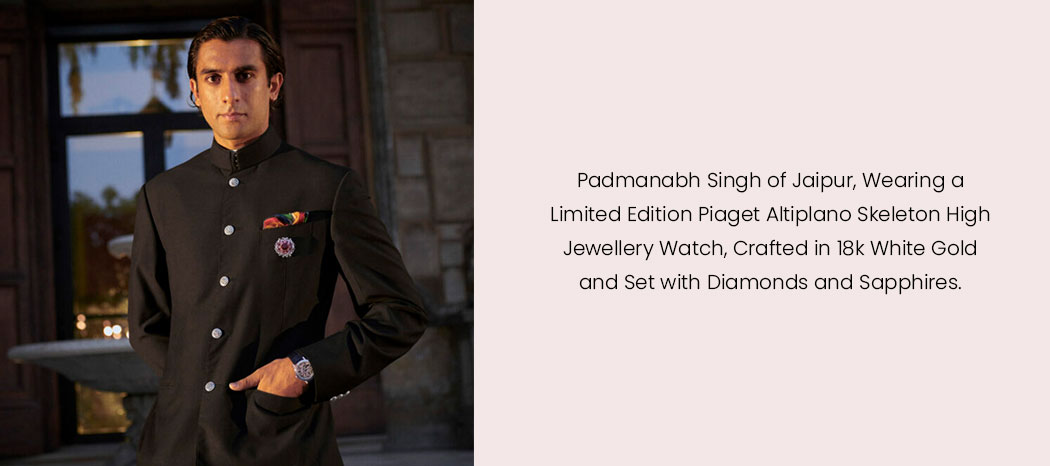
Fast forward to the present and this legacy of opulence has not faded, it has simply evolved. Sawai Padmanabh Singh of Jaipur, affectionately known as Pacho, is one of modern India’s most visible torchbearers of royal style. His affinity for Cartier aside, Pacho’s recent appearance wearing a limited edition Piaget Altiplano Skeleton High Jewellery watch, crafted in 18K white gold and set with diamonds and sapphires, serves as a reminder that Indian royalty continues to influence global luxury narratives. It is a fitting continuation of a legacy where watches are not accessories, but heirlooms of identity.



Recent Posts
Recent Comments
Archives