
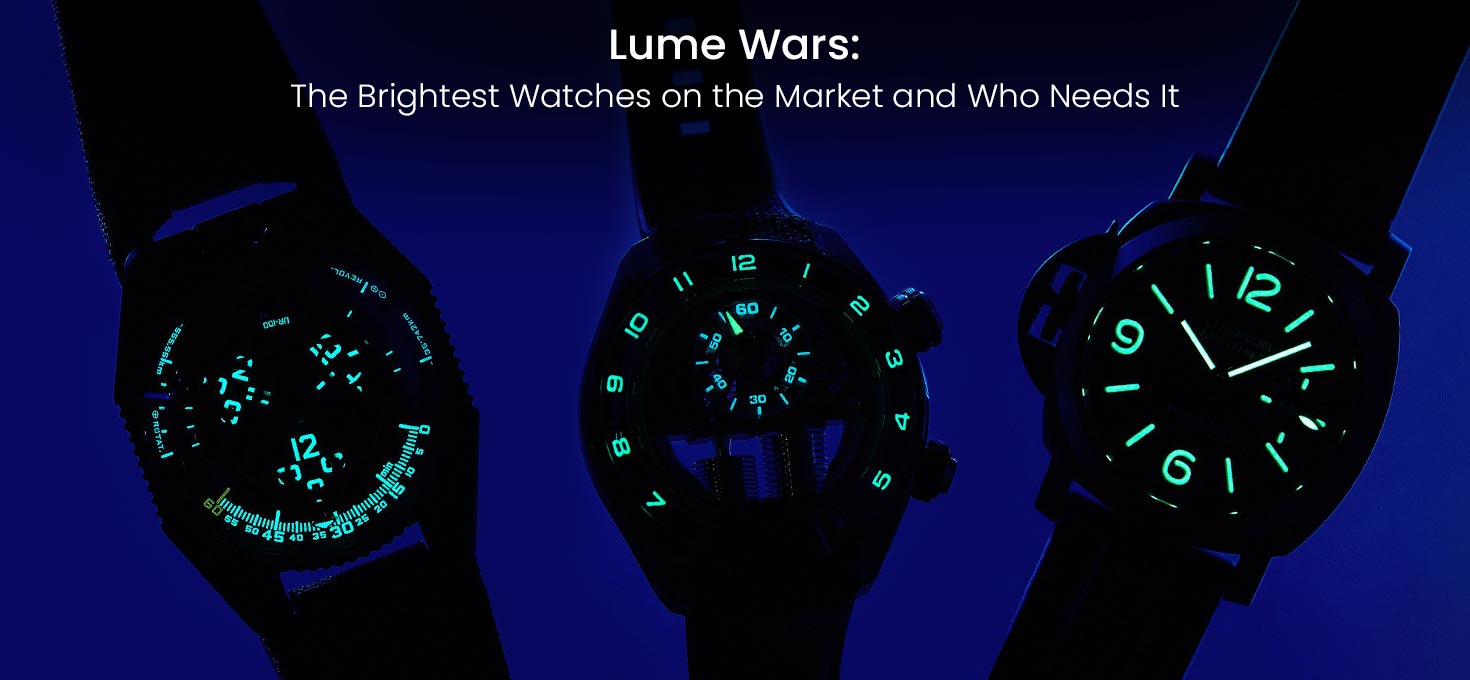
If I think back to my earliest toys, the ones that I can recall having wailed for while standing rooted in front of the shop windows, I can still faintly recall that they either made noises, or lit up, or both. Visual and aural sensory stimulations were a primary fix back then. Today, when checking out a new watch I hold it up to the light or bring it close to my ear to hear the mechanism ticking away industriously, I wonder, if I have even changed a little, or at all. But what is it about a wristwatch that is so mesmerising that men will silently gape and palpitate over every new launch when, to the layman, all that brands seem to do is either change dial colours, or switch up the hand shapes slightly, or maybe dial the case size up or down by a few millimetres. And of course, revise pricing upwards by a tidy 15%, yep, that too. But that’s not why watch lovers gawk and gasp, mostly.
One thing, which gets many a watch lover excited is the way some watches seem to instantly light up when one transits from light into sudden darkness. What’s worth noting is that we possibly display the same level of fervour and fascination with the concept as Madame Marie Curie possibly did when she first saw radium glow. Unfortunately, her Nobel-prize worthy life’s magnum opus also cost her, her life but we, with our limited IQs, still derive an almost relatable joy when we see something glowing when, just a moment ago, under light, it wasn’t. But macabre experiments with glowing objects aside, let’s understand exactly what is luminescence and how did it come to become such a coveted watch feature.
What the Lume
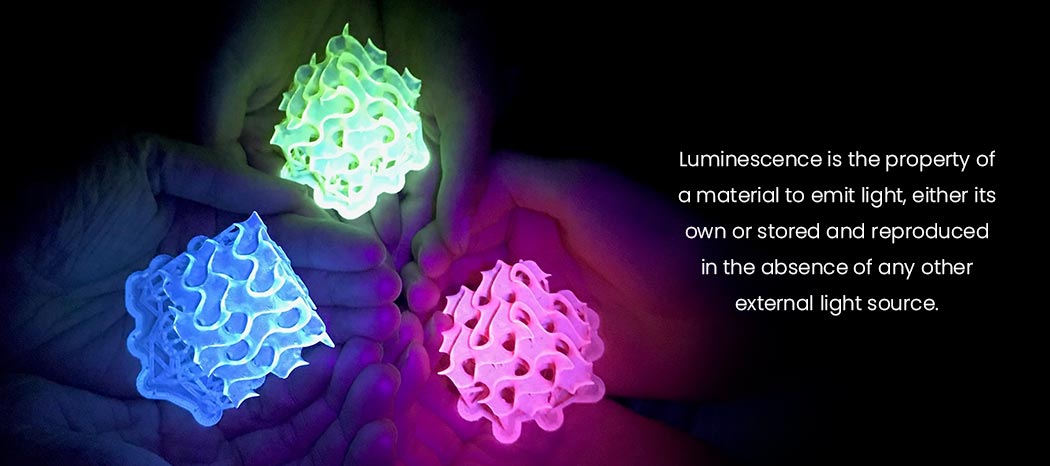
Luminescence is the property of a material to emit light, either its own or stored and reproduced in the absence of any other external light source. Now radioactive materials come first to mind when we talk about auto-luminescent objects. Sure, there are other materials which light up themselves but too many cartoons have ingrained the idea of radioactivity being the primary source of auto-glow. And, funnily enough, as much as we are aware of the hazards of being around radioactive materials today, their use was quite widespread till much after the Second World War. This was dangerous to both the people at the manufacture making the watches as also to the wearer. In fact, a top brand was the pioneer of using this tech for their military (/navy) watches and dropped it like a hot potato once reality dawned on them. But, in their defence, they didn’t deploy it with complete knowledge of the risks involved.
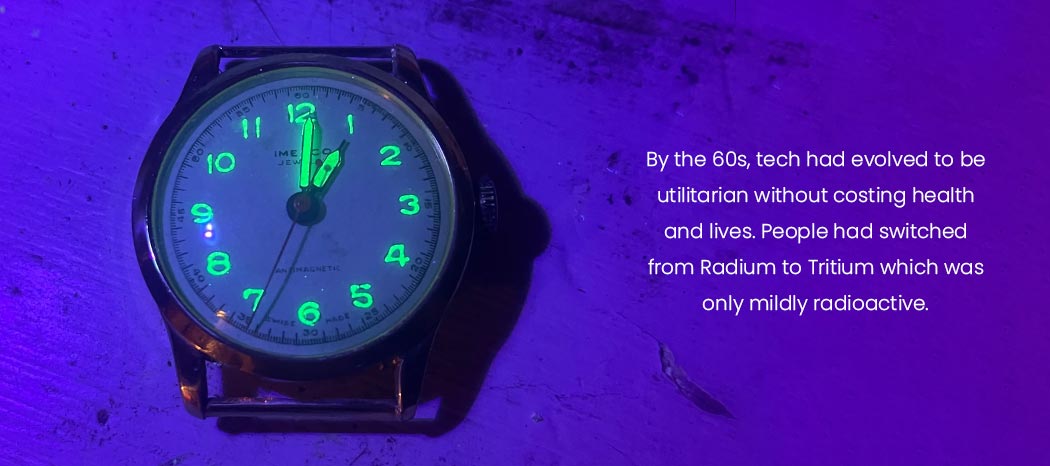
Fast forward to the 60s and the tech had evolved to be utilitarian without costing health and lives. People had started switching from Radium to Tritium which is still radioactive but only mildly so and nothing too severe to put people in harm’s way. That said, today it is selectively used for certain tool watches and for common city-wear – oriented gear, brands may skip this entirely.
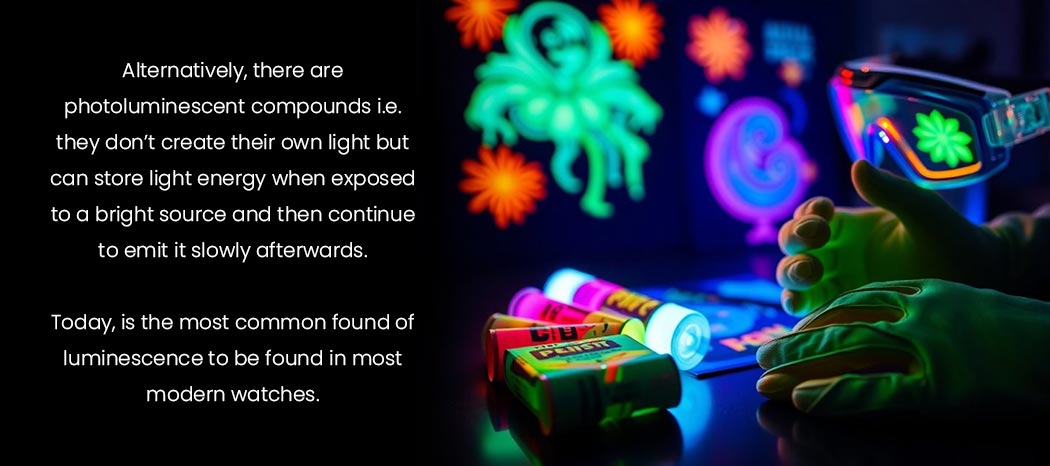
Next, we have compounds which show photoluminescence i.e. they don’t create their own light but can store light energy when exposed to a bright source and then continue to emit it slowly afterwards. This, today, is the most common found of luminescence to be found in most modern watches. How long it lasts depends on how many coats are applied, in what pattern and to what materials.
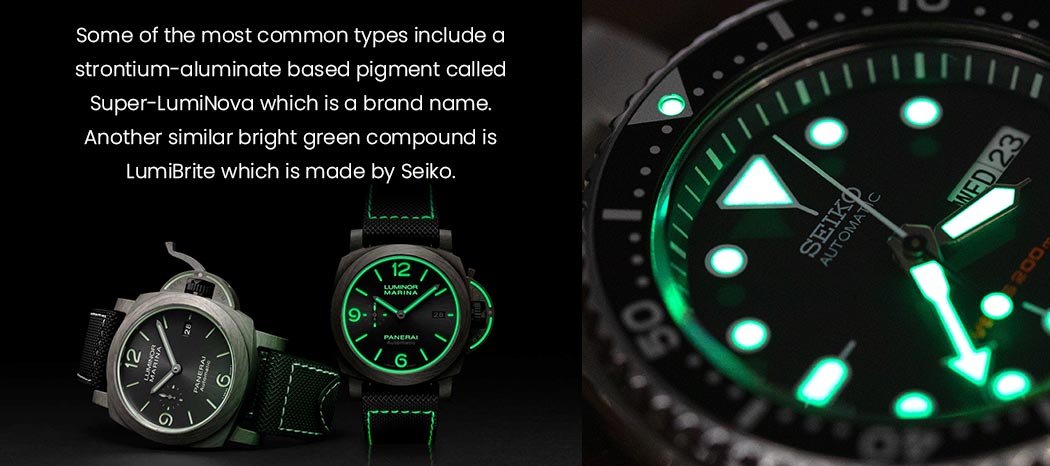
Some of the most common types include a strontium-aluminate based pigment called Super-LumiNova which is a brand name. Another similar bright green compound is LumiBrite which is made by Seiko, Other colours can be achieved but at the cost of reduced brightness and longevity. Then there is Tritium which is in low-level radioactive hydrogen isotope enclosed in glass tubes (Gaseous Tritium Light Sources or GTLS) which are phosphor-coated on the inside. As the slowly decaying gas emits particles, they strike the walls and make the phosphor glow, These tubes can last for about 20 years before going off (half life of the radioactive substance). So there you have it, all the ways to make a watch glow. Now the question remains, why?
Why Must Time Glow
So, now we know that we can have a watch which glows in the dark and one that won’t be slowly (and painfully) killing us while it does so. Think of nocturnal activities where time is of crucial essence to me, the first thing that comes to mind is James Bond or something akin to a Mission impossible adventure where time is crucial down to the last second. Like robbing a moving train in the dead of the night as it goes through a tunnel and all the power is cut just then to further cloak it in darkness. And our protagonist only has 45 seconds to execute the whole thing before the lights are restored, or the tunnel is over, or they find their flashlights…whichever. Surely they’d appreciate a watch which can tell time in the dark but without giving away their location or identity.
But outside of that, the armed forces always need to work with time as a primary element, one that unifies their entire operations. So precision and luminescence can both be indispensable.
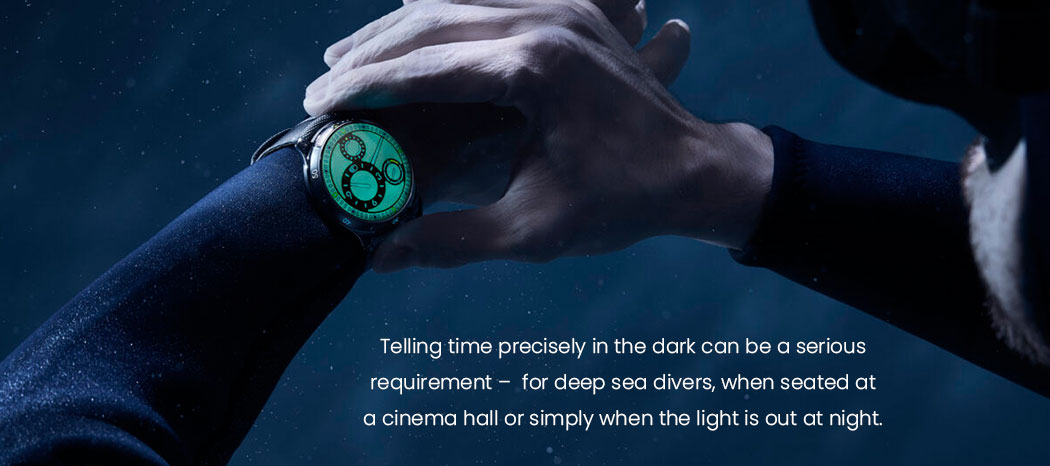
But even with jobs that may sound a lot less ‘cool’ (but actually are quite crucial), telling time precisely in the dark can be a serious requirement – like deep sea divers who go welding at oil rigs and or fixing underwater communication lines, they need watches to tell them time (and a lot other metrics) while working deep down there. And then there is the more first world need of being able to tell the time when seated at a cinema hall without having to light up and being blinding by your phone screen; albeit insignificant a reason when compared to the others above but still a valid requirement.
Bring on the Lume Battles
Watch nerds don’t do much on Saturday evenings which is why they all gather on some virtual platform and have ferocious Lume Wars. I say ‘ferocious’ with the same smirk that I have on when using a term like ‘Lume Wars’. It involves people switching off the lights while wearing their favourite (or most powerful) lume-coated watch on one wrist and then taking slow, long-exposure shots of it with their phones or fancy cameras in the other hand, all while trying to keep their camera-hand and watch-hand steady in an effort to achieve that crisp, unblurred shot. This they then proudly share on the platform and others judge who got the best shot. It’s quite the sport, involving dexterity, some speed (because the lume fades if you take too long) and plenty of balance and breath control. Many in the circle will liken their jobs to that of a sniper but I don’t know if that is something to be proud of, or even remotely true.
It’s usually someone with a dive watch who wins because traditionally those are the watches which had the most layers slapped on over maximum surface area. Pilot watches might come in a close second. And no, this sport isn’t open to Apple watch-wielders or the Garmin gang.
To Lume or Not To Lume
Luckily, having a watch with lume isn’t a no-no in any sphere of life. You can sport one while diving, or when out hiking or trekking, but it’s not entirely out of place on a dressy evening watch or something you’d wear to a meeting. Think of lume as something which is desirable and always good to have, especially if it’s applied right and tight. It makes your watch that little extra noticeable without compromising functionality or questioning integrity. We don’t need a unidirectional bezel as we go about our daily lives, or a tachymeter while driving to work, yet we all don’t think twice before wearing a watch that may have one of those, or both. Lume, by comparison, is significantly more useful and less intrusive. Definitely look out for it when you are on the market for something new to adorn and don’t worry if it won’t win the lume wars.


Recent Posts
Recent Comments
Archives