
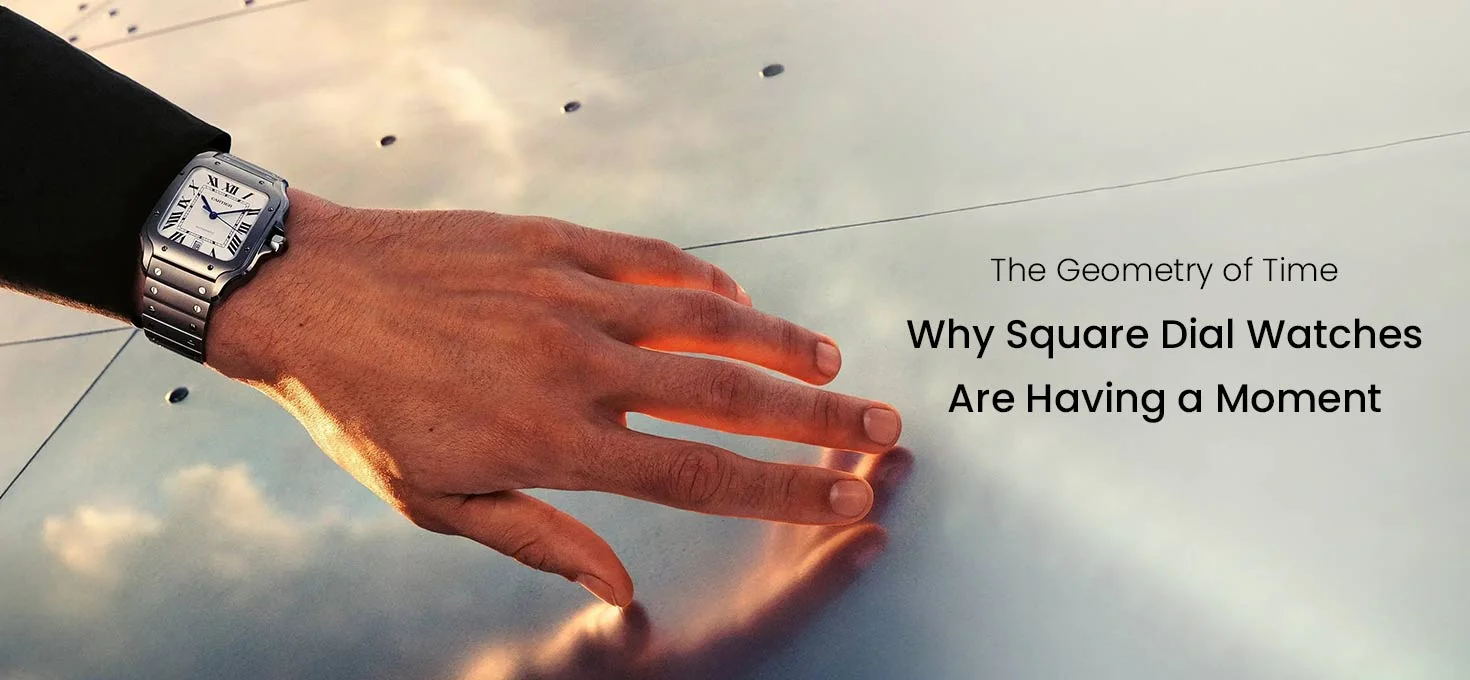
Once considered unconventional, watches with square dials are experiencing a renaissance.
From sundials to pocket watches, the round dial has dominated the world of timekeeping for centuries, its universal shape becoming synonymous with the very idea of a watch. But in the early twentieth century, things began changing. The rise of the Art Deco movement brought in a new design language defined by symmetry and clean architectural lines. As artists, architects and jewellers embraced this modern aesthetic, watchmakers followed suit, creating square timepieces that looked like wearable art. Nearly a century later, Art Deco is experiencing a resurgence across fashion, interiors and jewellery, and the square watch is back in the spotlight. Bold, versatile and distinctive, it transitions effortlessly from day to night. More importantly, it stands out amongst a sea of sports watches, making it the perfect choice for collectors seeking one-of-a-kind pieces with history, character and enduring style.
The Original Icon
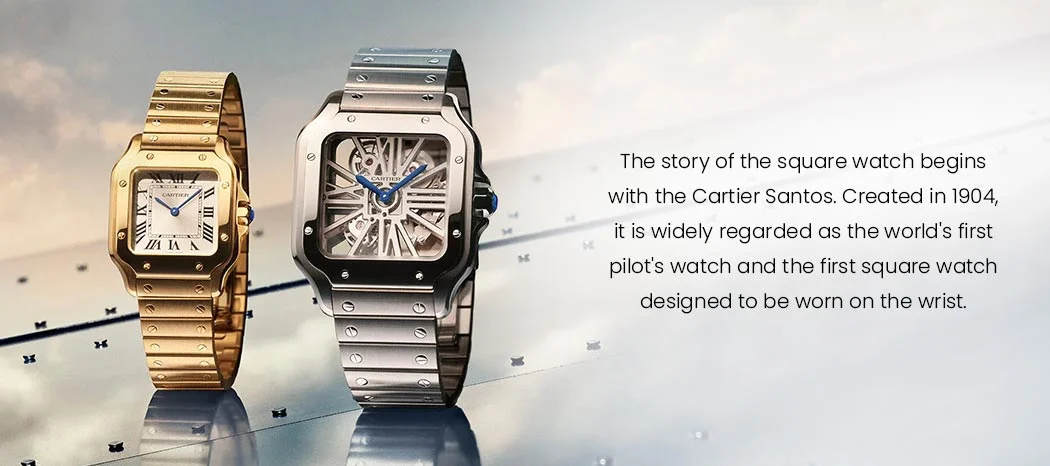
The story of the square watch begins with the Cartier Santos. Created in 1904, it is widely regarded as the world’s first pilot’s watch and the first square watch designed to be worn on the wrist. At a time when men only carried pocket watches, Louis Cartier created it for his friend, Brazilian aviator Alberto Santos-Dumont, who needed to read the time while flying. In doing so, he gave birth to an entirely new category of timekeeping.
More than 120 years later, the Santos remains as iconic as ever. Its angular square case, exposed screws and Roman numerals that nod to French design codes have become enduring design signatures. Regularly spotted on the wrists of Kareena Kapoor Khan, Brad Pitt and Tom Cruise, it continues to define understated luxury while proving that great design never goes out of style.
When the Square Dial Became a Style Statement
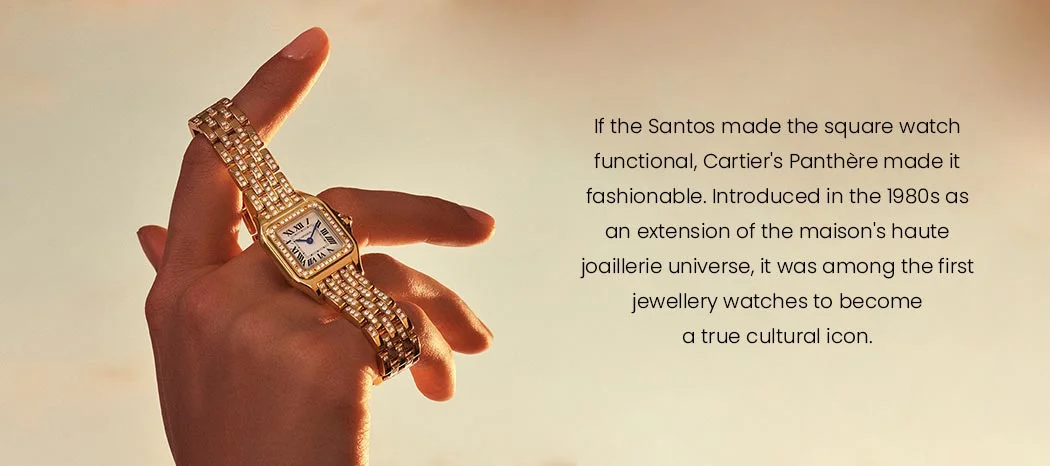
If the Santos made the square watch functional, Cartier’s Panthère made it fashionable. Introduced in the 1980s as an extension of the maison’s haute joaillerie universe, it was among the first jewellery watches to become a true cultural icon. Its flexible bracelet was designed to mimic the movement of a prowling panther, while its softly rounded square case made it feel elegant rather than rigid.
The Panthère quickly became synonymous with the glamour of the decade and has remained a favourite across generations, from Princess Diana and Madonna to Dua Lipa and Zendaya. Few watches have crossed so effortlessly between royalty, Hollywood and contemporary fashion.
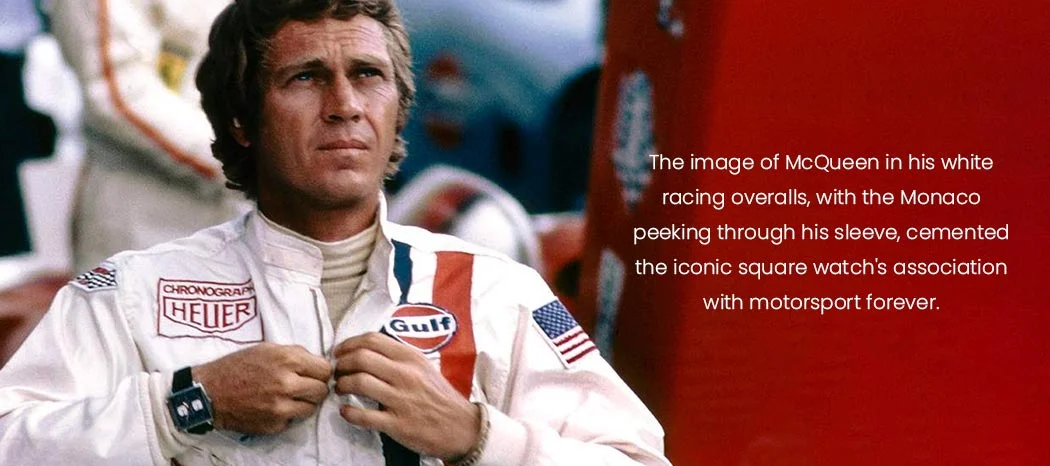
Around the same time, another square watch was making history in a completely different world. Named after the Monaco Grand Prix, the TAG Heuer Monaco debuted in 1969 as one of the world’s first automatic chronographs. Its bold blue dial, angular case and unconventional left-hand crown became etched into pop culture after Steve McQueen wore it in the 1971 racing film Le Mans. The image of McQueen in his white racing overalls, with the Monaco peeking through his sleeve, cemented the watch’s association with motorsport forever. Today, it remains a favourite among Formula One stars including Max Verstappen and Sergio Pérez.
Reinventing the Square
Contemporary watchmakers continue to reinterpret the square dial through new materials and engineering.
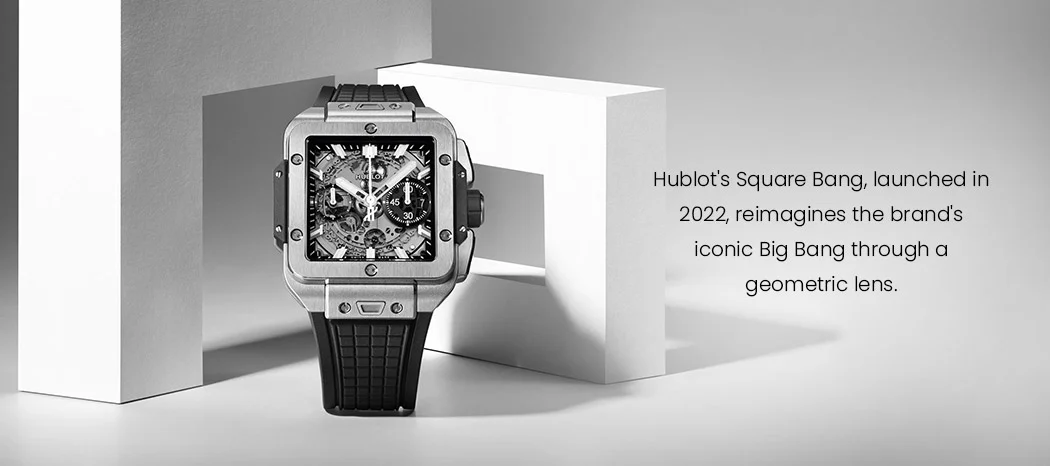
Hublot’s Square Bang, launched in 2022, reimagines the brand’s iconic Big Bang through a geometric lens. Preserving Hublot’s signature modular case construction and layered dial architecture, it transforms the familiar design into a bold square silhouette while blending ceramic, titanium and gold through the brand’s celebrated “Art of Fusion” philosophy. It made headlines when football star Kylian Mbappé wore one in 2024.
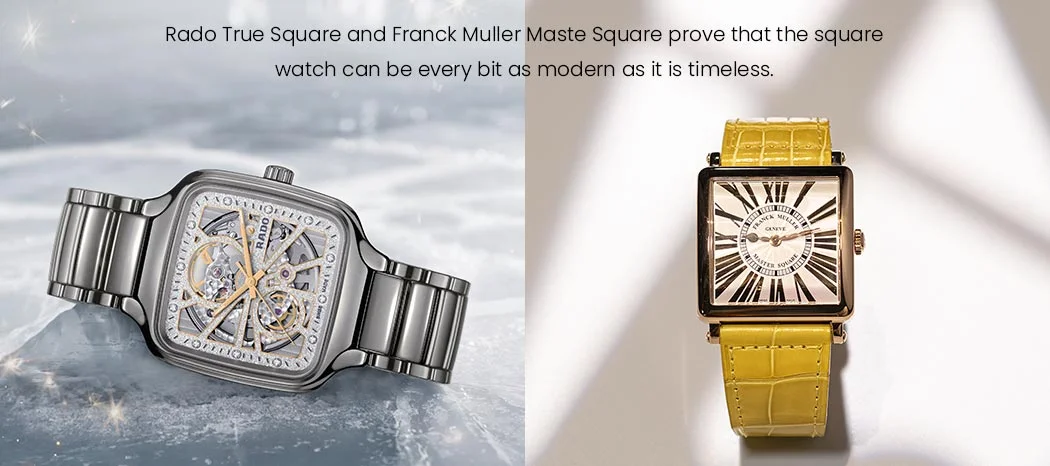
True Square, introduced in 2020, is a contemporary expression of that legacy. Featuring an injection-moulded monobloc ceramic case, it is lightweight, seamless and highly scratch resistant, proving that the square watch can be every bit as modern as it is timeless.
Franck Muller approaches the form with a more playful spirit. Inspired by Art Deco geometry, the Master Square combines the maison’s signature oversized Roman numerals with a square case, sunray finishes and guilloché detailing to create a dress watch that is both elegant and expressive.
Why Square Dials Endure
The appeal of the square dial lies in its ability to balance heritage with individuality. It feels architectural yet elegant, vintage yet contemporary, making it one of the most versatile watch styles to own. Whether paired with a tailored suit during the day or black-tie in the evening, it carries an effortless sophistication that few other watch designs can match.
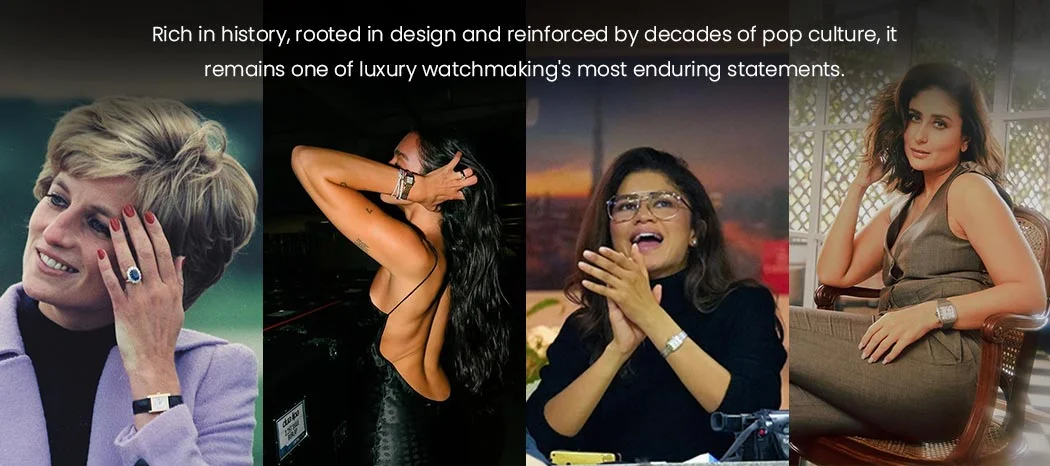
As collectors increasingly look beyond conventional sports watches, the square dial offers something refreshingly different. Rich in history, rooted in design and reinforced by decades of pop culture, it remains one of luxury watchmaking’s most enduring statements—proof that sometimes, thinking outside the circle is exactly what stands the test of time.


Recent Posts
Recent Comments
Archives