
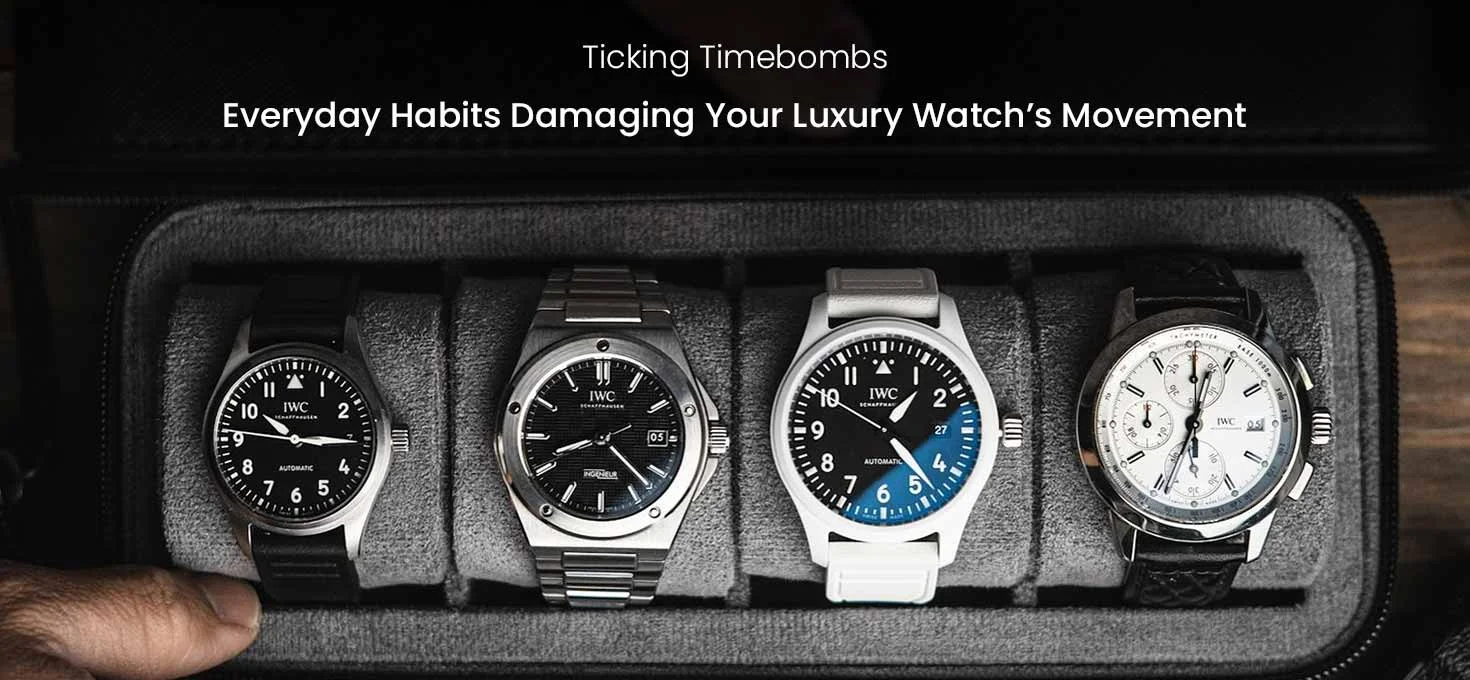
Timepieces are tough but far from invincible. Forged out of ultra-light carbon fibre, titanium, or toughened ceramic, watch cases are capable of withstanding Mother Nature’s extremes, G-force, and plunging 300 metres into the abyss — but what about the movement inside?
This microcosm of perfectly calibrated gears, pinions, and springs demands months and years of precision dexterity. And while these marvels of haute horlogerie are built to last for generations, they’re still vulnerable to misuse — their longevity relies on daily discipline and a red list of “don’ts”. Interestingly, this red list doesn’t focus on the catastrophic accidents that ruin watches — instead, the tiny, inattentive, rushed daily habits that slowly damage your timepiece’s precious movement. Whether you’re a seasoned collector, first-time luxury watch buyer, or anywhere in between, here are seven (and costly) everyday mistakes that can damage your watch movement.
The ‘Danger’ Winding Hours
Upon close inspection, you’ll notice that the date aperture of every perpetual calendar timepiece (or date complication timepieces) doesn’t ‘jump’ or instantly flip from ‘SAT’ to ‘SUN’. Instead, it’s a three-to-four-hour-long incremental process, during which a network of gears, cams, and levers performs designated functions. Understandably, you wouldn’t want to disturb the movement while it’s performing its duties.
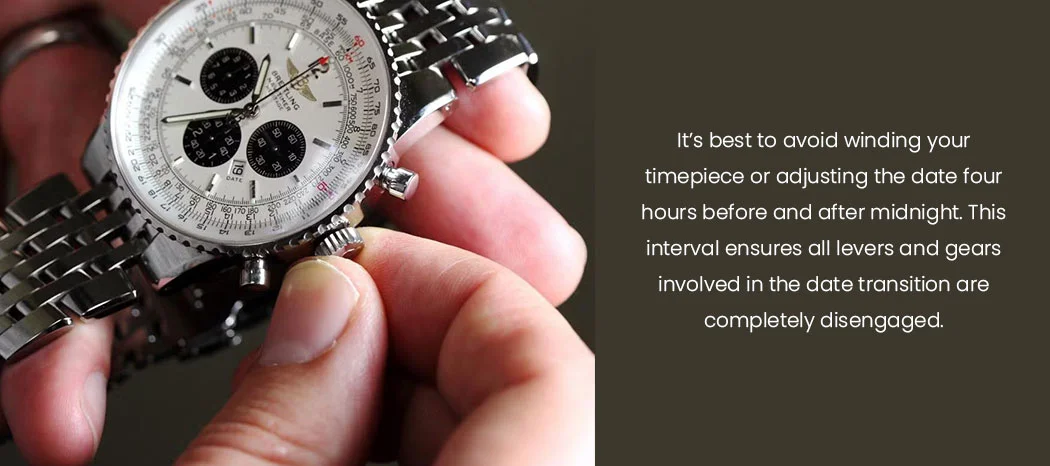
As the hour hand sweeps towards midnight, a date-change mechanism engages (typically around eight or nine o’clock). During this period, manually adjusting the date can cause the date-jumper to clash with the driving wheel, resulting in misalignment, sheared teeth, or worse, irreparably damage the movement. Hence, it’s best to avoid winding your timepiece or adjusting the date four hours before and after midnight. This interval ensures all levers and gears involved in the date transition are completely disengaged, allowing smooth adjustment without stress on the mechanism.
Magnets Are a Menace
Few enemies are as stealthy as magnets. They’re a silent yet potent force whose exposure is inevitable — right from our smartphones to laptops, and music speakers to refrigerators. And while most won’t cause immediate harm to you, they can be devastating to your mechanical watch.
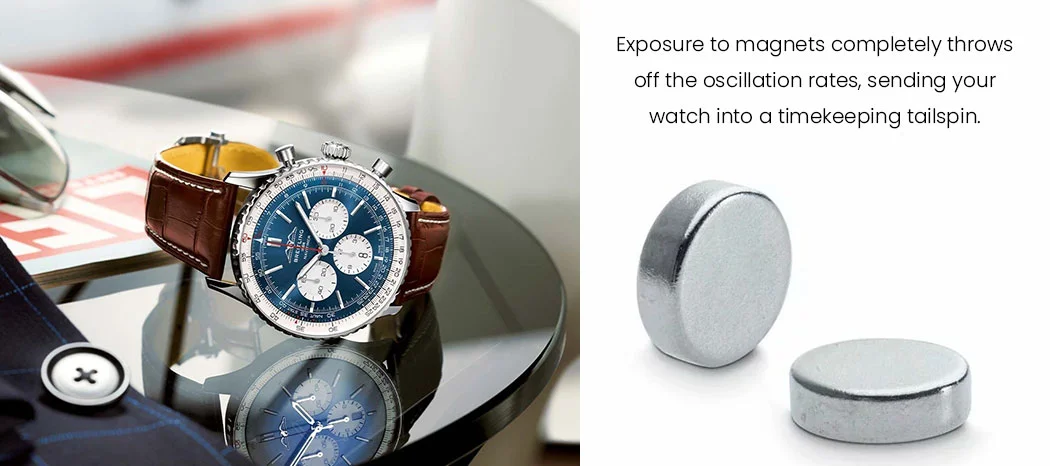
Why is this a glowing danger sign for your luxury timepiece? Because the hairspring of the movement, which is responsible for regulating its heartbeat, consists of a delicate metal coil no wider than a strand of hair. If magnetically engaged, it completely throws off the oscillation rates, sending your watch into a timekeeping tailspin.
Keep an eye out for sudden time gains or losses, erratic ticking, or complete stoppage. Rule of thumb: Keep your timepiece at an arm’s length from any highly magnetic components.
Shock & Impact
We’ve seen tennis players wear Richard Mille watches while serving at nearly 200 kilometres/hour speeds, and while their movements can withstand an incredible degree of G-forces, it wouldn’t be fair to assume that all luxury watch movements can.

Sure, timepieces are engineered for durability with built-in shock protection systems, but they, too, have limits. Sudden jolts from mountain biking, swinging a golf club, or even hammering a nail can wreak havoc on the movement. The most vulnerable components? The balance staff, escapement, and jewel bearings, all of which can be knocked out of alignment or fractured by a strong jolt or impact. Pay close attention to whether your timepiece is built for enhanced durability. If not, it’s best you avoid wearing it during heavy-duty activities.
Underwater Chronograph Perils
“Don’t divers use chronographs?” you must be wondering. Well, yes, but they don’t use them underwater. I’ll explain.
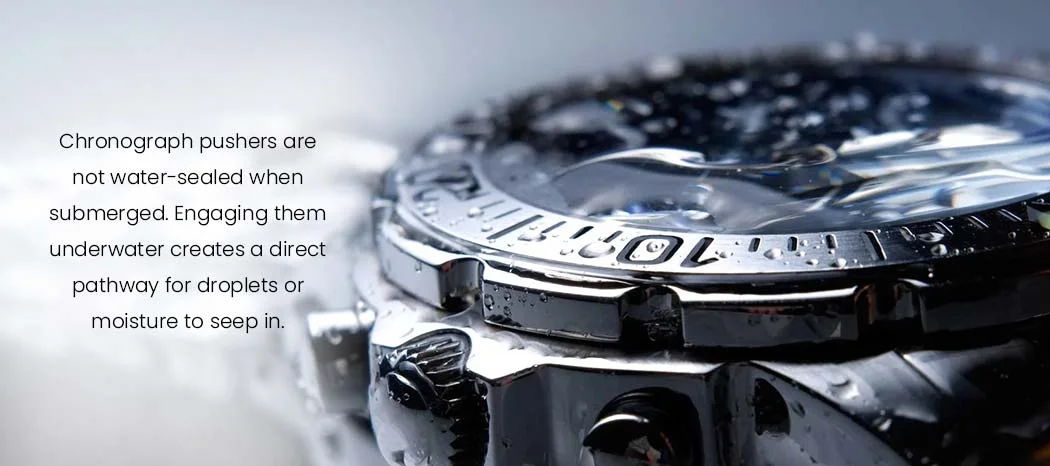
Unless your timepiece isn’t explicitly rated for underwater chronograph use, pressing the chronograph pushers underwater is nearly guaranteed to allow seepage of water. This is because chronograph pushers are not water-sealed when submerged. Engaging them underwater creates a direct pathway for droplets or moisture to seep in. This can result in corroded movements, emulsified oils, and discolouration due to salination. Timepieces like the Omega Seamaster Diver 300M Chronograph or Blancpain Fifty Fathoms Bathyscaphe Flyback are engineered to handle underwater pusher engagement. For everything else, keep your fingers off until dry land.
Set Time The Right Way
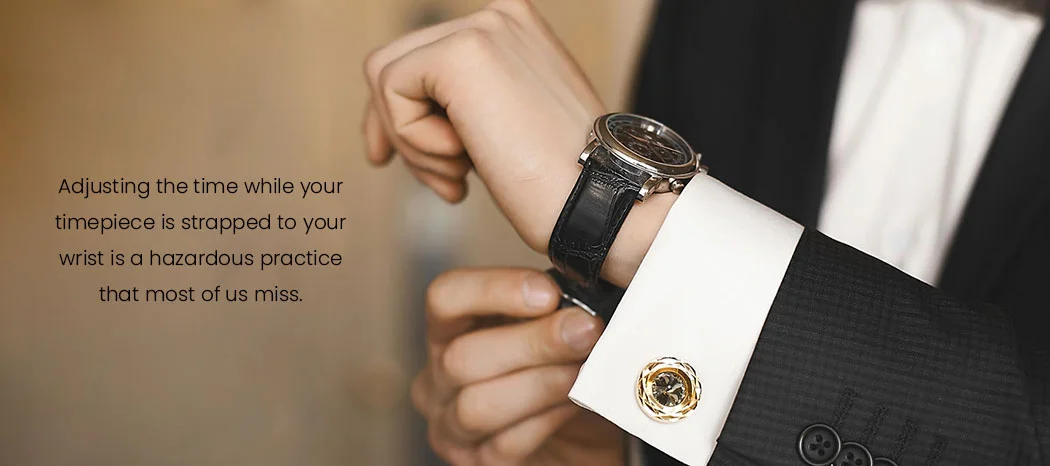
Adjusting the time while your timepiece is strapped to your wrist surely seems convenient, but it’s a hazardous practice that most of us miss. When adjusted in this position, it introduces a subtle lateral force on the winding stem and crown. Mind you, the winding stem is perhaps the most delicate component of the movement. Due to the angle of our hands when operating it, we tend to extend it diagonally outwards. You wouldn’t notice any issues immediately, but after a few months, perhaps years, you’ll notice a visible tilt. This can wear down the settings lever, misalign the step, or even cause the crown to pop out.
Always Follow Protocol
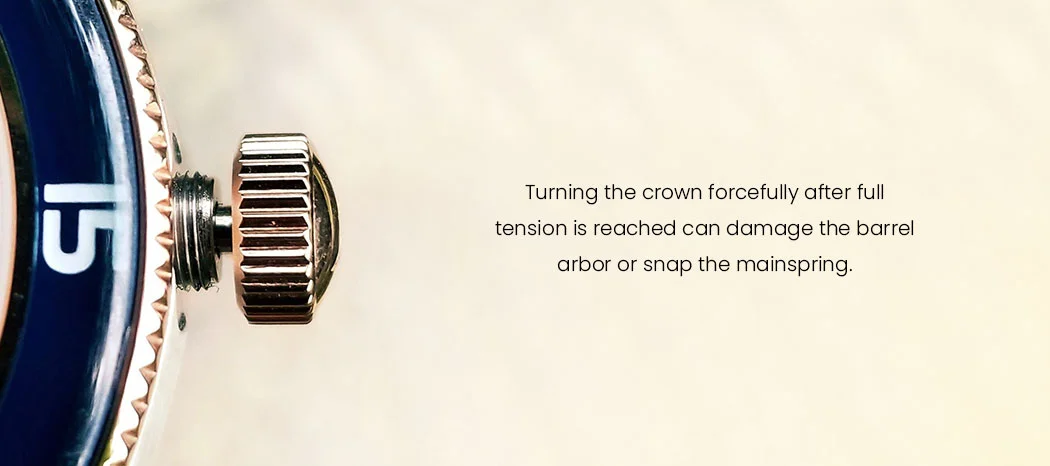
Contrary to myth, you can overwind a watch — particularly vintage manual movements or watches lacking a mainspring bridle. Turning the crown forcefully after full tension is reached can damage the barrel arbor or snap the mainspring. Another quick piece of advice: Don’t wind your watch backwards.
The same applies to chronographs. Resetting a chronograph while it’s running is a recipe for disaster. It may be a shortcut, but it engages the wrong set of gears, causing unnecessary strain on the heart cam and reset hammer. Potentially shearing gear teeth or jamming the complication.
Danger in the Air
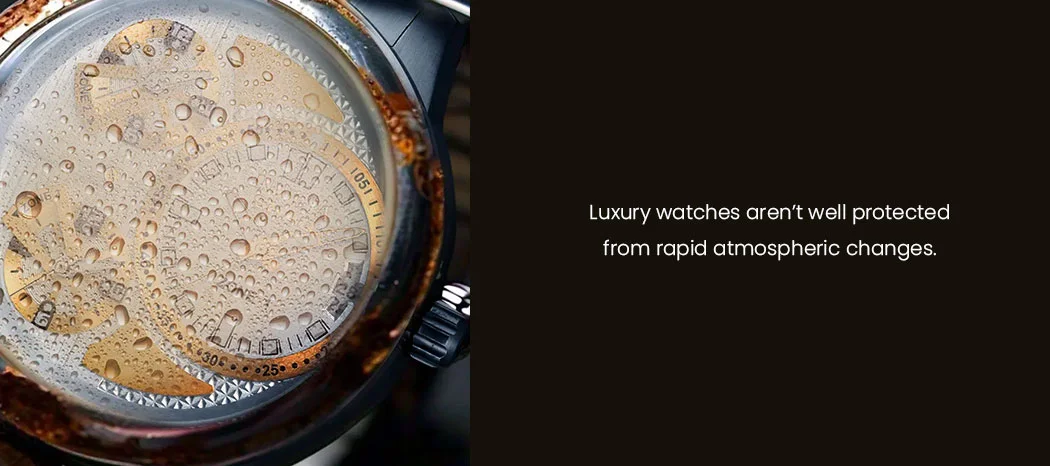
Luxury watches aren’t well protected from rapid atmospheric changes. For example, you entered the hot tub or jacuzzi after diving in the pool — suddenly, you notice condensation inside the dial’s crystal. This happens because you moved from a cold atmosphere to a hot, humid one. Humidity can rust screws, degrade oils, and tarnish dials.
The same applies to storage, like keeping your luxury watch near or inside your shower. I’d also suggest avoiding storing your timepiece anywhere too cold or too warm. It needs to be in a state of homeostasis with stable environmental factors. You don’t need a fancy watch box or pouch — a clean, clutter-free dresser drawer also works.
If you’ve found your way to this guide a little too late, and are experiencing issues with winding, setting dates, or notice fogging on your watch, visit Kapoor Time Crafter, an authorized watch service center for luxury watches in New Delhi.



Recent Posts
Recent Comments
Archives