
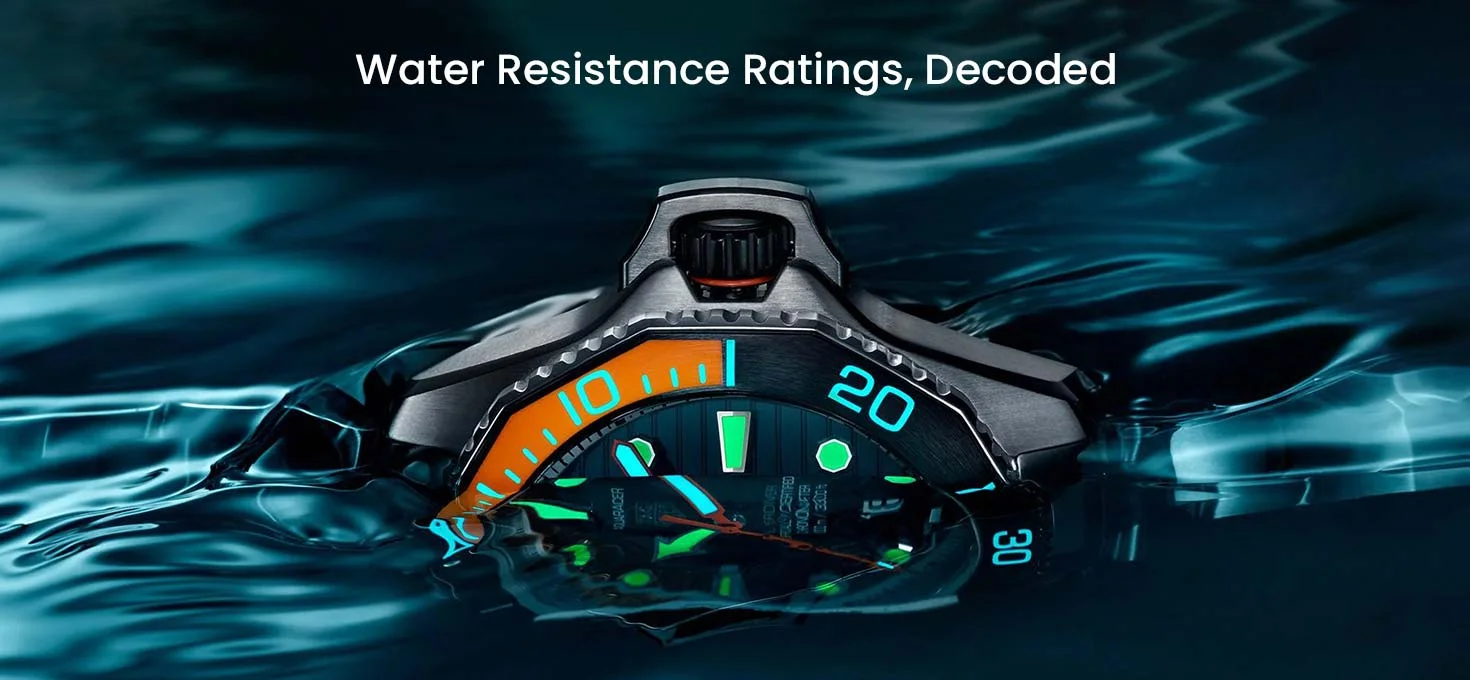
No shame to be honest, we are, after all, human, a species with a strong sense of personal preferences. Watches, a form of high art, are bound to evoke emotions of the most ardent kind in all of us. I always know what timepiece to buy for any amount, the one I would wear unto eternity, and the one feature I always want in my watch. As for the one feature in watches today which I think needs to be interpreted, more meaningfully, it would be the water resistance ratings as marked on most watches.
What?! You think that’s a bit random? Hear me out. Allow me to make my case.
To start, let’s just step back for a minute and think about the world of numbers. It is precise, diametrically in contrast to the world of written prose and artistic representations. While numbers are exact and quite defined (except of course negative square roots or the value of pi), art is open and subject to interpretations. If a roomful of people goes at a maths problem, they should ideally all arrive at the same answer (except with cunning Chartered Accountants); there is one correct answer and the others are simply, wrong. Whereas with art, there are bound to be as many opinions as the number of people who have seen/touched/heard/felt it. And yet, with art, nobody is entirely right or wrong for having an opinion on art, no matter how unprecedented.
The Joy in Numbers
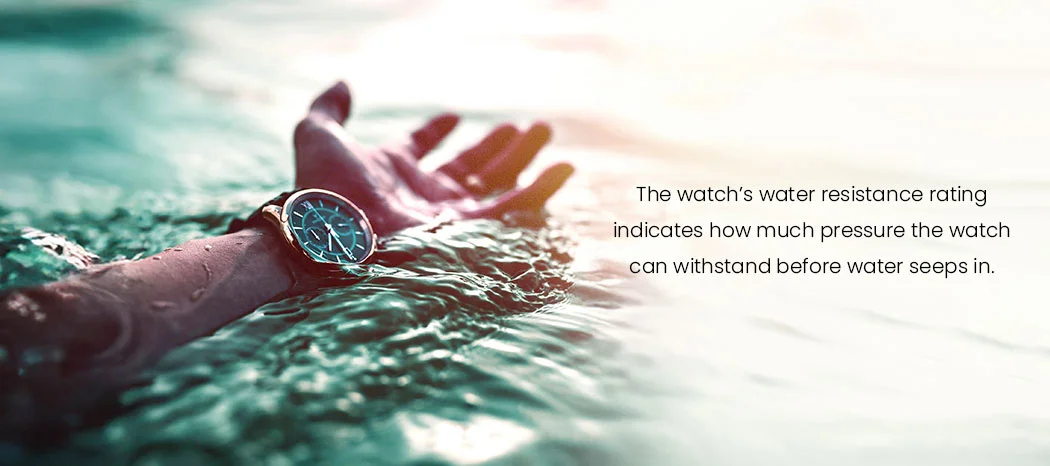
There’s a reason why numbers are used to control and govern. Speed limits are a function of kmph, age limits are denoted in years, your bank balance, the money you earn for the service provided, the taxes you pay, all are defined using a very precise set of calculations. There is almost no leeway for interpreting it otherwise. (At least, that’s what can land you in trouble with a cop, or the taxman.) And we like that sense of organisation mostly. It allows us to understand how much we spent on groceries, set aside for a family vacation, or splurged on a new phone or car. But imagine if these numbers were to suddenly stop making sense. Imagine a world where their application and meaning becomes vague, a variable entity, or one with different ways to read into them. It would be chaos!
That chaos, while not at that Y2K levels of paranoia scale, nevertheless, does exist in the watch world, and it relates to the numbers which are written in bold to define the water resistance of a wristwatch.
Now, before I get to the mains, a moment for self-gloating. As an Advanced, Rescue Deep-certified Nitrox diver, I am allowed to descend to almost 40metres in the deep blue. Tech divers go much deeper, (100m or a little more) but it’s rarely for leisure dives. The world free diving record stands at around 250m. Beyond that, it’s submarines and (un/)-manned submersibles. When people have to wear a watch for these disciplines, the intense rigour of the exercise is as daunting as faced by astronauts while charting space. One needs special tools for these. But if I were to wear my 50m water resistant marked watch to a dive to my deepest capabilities, chances are I’ll flood it well before I even reach that depth.
It means that the numbers we see marked under water resistance (WR) for our watches aren’t exactly what they are made out to be. Resistance to water is gauged by tests done in laboratories in a controlled environment. It isn’t the same as wearing it for a real-time deep-sea dive where the watch will be exposed to water at different temperatures, salinity, movement (with possible jerks and bumps) and consequently, what it may pass as a depth test in a lab may not translate to real-life equivalents.
The Number Confusion
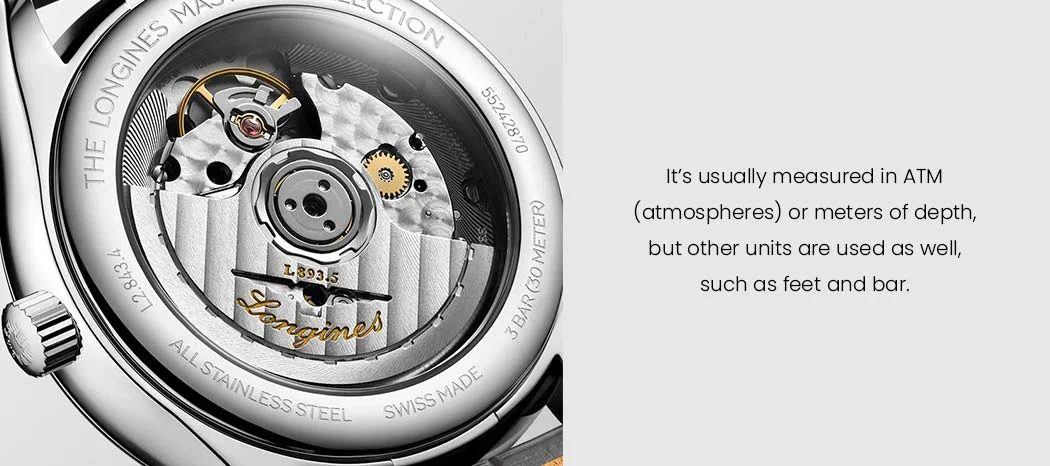
Let’s be honest, anyone who reads 30m of water resistance will think that this watch could survive falling to the bed of a shallow lake, being fished out years later and still be in ticking condition. Sadly, no. It shouldn’t even be worn while boating on the surface of said lake. Trust me, I am someone who learnt this lesson about water resistance the hard way.
Water, gentle as it seems, flows. Water at depth, calm as it may appear on NatGeo video footage, is powerful enough to crush an average like a flimsy tin can. Even a waterproof watch could fall victim if the seal has the teensiest of defects. Watch manufacturers test watches at different levels of pressure in the laboratory to see how they hold but in real-life application we need to interpret them very differently in order to not go over the limit.
Deciphering Depth Markings
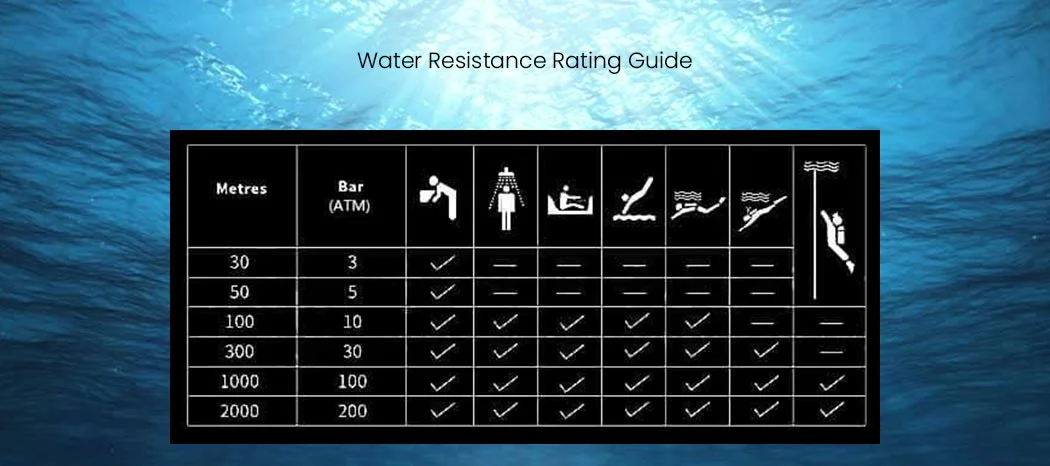
So, for convenience’s sake, a watch marked as not water resistant should be protected from water like Superman from Krypton – the slightest exposure can be their death knell. Next comes 30m or 3 bars of WR which roughly translates to mild splashes at most. Yes, 30m under the ocean you can see an entire new ecosystem thriving and yet, a watch marked with this number will barely manage to skim the surface.
50m will allow you to wash your face while wearing it, even get it wet in the rain, but nothing too prolonged. You still can’t swim with a 50m WR. For that you need to upgrade to 100m WR. This watch will also be good for other similar water sports that are confined to the surface.
200m WR is where the watches start getting serious about doing underwater time and can handle leisure diving, which is normally up to 18m and in some cases, 30m. But pushing beyond 25m can take a toll on any watch and weaken its water resistance seal for subsequent sorties. Also, who made the watch can play a big role in how a watch in this category handles depth.
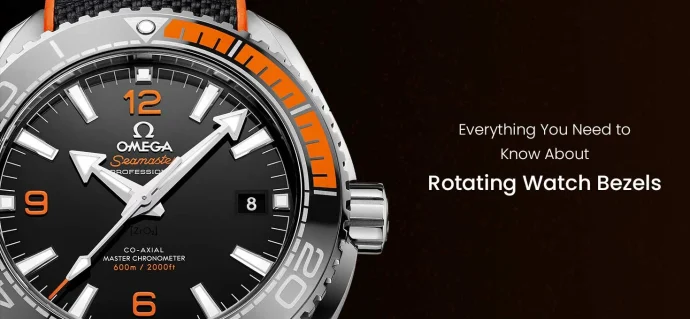
Beyond this is the gear with a WR rating of 300m and beyond (going as high (or as low) as 1000m); now these watches are professional gear for serious divers. Such watches often have a Helium escape valve and a uni-directional bezel with strong luminescence on the watch markers and hands, all features which are essential for deep diving. (Some trivia, dive-specific watches have unidirectional bezels whereas other watches – from pilot to travel to yacht racing style ones – have bi-directional bezels. The bi-directional movement feels more practical to measure short periods of elapsed time as also set a secondary time zone quickly, but a unidirectional bezel is a lifesaving adaptation in dive watches which ensures that the diver never runs out of oxygen underwater by overstaying his planned dive time.)
This last category, with WR rated to extreme depths, will still need frequent checks to make sure the water resistance holds. Saline water wreaks havoc with watches and the internals can get damaged quickly when one dives frequently.
To Dive or Not to Dive
Now, most of us know that our watches will get nowhere near the depths of the ocean, even lesser when we think of the 6-digit denomination we coughed up. We’ll all safely opt for a dive computer instead which not only throws up way more data (beyond just elapsed time and time left) but is more suited and geared for deep-sea diving today. So the figures, whether 50m or 1000m, will seem irrelevant, especially when being flexed in a corporate board room or at a leisurely soiree. But information is king and it’s always good to be in the know. That said, if watch repair centres had a penny for every time someone came in with a flooded watch, they’d have enough saved up to buy the watch…and a yacht to go with it.


Recent Posts
Recent Comments
Archives