
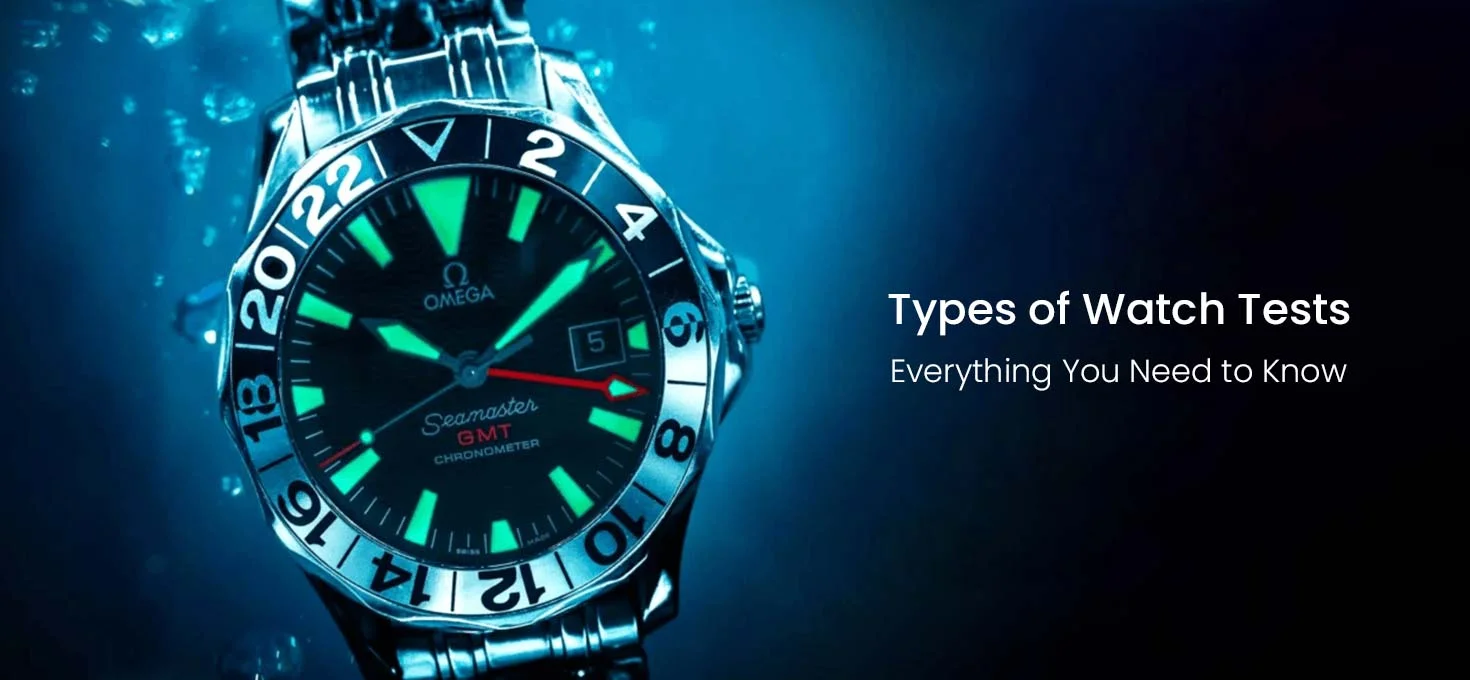
Luxury watches are celebrated for their exceptional craftsmanship, enduring longevity, and pinpoint accuracy. These mechanical marvels are more than just timekeepers; they are intricate works of art designed to withstand the test of time. However, to maintain their performance and preserve their value, regular servicing and testing are essential. Various types of watch tests are employed to ensure that every component functions flawlessly, from water resistance to precise timekeeping. In this blog, we explore the critical types of watch tests, their processes, importance, and frequency to help enthusiasts understand how to care for their cherished timepieces.
Water Resistance Test (Dry and Wet)
What is it?
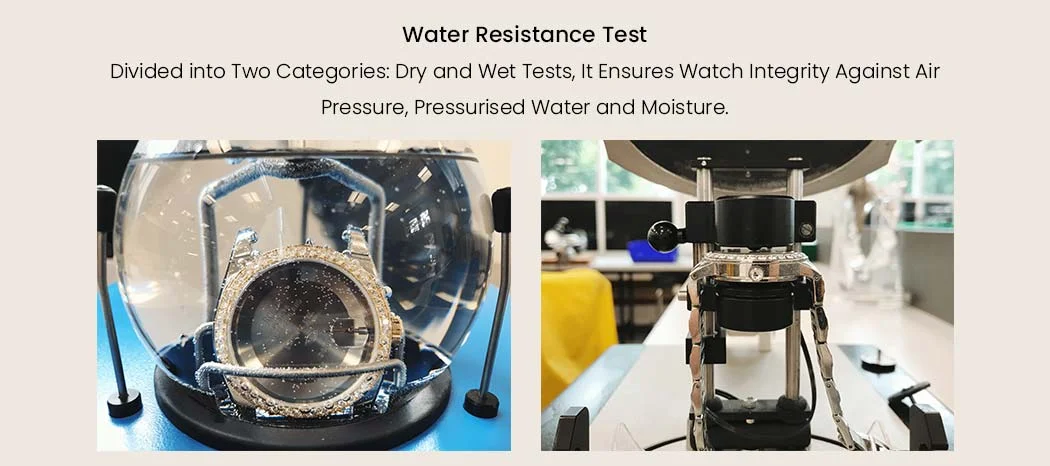
The Water Resistance Test – Dry/Wet evaluates a watch’s ability to prevent water ingress under specific pressure conditions. Luxury watches often feature water resistance ratings, measured in atmospheres (ATM) or meters, indicating their suitability for activities like swimming or diving. This test ensures the watch remains sealed against moisture, protecting its movement.
How is it done?
- Dry Test: A watch is placed in a vacuum chamber where air pressure is applied. Sensitive sensors detect minute case deformations, indicating whether the watch is airtight. No water is involved, making it a safe initial test.
- Wet Test: Using a testing device, the watch is placed in a pressurized chamber with air, then submerged in water. As pressure is released, bubbles escaping from the watch indicate leaks, often from the crown, case back, or crystal gaskets. A follow-up condensation test may involve heating the watch and applying a cold water drop to check for internal moisture.
Importance:
Water is a mechanical watch’s greatest enemy, as it can cause rust and damage to the movement. Regular testing ensures the watch’s gaskets and seals remain intact, especially after battery replacements or case openings. This is critical for dive watches used in high-pressure environments.
How often?
Test annually or after any service, shock, or prolonged water exposure. Gaskets degrade naturally, so replacement every 4–7 years during servicing is typical.
Water Resistance Test with Pressure Tester / Pressure Test
What is it?
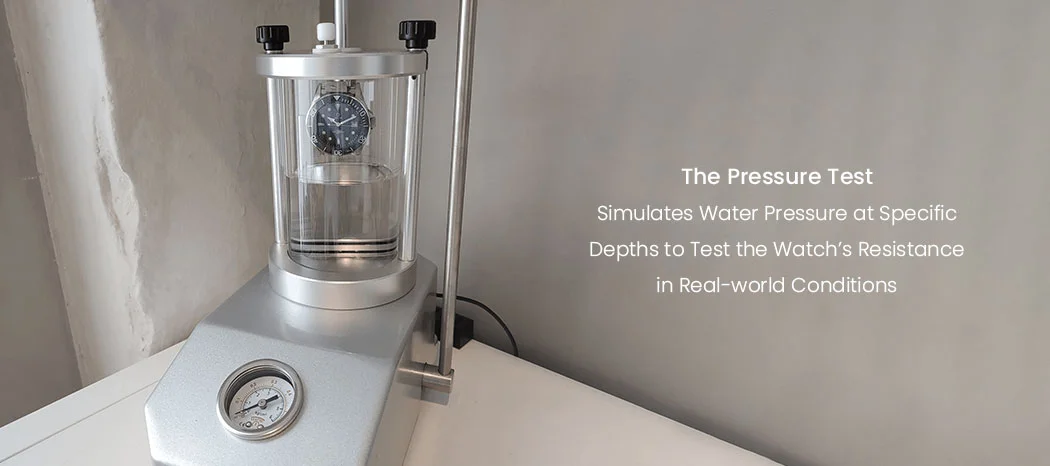
The Water Resistance Test with Pressure Tester is a specialized wet test that simulates water pressure at specific depths, ensuring a watch’s seals withstand real-world conditions. It’s commonly used for dive watches rated for deeper submersion.
How is it done?
Using a pressure tester, the watch is placed in a chamber half-filled with water. Air pressure is increased to a level corresponding to the watch’s rating (e.g., 5 bar for 50 meters). The watch is then submerged, and pressure is slowly released. Bubbles indicate leaks. High-pressure testers can simulate extreme depths (up to 1250 meters). A preliminary depressurization test prevents crystal damage in case of major leaks.
Importance:
This test verifies a watch’s ability to handle dynamic water pressure, crucial for diving or swimming. It pinpoints specific failure points, allowing targeted repairs like gasket replacement, ensuring reliability in aquatic environments.
How often?
Recommended annually for dive watches or after servicing. For everyday watches, test every 1–2 years or before water-related activities.
Helium Valve Test
What is it?
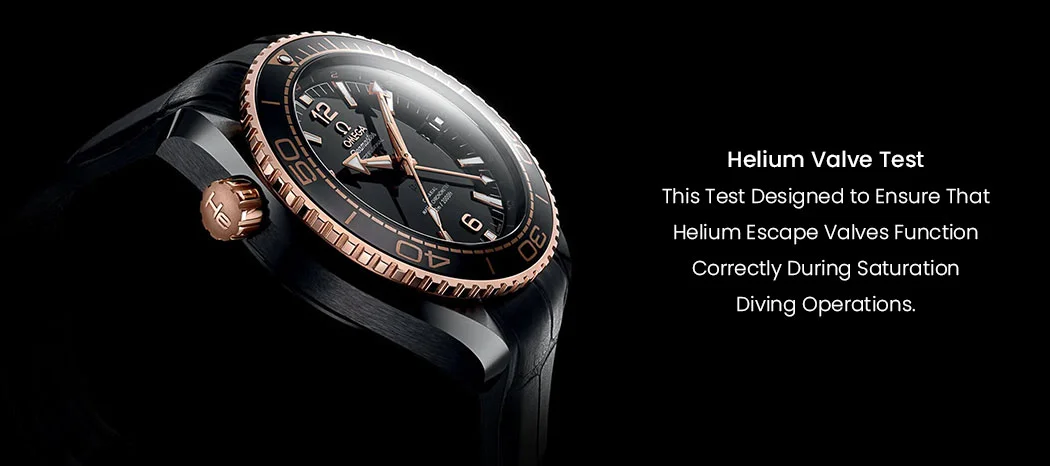
The Helium Valve Test ensures that dive watches equipped with helium escape valves function correctly. These valves release helium gas that accumulates inside the case during saturation diving, preventing pressure damage.
How is it done?
Using a helium test chamber, the watch is exposed to a helium-oxygen mixture at high pressure, simulating saturation diving conditions. After a set period, the pressure is reduced, and the helium valve should automatically release excess gas. Technicians check for case integrity and valve functionality, ensuring no deformation or leaks occur.
Importance:
For professional divers, a malfunctioning helium valve can cause the watch crystal to pop out due to internal pressure buildup. This test ensures the watch’s reliability in extreme underwater conditions, preserving its structural integrity.
How often?
Test every 1–2 years for dive watches used in saturation diving, or during major servicing intervals (every 4–7 years).
Winding Mechanism Test / Power Reserve Test
What is it?
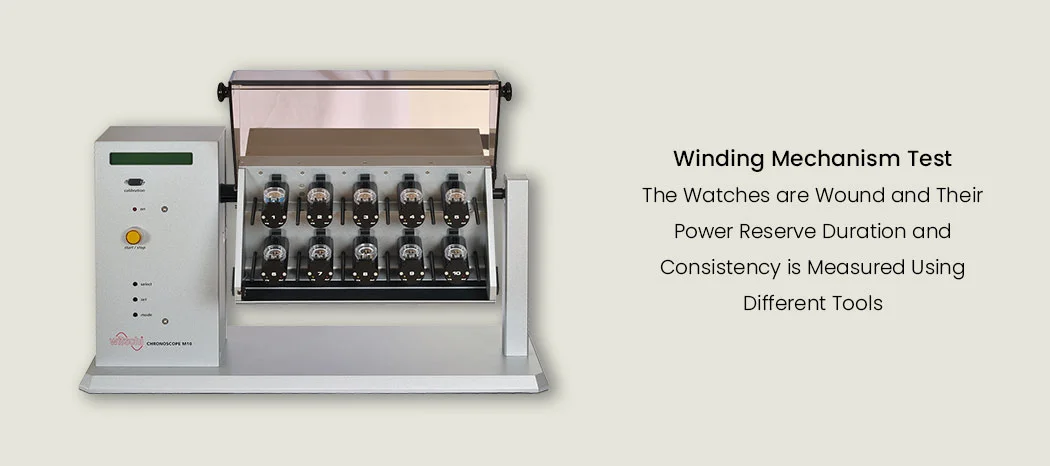
The Watch Winding test assesses the performance of a watch’s winding mechanism, whether manual or automatic, ensuring the mainspring receives adequate power for consistent operation.
How is it done?
For manual watches, the crown is wound 45–60 times using a power reserve testing device to simulate normal winding. Automatic watches are placed on a watch winder to mimic wrist movement. Technicians measure power reserve duration and consistency using machinery, ensuring the rotor or mainspring functions smoothly.
Importance:
A faulty winding mechanism can lead to insufficient power, causing the watch to stop or lose accuracy. This test ensures the movement receives consistent energy, critical for daily wear and long-term reliability.
How often?
Check during every service (every 4–7 years) or if the watch stops unexpectedly. Automatic watches may need rotor inspection more frequently if worn irregularly.
Watch Demagnetizer Test / Demagnetization Test
What is it?
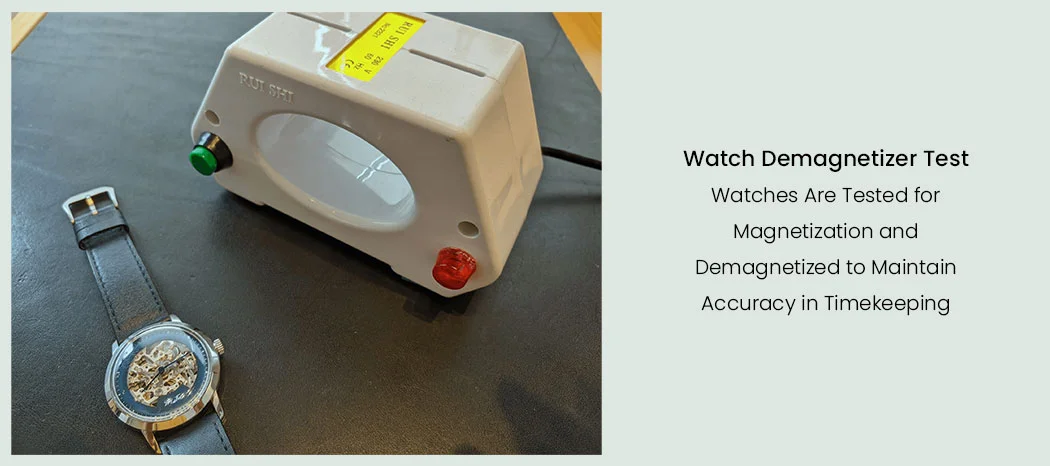
The Watch Demagnetizer test corrects magnetization in a watch’s movement, which can disrupt timekeeping accuracy by causing hairspring coils to stick together.
How is it done?
The watch is passed through a demagnetizer device which emits an alternating magnetic field to neutralize magnetism. If severe, the movement may be opened for targeted demagnetization. Technicians verify accuracy post-treatment using a time grapher.
Importance:
Magnetization, often caused by exposure to electronics or magnets, can make a watch run fast (20+ seconds/day) or stop. Demagnetizing restores accuracy without invasive servicing, preserving the watch’s condition.
How often?
Test if the watch exhibits sudden inaccuracy or every 1–2 years as a preventive measure, especially for watches exposed to magnetic fields.
Time Grapher Test / Timekeeping Accuracy Test
What is it?
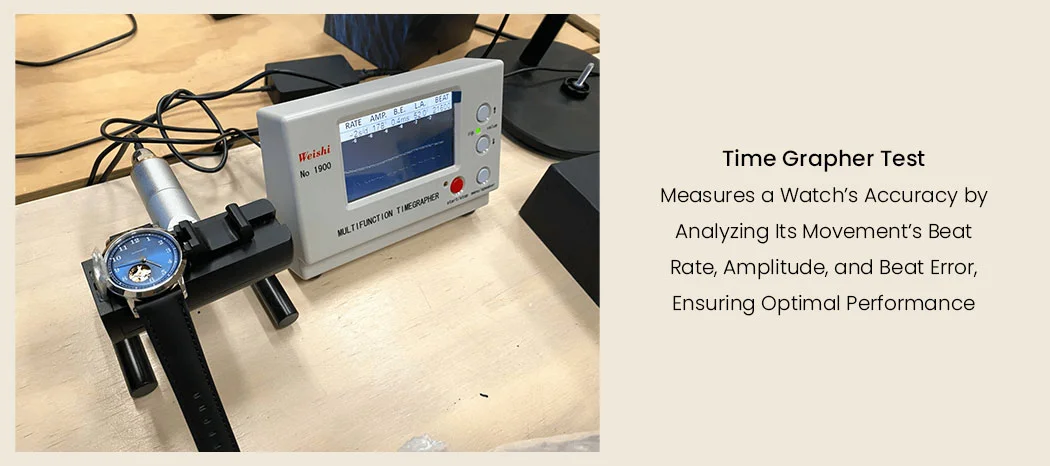
The Time Grapher test measures a mechanical watch’s accuracy by analyzing its movement’s beat rate, amplitude, and beat error, ensuring optimal performance.
How is it done?
Using a Timegrapher device, the watch is placed on a microphone stand that captures the escapement’s tick-tock sound. The device analyzes parameters like rate (seconds per day), amplitude (balance wheel swing), and beat error (symmetry of ticks). Results are displayed graphically, indicating whether adjustments or servicing are needed.
Importance:
Accuracy is the hallmark of a luxury watch. This test identifies issues like worn lubricants or misaligned components, ensuring the movement runs within acceptable tolerances (e.g., -4/+6 seconds/day for COSC-certified watches). It’s essential for enthusiasts and watchmakers tuning high-end timepieces.
How often?
Test annually or during servicing. Regular checks help detect early signs of wear, preventing costly repairs.
The longevity and precision of luxury watches depend on meticulous care and regular testing. Each type of watch test—whether it’s the Water Resistance Test, the Helium Valve Test, or the Time Grapher analysis—plays a vital role in maintaining a timepiece’s performance. By incorporating these tests into a comprehensive watch servicing routine, watch owners can ensure their watches remain reliable and accurate for generations. Regular servicing, typically every 4–7 years, includes cleaning, lubricating, gasket replacement, and thorough testing to address wear and environmental factors. By prioritizing these technical assessments, watch enthusiasts can protect their investments and enjoy the timeless elegance of their luxury timepieces.
Kapoor Time Crafter – Watch Service Center
For any service or watch tests, trust only authorized service centers to maintain your watch’s precision and longevity with expertise. Established over 50 years ago, Kapoor Time Crafter began as a trusted service center for premier luxury watch brands. We proudly serve as an authorized service center for 24 renowned names, such as Rolex, Cartier, Omega, Hublot, Breitling, Chopard, IWC, Longines, TAG Heuer, Tissot, Tudor, and others. With a rich heritage of excellence in luxury watch care, our skilled technicians deliver meticulous attention to every timepiece. Our state-of-the-art facility is equipped with the latest machinery and tools to ensure your watch receives unparalleled service. Discover our offerings at Kapoor Watch Co. website or visit Kapoor Watch Co. Stores to view collections or schedule a consultation with our specialists.

Recent Posts
Recent Comments
Archives