
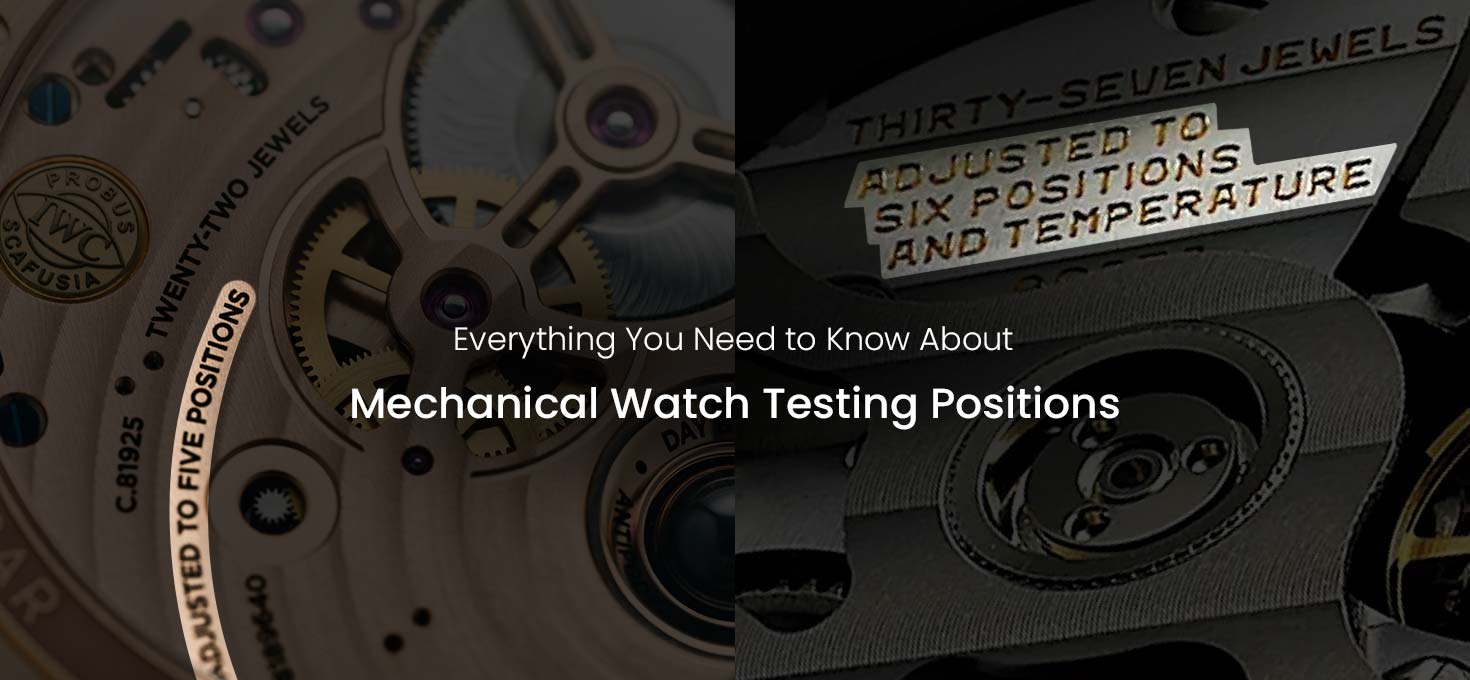
Mechanical watches are a blend of art and engineering, where tiny components work in harmony to measure time with remarkable precision. A critical aspect of their performance lies in mechanical watch tested positions, which ensure reliability across various orientations influenced by gravity. This comprehensive guide explores why watch tested positions are essential, how they affect accuracy, the standard positions used for testing, certifications that validate performance, and practical tips for maintaining timekeeping excellence. Whether you’re a seasoned horology enthusiast or new to the world of mechanical watches, this blog will deepen your appreciation for these intricate timepieces.
Why Tested Positions Matter for Mechanical Watches
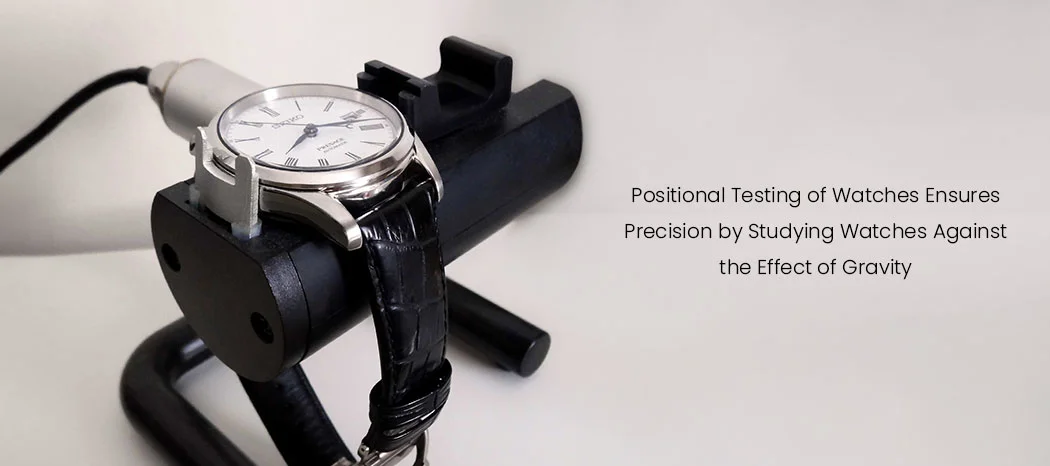
At the heart of a mechanical watch lies a complex assembly of gears, springs, and screws, all working together to keep time. Gravity, however, can subtly alter their performance, causing the watch to gain or lose seconds depending on its orientation. Testing watches in multiple positions simulates real-world conditions—such as wearing the watch during the day or placing it on a nightstand at night—ensuring consistent accuracy. For perspective, a watch with 99.9% accuracy could deviate by approximately 1 minute and 27 seconds daily if not properly adjusted, underscoring the importance of watch tested positions for high-end timepieces.
Without positional testing, a watch might perform flawlessly in one orientation but falter in another, compromising its reliability. Manufacturers aim for tight tolerances, typically achieving accuracy within ±3 to ±10 seconds per day for premium mechanical watches. This precision requires meticulous calibration across various positions, ensuring the watch remains a dependable companion in any scenario.
How Positions Affect Accuracy
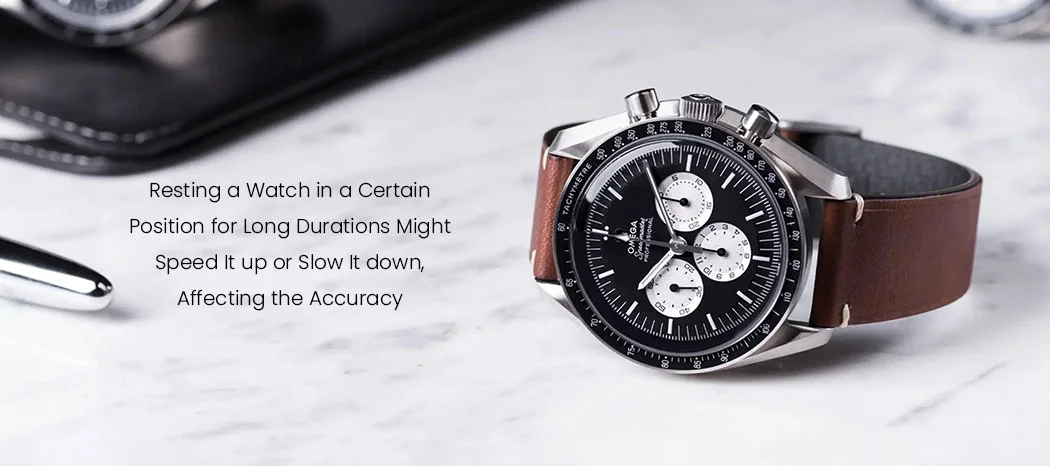
The balance wheel and hairspring are the heartbeat of a mechanical watch, oscillating to create consistent “beats” that drive the timekeeping mechanism. Gravity can influence these components, causing slight variations in their movement. For example, in vertical positions like crown up or crown down, gravity pulls unevenly on the balance wheel’s pivots, potentially speeding up or slowing down the watch. Horizontal positions, such as dial up or dial down, are generally more stable but can still exhibit minor inaccuracies if the balance is not perfectly poised.
Consider a watch left in a crown-down position overnight; it might lose a few seconds due to increased friction on certain pivots. Conversely, in a dial-up position, it could gain time if the balance wheel is slightly imbalanced. Manufacturers use timing machines to measure these deviations over 24-hour periods in different orientations, adjusting the watch to minimize errors. Modern materials, such as Nivarox hairsprings, help reduce positional variances, but thorough testing remains essential for achieving optimal accuracy.
Temperature also plays a role, as extreme heat or cold can cause components to expand or contract, altering their performance. While advanced alloys mitigate these effects, positional testing across a range of temperatures ensures robustness in diverse environments.
Standard Positions for Watch Testing
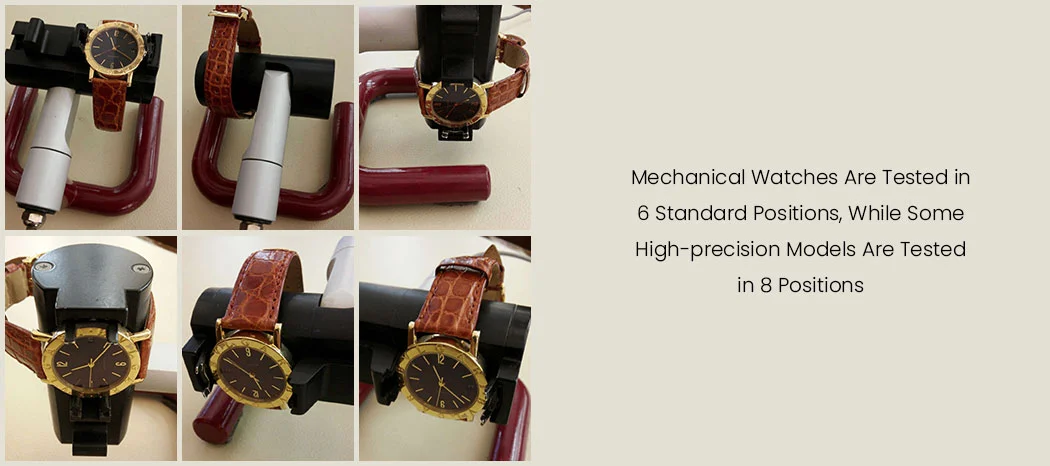
To replicate real-world usage, mechanical watches are tested in 5 to 6 standard positions, with some high-precision models evaluated in up to 8. These positions include:
- Dial Up: Watch face up, as if resting on a table, often the most stable orientation.
- Dial Down: Watch face down, simulating placement on a soft surface overnight.
- Crown Up: Crown facing upward, mimicking a vertical position on the wrist.
- Crown Down: Crown facing downward, another common vertical orientation.
- Crown Left: Crown pointing left, testing lateral gravitational effects.
- Crown Right: Crown pointing right, ensuring balanced performance.
Some watches are also tested in halfway positions, such as semi-crown up or down, for finer adjustments. During testing, the watch is held in each position for a set period, and its rate is recorded to calculate average deviations. The goal is to adjust the balance wheel so that positional errors are minimized, resulting in consistent daily performance.
Certifications for Watch Accuracy

To validate their precision, many mechanical watches undergo independent testing to earn certifications. The most recognized is the COSC (Contrôle Officiel Suisse des Chronomètres), which evaluates uncased movements in five positions at three temperatures (8°C, 23°C, 38°C) over 15 days. To qualify as a chronometer, a movement must maintain accuracy within 4/+6 seconds per day for larger calibers. This rigorous process ensures reliability across mechanical watch-tested positions.
Some manufacturers go further, pursuing certifications like METAS, which includes testing in six positions and under high magnetic fields (up to 15,000 gauss) to simulate real-world conditions. The Geneva Seal, another prestigious standard, emphasizes both accuracy and aesthetic finishing. These certifications assure enthusiasts that their watches meet stringent benchmarks for positional accuracy and overall performance.
Factors Influencing Positional Accuracy
Beyond gravity, several factors can impact a watch’s performance in watch-tested positions:
- Temperature Variations: Extreme temperatures can alter the dimensions of the balance wheel and hairspring, affecting timekeeping. Modern designs incorporate temperature-resistant materials to minimize these effects.
- Magnetism: Exposure to magnetic fields from devices like laptops or speakers can magnetize the hairspring, causing the watch to run erratically fast or slow. A quick pass through a demagnetizing machine resolves this issue.
- Aging and Wear: Over time, lubricants break down, and components experience micro-wear, increasing positional variances. Regular servicing every 3-5 years restores optimal function.
- Movement Complexity: Watches with complications, such as chronographs, require more extensive positional testing due to additional components influencing the balance.
Physical shocks can also disrupt accuracy by tangling hairspring coils, leading to significant rate changes. A skilled watchmaker can correct this with minimal intervention.
Regulation vs. Adjustment
Correcting positional inaccuracies involves two processes: regulation and adjustment. Regulation addresses consistent fast or slow running by fine-tuning the regulator lever or screw, a quick procedure often completed in minutes using a timing machine. Adjustment, however, is more complex, requiring the watchmaker to poise the balance wheel for each position to ensure uniform performance. This involves monitoring rates across all watch-tested positions and making precise tweaks, a task that demands expertise and patience.
For enthusiasts, affordable timing apps or devices allow basic home checks, but professional servicing is recommended for accurate adjustments. Regular maintenance ensures the watch remains within its specified accuracy range.
Practical Tips for Maintaining Positional Accuracy
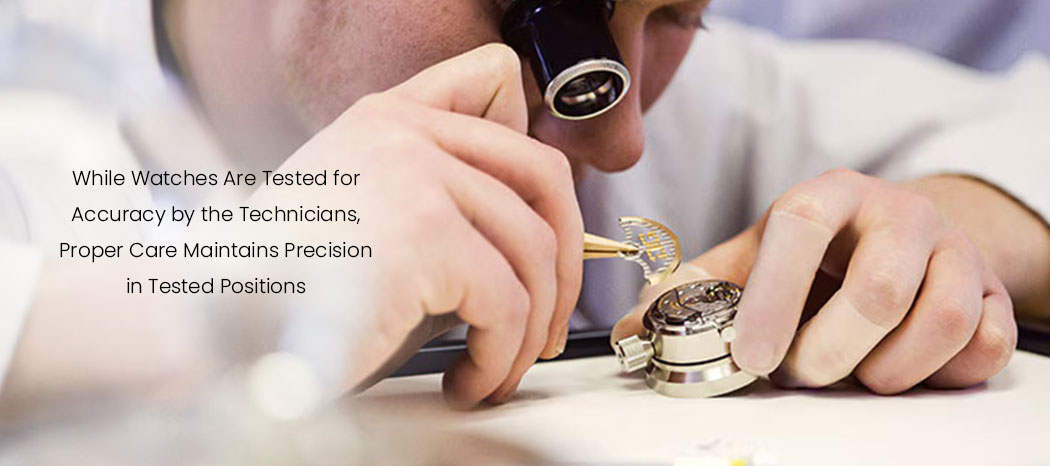
To keep your mechanical watch performing optimally:
- Consistent Wear for Automatics: Wear automatic watches for at least 8-10 hours daily to maintain the mainspring’s power reserve. If not worn, manually wind with 5-10 crown turns.
- Avoid Magnetic Fields: Keep the watch away from electronics like smartphones or speakers to prevent magnetization.
- Monitor at Home: Use a timing app to check rates in different positions periodically, noting any consistent deviations.
- Regular Servicing: Schedule a full overhaul every 3-5 years, to clean, lubricate, and re-adjust components.
- Optimal Storage: When not worn, store the watch in a position that counters daily drift, such as dial up if it runs fast during wear.
These practices ensure your watch maintains its accuracy across watch-tested positions for years, if not decades.
Understanding mechanical watch tested positions unveils the intricate balance of science and artistry in horology. From historical innovations to modern certifications, positional testing ensures mechanical watches remain reliable in any orientation. By embracing proper care and informed habits, enthusiasts can preserve the precision of these timeless creations.
Kapoor Time Crafter – Watch Service Center
For all your watch servicing and testing needs, rely on authorized watch service centers to ensure your timepiece maintains its precision and durability with expert care. Founded over five decades ago, Kapoor Time Crafter started as a trusted hub for servicing top-tier luxury watch brands. We are proud to be an authorized service center for 24 prestigious brands, including names like Cartier, Omega, Hublot, Breitling, Chopard, IWC, Longines, TAG Heuer, Tissot, and more. With a legacy of excellence in horological care, our expert technicians provide meticulous attention to every watch. Our advanced facility, equipped with cutting-edge tools and technology, guarantees exceptional service quality. Explore our services at Kapoor Watch Co. website or visit Kapoor Watch Co. Stores to browse collections or book a consultation with our specialists.
FAQs About Mechanical Watch Tested Positions
Why are mechanical watches tested in different positions?
Testing ensures the watch maintains accuracy under varying gravitational influences, simulating real-world use on the wrist or at rest.
How many positions are watches usually tested in?
Typically 5 to 6, with high-end chronometers tested in 5 and some premium models in up to 8 for enhanced precision.
How does a watch’s position affect its accuracy?
Gravity alters the balance wheel’s oscillation, causing slight rate changes; vertical positions often show greater variance than horizontal ones.
Why are crown up and crown down positions important in watch regulation?
These positions mimic wrist-wear orientations, where gravity affects pivots differently, making them critical for consistent daily performance.
Do quartz watches need to be tested in different positions?
No, quartz watches rely on crystal vibrations unaffected by gravity, eliminating the need for positional testing.



Recent Posts
Recent Comments
Archives