
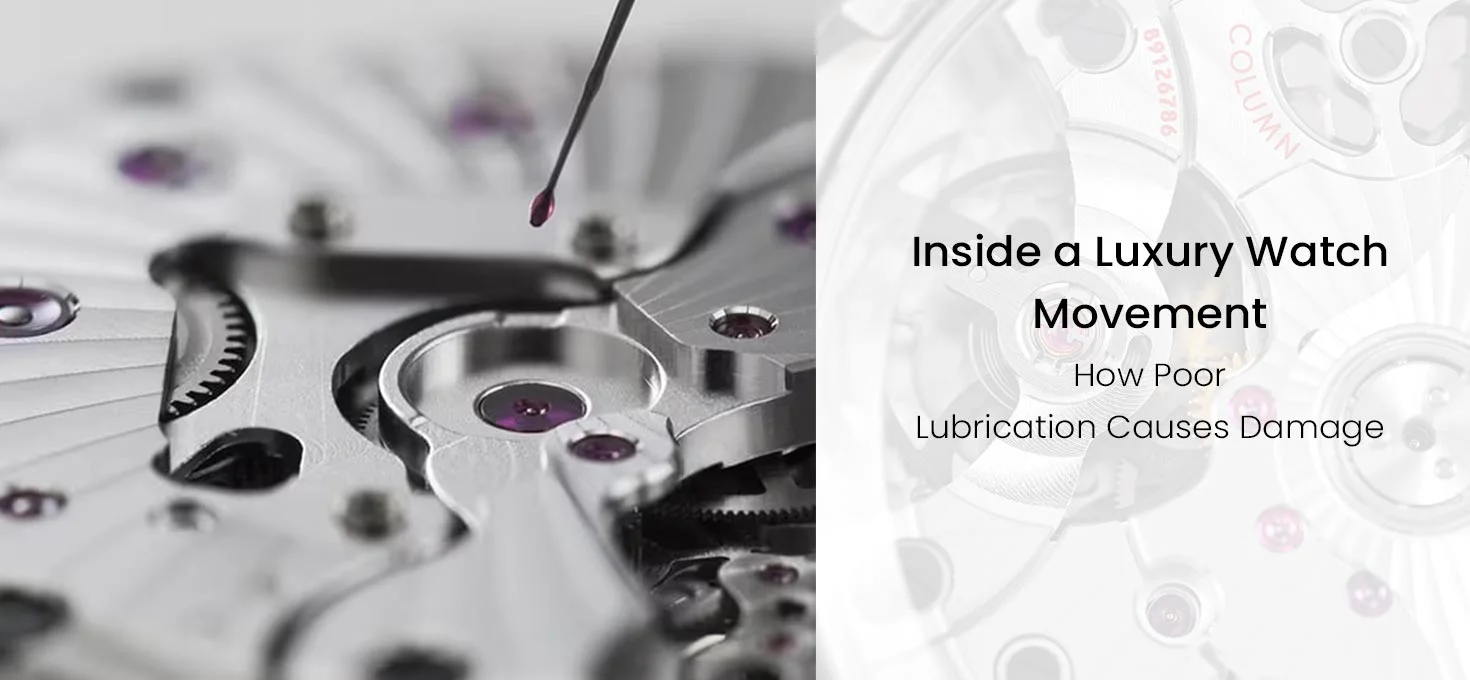
Luxury mechanical watches are celebrated for their craftsmanship, precision engineering and the promise of lasting for generations. Yet beneath the polished bridges, hand-finished components and prestigious brand names lies an often-overlooked factor that determines whether a movement thrives or deteriorates, that’s lubrication. In horology, lubrication is not merely a maintenance detail but is a fundamental requirement for survival. As Abraham-Louis Breguet famously implied, the quest for the perfect oil has always been one of watchmaking’s greatest challenges. When done incorrectly, luxury watch movement lubrication can silently undermine accuracy, efficiency and long-term durability. Similarly, mechanical watch lubrication plays a decisive role in managing friction within microscopic tolerances. Too little, too much or the wrong type of oil can slowly but relentlessly shorten a movement’s lifespan, regardless of how prestigious or expensive the watch may be.
How Lubrication Works Inside a Mechanical Movement
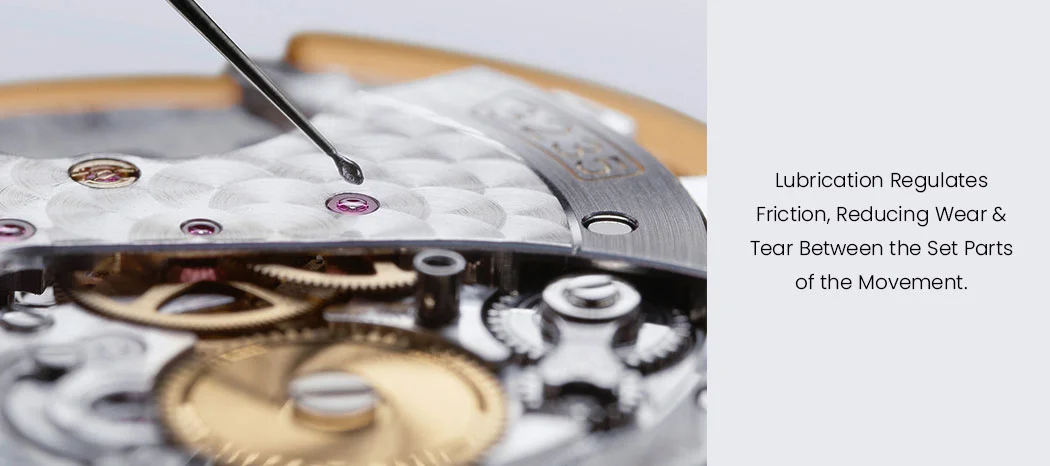
A mechanical movement is a tightly choreographed system of components transferring energy from the mainspring to the escapement. Every rotation, oscillation and impulse generates friction. Lubrication exists to control that friction, not eliminate it entirely. Strategic oiling ensures smooth energy transmission, prevents excessive wear and stabilizes timekeeping performance. Without proper mechanical watch lubrication, friction increases at critical contact points such as gear teeth, pivots and jewels, forcing the movement to work harder for the same output. Different areas of the movement demand different lubricants. High-speed, low-torque components like the escapement require extremely light oils to avoid disrupting oscillation. Slower, high-load areas such as the barrel arbor or mainspring rely on heavier greases to manage torque and prevent metal fatigue. Historically, watchmakers used natural oils derived from animals or plants, but these were prone to oxidation and gumming. Modern synthetic lubricants have significantly improved stability and longevity, yet even they degrade over time through evaporation, contamination and chemical breakdown. Precision in luxury watch movement lubrication is therefore not optional but is essential to preserving both performance and longevity.
Importance of Correct Lubrication
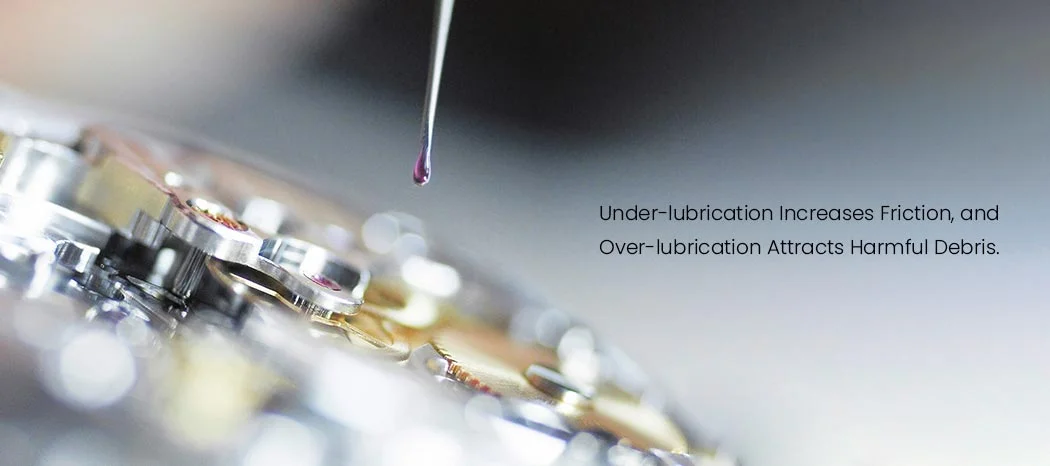
Incorrect lubrication is not limited to neglect. It manifests in multiple forms, each equally damaging. Under-lubrication often occurs as oils dry out or evaporate with age, leaving metal surfaces to grind directly against one another. This increases friction, reduces amplitude and accelerates wear at pivots and gear teeth. Over time, even hardened jewels and polished steel components can suffer irreversible damage. Over-lubrication is just as dangerous. Excess oil does not stay neatly in place and rather it migrates. When oil spreads beyond its intended contact point, it attracts dust and debris, forming an abrasive paste that actively wears components. This is especially destructive in high-precision areas like the escapement. Using the wrong lubricant compounds these issues further. Oils with incorrect viscosity can disrupt timing stability, slow energy transfer or break down prematurely. Even with modern advancements, mechanical watch lubrication remains highly sensitive to application technique, quantity and compatibility. Luxury movements, despite their advanced engineering, are not immune to these fundamental physical realities.
How Incorrect Lubrication Shortens a Movement’s Lifespan
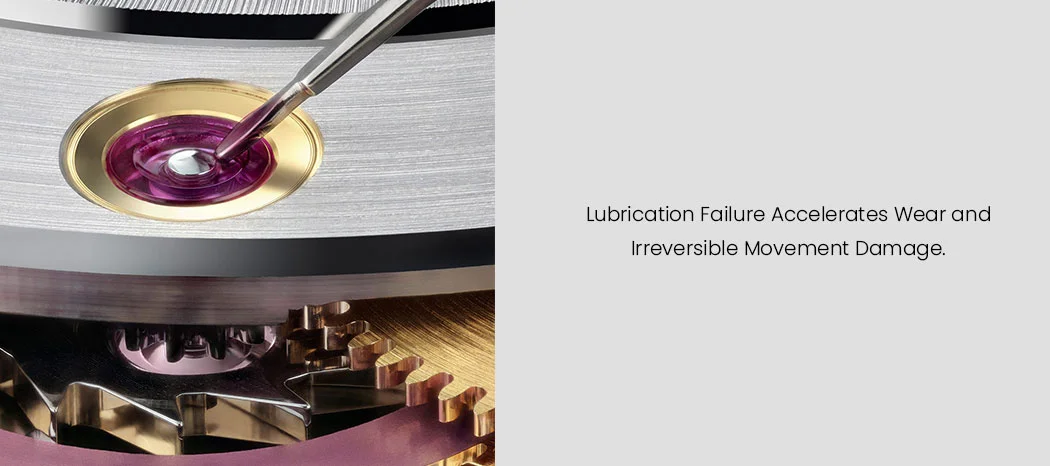
When lubrication fails, the consequences cascade throughout the movement. Increased friction leads to accelerated wear of pivots, pinions and gear teeth, permanently altering tolerances that were originally measured in microns. As efficiency drops, the mainspring must work harder to deliver power, resulting in reduced power reserve and uneven torque delivery. This directly affects accuracy, causing fluctuations in timekeeping that regulation alone cannot fix. Over time, poor luxury watch movement lubrication can lead to cracked jewels, worn bridges, and damaged wheels, repairs that are both costly and in some cases, impossible due to part scarcity. These issues rarely appear overnight. Early warning signs often include stiff winding, erratic accuracy, shortened power reserve or unusual sounds during operation. Unfortunately, many owners ignore these symptoms, allowing minor lubrication issues to evolve into major mechanical failures. At this stage, routine servicing turns into complex restoration, significantly shortening the movement’s practical lifespan.
Professional Servicing and Future Innovations
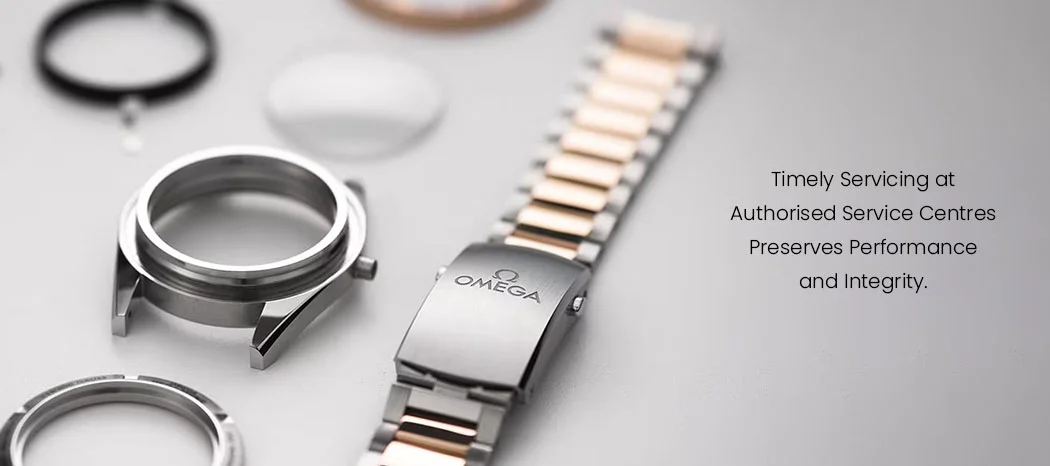
Proper lubrication is inseparable from professional servicing. Before fresh oil is applied, the movement must be fully disassembled and meticulously cleaned to remove degraded oils and contaminants. Only then can precise quantities of the correct lubricants be applied to exact locations. This level of precision cannot be replicated through casual or DIY methods, which often cause more harm than good. Regular servicing intervals, typically every three to five years ensure that mechanical watch lubrication remains effective and that wear is addressed before it becomes irreversible. The future of horology continues to explore alternatives such as dry lubricants, advanced coatings and nano-technology aimed at reducing dependence on traditional oils. While promising, these innovations have yet to fully replace conventional lubrication. Until then, the longevity of any mechanical watch depends on disciplined maintenance. Lubrication may be invisible, but its impact is profound. Incorrect luxury watch movement lubrication does not merely affect short-term performance and permanently alters a movement’s lifespan. True luxury in watchmaking is not only about craftsmanship at birth, but about care throughout a lifetime.
Professional Servicing Is Essential to Preserving a Luxury Watch’s Value
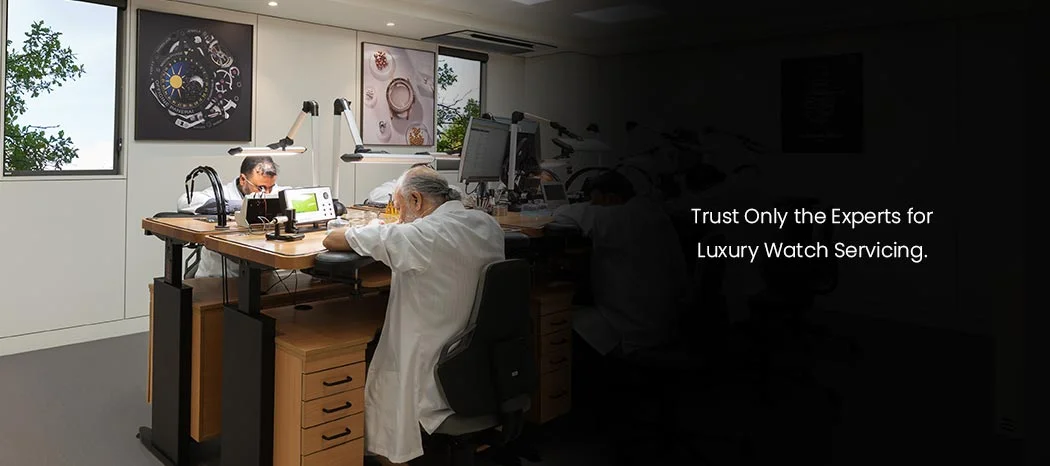
Preserving the value of a luxury watch requires far more than routine maintenance. It demands expertise, precision and a deep respect for horology. A professional understands that every timepiece embodies not only mechanical complexity but also emotional and heritage value. With a commitment to meticulous servicing, transparent documentation and strict adherence to certified standards, authorised service centers ensure each watch is cared for in a way that safeguards its performance, originality and long-term market appeal. Whether you plan to wear your watch for decades or consider future resale, professional servicing by trusted experts forms the crucial link between ownership and enduring value.
Kapoor Time Crafter
When it comes to protecting a luxury watch’s value, correct movement servicing, especially precision lubrication is not optional but essential. Improper or degraded lubrication can accelerate wear, compromise accuracy and permanently affect a movement’s integrity. Built on a legacy of authenticity and technical mastery, Kapoor Time Crafter caters to discerning watch enthusiasts who understand that longevity begins at the microscopic level. We specialize in high-end luxury watches, delivering meticulous servicing that adheres to the exacting standards of fine horology, ensuring each movement is cleaned, lubricated and regulated with absolute precision. By preserving mechanical health and originality, our expertise safeguards both performance and long-term market value. Visit our Kapoor Watch Co. Stores or explore our website to book a consultation and ensure your timepiece receives the care it deserves.
Recent Posts
Recent Comments
Archives