
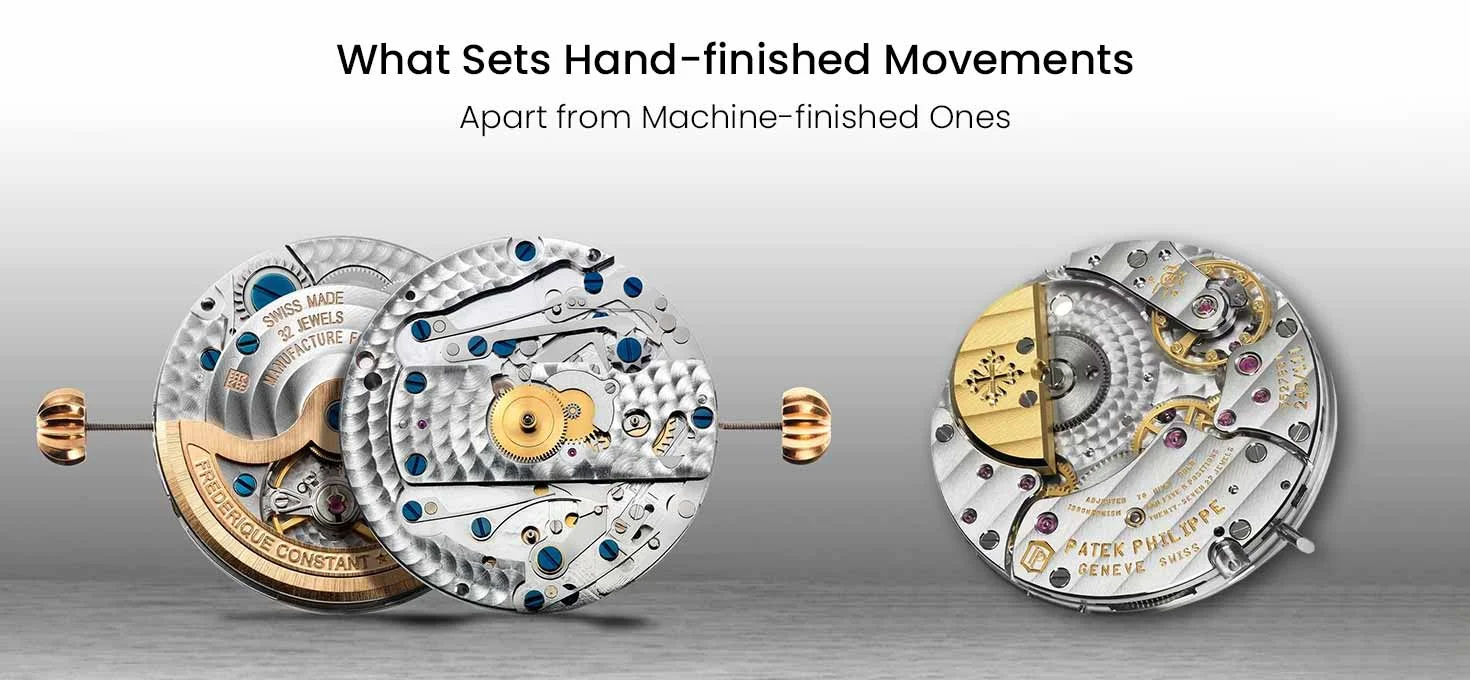
Watches represent some of the most remarkable achievements in miniaturised engineering. Inside every mechanical timepiece lies a movement, a complex symphony of gears, springs, levers, and jewels working in perfect harmony to measure time. While the fundamental goal of any movement is reliable timekeeping, the methods used to create and refine these mechanisms vary significantly. Two primary approaches dominate modern horology: machine-finished and hand-finished movements. Machine-finished movements rely on automated precision manufacturing, delivering consistency and accessibility. Hand-finished movements, in contrast, involve skilled artisans who meticulously refine each component, adding layers of artistry and individual attention. These approaches reflect different priorities in watchmaking; one focused on efficiency and uniformity, the other on tradition and refinement. Exploring their differences reveals much about how watches are built today and what truly adds value for collectors and enthusiasts alike.
What Are Machine-Finished Movements?
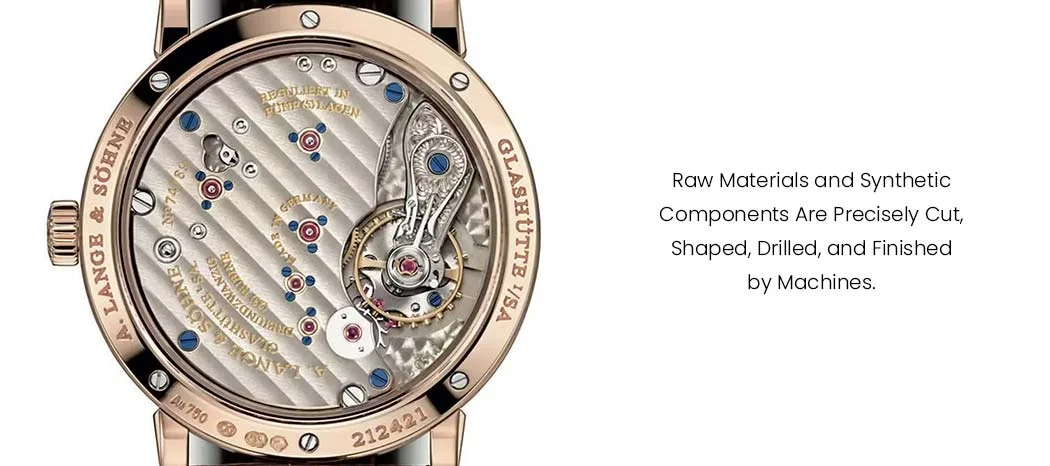
Machine-finished movements form the foundation of contemporary watch production. They are created using advanced computer-controlled technology, including CNC (Computer Numerical Control) machining centers, automated assembly lines, and laser-guided tools. In this process, raw materials like brass, steel alloys, and synthetic components are precisely cut, shaped, drilled, and finished by machines with minimal human intervention beyond initial programming and final quality checks. The greatest strength of machine finishing lies in its repeatability. Every bridge, gear, and pinion is manufactured to exact tolerances across thousands of units. This eliminates the small variations that can occur in manual work. Automated processes ensure that each part meets strict specifications, resulting in movements that perform consistently from one watch to the next. Production speed is another major advantage. What might take a watchmaker hours or days to complete by hand can be accomplished in minutes on a modern production line. This efficiency translates directly into lower manufacturing costs, allowing mechanical watches to reach a wider audience at more accessible price points. Quality control in machine-finished movements typically involves automated testing equipment and statistical sampling methods, which maintain high standards across large batches. Machine-finished movements power a vast range of timepieces, from everyday wearers to complicated calibres. Thanks to decades of advancement in manufacturing technology, these movements have achieved levels of precision and reliability that would have seemed impossible a few generations ago. They represent the triumph of modern engineering, bringing the joy of mechanical watchmaking to far more people without sacrificing dependable performance.
The Craftsmanship of Hand-Finished Movements
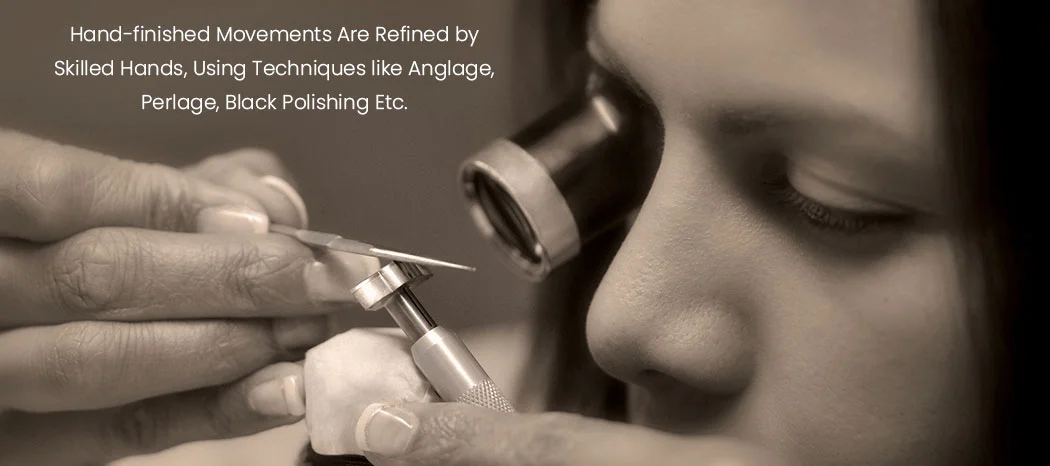
Hand-finished movements take a fundamentally different path. While base components may still originate from precision CNC machines for foundational accuracy, the critical refinement stage is entrusted entirely to experienced horologists. These artisans spend considerable time manually working on each part using traditional tools and techniques passed down through generations. Several signature techniques define hand finishing. Anglage, also known as bevelling or chamfering, involves carefully filing and polishing the sharp edges of bridges and plates at a precise 45-degree angle. This creates elegant, light-catching facets that highlight the movement’s architecture. Perlage consists of overlapping circular graining patterns applied with a rotating tool, often covering base plates and giving a textured, shimmering effect.
Côtes de Genève, or Geneva stripes, features parallel brushed lines across larger surfaces, adding visual rhythm and depth. One of the most demanding techniques is black polishing, or mirror polishing. Artisans use progressively finer diamond pastes in circular or figure-eight motions to create perfectly flat surfaces so reflective they can appear black when viewed at certain angles. Polishing screw heads and slots, and hand-striping are additional details that demand patience and steady hands. Beyond aesthetics, hand finishing offers practical refinements. Artisans can detect and remove microscopic burrs or imperfections that machines might miss. Carefully polished pivots and jewel holes reduce friction, potentially improving long-term wear characteristics. Each movement receives individual regulation and adjustment, allowing the watchmaker to optimise its performance based on its unique characteristics. This human touch transforms a functional mechanism into something closer to a work of art. Hand-finished movements are typically produced in much smaller quantities, which contributes to their exclusivity and higher cost. They embody the continuation of centuries-old horological traditions in an increasingly automated world.
History and Evolution
For most of watchmaking history, all movements were essentially hand-finished. From the earliest pocket watches through the golden age of horology, skilled craftsmen performed every operation manually. The Industrial Revolution and the rise of mass production introduced machinery that dramatically increased output and consistency. The post-World War II period saw rapid advancement in automated manufacturing. Today, the industry operates in a hybrid reality: even the finest movements benefit from modern machining for base components, while hand finishing remains the hallmark of higher refinement.
Key Differences Between Machine-Finished and Hand-Finished Movements
Several important distinctions separate these two methods:
- Production Scale and Speed: Machine finishing excels at high-volume production, completing movements rapidly and efficiently. Hand finishing requires significantly more time, often hours or even days for a single calibre as each component is individually worked on.
- Consistency versus Individuality: Machines produce nearly identical parts with remarkable uniformity, which is ideal for serviceability and predictable performance. Hand finishing introduces subtle variations that reflect the artisan’s judgment, allowing for personalised optimisation of each movement.
- Cost Implications: The efficiency of automation reduces per-unit costs substantially, making well-made mechanical watches more affordable. Hand finishing, due to intensive skilled labour, naturally results in higher prices and positions these pieces in more exclusive segments.
- Aesthetic Qualities: Machine-finished surfaces tend to be clean and functional but relatively plain. Hand finishing creates rich visual texture through decorative techniques that catch light beautifully when viewed through an exhibition caseback.
- Human Involvement: Machine processes minimise variables introduced by humans. In hand finishing, the experience and sensitivity of the artisan become central, enabling fine adjustments and quality decisions that automated systems cannot replicate.
- Maintenance Considerations: Both approaches can produce durable movements, but hand-finished examples often benefit from specialist servicing that respects their unique characteristics.
Does Finishing Technique Affect Performance?
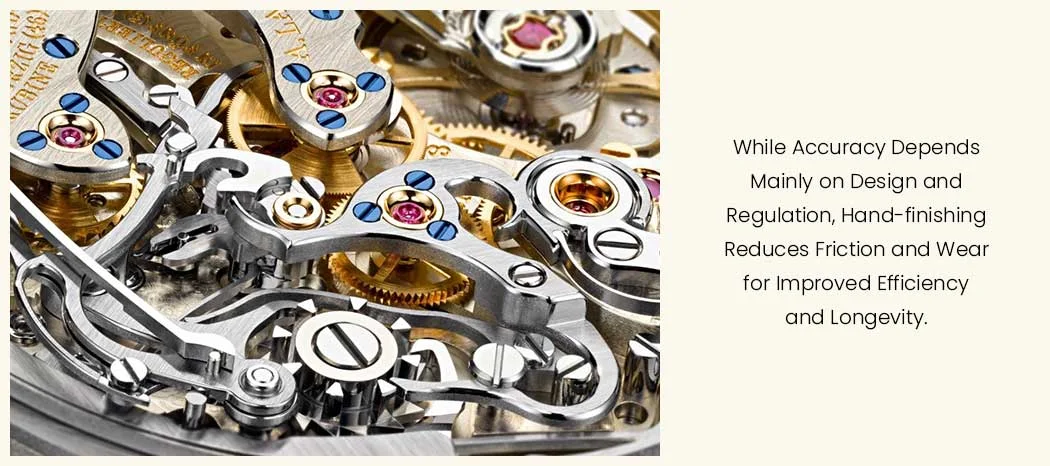
Many enthusiasts wonder whether hand finishing delivers measurably better timekeeping. The honest answer is nuanced. The core accuracy of a movement depends primarily on its design, the quality of its balance wheel and hairspring, and professional regulation rather than surface decoration alone. However, superior finishing does provide tangible benefits. Smoother, better-polished surfaces reduce friction between moving parts, which can contribute to improved efficiency and slightly better power reserve. Removing microscopic imperfections helps minimise long-term wear, potentially extending service intervals. The most significant advantages of hand finishing remain in the realm of longevity through refined surfaces and the emotional satisfaction of owning a piece that bears the unmistakable mark of human craftsmanship. Modern machine-finished movements have proven extremely reliable, often requiring minimal adjustment over years of use.
Choosing Between Machine-Finished and Hand-Finished Movements
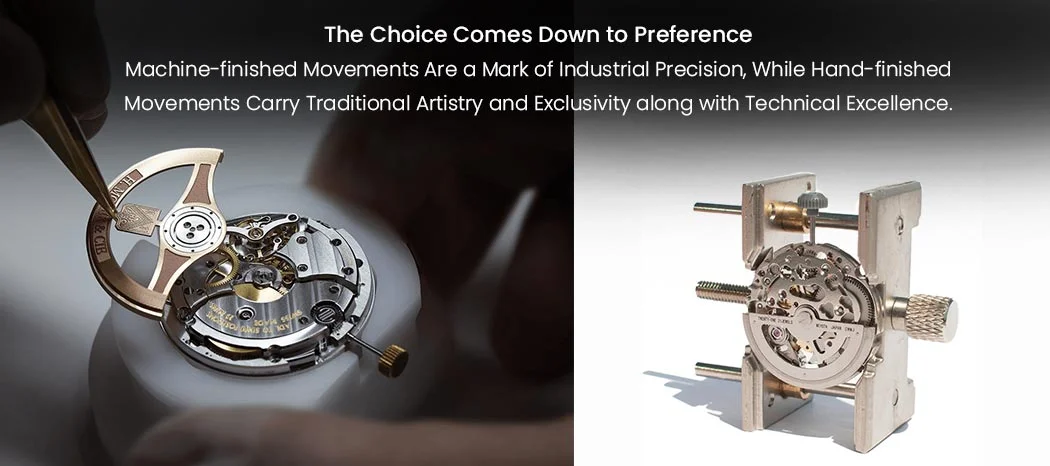
Your choice ultimately comes down to personal priorities and what you seek in a watch.
Machine-finished movements are ideal if you value reliability, consistency, ease of maintenance, and strong value for money. They allow enthusiasts to enjoy sophisticated mechanical timepieces without entering the highest price brackets. For daily wear or as a first serious mechanical watch, they offer an excellent balance of performance and practicality. Hand-finished movements appeal to those who appreciate traditional artistry, visual beauty, exclusivity, and a deeper connection to the craft of watchmaking. These pieces often become cherished objects that can be passed down through generations, carrying both technical excellence and human story.
Many collectors eventually own examples from both categories, appreciating each for what it represents in the broader landscape of horology. The contrast between machine-finished and hand-finished watch movements illustrates the rich diversity within modern watchmaking. One approach harnesses the power of technology to deliver precision and accessibility, while the other preserves the intimate involvement of skilled hands to create objects of lasting beauty and character. Neither is inherently superior; both contribute meaningfully to the world of mechanical watches. By understanding these differences, you can make more informed choices and develop greater appreciation for the incredible engineering and craftsmanship hidden beneath the dial of your favourite timepiece. Whether your collection leans toward one style or embraces both, the real reward lies in the simple pleasure of wearing a beautifully made mechanical movement on your wrist.
Kapoor Watch Co.
Kapoor Watch Co. is a long-established, respected name in the luxury watch industry and is renowned as an authorized retailer for some of the world’s most prestigious brands like Franck Muller, Rado, Cartier, Hublot, Breitling and many more. With decades of experience, we have built a strong reputation for authenticity, integrity, honesty and exceptional customer service. Whether seeking a classic timepiece or a statement of opulence, we ensure a personalized and immersive shopping experience coming out as the destination where luxury meets legacy. So visit the Kapoor Watch Co. Stores today or check out our Kapoor Watch Co. website and get your ideal watch now



Recent Posts
Recent Comments
Archives